Fibreglass vs Aluminum Windows
How Do the Two Stack Up in Terms of Thermal Performance, Lifespan, Sustainability, Strength and Aesthetics


On a bitterly cold morning, two windows can look almost identical from across a room while behaving very differently at the glass, frame and edge of the opening. One may stay relatively warm and comfortable near the frame; another may develop a noticeably colder perimeter or become more prone to condensation. Over time, the differences can extend beyond energy use to maintenance, operation and how well the window continues to perform after decades of temperature swings, moisture, wind and sunlight.
That is why comparing fibreglass and aluminum by material alone can be misleading. A high-quality, thermally broken aluminum window can outperform a poorly designed fibreglass window, while a well-engineered fibreglass window can provide insulation that is difficult to match with conventional aluminum. The real choice is not simply between a low-conductivity composite and a highly conductive metal. It is between two very different approaches to achieving strength, thermal performance, durability and architectural flexibility.
The real question is how the frame, glass, spacers, seals, hardware and installation work together. For homeowners, that means looking beyond the material label and examining the complete window’s thermal performance, weather resistance, construction quality and expected service life. But aesthetics and structural requirements matter too. If you are planning a large picture window, oversized slider, glass wall or a design with very narrow sightlines, the frame’s strength and profile dimensions can become just as important as its insulation value. In other words, the best choice may depend not only on how efficiently the window performs, but also on the size of the opening, the amount of glass you want, the appearance you are after and the conditions the window will have to withstand.
Fibreglass vs. Aluminum at a Glance
| Factor | Fibreglass | Thermally broken aluminum |
|---|---|---|
| Thermal insulation | Excellent | Good to excellent, depending heavily on thermal-break design |
| Thermal expansion | Very low | Higher; system design matters |
| Structural strength | Very good | Excellent |
| Slim sightlines | Good | Excellent |
| Condensation resistance | Generally easier to achieve | Highly dependent on thermal-break quality |
| Moisture/corrosion resistance | Excellent | Excellent with appropriate finish and detailing |
| Maintenance | Very low | Very low |
| Large architectural openings | Good, but product dependent | Excellent |
| Residential high-performance use | Strong fit | Strong fit with premium thermal design |
| Commercial curtain wall/storefront | Less common | Dominant technology |
| Upfront cost | Usually premium | Very broad range; often competitive in commercial systems |
| End-of-life recycling | More difficult | Strong advantage for established metal recycling |
Aluminum Windows

Get the Green Building Project Checklist
Use this handy checklist on your next project to keep track of all the ways you can make your home more energy-efficient and sustainable.
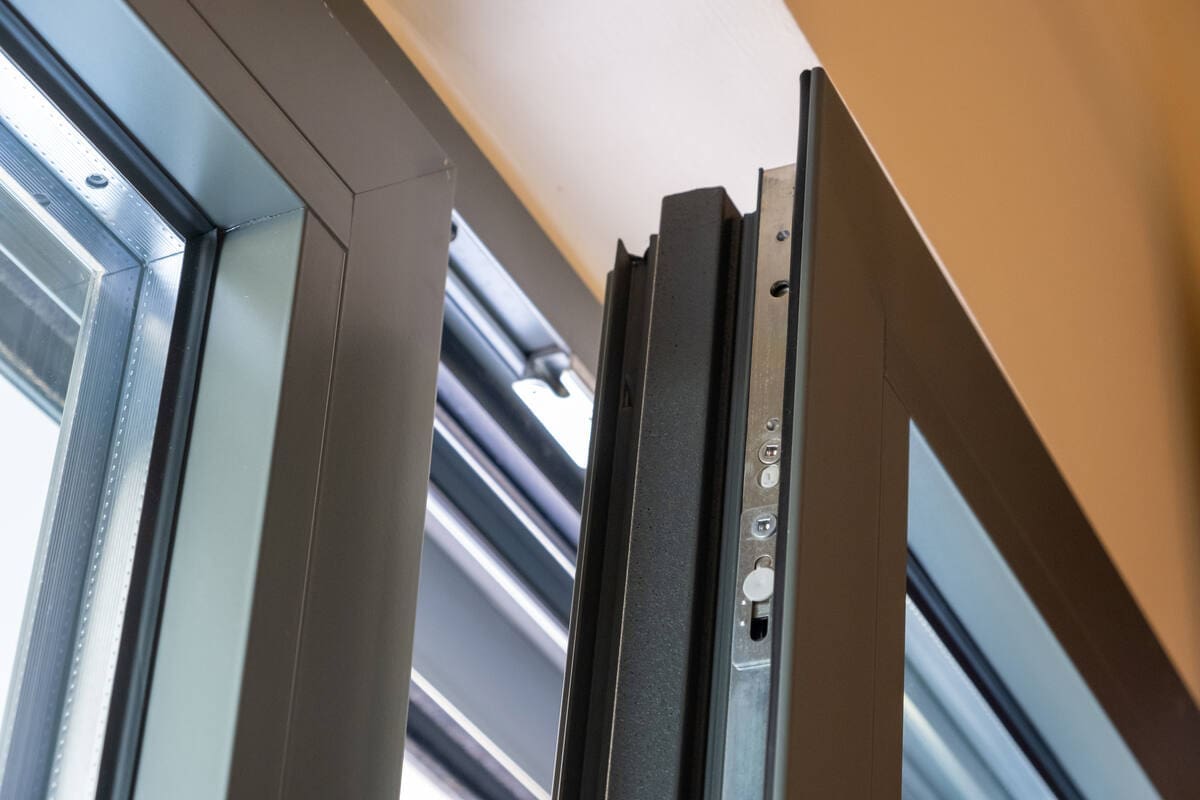
Aluminum has been a dominant window and curtain-wall material for decades for one fundamental reason: it is strong, light, durable and exceptionally easy to extrude into precise structural shapes.
The problem is thermal conductivity.
Lawrence Berkeley National Laboratory’s NFRC simulation documentation describes aluminum’s high thermal conductance as its biggest thermal disadvantage. It also makes an easily overlooked point: because aluminum conducts heat so readily, the geometry and surface area of the frame matter considerably. A relatively compact aluminum profile can perform better than a more complicated profile with a greater conductive path.
Thermal breaks are not optional in high-performance buildings
Modern aluminum windows intended for conditioned buildings usually incorporate a thermal break. Instead of allowing one continuous piece of aluminum to connect the outside and inside, the profile is separated by a less-conductive material, commonly a polymer.
The thermal break interrupts the conductive path and reduces heat transfer through the frame.
But “thermally broken” does not automatically mean “high performance.”
The width and configuration of the thermal break, frame geometry, drainage chambers, hardware, corner joints and glazing interface all matter. LBNL research has specifically examined highly insulating commercial aluminum systems because aluminum framing remains a weak part of many otherwise high-performance facades.
For a high-performance building, ask for the tested whole-window U-factor, not simply a statement that the window has a thermal break.
Durability and lifespan
Aluminum is exceptionally durable when the alloy, finish and drainage are appropriately designed for the environment.
It does not rot, and properly finished aluminum is highly resistant to normal weather exposure. Anodized and powder-coated finishes can provide long service lives, although coastal salt exposure, industrial pollutants and poor detailing can accelerate corrosion or finish deterioration.
A useful piece of research comes from a service-life study published in Engineering Failure Analysis. Researchers inspected 173 aluminum window frames and used a factor method to estimate service life. Their optimized model produced an estimated aluminum-frame service life of roughly 37 to 41 years under the conditions studied. The authors also emphasized that exposure and user behaviour substantially affect degradation.
That is not a promise that aluminum windows last 40 years. It illustrates why a published lifespan should be treated as an engineering estimate rather than a warranty.
The Big Aluminum Advantage: Slenderness and Structural Capacity
When architects want large expanses of glass, narrow sightlines, very large operable panels, curtain walls, storefronts or highly glazed commercial façades, aluminum becomes much harder to replace.
Its structural stiffness allows manufacturers to create slender profiles that can accommodate substantial glass loads and wind pressures.
That is one reason aluminum remains the dominant framing material in commercial fenestration. LBNL notes that commercial systems primarily use aluminum because of its combination of strength, cost, manufacturability and long service life.
This combination of strength, slim profiles and large glass areas is a major reason aluminum is so common in luxury windows and doors. High-end residential systems can accommodate oversized fixed panes, expansive sliding doors and minimal sightlines that would be difficult to achieve with many conventional frame materials. But premium appearance does not necessarily mean premium thermal performance: for large aluminum openings, buyers should look closely at the thermal-break design, whole-window U-factor, air leakage and condensation resistance rather than judging the product by its frame profile alone.
Fibreglass Windows
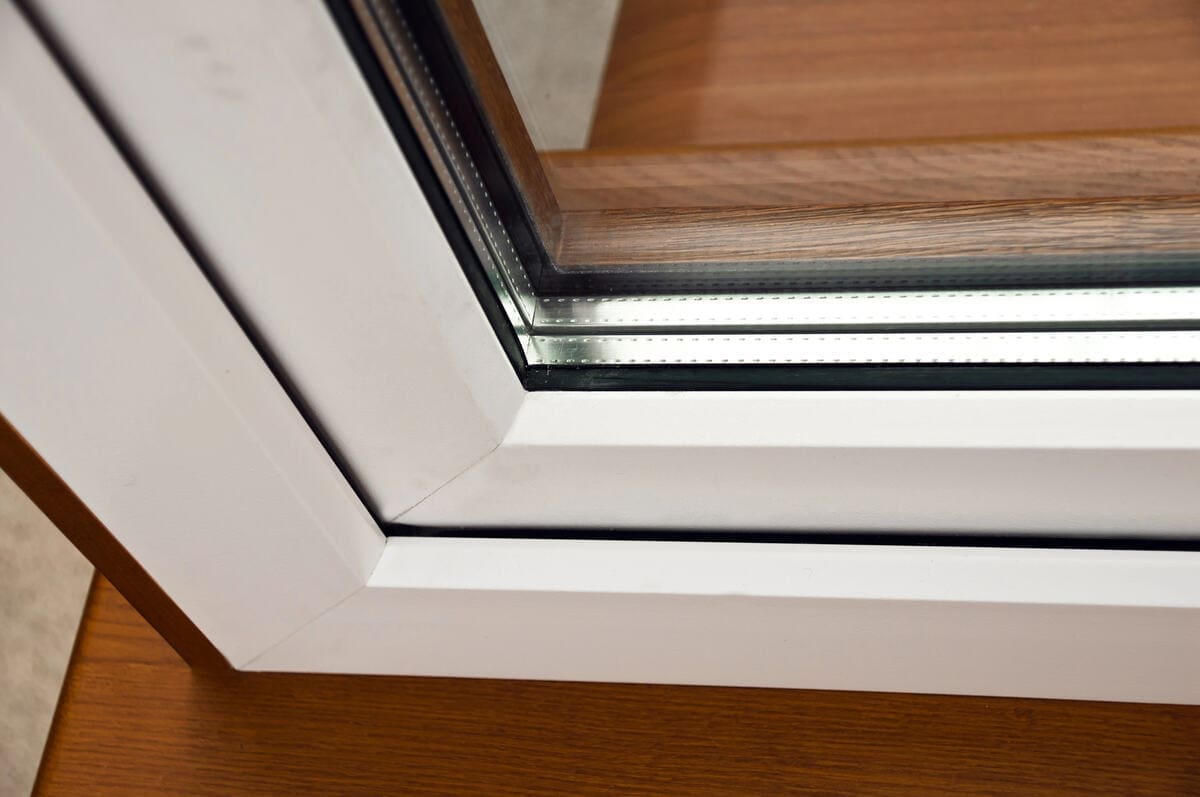
Fibreglass frames are pultruded – continuous glass fibres pulled through a resin bath and cured into a rigid profile, the same process used for boat hulls and ladder rails. The composite shares nearly the same coefficient of thermal expansion as glass, which matters more than it sounds: across a 50–60°C swing between a summer afternoon and a winter night, a frame that moves at a different rate than its glazing puts constant stress on the seals. Fibreglass and glass move together, so the seals see far less of that stress over the window’s service life.
Durability and Lifespan
Fibreglass is resistant to moisture, corrosion and biological deterioration. It does not rot like wood, and it does not have the corrosion issues associated with unfinished or poorly protected metal.
Its long-term performance also benefits from its low thermal movement. This is particularly interesting for large windows, dark colours and climates with large temperature swings, where solar heating can create substantial temperature differences across the frame.
There is no scientifically defensible single lifespan for fibreglass windows. Hardware, seals, glazing and installation can fail long before the structural frame itself. A high-quality fiberglass frame is nevertheless generally a several-decade component, and its structural stability is one of its major advantages.
Insulation
This is where fibreglass has a clear material advantage over ordinary aluminum.
Fibreglass itself is much less thermally conductive than aluminum, and many fibreglass profiles contain hollow chambers that can also be insulated.
But do not confuse frame performance with whole-window performance. A triple-glazed fibreglass window with a sophisticated low-E glass package may be dramatically better than a basic double-glazed model made from the same frame material.
Look at the complete window’s Uw/U-factor, not simply the frame material.
Appearance and sightlines
Fibreglass can produce relatively narrow frames because it has a strong strength-to-weight ratio. It can therefore approach some of the clean appearance associated with aluminum, although aluminum still tends to offer the thinnest profiles for many architectural applications.
Fibreglass can also be painted or supplied in factory finishes, although aluminum generally offers a broader ecosystem of architectural finishes, colours and anodized surfaces.
Which is the More Sustainable Option?
Circularity is a selling point for aluminum as roughly 74.5 percent of all aluminum ever produced since 1888 is still in circulation, per the International Aluminium Institute, since scrap recycles with no loss of quality.
Fibreglass on the hand is difficult to recycle because the glass fibres and thermoset resin are chemically bonded into a material that cannot simply be melted and remoulded. A 2022 peer-reviewed review of glass-fibre-reinforced polymers identifies end-of-life recycling as a significant challenge. Because the thermoset resins used in most GFRP products cannot easily be remelted or separated back into their original constituents, recycling is considerably more complicated than it is for metals such as aluminum.
That does not make aluminum the lower-impact choice however. Aluminum production can be highly energy intensive, and an energy-efficient fibreglass window may reduce operational energy use.
In addition to greater energy efficiency, fibreglass has something else going for it in terms of sustainability: a longer lifespan. It’s an important factor since the less often you have to replace your windows the more sustainable the option is.
So it’s hard to declare a clear winner here. Sustainability depends on what factors are most important to you. If you’re thinking of the whole lifecycle and value end-of-life recyclability, go for aluminum. If you’re thinking more about energy efficiency and lifespan, choose fibreglass.
Which Should a Homeowner Choose?
For a homeowner building or renovating a high-performance home, fibreglass becomes particularly attractive when insulation, condensation resistance and dimensional stability are major priorities.
For example, imagine a northern home with triple glazing, excellent air sealing and highly insulated walls. In that situation, a poorly insulated aluminum frame could become a thermal weak point. Fibreglass allows the frame to approach the thermal performance expected from the rest of the envelope.
Fibreglass is also interesting where a house has large south-, east- or west-facing windows with strong solar exposure. Its low thermal expansion can reduce the frame movement associated with large temperature differences.
Aluminum becomes particularly compelling when the architectural design calls for very large panes, minimalist sightlines, large sliders or substantial glass walls. A thermally broken aluminum system can provide that visual and structural performance while still achieving respectable thermal numbers.
The important qualification is that cheap, non-thermally broken aluminum is a completely different proposition from a properly engineered high-performance aluminum system.
Images from Depositphotos