
The Siding of Choice for a Climate Resilient Home

In this weekly Q&A column, retired builder/building inspector Cam Allen answers readers’ questions about home renovation and climate resilient homes. Have a question? Enter it in the form below.
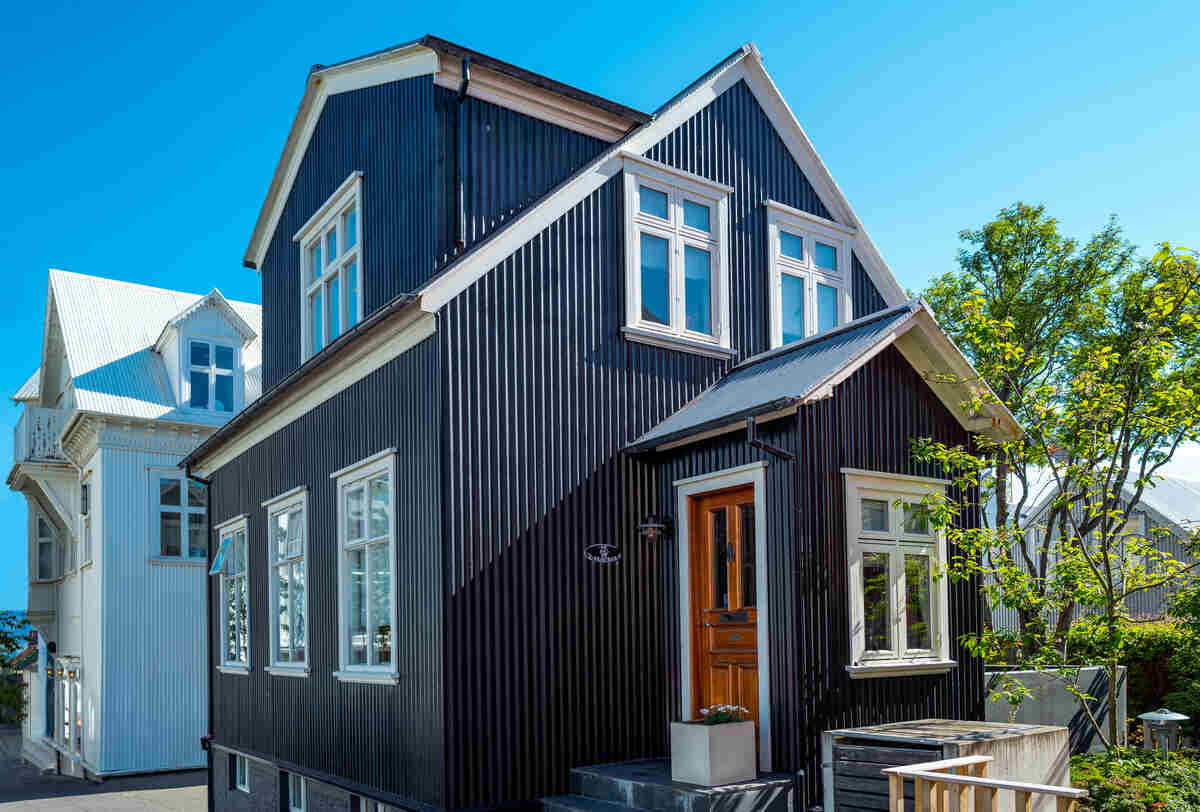
With home resilience becoming a major issue given the climate extremes we are now enduring, there are three major areas on the outside of a home that represent 99 percent of the climate security for a home. Your roof, windows and siding must act in conjunction with one another to protect your home and its occupants.
Metal roofing is widely accepted as the premier roof covering. Thermal pane
windows manufactured with premium vinyl and either laminated or tempered glass inserts are now recognized as the most secure windows. If the window is certified with standards similar to the Miami-Dade County Building Code you can pretty much be assured they will make the grade.
This brings us to the siding on the outside of your home and while metal siding is acceptable from a design perspective it does have some limitations. It is certainly not cheap to install, is prone to dents and scratches and it will amplify rain or hail noise and in some areas that are prone to rain or extreme heat, an insulation underlayment may be needed.
This brings us to the most popular siding today when resilience, durability and thermal resistance become governing factors. The answer is fibre cement siding. There is some illusion that this type of siding has only been around
since the late 1980s and that the leading manufacturer, James Hardie Corporation is the only manufacturer. Well now it’s time to debunk both of these myths, somewhat!
There is no “invention date” with respect to this kind of siding, however the James Hardie Company has been around since 1888 when Austrian Inventor Ludwig Hatschek patented a process using cement board sheets reinforced with asbestos fibres. They continued to utilize asbestos in their building materials until the 1980s when there was an American ban ordered on asbestos in 1989. It was appealed in 1991 with some restrictions. Canada led
the banning of this material in 1986. Asbestos today is practically nonexistent in building materials. At one time it was in floor tile, insulation, siding and even some kinds of commercial paper.

Older homes that have asbestos siding are still around, albeit not that common. In most cases this siding was made of large shingles or short sections attached to the exterior of the home. If you suspect your home has asbestos siding then it should be tested before any renovations or removal. This older siding did use “short strand” asbestos which was banned and is known to cause cancer. The most common answer is “leave it alone.” Yes, it can be painted but any kind of renovation or removal requires a certified asbestos removal contractor and it is a time consuming, expensive project. If the home was built before the mid-80s and a change in siding is desired, a qualified asbestos testing laboratory should be hired for inspection and testing.

Get the Green Building Project Checklist
Use this handy checklist on your next project to keep track of all the ways you can make your home more energy-efficient and sustainable.
By the early 1980s James Hardie realized change was needed and they developed a cellulose fibre cement formula and today all of their products are asbestos free. A blended formula of sand, cement and cellulose fibres make up today’s Hardie Board siding. This company was the forerunner of the product and still dominates the market to the point where today the name Hardie Board is synonymous with cement board siding, sorta like snowmobile and Ski-Doo.
The main advantage to cement board siding is its durability. Its non-porous surface protects against driving rain and hail, does not allow mould or rot and is not affected by any sort of insect infestation. Due to its well-documented integrity it will not warp, crack or be affected by any small animal intrusion. If you buy it with a factory finish it is fade resistant too. It is easy to keep clean by using warm water and a mild detergent will do the trick. For tough stains,
careful power washing is generally all that is needed to keep it looking clean and fresh.
Its life span can be affected by improper installation however. If you have removed any older siding, cover the home with proper house wrap and then snap a chalk line showing where the wall studs are. Professional installation is recommended unless you have the proper tools and strong DIY skills. Proper tools mean fibre cement rated saw blades and masks and goggles should be used when any cuts are made. The proper nails are either hot dip galvanized or
stainless steel.
Now I will add some experience speaking, you can hand nail this siding, however I strongly recommend you use a siding nailer operated from a compressor set at the right pressure. This means you should end up with each nail set at the right depth.
I don’t recommend battery powered nailers. This siding is tough on batteries and once they start to lose battery power you will see the difference in how well the nail is set into the siding. My last two tips are, make sure you have an overlap of at least 1 ¼” and stagger your joints for a clean, professional look. The siding companies offer colour matched caulking for all exposed joints. The best one, by experience, is any one of the colour matched elastomeric caulkings. They are a silicone blend and allow any minor joint movement without cracking or shrinking. The use of recommended fasteners, proper flashings, joints sealed as recommended by the manufacturer and attention to the installation so that no water is trapped behind the actual siding is premier to a long lifespan.
Today there are other makers of this tough, wind, fire and moisture resistant siding. Along with James Hardie, companies like Allura, Nichiha and GAF now make a range of plank fibre cement siding. It is available in options like wood texture, stone or brick patterns along with a smooth or textured finish.

The last plus in my opinion is the energy efficiency for this type of siding. While not advertised as much, it has excellent thermal resistance and some insulation values too. It will help with heating and cooling costs for the homeowner.
I have seen warranties ranging from 30 to 50 years for this type of siding, James Hardie’s is 30 years for the actual product, for any finish defects their warranty is 15 years. Other than attention to a proper installation, cost and some limitations in design the only other consideration I have heard of is
the weight of the siding. It is heavy and I have heard of situations where additional framework was needed to support the siding. That said, a properly assembled conventional wood frame home is generally suitable.
Is fibre cement siding the choice for a home in today’s environment? My answer is yes. Today it’s either metal or fibre cement to protect a home from any climate crisis effects.
Read more on this topic: How Sustainable Is Fiber Cement Siding?
Images from Depositphotos
Have a Home Renovation Question?
Write it down below and we’ll get back to you. All questions get answered – every week, we’ll select one for publication in the column.


