
How Canadian Cities Are Using Wastewater to Heat Buildings
Exploring the Technology, Benefits, and Adoption Challenges Behind Wastewater Heat Recovery Systems

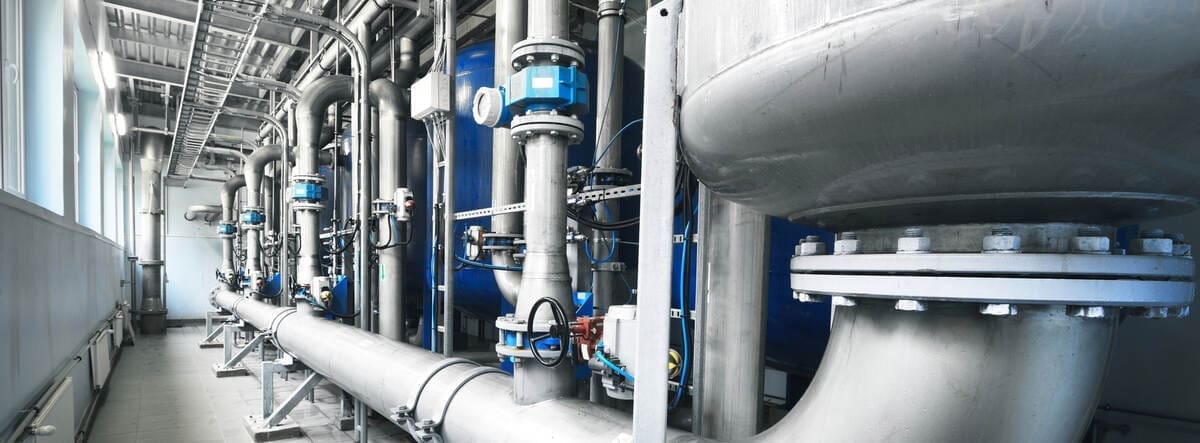
Every day in Canada, more than 15 billion litres of warm water flows through shower drains, sinks and toilets into a vast underground sewer network that most of us never think about again. But the heat carried in all that water does not have to go to waste! With the right technology, it can be captured and used to heat and cool our buildings year-round.
How Wastewater Heat Recovery Works

Capturing the heat from wastewater generated in buildings in Canada could mitigate up to 54.7 million tonnes of greenhouse gas emissions every year. Wastewater energy transfer systems use a heat pump to capture and transfer heat from warm wastewater to clean water through heat exchangers. The warm clean water can then be used for various domestic purposes like showering, or refrigerant cycles for home heating.
Using recovered heat is 400 percent more energy efficient than heating water conventionally, especially using fossil fuels like natural gas.
– Water Canada
The City of Markham in Ontario is working towards making use of this resource to heat and cool its buildings. What will soon be the world’s largest wastewater energy transfer project, Markham District Energy (MDE), in partnership with FVB Energy announced an 18.75 MW system that is currently under construction.
MDE is tapping into its trunk sewers that continuously carry between 1,200 and 2,000 litres per second of wastewater at temperatures between 15 to 25°C. The system works in both directions: in winter heat pumps extract thermal energy from the sewer and elevate water temperatures to 95°C for distribution across the district heating network. In summer, the process reverses, and the system rejects heat back into the sewer to provide chilled water for cooling. When fully operational in 2026, the system will supply low-carbon heating and cooling to over 13 million square feet of connected buildings in downtown Markham, abating over 30,000 tonnes of greenhouse gas emissions annually.

Get the Green Building Project Checklist
Use this handy checklist on your next project to keep track of all the ways you can make your home more energy-efficient and sustainable.
Edward Rubinstein has spent years developing district energy projects in Toronto, including those using wastewater heat recovery. He describes sewer heat recovery as a valuable and consistent resource that cities can tap into. “If you think about what’s coming out of people, it’s roughly body temperature,” he says. “In a large urban area, you’re going to get very consistent flows at the larger sewers, and also near the wastewater treatment plants.”
This consistency is its biggest strength. Unlike solar panels that go dark at night or wind turbines that stall on calm days, the energy in a city’s sewer system doesn’t fluctuate with the weather. Flow rate as well as temperatures are fairly consistent during a heat wave or during a snowstorm. Projects typically work well if flows are in the hundreds to thousands of litres per minute, and consistent temperatures above roughly 10 °C.
Depending on the scale of the heat recovery system, it can be used for both heating and cooling, a flexibility that makes it especially attractive for large institutions like hospitals, which often need both simultaneously for its operations.
WATCH | How Wastewater Heat Recovery Technology Works
The Money Question
Still at a nascent stage, sewer heat recovery systems are expensive projects. The infrastructure is expensive and approvals are complex.
The MDE project has received federal funding of $24.9 million, and the Canada Infrastructure Bank and CIBC are each investing $135 million to support the project. The Canada Growth Fund has further de-risked the project through a carbon contract for difference, a 10-year agreement guaranteeing MDE $100 per tonne of CO2 avoided, providing long-term investment certainty.
As municipalities own the sewers and are typically run under public right-of-way, such projects require careful negotiation with the city. Rubinstein explains, “Actually getting access to wastewater is one, but also if you’re building infrastructure, tapping into sewers and things like that, the city has to run the sewers and they can’t compromise that business, right? So, they also want to make sure that their business is not impacted.”
In the case of MDE, a municipal owned utility, access to its sewer infrastructure is straightforward and increased feasibility of implementation.
The business case, Rubinstein notes, is highly project specific. Costs vary with the size of the system, proximity of the heat source to where energy is needed, and the amount of piping required. What tends to make these projects viable is a long-time commitment and a client who can continue to operate the system through payback.
He points to the University of Toronto’s large-scale geothermal project as an example of the kind of institution well-positioned to make these investments work. U of T already has a central plant, a large building footprint, and, critically, the certainty of being around for decades. “It’s going to be around for a long time. So, it already has a lot of the parts to help make these projects more viable.”
A Growing Landscape
British Columbia has also made significant progress to utilize waste heat. The province regulates thermal energy networks, giving developers and investors a clearer framework to work within. The BC Utilities Commission (BCUC) classifies thermal energy system providers as public utilities under the Utilities Commission Act. This would boost investor confidence due to clear approval pathways, predictable rate structures and consumer protections that would make the business case bankable. This is different from Ontario, where every project has to negotiate its commercial structure within municipal frameworks.
Vancouver has a target to transition to 100 percent renewable energy sources by 2030. The False Creek Neighbourhood Energy Utility supplies heat and hot water to 47 buildings through sewage-to-water heat pumps. Operational since 2010, False Creek is Canada’s longest-running example of this technology at scale. The new heat pumps added in 2024 operate at over 300 percent efficiency, delivering more than 3 units of thermal energy for every unit of electricity used.
Metro Vancouver has signed its first deal to supply sewer heat to the large-scale Senakw development with 6,000 rental units across 11 towers. The scale of this project is slightly different in that Metro Vancouver, the regional authority that oversees 21 municipalities, offers access to its thermal energy from its regional sewage network as a shared resource. Any qualifying development across the region can tap into it the way they would connect to a water or electricity grid.
Other Heat Recovery Technologies

Sewers are just one of many places where heat goes to waste in cities. In buildings, heat carried by stale indoor air is expelled outside. Energy recovery ventilators (ERVs) are now increasingly required or incentivized under building codes across Canada. They capture heat from outgoing exhaust air and use it to warm incoming fresh air before it reaches the heating system, reducing the burden on the HVAC system.
Industrial processes generate significant waste heat that largely goes uncaptured. The Zibi Community Utility in Ottawa captures industrial waste heat from paper manufacturing processes to heat and cool buildings in the mixed-use residential community.
Rubinstein describes the use of waste heat in multi-use buildings like hospitals, where systems can capture heat being rejected from one part of a building and redirect it where it’s needed elsewhere. Hospitals, laboratories and large commercial buildings often have simultaneous heating and cooling loads and technologies that connect those needs internally can make a significant dent in energy consumption.
He encourages new mixed-use communities being planned across the country to consider thermal energy systems to be planned alongside the buildings right from the start. Infrastructure and energy distribution networks can be laid before the streets go in and the entire community can be designed around a low-carbon thermal spine from day one. Rubinstein also points to emerging use cases, including waste heat from data centres, as a promising opportunity for heat recovery.
How Can Individual Homeowners Contribute?
For homeowners reading this and wondering where they fit in, direct participation in sewer heat recovery is largely out of reach at the residential scale.
Sewer heat recovery works best with large-diameter pipes carrying high, consistent volumes of wastewater. A single street of detached homes doesn’t generate that kind of flow. And even if the heat source were available, finding space for a central plant in an established residential neighbourhood presents its own challenges.
Homeowners on the other hand, can participate at a smaller, more personal scale. Drain water heat recovery systems are simple devices installed on shower drains that capture heat from outgoing warm water and use it to pre-warm incoming cold water, and this can be great a starting point to utilize waste heat at a residential level (Read “How Drain Water Heat Recovery Systems Turn Wastewater Into Energy Savings” to learn more about this). Heat pump water heaters and air-source heat pumps are now widely available and can dramatically reduce the energy intensity of home heating without requiring any connection to a district system.
The Policy Gap

Currently, thermal energy systems serve only 3 percent of Canada’s heating demand. Regulatory uncertainty, the lack of standardized planning tools and the complexity of coordinating multiple stakeholders are barriers that still need to be addressed for these systems to achieve their potential in Canada.
“Thermal networks have several gaps,” Rubinstein says. “They can be very expensive capital projects, so funding is helpful. But governance is also an issue. These projects often cover multiple jurisdictions. We’re starting to get there with some of the policy around smaller-scale geo, but for district energy, there’s still a lot of room to grow.”
The City of Toronto’s sewer mapping initiative is a start. The City has made available a Wastewater Energy Map that provides approximate flow rates and temperatures within sewers across the city.
Toronto’s TransformTO Net Zero Strategy sets a 2030 goal of connecting 25 percent of commercial and industrial floor area to low-carbon thermal energy. To achieve this goal, there needs to be stronger policy and funding structures that supports diverse sources of renewable energy, including thermal networks. Thermal heat recovery technologies are proven, many projects are being built across the country, and the resource isn’t going anywhere.
“As long as people go to the bathroom,” Rubinstein says, “there’s going to be this resource available.” The question is no longer whether we can capture it, but how best we can utilize it.
WATCH | Wastewater Heat Recovery In-Depth
Images from Depositphotos
