Retrofit vs New Build
The Operational vs Embodied Carbon Tradeoff

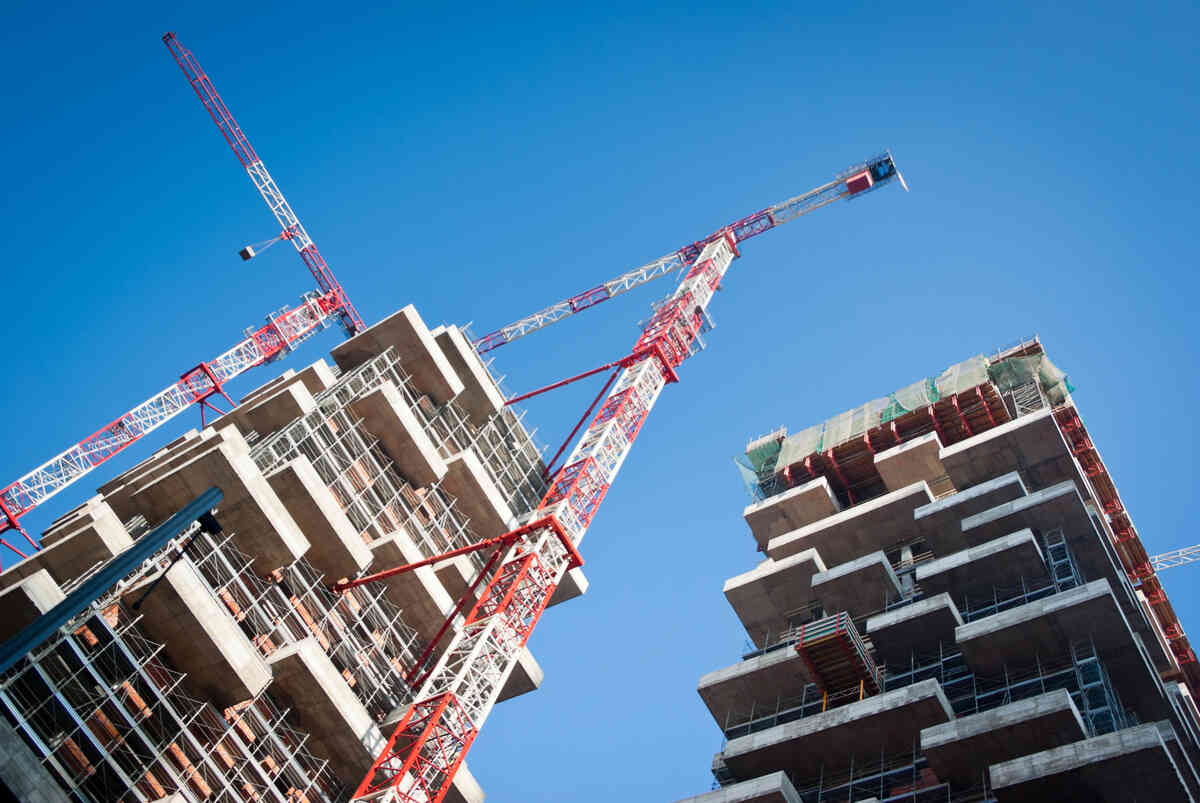
Construction industries around the world are starting to face a dilemma that is becoming ever harder to ignore: whether it is better to breathe new life into older buildings or build new ultra-efficient ones from scratch.
On paper, the answer can be deceptively simple (i.e., new = more efficient = better), but is this missing a trick? After all, a considerable amount of time, effort and energy has already been spent on existing building stock.
What’s more, these already-spent material, time and energy investment costs can be considerable. When factoring in emissions associated with demolishing older buildings, it could turn out that retrofitting might just be a better deal, emissions-wise.
So this raises an interesting question: at what point does a retrofit become so deep and expensive that rebuilding makes more environmental and economic sense?
Let’s take a look.
Operational and Embodied Carbon

Get the Green Building Project Checklist
Use this handy checklist on your next project to keep track of all the ways you can make your home more energy-efficient and sustainable.
Constructing anything, especially buildings, requires committing considerable amounts of time, effort and resources. Each and all of these activities necessarily have associated “carbon costs” that cannot be avoided, but have to be factored in when considering the environmental impact of a project.
The first is technically called “operational carbon.” This is the carbon emissions generated during the use of the building. That includes anything you can think of, but is primarily concerned with heating, cooling, ventilation, lighting and appliance running costs.
Historically, operational emissions dominated the equation. Poor insulation and fossil-fuel heating meant buildings consumed huge amounts of energy for decades.
The next is something called “embodied carbon.” As we previously hinted at, this is effectively any “sunk costs” associated with the construction of the building itself. This includes things like extracting raw materials, refining materials in things like concrete and steel, transport to the construction site, etc.
These costs cannot be ignored and are often quite significant. According to the Business Development Bank of Canada, embodied emissions account for roughly 20 to 25 percent of lifecycle emissions in conventional buildings.
WATCH | What Is Embodied Carbon in Buildings?
In highly energy-efficient buildings, that figure can rise to 45 to 50 percent, and in some ultra-efficient structures, embodied carbon can exceed 90 percent of lifecycle emissions. As you can see, the more efficiently a building is designed, the higher the “upfront” embodied carbon costs.
An interesting quandary indeed.
Retrofitting: Sustainable Construction’s Secret Weapon?
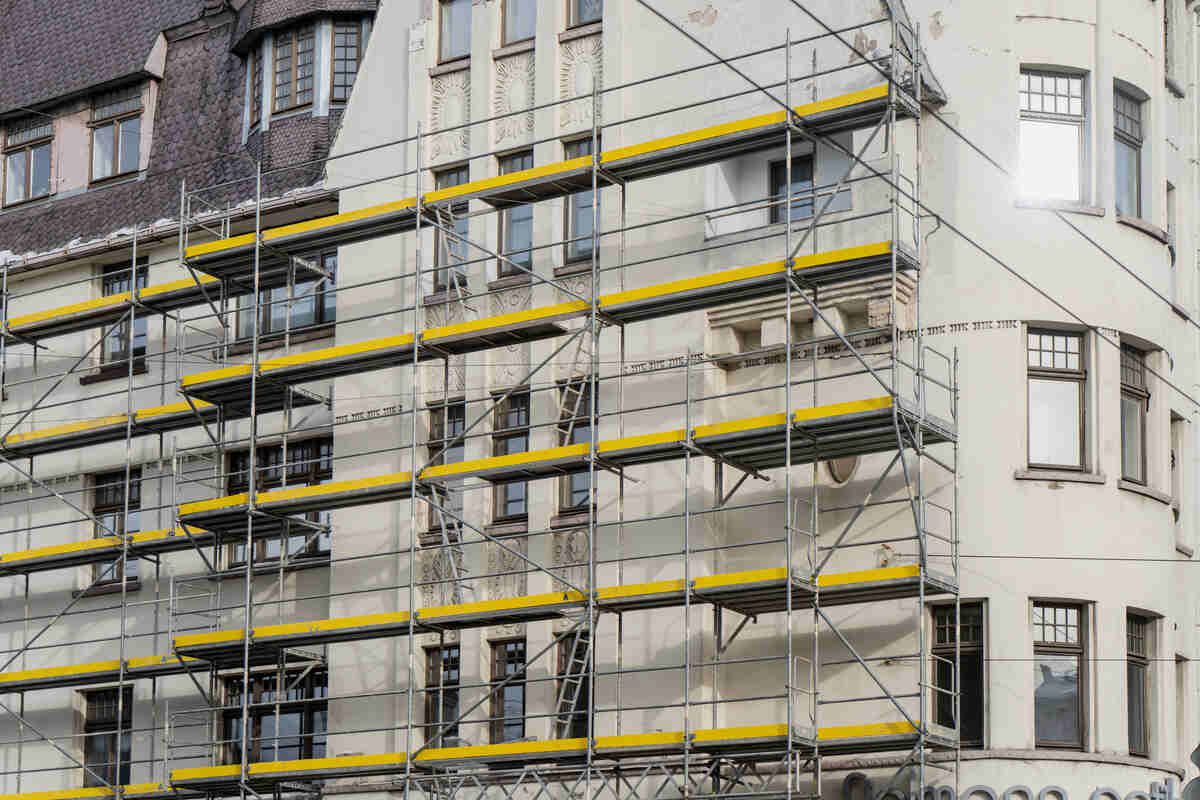
That being said, there is one unavoidable reality driving Canada’s retrofit push: that most of the buildings that will exist in 2050 already exist today.
The Pembina Institute notes that roughly 70 percent of the buildings expected to exist in 2050 are already standing. That means Canada cannot reach climate targets through new construction alone.
This is why governments are increasingly supporting deep retrofit programs, such as Canada’s Deep Retrofit Accelerator, and why policymakers are studying Dutch-style industrialized retrofit approaches, such as Energiesprong.
WATCH | Energiesprong Explained
The Dutch Energiesprong model is particularly noteworthy as it treats retrofits almost like manufactured products rather than bespoke renovations. Buildings receive prefabricated insulated facades, rooftop solar and heat pump systems that can dramatically reduce operational emissions while minimizing occupant disruption.
Interestingly, Canada has already begun experimenting with aggregated retrofit programs inspired by Energiesprong under federal climate initiatives.
Pay Now, Not Later
One critical, if often overlooked, benefit of retrofitting buildings is something money can’t buy: time.
This is especially the case when you understand that demolition and rebuilding activities are necessarily polluting. Retrofitting spreads emissions over time while preserving much of the original structure.
Research from the University of Toronto’s Centre for Sustainable Built Environment found that adaptive reuse and retrofit projects preserved 60 to 98 percent of the original structural mass of buildings.
That matters because structural components (especially concrete and steel) carry enormous embodied carbon loads.
Deep retrofits can also produce substantial operational savings. Natural Resources Canada and Pembina Institute studies suggest deep retrofits can reduce building energy consumption by 50 to 70 percent and operational emissions by as much as 80 to 100 percent in some cases.
WATCH | Why We Decided to Do a Deep Energy Retrofit
For older multi-family buildings in Vancouver, modelling research found that retrofits combining airtightness upgrades, heat pumps, ventilation improvements and solar PV could reduce emissions from roughly 27.6 tCO2e annually to 3.77 tCO2e.
Those are enormous reductions without demolishing the building.
Retrofit: When the Grass Isn’t Greener
As encouraging as all this seems, retrofits become more difficult when buildings suffer from:
- Severe structural deterioration
- Poor layouts
- Asbestos contamination
- Outdated electrical or plumbing systems
- Low ceiling heights
- Major moisture damage
- Poor orientation for modern energy systems
At a certain point, retrofitting becomes so invasive that much of the embodied-carbon advantage disappears. This is especially true when projects require:
- Major concrete replacement
- Full facade removal
- Extensive structural reinforcement
- Replacement of mechanical systems
- Major internal reconfiguration
WATCH | What Is Deep Retrofit and Why Is It So Important?
In the worst cases, some “deep” retrofits begin to resemble partial reconstructions. What’s more, deep retrofits are often expensive because existing buildings are inherently unpredictable.
Hidden conditions, asbestos removal, irregular geometry and tenant disruption all drive costs upward.
New construction is not cheap either (especially amid a housing shortage), but it benefits from standardized processes and economies of scale.
Where New Builds Make More Sense

As much as we’ve sung the praises of retrofitting, new buildings do offer real environmental advantages. A purpose-built net-zero or passive building can dramatically outperform even strong retrofits operationally. New construction also enables:
- Optimized orientation
- Advanced building envelopes
- District energy integration
- Mass timber construction
- Integrated renewables
- Superior airtightness
- All-electric systems
In dense urban environments, rebuilding can also increase housing supply significantly. That matters because Canada’s housing crisis is itself becoming a climate issue.
Housing shortages push urban sprawl outward, increasing transportation emissions and infrastructure expansion. Programs such as Build Canada Homes recognize that large-scale housing delivery is essential.
In some cases, replacing a poorly performing low-density structure with a highly efficient multi-unit building can reduce emissions per resident despite the high upfront embodied carbon.
This is particularly true when:
- Density increases substantially
- Low-carbon materials are used
- Operational energy use drops dramatically
- Transit-oriented development reduces car dependence
So, when does rebuilding make more sense than retrofitting? Generally, rebuilding begins to make more environmental sense when several conditions align.
Retrofit vs New Build
| Retrofit Favours | New Build Favours |
| Structure is fundamentally sound | Severe structural deterioration |
| Existing density is appropriate | Major densification possible |
| Embodied carbon savings are high | Operational savings are massive |
| Heritage or cultural value exists | The existing building is highly inefficient |
| Minimal invasive work required | Retrofit approaches near reconstruction |
| Tenant displacement can be minimized | Major safety/compliance issues exist |
The key here is lifecycle analysis. A poorly insulated but structurally sound mid-rise apartment block may be an ideal deep retrofit candidate.
A deteriorating single-storey commercial building on valuable urban land may not be.
Hybridization: Get the Best of Both Worlds
When it comes to retrofit versus new build, the reality is that Canada needs both. The country cannot retrofit its way entirely out of the housing crisis.
It is also not feasible to demolish and rebuild the nation’s entire existing building stock without creating a colossal embodied-carbon problem.
To this end, the likely future is a mixed strategy:
- Aggressive deep retrofits for structurally viable buildings
- Selective demolition where density or structural conditions justify it
- Low-carbon new construction methods
- Industrialized retrofitting systems
- Adaptive reuse wherever practical
The focus, then, should not just be operational efficiency, but rather on the total lifecycle carbon. When seen through that filter, this changes how buildings are evaluated entirely.
Summing Up
For decades, construction focused almost exclusively on energy bills and operational performance. But as grids decarbonize and buildings become more efficient, embodied carbon and waste are becoming impossible to ignore.
In many cases, the climate battle will not be won by futuristic new buildings alone. It may instead depend on how intelligently we reuse the ones we already have.
Read more on this topic in What It Costs to Retrofit a House in Canada (And Ways to Save)
Images from Depositphotos