Why Energy Models Keep Getting Building Heat Loss Wrong

When it comes to energy efficiency of buildings, nothing is more important than minimizing heat loss as much as possible. For new projects, this challenge is typically addressed using computer models that estimate how a building should perform once constructed.
While these models are useful, they often fall short when compared to real-world performance. In many cases, buildings lose more heat than predicted, leading to higher energy use, increased costs and reduced comfort for occupants.
Not ideal, to say the least. So why does this gap exist? Let’s find out.
Those Pesky Humans
As we alluded to in the introduction, most heat loss calculators or models are an attempt at a one-size-fits-all method of producing an expected result. Depending on the model’s purpose, this will likely mean the model makes some assumptions based on things like a building’s occupancy, weather patterns, thermal performance of the building envelope materials, etc.
For this reason, important factors like heating patterns, times of use of buildings (and therefore conditioning) and environmental factors like solar gain are “standardized” using agreed default values.

Get the Green Building Project Checklist
Use this handy checklist on your next project to keep track of all the ways you can make your home more energy-efficient and sustainable.
While some assumptions can be made for the physical structure of a building (if its exact construction is known), other factors, like tricky human beings, can throw a wrench into the plans.
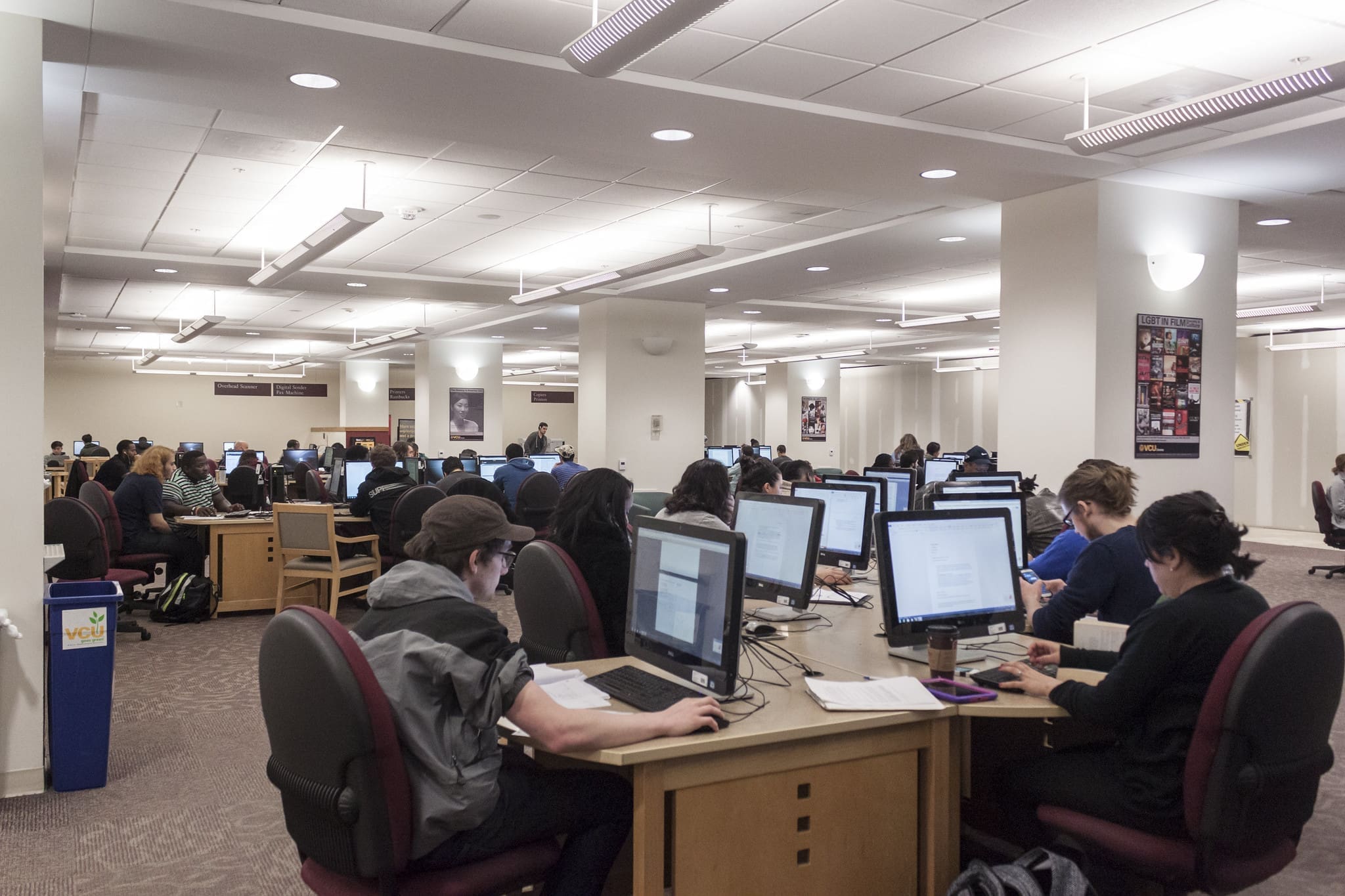
This can be as simple as using standardized occupancy schedules (9 to 5 for offices, at or near 100 percent occupancy at peak times, etc). However, in reality, building occupancy is far more chaotic and random (stochastic in technical jargon).
And that is just part of the story. When it comes to actual heating and cooling behaviour, in the real world, people tend to heat rooms unevenly (or incorrectly), open windows when air conditioning (AC) or heating is on and may even heat or cool spaces intermittently.
Depending on heating and cooling regimes in properties, they may also override installed energy management systems or turn on portable heaters or coolers for a boost in comfort. Such variables, as you can appreciate, are nearly impossible to average for a standard model or algorithm.
For all the best will in the world, any model attempts to smooth out edge cases to give a level playing field for assessment or regulatory purposes. The variance from a model’s heat loss estimations can vary widely, but some studies have shown they can be off by as much as ±10–30 percent.
The Headache of Thermal Bridging
Beyond tackling unpredictable issues like occupants, models can also struggle with the nuts and bolts of a building, too. One prime example is something called thermal bridging.
This, in case you are unaware, is a phenomenon where heat conducting materials (like metal studs) form a path through a building’s insulation. Such features enable heat to bypass said insulation, allowing it to enter (or indeed escape) a building, thereby affecting its overall energy performance.
WATCH | Intro to Thermal Bridging
Locations vary depending on building design, but are typically found at junctions between walls and roofs, walls and floors, balconies and around doors and window frames. Not only do they impact energy loss in the real world, but they can also lead to issues like condensation, mould growth and reduce the overall internal comfort for occupants.
Most models tend to use psi-values (typically expressed as Watts per metre Kelvin, or W/mK). These values are used to express heat loss over a given linear measurement between the internal and external temperature differences.
In an ideal world, these values would be as close to 0 as possible, even negative, but good practice is to minimize them to between 0.04 and 0.48 W/mK. However, modelling software tends to assume (rightly or wrongly) a perfect, faultless installation during construction.
But in reality, this is rarely ever the case. Insulation (if any) can be missing at junctions, and may have poor or non-regular sequencing on site. Builders also rarely follow design details verbatim.
Such discrepancies can often add significant differences in real building performance when compared to simulated figures. This can add between 37–70 percent heat loss differences under the worst cases.
Since building elements are also hidden within the final building, they can be nearly impossible to detect on site and, therefore, tend to be invisible for compliance-based calculation methods.
Build Tight, Ventilate Right
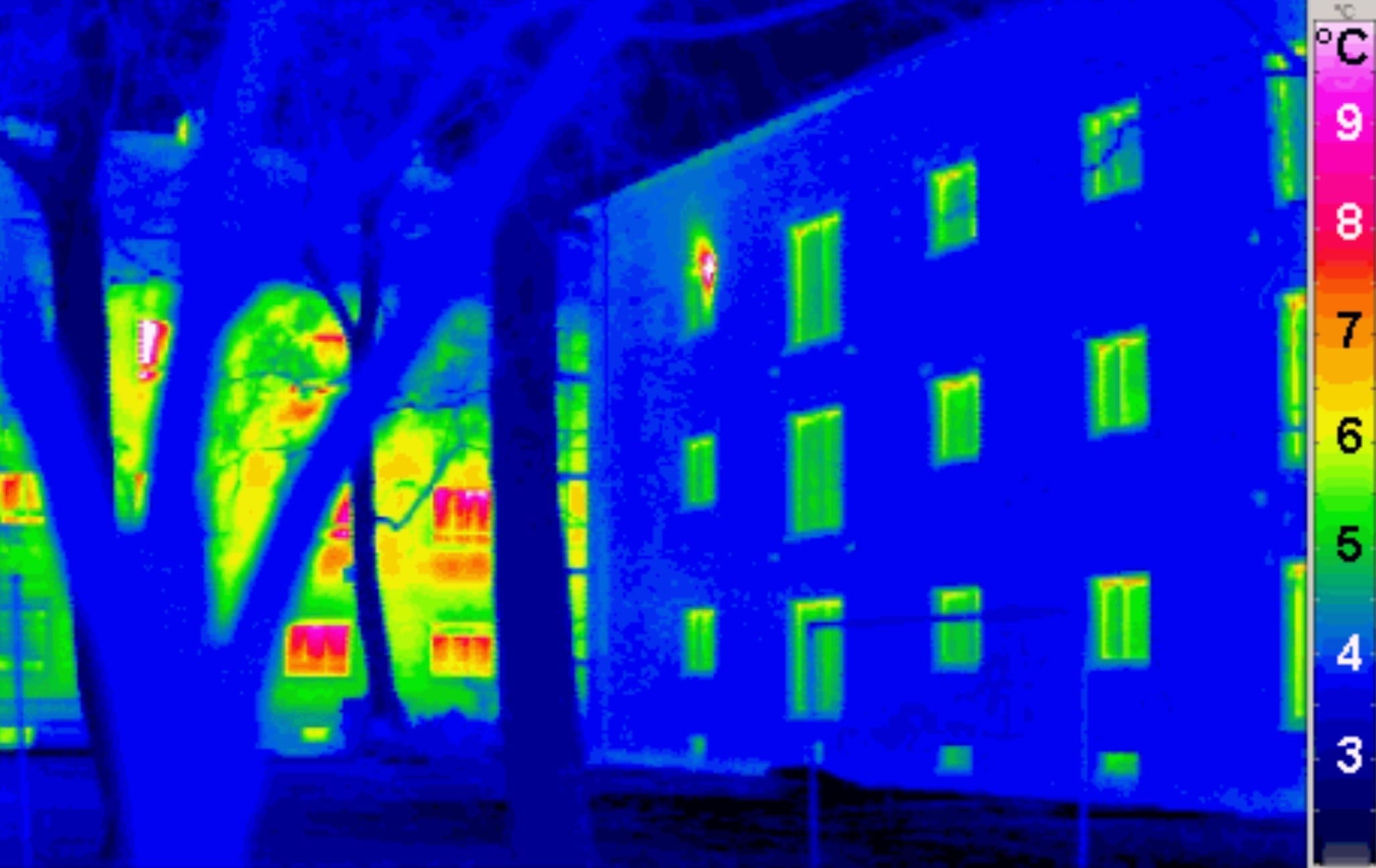
Yet another significant factor that results in differences between heat loss in reality and models is airtightness. Just like in the world of finance, a building’s energy performance is not a matter of how much it makes, but how much it keeps.
You can have the best insulation, best heating/cooling systems, and yet if air can leak in or out, that all counts for nothing when it comes to energy efficiency. Good airtightness discipline also dramatically impacts internal comfort as it helps with major issues like preventing moisture-related issues.
Minimum compliance standards vary, but under Canada’s 2020 National Building Code, most new construction should aim for 2.5 air changes per hour (m³/h·m²) at 50 Pascals (50 Pa). High-performance standards, like R-2000, are stricter and require no more than 1.5 air changes.
For all the will in the world, a building is a physical structure and is subject to human error and interaction with things like gravity, settling, etc, in the real world.
For this reason, while a building may have been designed with the best target possible, the as-built performance will often fall short of this. On site, the only way to verify a structure’s airtightness is through pressure testing, which introduces its own issues.
WATCH | Understanding Building Air Tightness
Testing typically involves the use of something called a blower door test, which records air flow in and out of a building under standard conditions. Such tests require all windows and doors to be closed, openings like vents and fans sealed and internal doors left open.
One external door is fitted with a temporary frame and a calibration fan that creates a pressure differential between the inside and outside of the building. The airflow (in or out) of the building is then recorded over a fixed timeframe to give you a “leakiness” value.
Some tests will also involve the use of smoke generators to seek out unintentional leaks through things like sockets, hatches, window frames, etc.
Often, such tests are performed under best case or ideal conditions, and are “gamed” (temporary sealing, etc). When the building is handed over and used for real, undetected leaks (or indeed introduced ones) will dramatically change the real airtightness of a structure.
Service penetrations (designed or altered later), loft hatches, floor void leaks, etc, are some of the main culprits. For this reason, a building can often pass such tests, but not perform as expected when in real operation.
But how bad can this be? Well, for argument’s sake, let’s assume a building has a designed airtightness of 3–5m³/h·m². Under real-world conditions, the real figure could be as much as double that, perhaps more.
Designed to Pass, Not to Perform

Much of the gap between predicted and actual performance stems from how buildings are designed to meet compliance targets rather than to reflect real-world outcomes. Tools such as the EnerGuide Rating System (ERS) are effective for standardization.
But they rely on fixed inputs and assumptions that can diverge significantly from what is ultimately delivered on site. Once a design achieves the required target, there is often little incentive (or need) to revisit the model, even when specifications change.
Substitutions in materials, alterations to junction details, or simplifications during construction are common, yet these changes are rarely fed back into updated calculations. The result is a building that complies on paper, but no longer matches the performance implied by the model.
Clearly, this is a disaster waiting to happen in terms of heat loss and energy efficiency.
The Quality Control Gap
There is also a more fundamental disconnect between model and build. Energy models assume a level of precision in installation that is difficult to achieve consistently on site.
Insulation may be poorly fitted or compressed, airtightness layers interrupted, and junction details only partially realized. Small defects, repeated across the building envelope, can have a disproportionate impact on heat loss.
In this sense, the model describes a building that is rarely, arguably never, the one that gets built.
Wrapping Up
As we hope you have now come to appreciate, the gap between predicted and actual performance is not an occasional anomaly, but a persistent feature of the built environment. While energy models remain useful tools for comparison and compliance, they should not be mistaken for guarantees of real-world outcomes.
Closing this gap will require more than incremental improvements in modelling. It demands better alignment between design intent and on-site delivery, alongside greater emphasis on measured performance once buildings are in use.
Until such time, the difference between how buildings are expected to perform and how they actually behave is likely to remain a defining challenge for the industry for some time to come.
Images from Depositphotos