
Where Are All Those Shut-Offs?!
Be Ready Before Disaster Strikes

In this weekly Q&A column, retired builder/building inspector Cam Allen answers readers’ home renovation questions. Have a question? Enter it in the form below.

A question from a reader who has been following my recent group of columns on insurance made a comment about a home preparation list she found for emergencies. She asked, ”My list says I should shut off the furnace, hot water tank and a bunch of other stuff, that’s great except for a new, single female homeowner, where do I find these things!!”
I have heard this comment before at our Fragile Shelters public presentations
and we actually have a prepared list that we hand out. This week I will cover the five main shut-offs. If any reader wants a copy of our entire list, send me an email.
One of the first things we advise is to make a drawing of your home then mark each of the shut-off locations on this drawing once you find them. Tape this drawing on the inside of a closet door. If a weather issue happens and you are not home, a friend or neighbour who has access to your home could use it to complete the necessary shut-offs.
Water

First on the list is how to turn off your home water supply. If you live in the city, go to your basement – your water meter and shut-off will usually be located coming out of the floor near a basement wall or low on a basement wall. In most homes this is a copper pipe, commonly ¾” in diameter.

Get the Green Building Project Checklist
Use this handy checklist on your next project to keep track of all the ways you can make your home more energy-efficient and sustainable.
Newer homes will use a plastic pipe known as PEX and this pipe can be blue, cream coloured or white. There will be a metal, often brass round fixture called a water meter close to the wall at the end of this pipe. Many have a glass top showing a meter reading. On the pipe coming out from this meter will be a copper or PEX pipe that supplies water to your home and you should see a shutoff. In older homes it may be a basic screw type tap, today they use a gate style lever shut-off. This shut off lever right now will likely be sitting in-line with the water line. Grip the lever and turn vertical to the pipe, putting it 90 degrees from the pipe.
Electrical
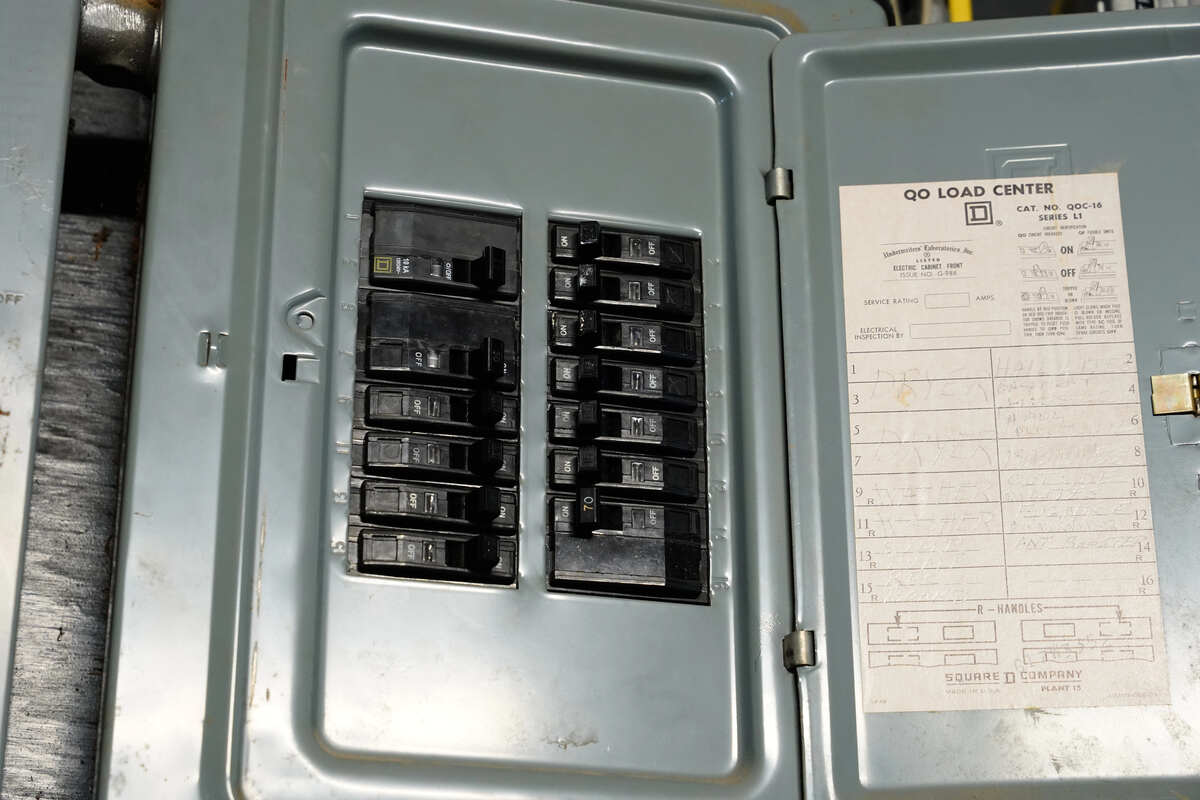
Next is your electrical shut-off at your main panel. There is a quick way to find this panel. Go outside your home and if your utility supply is overhead you will see black wires coming from your hydro pole. Look up and find where they come near your house. There will be a metal or grey pipe sticking up from your home with these wires going to this pipe, it is likely clamped to your home. This pipe is attached to a metal box on the exterior wall of your home that holds your electrical meter. Generally speaking, your electrical panel is inside your home on the other side of this meter box.
If you are in an urban setting, a high percentage of their electrical supply is underground and in this case you do the same thing only now you look at your exterior basement walls. You should see the same grey plastic pipe coming up out of the ground to a metal meter box.
Now go into your home to the wall where you saw your meter box located. Generally speaking your main panel will be on this wall inside your home. It is popular now to mount electrical panels in an attached garage.
If your home is older and has fuses, there was one fuse panel that was very popular made by Amalgamated Electric. It has 2 doors on the front, the one on the right you do not open, it has a black push style lever on it that you press down on the side that is raised up. It will take some effort – they are usually quite stiff.
Most homes since the 80s are supplied with electrical breakers and these panels generally have a metal door that you open. If your panel is mounted horizontally you will see all the branch breakers and at one end a larger breaker by itself. If your panel is mounted vertically this large breaker will be at the top, this is not supposed to be more than 5 feet from the floor. This large breaker will be labelled either 100 or 200, which denotes the amperage supply to your home.
This large breaker should be pushed to the left or right from its current position. They are stiff and snap hard as they move – it will take some effort. There are instances where main disconnects are separate from the breaker or fuse panel; it is common to be located beside the panel.
If this tip does not find your electrical panel, have an electrician come in and find it for you.
While most are accessible from these instructions, I have seen a few over the years hidden in some strange places. Electricity is not something to play with, it will be worth the call for a licensed trade. If you are told to evacuate and your basement has water in it, do not go near your panel, leave this to the emergency responders or hydro company.
Natural Gas

If your home is supplied by natural gas you should have shut-offs attached to the gas supply for each appliance. Commonly they are a lever style shut-off not unlike your water shut-off or a red twist style knob. They are usually located behind your stove or free standing gas fireplace. If you have a gas insert fireplace it should be located near where your controls are, under the fireplace behind the controls door. A gas water heater and a gas furnace will be a lever shut-off and located on the vertical gas line beside the actual hot water tank or furnace.
You will have a master shut-off attached to the main gas meter outside your home, located somewhere along your basement wall. This meter is commonly grey and has 4 small “clock-like” dials on it which is how the gas company calculates your usage.
Right beside your meter you will see an odd-shaped grey lever that if turned off it lines up with a hole in the fitting on your gas supply line. These two holes, once lined up, allow your gas company to “lock off” your home supply in case you forget to pay your bill! This level is usually quite stiff and sometimes needs a wrench. This should only be used as a last resort if you cannot reach or find all of your appliance shut-offs.
Finding the electrical shut-off for your furnace can be difficult, especially if it is an older installation. They can be a conventional light switch located in the ceiling floor joists of your basement. They can also be located at the bottom of your basement stairs, high up on the wall so children cannot easily turn the furnace off.
This switch installation is done so your service tech can turn the furnace off for annual service and not disturb the rest of the household electrical service. In an older home I have seen them in multiple locations including the fuse in a fuse panel. If this switch is not readily accessible or you simply cannot find it, call your furnace tech to have them come and locate it for you. If its accessibility is poor, have them move the switch to a more convenient spot.
Additional Tips
Lastly, if you have a garage with an automatic door opener and your power goes off, there is a manual way to open the door. There should be a short rope with a red plastic knob on the end hanging down from the door track. Pull this red knob “straight down” and it will release the door, allowing it to be manually operated.
One final tip that’s not switch related is to install battery backup emergency
lighting. You can buy these lights that plug into any wall socket and only
come on when the power fails, hallways are strongly recommended.
Images from Depositphotos
Have a Home Renovation Question?
Write it down below and we’ll get back to you. All questions get answered – every week, we’ll select one for publication in the column.


