
Average Cost of Solar Panels in Nova Scotia
Installation Costs, the Factors Driving Prices and the Financial Incentives Available (Updated 2026)

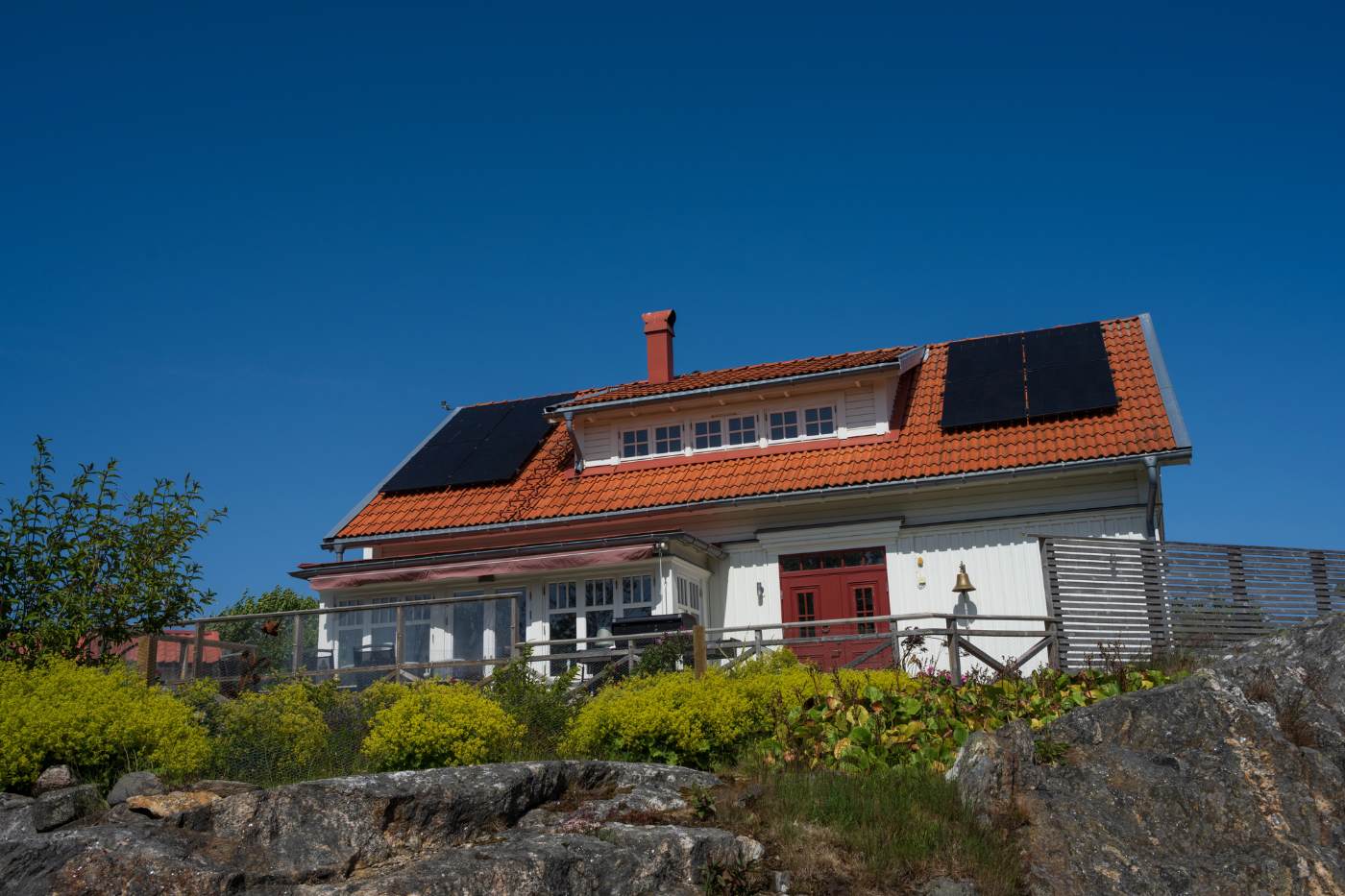
In Nova Scotia, coal does the heavily lifting to keep the lights on and the food warm. Despite declining usage, coal still dominates the province’s energy mix by more than 50 percent. However, Nova Scotia’s Clean Power Plan aims to phase out coal and achieve 80 percent renewable energy by 2030.
The plan aims to strengthen existing renewable energy systems and improve grid resilience, while adding new wind and solar resources. Receiving about 1,800 to 2,000 hours of sunshine in a year, the province expects an expansion of over 300 MW of larger-scale solar panels installed by 2030.
For homeowners and businesses alike, now is a great time to make the switch and invest in solar as the province sprints towards its 2030 goal. Read on to learn what you can expect to pay for a solar panel system in Nova Scotia, a breakdown of typical installation expenses and various financial support programs that you can take advantage of.
How Much Do Solar Panels Cost in Nova Scotia?
How much a homeowner ends up spending on a solar panel system depends on multiple factors, such as the home’s energy consumption and the size of both the system and the roof. Typically, a home in Nova Scotia consumes around 10,000 kWh per year. In 2023, electricity – especially baseboard heating and heat pumps – accounted for 29 percent of Nova Scotia’s residential heating energy.
The average solar potential in Nova Scotia is roughly 1,090 to 1,150 kWh/kWp per year, and to meet all of your home’s energy needs, you’d typically be looking at a system closer to 10 kWp.

Get the Green Building Project Checklist
Use this handy checklist on your next project to keep track of all the ways you can make your home more energy-efficient and sustainable.
On average, the cost of roof-mounted solar panels in Nova Scotia runs between $2.50 and $3.20 per watt, reflecting Atlantic Canada’s smaller installer market and additional structural considerations for snow and wind loading.
The Average Cost of Installing Solar PV in Nova Scotia
The cost before incentives is calculated at $2.50 to $3.20 per watt, and the annual savings is for 1,100 kWh/kWp at Nova Scotia Power’s rate of $0.19128 per kWh.
| System Size | Cost Before Incentives | Annual Savings | Estimated Payback Period |
| 8 kWp | $20,000 – $25,600 | $1,680 | 12-15 years |
| 10 kWp | $25,000 – $32,000 | $2,100 | 12-15 years |
| 12 kWp | $30,000 – $38.400 | $2,525 | 12-16 years |
The payback calculation assumes full self-consumption and the full-retail net-metering credit on every kWh produced, but it’s important to note that real households with typical daytime vs. evening usage patterns may save less than 100 percent of the on-paper value.
As federal and provincial rebates have closed since 2025, the above figures reflect the full, unsubsidized cost of installation. Annual savings assume Nova Scotia Power’s standard residential energy rate of 19.128¢ per kWh, and the full retail-rate net-metering credit for exported electricity.
Payback periods vary because the actual system performance depends on several factors. These include installation costs, your home’s specific consumption pattern and the site’s conditions – such as how shady the property is and the roof’s angle and orientation.
Nonetheless, Nova Scotia Power’s residential rate is among the highest in the country, so each kilowatt-hour of self-generated electricity should result in an attractive payback. Nova Scotia Power credits are also exported at the same full retail rate year-round.
What Drives Costs in Nova Scotia

If you’re trying to decide whether investing in solar panels is the best decision for you, here are six factors you should keep in mind.
Type, Size and Efficiency of Panels
Bigger systems typically come with better savings, since the fixed costs of installing solar, such as the permits and the cost of labour, are generally spread out and work better for larger systems. System size is part of the reason why in the cost table above there’s a range in prices.
Most new solar panels are now based on high-efficiency monocrystalline silicon technology, particularly newer N-type TOPCon and HJT designs. Current residential and commercial modules commonly achieve efficiencies above 20 percent, with some of the latest models reaching around 23 to 25 percent. Bifacial panels, which can generate electricity from both the front and rear of the panel, are also increasingly common and can produce additional energy when installed where reflected light can reach the back of the panel.
Higher efficiency means the system can generate more electricity from the same amount of roof or ground area, which is particularly valuable when space is limited. However, panel efficiency is only one factor in the value of a solar system; the panel’s price, expected energy yield, durability, degradation rate and installation costs also affect the overall economics. Bifacial panels can be especially attractive for ground-mounted systems or other installations where the rear of the panel has good exposure to reflected light.
Roof Characteristics and Structural Load
To maximize solar potential, panels should be tilted for maximum solar exposure. At Nova Scotia’s latitude, the optimal slope works out to roughly 39.1 to 40.4 degrees, depending on which city you live in. Adjustable systems can be tilted more precisely with the seasons, but these can be more expensive.
Shading from trees and neighbouring buildings also affect efficiency and the value that you’re getting for your money. When you consider that the province receives a lot of snow during the winter, the added weight of panels and racking against the province’s snow loads is another important factor. Older roofs may need reinforcement or an engineered assessment before a permit for solar panels is issued.
Net-metering
Nova Scotia Power offers one of Canada’s more generous net-metering programs. Each kilowatt-hour of electricity you export to the grid will earn you a credit at the full residential retail rate, which is the same rate at which you’d buy electricity from the utility.
Residential systems up to 27 kW can go through the utility’s Self-Generating Option, which means you don’t need to put in a separate application to join the program.
What sets Nova Scotia apart from many other provinces is that surplus credits are banked as kilowatt-hours and carried forward on an annual cycle, allowing excess summer generation to offset electricity use during other months. At the year’s end, however, any credit balance remaining after offsetting the electricity you were billed for during that calendar year is not paid out in cash and is not carried forward indefinitely.
This changes the math so that homeowners have more room to size their panels towards their full annual usage, instead of conservatively under-sizing the panels to avoid excess energy generation.
Permits
Permit processes in Nova Scotia are handled by the municipalities, and they’re quite different from one to the next. In the Halifax Regional Municipality, a solar building permit typically runs from $150 to $600, depending on project value. On the other hand, in the Municipality of the County of Kings, the equivalent collector permit is a flat $50.
An electrical permit is mandatory everywhere in the province under the Electrical Code Regulations, regardless of which municipality issues the building permit.
Climate and Weather
Nova Scotia receives less solar irradiance than most of the country, with around 1,700 to 1,900 hours of sunshine per year. Colder temperatures work in the province’s favour, since solar cells perform more efficiently in cool weather.
However, December through February are consistently the weakest months for solar energy production, due to shorter days and snow cover, but long summer days compensate for the loss. Coastal storms and high wind loads are another big consideration to keep in mind, and installers often recommend wind-rated racking, which adds to the upfront cost of installation.
Taxes
Nova Scotia doesn’t have a provincial sales tax that’s separate from the federal one. Instead, solar equipment and its installation are taxed under the Harmonized Sales Tax (HST), which is currently 14 percent (comprising 5 percent federal and 9 percent provincial taxes).
As with any net-metering setup, a bidirectional meter is also required to track the electricity that’s bought and sold, adding a further cost for homeowners.
Insurance Implications
Most home insurance policies consider rooftop solar PV systems a permanent rooftop fixture, and cover them for fire, theft, wind and hail damage. There could be an increase in your insurance premium after a solar installation, as solar installations raise the replacement costs of homes.
Wind risk is the bigger consideration for Nova Scotia homeowners, given the province’s exposure to coastal storms and hurricane remnants. Coverage for wind damage to solar panels isn’t standard across all insurance companies, and some apply separate deductibles or exclusions for it, so it’s important to ask your own insurer about wind coverage.
It’s recommended that you notify your home insurance provider when you install solar, review your coverage details before and after doing so, and remain aware of any exclusions. You may want to shop around to see which insurance provider will give you the best coverage deal for your solar panel system.
Solar Panel Incentives Available in Nova Scotia
Nova Scotians have fewer direct rebates to work with than they did a year ago, as both the federal Canada Greener Homes Loan and the province’s SolarHomes rebate have closed since late 2025.
Currently, only the province’s net metering and municipal financing programs are available. Keep an eye out for updates on rebate policies, availability, eligibility and incentive details so you can get the best deal possible when you make the switch to solar.
Below are the incentives that are available as of October 2026.
Provincial Incentives
NS Power Net Metering (Self-Generating Option) – Nova Scotia’s net-metering program offers credits on electricity exports at the full retail rate. Residential systems up to 27 kW can typically enrol through the Self-Generating Option without a separate application to Nova Scotia Power. Surplus credits bank monthly on an annual cycle.
SolarHomes Rebate – Efficiency Nova Scotia’s residential SolarHomes rebate, which offered $0.30 per watt up to $3,000, stopped accepting new homeowner applications on April 17, 2025. The program remains open to registered non-profit organizations and charities, so community buildings and non-profits may still be eligible.
Municipal Incentives
Halifax Solar City (HRM)’s PACE Program – HRM’s PACE program finances solar installations at a fixed 4.75 percent interest rate over a 10-year term, repaid through the property tax bill rather than a personal loan. Since the debt attaches to the property, it transfers to the new owner if the home is sold.
Nova Scotia Clean Energy Financing / Switch PACE – PACE-style financing is available on a municipality-by-municipality basis, and the coverage keeps expanding. Programs are currently active in the towns of Bridgewater, Amherst and New Glasgow, along with the municipalities of Lunenburg, Barrington, Yarmouth, Cumberland, Victoria, West Hants and Pictou County, among others. Terms and maximum loan amounts vary by municipality, so homeowners need to confirm the details of their programs locally rather than assuming province-wide terms.
Long-Term Savings

Nova Scotia Power’s rates are among the highest and fastest-rising in the country, with two increases approved in barely a year. Net-metering in Nova Scotia pays out the full retail rate.
That combination means the case for installing solar in Nova Scotia is built on the fundamentals of the grid itself, not a rebate that could disappear tomorrow. If you’ve already made the decision to switch to solar or are still weighing it, the math is arguably more durable here than in provinces that are still leaning on incentive programs to make the numbers work.
Images from Depositphotos


