What a Heat Pump Really Costs in Ontario in 2026
Line-item Breakdown Across 3 Layers (System, Installation and Permits) + Rebates Based on Your Current Heating Fuel

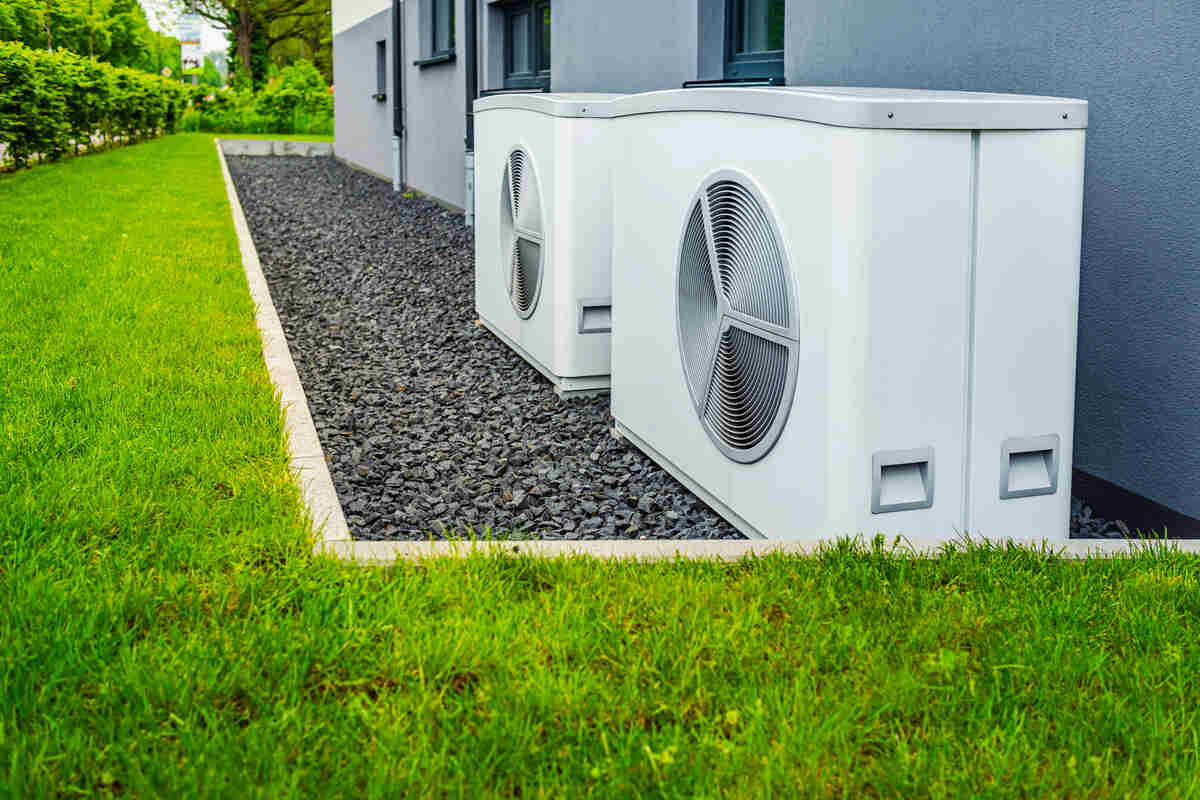
Ask an installer what a heat pump costs and you will usually get one of two unsatisfying answers. Either a number so wide it tells you nothing, or a number so specific it cannot possibly be true before anyone has seen your house.
The honest answer is that the price has three layers, and only one of them is about the equipment. This is a line-item breakdown of all three, plus the part that catches most homeowners out: the rebate does not work the way the advertising implies, and two federal programs that are still being quoted at kitchen tables closed some time ago.
Every program figure below comes from the program’s own pages. Every installed-cost band is what we quote in Peel Region and Halton Hills, and the ranges are wide on purpose, because that is genuinely how wide they are.
Average Heat Pump Cost in Ontario
Cost Figures for 2026, Including Installation
| System type | Best for | Installed range (CAD) | Rebate eligible |
|---|---|---|---|
| Ductless mini-split, single zone | One room, an addition, or a house with no ductwork | $3,500–$7,000 | Yes, if cold-climate rated |
| Ductless mini-split, multi-zone (2–5 heads) | Whole home without ducts | $8,000–$15,000 | Yes, if cold-climate rated |
| Ducted air-source, cold-climate | Most homes that already have ductwork | $6,000–$14,000 | Yes |
| Ducted air-source, standard efficiency | Supplemental heating or milder-climate use | $5,000–$11,000 | Often not — must be cold-climate rated |
| Ground-source (geothermal) | Long-term operation and highest efficiency | $20,000–$45,000 | Yes, at a higher cap |
Layer 1: The System Type

Get the Green Building Project Checklist
Use this handy checklist on your next project to keep track of all the ways you can make your home more energy-efficient and sustainable.
This is the largest single factor, and it is not the brand. It is the architecture of the system.
Two things in the above table matter more than the numbers. The first is the last column. A standard-efficiency air-source unit can be the cheapest line on a quote and still be the most expensive decision, because it is frequently not cold-climate rated and therefore not rebate eligible.
In an electrically heated home, a $5,000 unit that earns nothing back is more expensive than an $8,000 cold-climate unit that earns $3,750 and nets $4,250. In a gas-heated home the rebate is smaller and the arithmetic can go the other way, which is exactly why the eligibility line matters: you cannot compare two quotes until you know which of them qualifies. Ask for rebate eligibility to be stated on the quote, in writing, before you compare totals.
The second is that the ductless and ducted rows are not really competing products. If the house has usable ductwork, ducted is almost always the better value. If it does not, the choice is between multi-zone ductless and adding ductwork, and that comparison belongs in layer two.
Layer 2: What Your Building Adds
The equipment quote is the starting line. The building decides how far past it you go.
Ductwork: Add $1,000 to $5,000 when work is needed.
This is where the most quote-to-quote variation hides. A heat pump moves more air at a lower temperature than a furnace does, so ducts sized for a furnace are often too restrictive. Sometimes that means minor modifications; sometimes it means new returns.
A quote that does not mention ductwork at all on a retrofit has either checked it and found it fine, or has not checked it. Ask which.
Electrical service upgrade: Add roughly $1,500 to $4,000 when required.
Older housing stock frequently still has its original 100-amp service, and a heat pump with electric backup heat can push the calculated load past what that panel supports.
This should be assessed before equipment is ordered, not on installation day. It is the single most common source of a surprise line item appearing after a contract is signed.
The cold-climate premium: add $1,000 to $3,000 over a standard unit.
This buys the engineering that holds capacity when it is genuinely cold – an inverter-driven compressor and a refrigerant circuit designed for high compression ratios.
In most of Ontario it also buys rebate eligibility, which frequently returns more than the premium cost.
Siting and acoustics – A few hundred dollars up to about $1,000.
Pads, longer line sets, sound attenuation where the unit sits close to a neighbour’s window or a bedroom wall. There is no way to know which of these apply to your house from a phone call. Any installer quoting a firm price without having been inside is quoting layer one and hoping layers two and three are small.
Layer 3: Permits
A permit is usually a modest line, but it is a line that should appear. In Ontario, permit requirements for HVAC work are set municipally, not provincially, so the rule and the fee differ between neighbouring cities. In practice a building permit is commonly triggered when the replacement changes the efficiency class of the equipment, and when ductwork is altered. Electrical work is separate and falls under the Electrical Safety Authority, which requires its own notification and inspection.
The number is not the point. Two things are:
Who files it – A permit filed by the contractor is part of the job. A permit the homeowner discovers they were expected to file is a delay and sometimes a re-inspection.
Whether it is on the quote – An omitted permit is not a saving. It is a cost that has been moved to later, and in a competitive quote comparison it makes the cheaper number look better than it is.
Call your municipal building department, or read the current fee schedule on the municipality’s own site. Do not take a permit figure from a contractor’s blog post, including ours – fees change, and they vary by city.
The Rebate, Precisely

Ontario’s live program is Home Renovation Savings, co-delivered by Enbridge Gas and Save on Energy. This is where most of the confusion lives, because the headline number in the advertising is almost never the number a given household receives.
The rebate is tiered by the fuel you heat with today, and it is calculated per ton of rated heating capacity, not as a flat amount:
- Homes on natural gas (Enbridge account): cold-climate air-source at $500 per ton, up to $2,000. Ground-source: $3,000.
- Homes on electricity, oil, propane or wood: cold-climate air-source at $1,250 per ton, up to $7,500. Ground-source: up to $12,000.
- Rented heat pumps, any fuel: $500 per ton, up to $2,000; ground-source $3,000.
The per-ton figure is calculated on the minimum rated heating capacity at 8.3°C, which is a published performance figure, not the nameplate tonnage on the box. Ask which number your installer used.
Two conditions decide whether you get anything at all: Pre-approval is mandatory. The program’s own wording is that installations done before approval are not eligible. This is the single most expensive mistake available in this process, and it is entirely avoidable. No home energy assessment is required for heat pumps under the current program, though other measures do require one. Eligibility is limited to homeowners in a single detached, semi-detached, row house, townhome or mobile home.
What this means in practice is that most Peel Region homes, which heat with natural gas, sit in the $2,000 tier rather than the $7,500 headline. That is not a reason to skip the rebate. It is a reason to know which number applies to you before you build a budget around it.
How Incentives Have Changed
This is the part worth reading twice, because outdated federal figures are still circulating.
The Oil to Heat Pump Affordability program is closed. July 31, 2026 was the last day to apply. Applications submitted before that date continue to be processed, with a January 31, 2027 deadline to upload documents and complete the work. If you are being told to plan around a new OHPA grant, that advice is out of date.
The Canada Greener Homes Loan is closed. October 1, 2025 was the last day to apply for the interest-free financing of up to $40,000. Existing applicants continue through their process; new applicants cannot join. What replaced them is the Canada Greener Homes Affordability Program, which is delivered through provinces and territories rather than directly by Natural Resources Canada, and which is targeted at low- to median-income households. Because each province designs its own implementation, eligibility and amounts differ by where you live, and the right place to check is your province’s delivery page rather than any national summary.
The practical takeaway: for most Ontario households in 2026, the provincial Home Renovation Savings rebate is the money on the table, and the federal layer people remember from 2023 and 2024 largely is not.
Here’s What a Heat Pump Costs in Ontario Based on Different Types of Fuel and Their Corresponding Incentives
Four worked examples, using mid-range installed costs. These illustrate the arithmetic; they are not quotes.
- A gas-heated home installing a 3-ton ducted cold-climate system at roughly $10,000 receives $500 per ton, so $1,500, for a net cost of about $8,500.
- An electrically heated home, same system, same $10,000 receives $1,250 per ton, so $3,750, for a net of about $6,250.
- A gas-heated home going ductless, two zones, at roughly $12,000 receives about $1,000, netting roughly $11,000.
- An electrically heated home, ductless three zones, at roughly $14,000 receives $3,750, netting roughly $10,250.
One line item that belongs on the other side of the ledger: a heat pump also cools. If the air conditioner was already near replacement, the comparison is not heat pump versus furnace, it is heat pump versus furnace plus air conditioner, and that changes the picture materially.
Rebate Timing
Almost everything expensive about this process is a sequencing error rather than a pricing one.
Get pre-approval before any equipment is ordered or installed. Not before final payment. Before the work.
Confirm the model is on the eligible list before you sign, not after. Cold-climate rating is a specific qualification, not a marketing description.
Have the electrical assessment done during quoting. A service upgrade discovered mid-install is expensive, and it can stall a rebate application that was built on a different scope.
Keep the paperwork as you go. Invoices, model and serial numbers, permit documentation, inspection records. Assembling this months later, from memory, is how claims get delayed.
Short Answers to the Questions That Follow
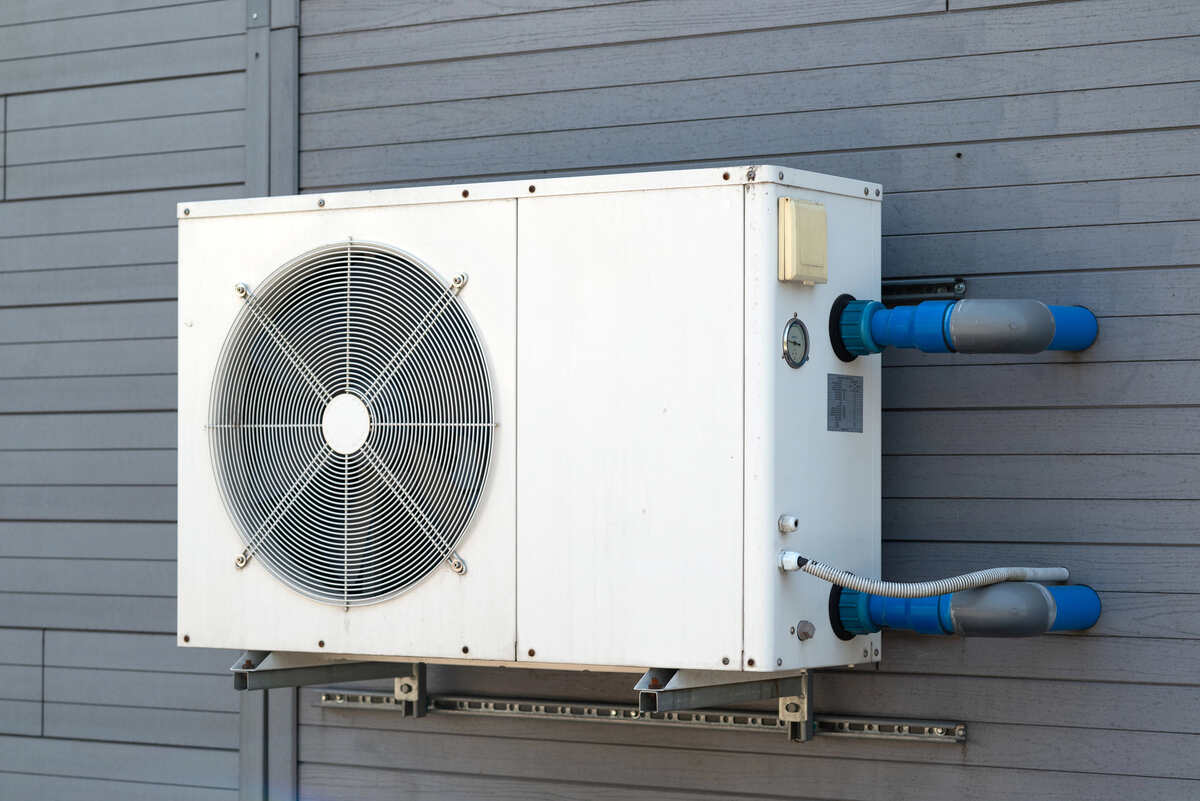
Does a Heat Pump Actually Work Here in January?
A cold-climate unit, correctly sized, carries most Ontario houses through most of the winter on its own. Below its balance point – the outdoor temperature where its output equals the house’s heat loss – backup heat covers the difference. Backup running on the coldest nights is a designed behaviour, not a fault.
Why Does the Air from the Vents Feel Cooler Than my Furnace?
Because it is. A furnace delivers supply air in the fifties Celsius; a heat pump typically delivers in the low to mid thirties, over longer, gentler run times. If the thermostat is holding setpoint, the system is doing its job.
Why Does the Outdoor Unit Steam in Winter?
Defrost. The coil accumulates frost in damp cold, so the unit periodically reverses to melt it. Several cycles a day is normal. A unit that stays iced after a defrost cycle is not.
Is the Cheapest Quote Ever the Cheapest Job?
Sometimes. But check first whether it includes the permit, whether it includes ductwork, whether the unit is rebate eligible and whether an electrical assessment was done. Those four items are where the difference between two quotes usually lives.
The Summary an Installer Would Give You
Budget the equipment from the table, then assume the building will add something, because it usually does. Confirm the rebate tier that applies to your fuel before you plan around a number. Get pre-approval before the work starts. And treat the permit and the electrical assessment as part of the quote rather than as surprises.
A heat pump is a good investment in this province for most households. It is a considerably better one when nobody has to explain, in February, why the rebate did not arrive.
Images from Depositphotos