How Much Does it Cost to Renovate a Bathroom in Canada?
Pricing for Different Types of Renovation, Unexpected Costs and How to Save Money (Updated 2026)

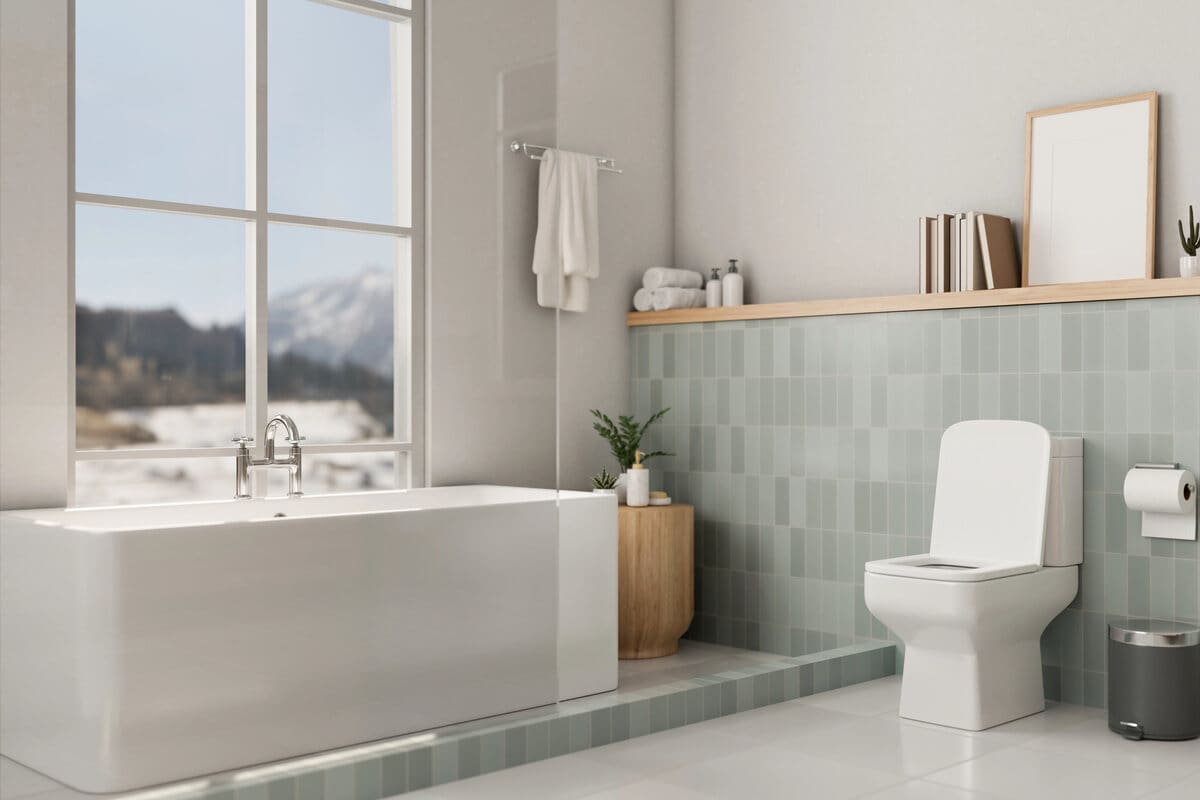
A bathroom renovation in Canada can set you back anywhere between $15,000 and $30,000 for a professionally completed, mid-range project. Smaller works, like, say, a cosmetic refresh, will set you back around $10,000. More intensive gutting and full remodelling, on the other hand, can easily exceed $40,000 to $60,000.
Prices can vary widely depending on where you live too. Contractor rates for bathroom renos in Vancouver and the Greater Toronto Area, for example, tend to be higher than in some smaller Canadian markets. The same goes for house renovations in general. Where there’s heavy demand, costs are higher. However, the age and type of property can sometimes matter even more than geography.
WATCH | Ultimate Beginner’s Guide to Bathroom Renovation
What is the Average Bathroom Renovation Cost in Canada?

Get the Green Building Project Checklist
Use this handy checklist on your next project to keep track of all the ways you can make your home more energy-efficient and sustainable.
Given how much variation there is in renovating a bathroom, it is a little difficult to give a single answer. Repainting the walls can be quite cheap, but completely gutting and renewing the space can be pricey, especially for luxurious finishes and appliances.
That said, speaking very broadly, Canadian homeowners can expect something like this:
| Type of renovation | Typical cost ($CAD) |
| Cosmetic refresh | 5,000-15,000 |
| Standard full bathroom | 15,000-30,000 |
| Higher-end renovation | 30,000-45,000 |
| Large/custom primary ensuite | 40,000-60,000+ |
What Do Homeowners Actually Pay for a Bathroom Reno?

Like anything in life, average pricing is a useful piece of information, but “the proof of a pudding is in the eating,” as they say. Recent Reddit threads show just how much bathroom quotes can vary.
In August 2026, Toronto homeowners discussing full bathroom renovations reported around $15,000 as the low end for a complete gut renovation. Another user who works just north of Toronto disclosed that their projects generally start closer to $20,000 and usually come in around $25,000.
Yet another Toronto-area homeowner discussing a renovation in March 2026 said they received quotes between $17,000 and $20,000 and ultimately paid about $20,000 for a four-piece bathroom gutted to the studs, including upgrades and a new exhaust vent.
Why are Bathroom Renovations so Expensive?
Bathrooms by their very nature have to be waterproof and hygienic spaces for long-term use. For this reason, one of the biggest jumps in cost for works usually occurs when changing the layout.
Moving a toilet, for example, can be very expensive because you also need to move or install fittings for drainage. Likewise, relocating showers, tubs and sinks will also require additional supply and drainage work.
HomeStars estimates that moving plumbing in Toronto can add around $2,000 to $5,000 or more to a renovation. Its Calgary cost guide puts some new or relocated drain work at approximately $3,500 to $8,000.
Other things that will dramatically impact costs include:
- Custom or luxury tiling
- Frameless glass enclosures
- Large-format or natural-stone tiles
- Heated flooring
- Custom vanities and countertops
- Premium faucets and shower systems
- New lighting and electrical circuits
- Improved ventilation
- Structural alterations
- Condo access and building requirements
It is, therefore, a good idea to keep the existing layout and/or retain some fixtures and fittings, as this can lead to huge savings.
What Unexpected Bathroom Renovation Costs Should You Watch For?
As you might expect, spaces like bathrooms can have hidden problems, especially in older homes. Renovations that involve opening up walls or floors may uncover leaking plumbing, rotten framing, damaged subfloors, mould, inadequate waterproofing or outdated wiring.
For this reason, cheaper quotes should be treated with a pinch of salt since additional costs can be tacked on after discovering these new problems. It is, therefore, a good idea to keep about 10 to 20 percent of the budget as a contingency, particularly in older properties.
How Can You Reduce the Cost of a Bathroom Renovation?

Avoiding expensive new custom tiles or a gold toilet aside, the best savings usually come from reducing labour rather than simply buying cheaper fixtures.
If you can, keep the toilet, sink, shower and bathtub in their existing locations, use standard-sized fittings where possible and choose finishes before work begins to avoid costly changes.
If you are happy (and capable) to do so, consider doing some work like painting or ripping out things like old cabinets yourself. But plumbing, electrical work and waterproofing are best left to qualified tradesmen, as you can appreciate.
Another thing to note is that you should always compare itemized quotes carefully. A cheaper quote may simply exclude fixtures, disposal, permits, electrical work or waterproofing.
WATCH | Bathroom Renovation Secrets to Success (Without Breaking the Bank!)
Frequently Asked Questions
Can you renovate a bathroom for $10,000 in Canada?
Yes, but realistically this would be minor cosmetic work only. A small bathroom with inexpensive finishes, no plumbing relocation and some DIY labour may be achievable for around $10,000. More comprehensive renovations will likely set you back much more than that.
How long does a bathroom renovation take?
In short, it depends on the work required. A relatively straightforward full renovation commonly takes between a week and four weeks. Custom materials, permit requirements, unforeseen repairs and subcontractor scheduling can, of course, take longer.
What is the biggest bathroom renovation expense?
Labour usually represents the lion’s share of the work. Plumbing, tile installation, waterproofing and electrical work can account for a substantial proportion of the budget.
Is moving bathroom plumbing expensive?
Sadly yes… Moving fixtures can add several thousand dollars to a project, particularly when relocating the toilet or drainage system. If at all possible, keeping the existing layout is one of the best ways to keep costs down.
How much should I budget for unexpected costs?
A contingency of around 10 to 20 percent is advisable. The older the property and the more extensive the demolition, the more important that reserve becomes.
Images from Depositphotos