
Is Your Deck Safe?
5 Things to Check Before You Step Outside

In this weekly Q&A column, retired builder/building inspector Cam Allen answers readers’ home renovation questions. Have a question? Enter it in the form below.
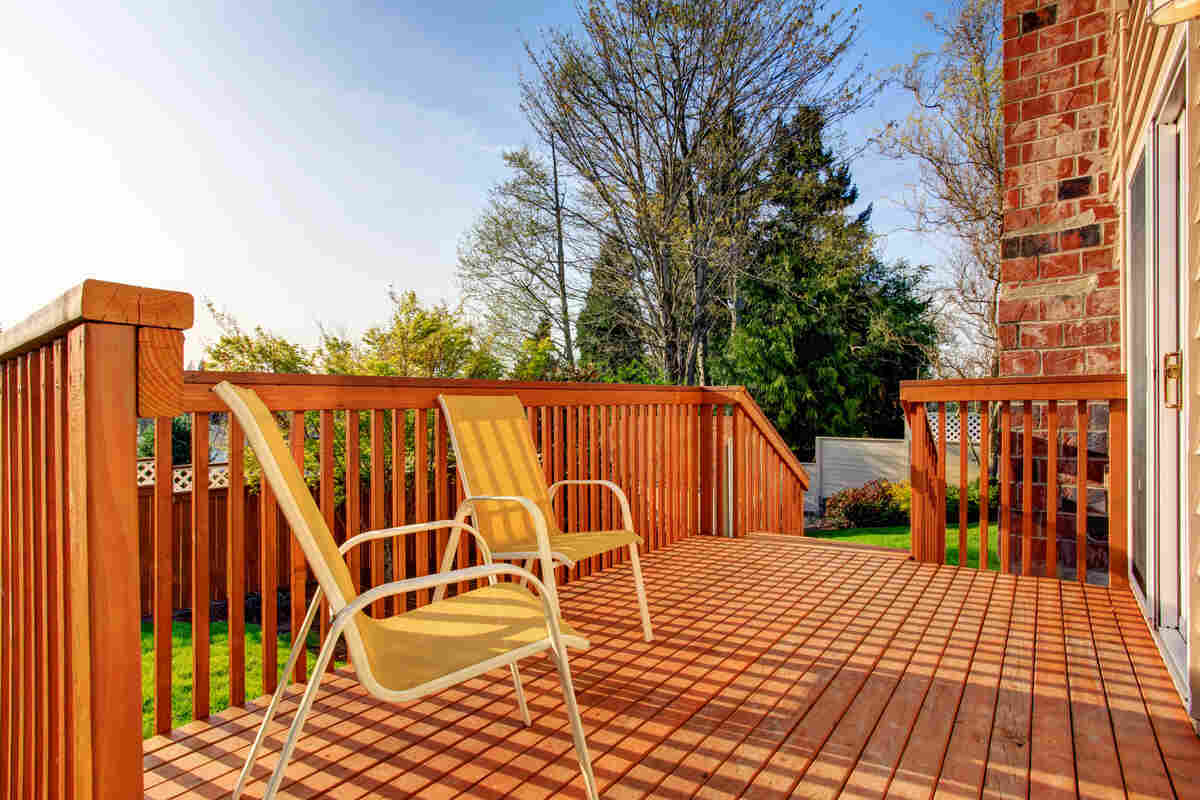
While there are no current statistics for Canada, in the United States from
the period of 2020 to 2024 there were 8,700 injuries and two deaths due to complete collapses or framework failure, usually deck flooring. I admit I have lost count on the number of calls to my former construction company asking for some “minor repairs” to a deck and ending up demolishing and replacing it. You should think of your deck as part of your permanent structure, part of your home minus a roof.
Simply power washing it each year and a coat of stain every 4 to 6 years is cosmetic, an annual safety check should also be part of your yearly routine. While doing it in the spring is nice, any time of the year is acceptable and having an invasive review, poking and taping where it counts. Based upon my memory and experience, over half of the decks we were called to needed substantial repairs. If your deck is over 30 years old, expect to make major repairs or complete replacement.
Ledger Board
The number one section of the framework that fails and often results in human injury is the ledger board. This is the wood 2×6 or 2×8 that is directly attached to your home and the deck floor joists are then secured to this, usually with joist hangers. The ledger is regularly exposed to rain off your residence’s walls, climate buildup and snow against the home that gets some heat radiance from the home and melts first. Improper or no flashing deflecting the climate away from the home out onto the actual decking advances the decay. If your ledger board is not bolted or lag bolted to the home, fix this now! Look for any decay, use an ice pick or flat screwdriver and if you can depress this ½” or more, then the ledger board likely needs to be replaced. Do this from under the deck, close to where the decking and ledger board connect. While you are poking around under the deck, do the same inspection on your deck boards.
Deck Foundations and Supports
I know of no municipality that allows simple deck blocks sitting directly on the ground to support a deck of any height. The only place they are allowed is for grade decks attached to a home. When they say grade they mean that only the base frame is permitted, nothing elevated at all.
Any deck should be supported on proper concrete posts. These can be sono-tubes, footing tubes or “site-made” wood sleeves to hold the concrete. While not everyone did, we made up a “crib” of #5 rebar to fit inside the tubes. I felt it was the right long-term step to do. These posts should be no less than 1.5 metres below grade.

Get the Green Building Project Checklist
Use this handy checklist on your next project to keep track of all the ways you can make your home more energy-efficient and sustainable.
The only other option is a helical pile. Most municipalities permit these, usually if they are professionally installed. They are a galvanized screw type metal post that is drilled into the ground. We never installed these ourselves – I called in the contractor who had the equipment to install these in the right locations and correct depth. They can be a quick base for your deck frame.
Railings
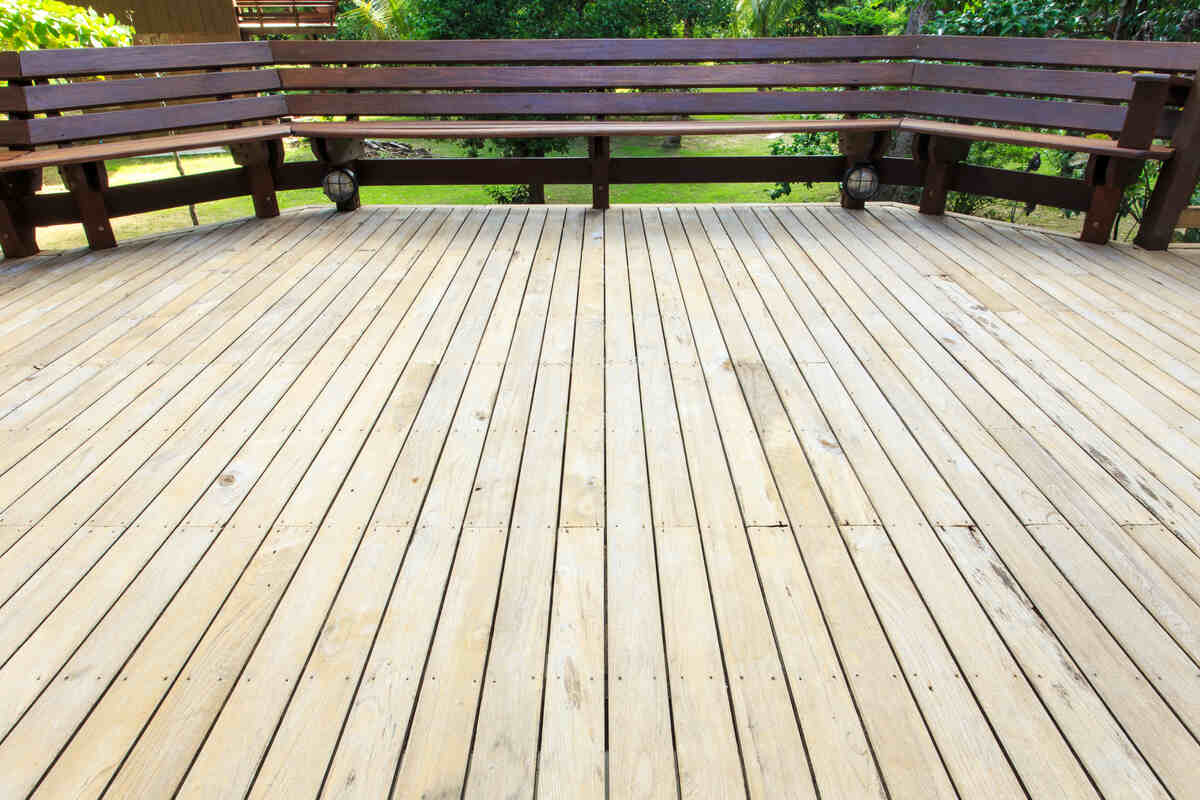
Push against your railings. If they flex (they should be able to withstand 200 pounds of lateral force) it’s time to replace them. While you’re doing that, pay attention to the posts. I’ve lost count of the number I’ve seen simply screwed to the deck frame. They should be securely fastened with carriage bolts passing through the 4×4 post and the deck framing. The bolts should be staggered rather than placed directly in line with one another.
Spindles
Check the spindles or balusters as some call them (the vertical bars attached to railing), they should be secure, no more than 4” spacing and without cracks or decay. Another common thing we saw far too often, improper height of deck railings. If your deck is 71 inches from the finished grade, your hand rails should be 42 inches (1070mm) high. 36 inches (900mm) is meant for everything else. If your deck is over 24 inches (600mm) from grade, handrails are required. Failure of handrails are the number one cause of injuries, especially for children or seniors.
Stairs
Number three on the major failures list is stairs. They are often affected by the stringers settling and rotting. A stringer is the wood side frame piece that your steps are supported on. On any deck we saw that was more than about 10 to 15 years old the bottom of these stringers were decayed and needed repairs. The best way to reduce this is to fit the stair stringers on two solid, stable patio stones sitting upon a base of gravel that are above grade.
One thing we began recommending once solar lighting became popular was small lights located on the inside of the stringer facing the step.
If your home has children or constant senior presence, a gate at the top of the stairs has saved many a fall.
Another tip: wood stairs can be slippery, however not as smooth as composite or plastic decking. Give some thought to safety strips or rubber treads properly attached to the steps.
Other Safety Tips for Your Outdoor Space
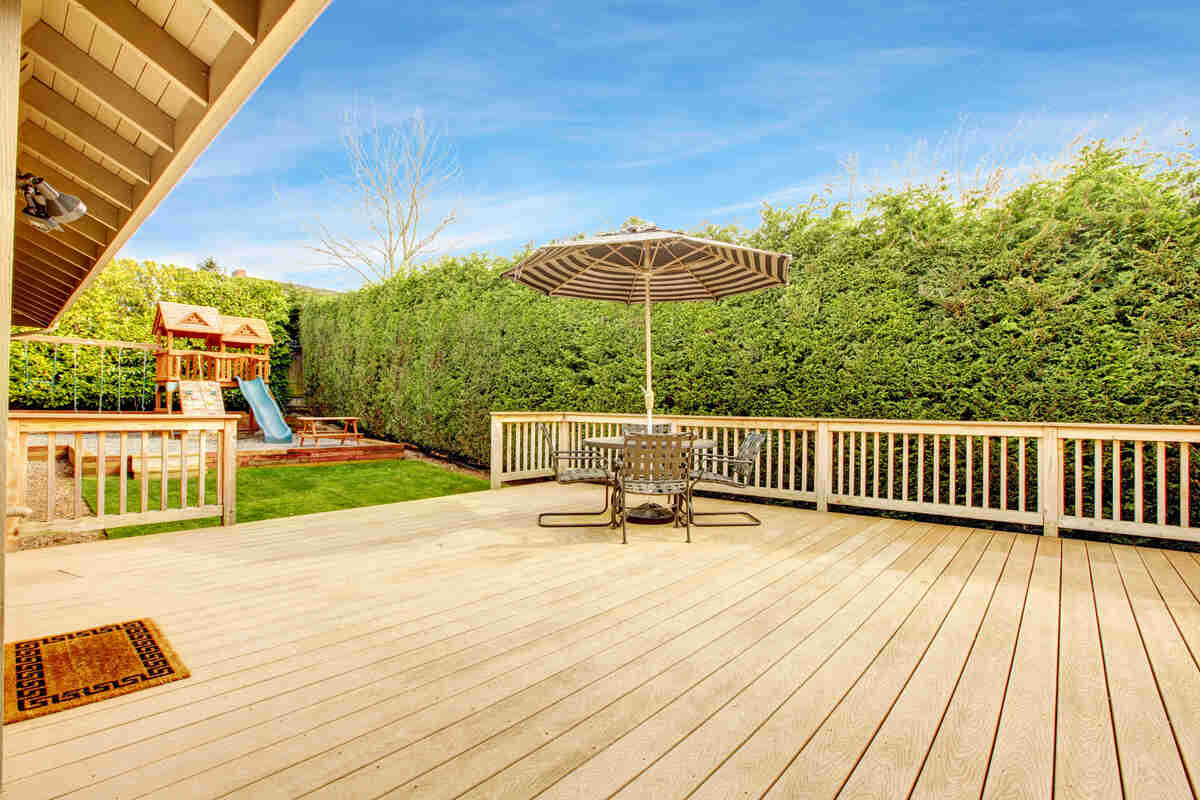
I don’t know why, but hamburgers seem to taste better cooked on a BBQ in the summer! Again I have lost track of the number of calls to fix the vinyl siding on a home because the grill was located too close to the house. The standard rule of thumb is two feet from any solid surface. Locate the BBQ on a non-flammable grill mat. These can be bought at most big box lumber or hardware stores. If you use charcoal then a watertight storage box for lighter fluid and matches is a good idea. We always recommended a 2.5lb class A fire extinguisher located near the BBQ.
One thing I did this year and am glad I did is install an outdoor area rug on both of our decks. If your rug is made of solution-dyed acrylic before it’s spun into fibre it is a colourfast, stain resistant and “tread safe” area rug. A couple of times this year I lifted ours and washed underneath with a mix of water and vinegar to keep any mould or decay reduced.
Sadly, I remember all too well being called to a home where the second floor deck had collapsed, two teenagers were seriously hurt. The grief stricken faces of those parents who owned the home have stayed in my memory, it said more than words could. They should have inspected the deck long before this. Do not become a statistic.
Images from Depositphotos
Have a Home Renovation Question?
Write it down below and we’ll get back to you. All questions get answered – every week, we’ll select one for publication in the column.


