
Researchers at the University of Stuttgart have developed a 3D printing method that uses live bacteria to turn compacted sand into solid, load-bearing bio-concrete structures without conventional cement.
The work, published in npj Advanced Manufacturing, could point towards lower-carbon construction materials at a time when cement production is responsible for roughly 8 percent of global carbon dioxide emissions.
The process relies on microbially induced calcium carbonate precipitation, or MICP. In simple terms, the bacteria break down urea and trigger the formation of calcium carbonate crystals. Those crystals act like a natural glue, binding sand grains together into a hardened structure.
While MICP has already been explored for soil stabilization and simple brick production, the Stuttgart team aimed to push the method further by combining it with 3D printing to create more complex shapes.
Modified Printer Deposits Bacteria Into Sand
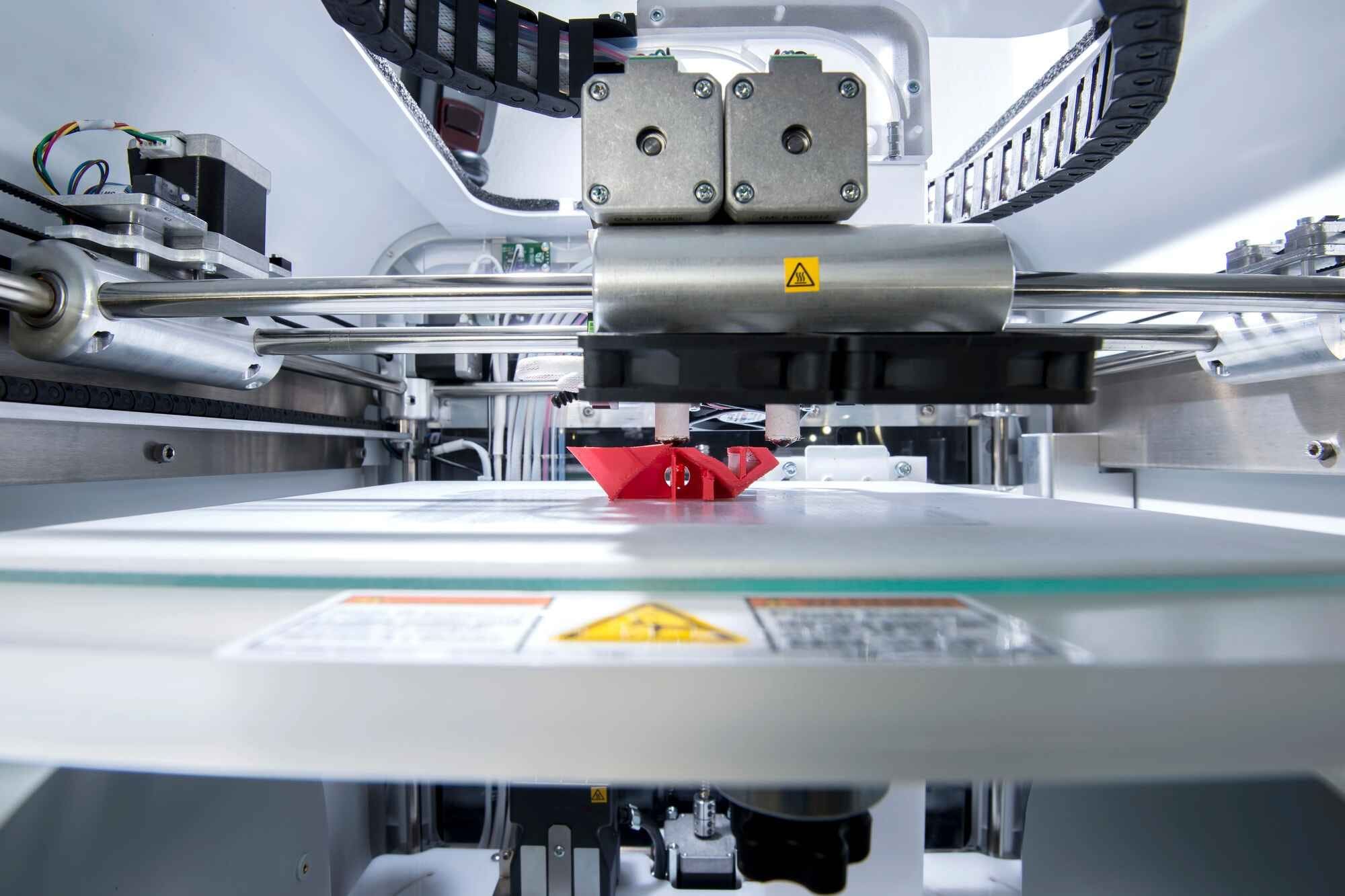
Instead of extruding concrete through a nozzle, the researchers used a modified consumer-grade 3D printer fitted with a peristaltic pump. The system deposited a suspension of Sporosarcina pasteurii bacteria along pre-programmed paths inside a moistened sand mixture.
The sand used in the process ranged from 0.063 to two millimetres in particle size. After each layer was added, a pneumatic piston vibrator compacted the print bed before the bacterial suspension was applied. The researchers said that compaction increased the packing density of the sand, helping improve the final strength of the printed material.
To keep the bacteria from spreading away from the intended printed areas, the sand was first pre-wetted with a calcium chloride fixation solution. After printing, the sealed bed went through 20 immersion cycles in a urea and calcium chloride solution over several days to complete the hardening process.

Get the Green Building Project Checklist
Use this handy checklist on your next project to keep track of all the ways you can make your home more energy-efficient and sustainable.
WATCH | 3D Printed Cement-Based Materials with Bioinspired Design
Strength Results Show Promise, But Limits Remain
In testing, small printed cylinders measuring 25 millimetres in diameter and 30 millimetres tall reached mean unconfined compressive strength values of 11 MPa and 17 MPa.
Those results are above the 2.5 MPa minimum required for aggregate concrete masonry units under German standards. However, they remain below the 20 MPa threshold required for reinforced precast concrete components.
The team also produced a more complex test structure measuring 90 millimetres in diameter and 80 millimetres high. A 3D scan found dimensional deviations ranging from minus four to plus four millimetres. The researchers identified deformation caused by compaction as the main source of inaccuracy.
For now, the method appears best suited to thin, porous structures with high surface area-to-volume ratios, since the cementation solution struggles to penetrate denser forms.
The researchers identified façade panels as a possible near-term application. Longer term, they said the process could also support extraterrestrial construction, including the fabrication of lunar habitat components from regolith-like materials.
Image from Depositphotos
