President Trump’s renewed attacks on offshore wind energy have caused concern throughout the American renewable energy sector, but Canadian industry experts see opportunity in the fallout.
With Trump halting federal leasing for offshore wind and fast-tracking fossil fuel development, the once-bustling U.S. offshore wind market is facing a standstill. Approved projects have been delayed, jobs are at risk and future development remains uncertain as Trump doubles down on his long-standing disdain for wind power, calling it “the greatest scam in history.”
The decision directly impacts states like New York and those across New England, where aggressive offshore wind targets now appear increasingly difficult to meet. With developers now reconsidering U.S. investment and procurement efforts stalled, industry leaders say there’s a new gap in the North American market, and Nova Scotia may be in a unique position to fill it.
Nova Scotia’s Wind West Plan Gains Traction

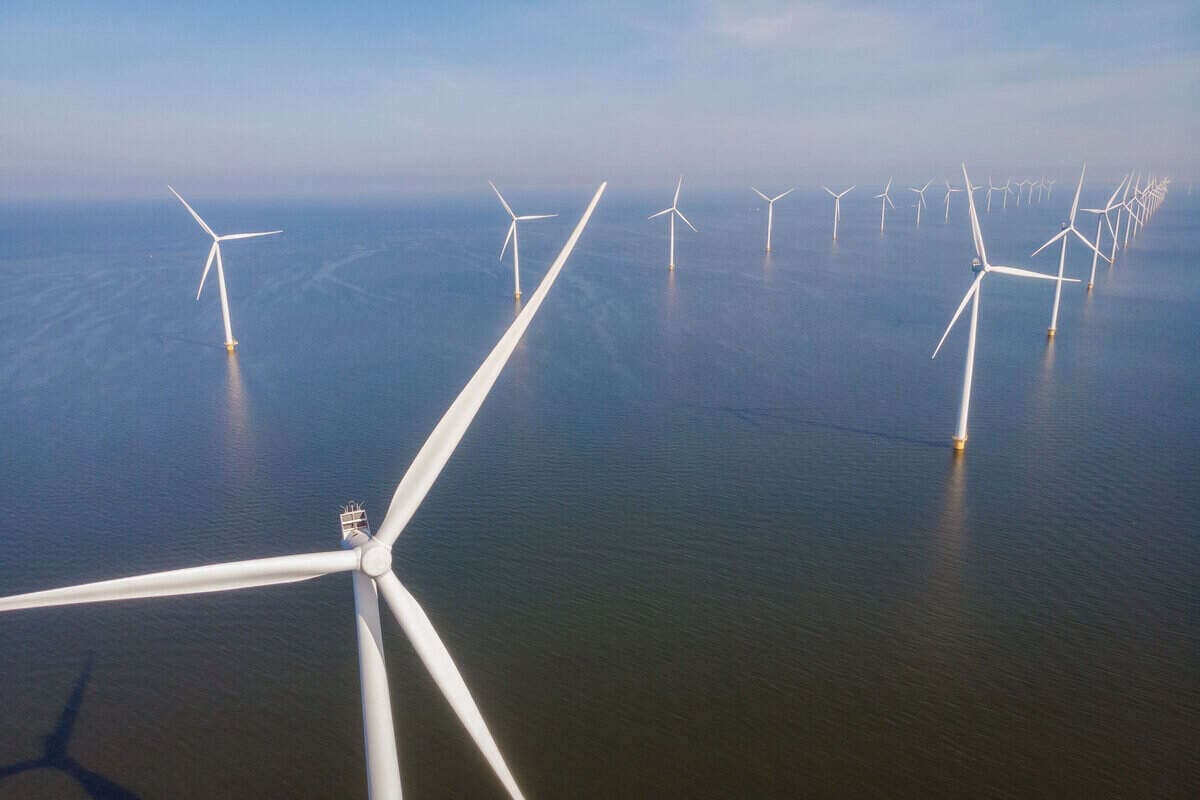
Nova Scotia Premier Tim Houston is presenting a bold plan to license offshore wind farms capable of producing up to 40 gigawatts of electricity, more than 15 times the province’s domestic needs. The province hopes to export the surplus energy to other Canadian provinces and, crucially, to the United States.
According to Danish consulting firm Aegir Insights, Wind West could be a golden opportunity to attract global developers now looking for alternatives to U.S. markets.
Nova Scotia offers ideal conditions for offshore wind, with strong and steady wind speeds, shallow continental shelf areas near Sable Island, and established maritime expertise.

Get the Green Building Project Checklist
Use this handy checklist on your next project to keep track of all the ways you can make your home more energy-efficient and sustainable.
Combined with a stable political climate and increasing support for renewable infrastructure, the province may now be the most attractive North American site for offshore wind investment.
A Cross-Border Economic Opportunity
While Trump’s stance may hurt U.S. clean energy targets, his administration’s policy shift could inadvertently benefit Canada’s Atlantic provinces. “One state’s challenge could be another state’s opportunity,” said Aegir’s Signe Sorensen.
She noted that U.S. utilities and governments looking to meet renewable targets may now have to consider importing clean energy from Canadian sources like Wind West.
New England and New York are willing to pay premium rates for offshore wind energy – rates that Nova Scotia may be able to meet competitively. With global supply chains still recovering, the timing could be ideal for Nova Scotia to capitalize.
Nova Scotia Already Building Wind Momentum
The province has already signed deals for six new land-based wind farms to power major institutions including hospitals, universities, municipalities and federal buildings.
All six projects involve Mi’kmaw community partnerships, supporting both clean energy goals and Indigenous economic development.
With the federal and provincial governments working jointly to map out offshore zones and a first leasing round set for 2025, Nova Scotia is fast positioning itself as a renewable energy leader.
Images from Depositphotos