Why Do We Need So Many Permits?

In this weekly Q&A column, retired builder/building inspector Cam Allen answers readers’ home renovation questions. Have a question? Enter it in the form below.
Along with writing this weekly column I give numerous public speaking/video presentations on Housing and the Climate Crisis to service clubs, municipal organizations and trade groups. At these meetings we give out a sheet asking for questions and then I answer as many as time permits after the presentation. This week’s column is a result of constant questions about building permits from attendees.
I chuckle when I get some questions that start with “I know more than the damn building inspector,” “this is nothing but a tax grab” and my favourite “I don’t need some government dummy looking over my shoulder.” My answer often starts like this, “Banks, insurance companies and most home buyers want to see a completed permit, especially if it has been an addition or a major renovation and I stress the word completed including the occupancy permit.”
The permit process can be daunting and I respect the fact that many municipal building departments are seriously understaffed and lacking in the experience that was present years ago. The job is far too often political, especially in smaller municipalities. That said, the small town building inspectors are often more lenient with drawings and do not demand engineered plans for smaller renovations. I have seen them accept reasonable, accurate to scale drawings. There are additional permits for electrical, plumbing and demolition in most jurisdictions. This week we will stick to the standard building permit and why it’s necessary.
Building Codes in Canada
In Canada there is a National Building Code and a National Energy Code of Canada for Buildings. Though a lot of folks think codes have been around forever, the first National Building Code (NBC) was not published until 1941. It is updated when deemed necessary by the federal government.
Each province has its own building code, but it must be based upon the NBC. Provincial standards must be the same or better than the NBC.
Get the Green Building Project Checklist
Use this handy checklist on your next project to keep track of all the ways you can make your home more energy-efficient and sustainable.
The Purpose of a Building Permit
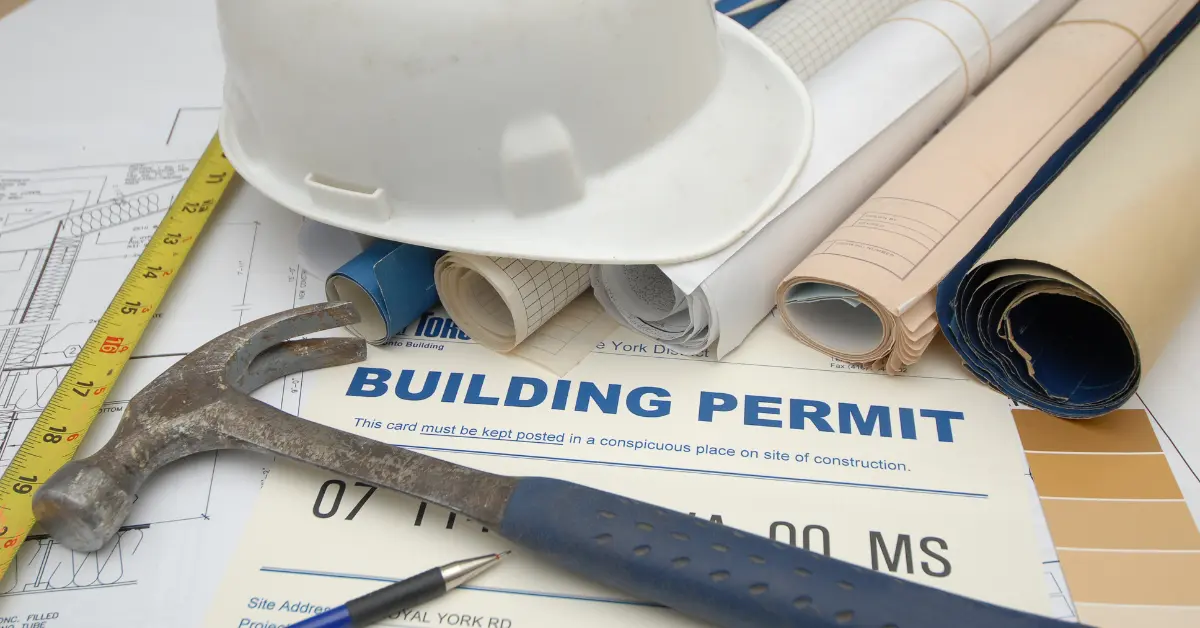
The main reasons for a building permit started out as a method of standardization of building homes. Today it is used for other purposes like foundation design, engineered load bearing confirmation and confirming compliant materials are some of the major ones. The intent is to help prevent accidents and ensure a structure is safe and secure for occupants.
Permits have evolved over the years and are now used not only for assembly of new homes, additions and major renovations but a long list of other building activities. Repairing or underpinning a foundation is one, whereas upgrading an existing foundation with a waterproofing system is not on many municipal permit lists, this is one I have never understood. Any alteration to a home that is deemed structural like adding windows and doors in existing exterior walls.
Decks and porches require permits (closing these in is often ignored, though they do need a permit). In most rural locales if you are adding to the footprint or changing the level of occupancy you can expect that a septic permit will be included by your municipality. Most permits are tied to the value of the project and yes, this is how the municipality gets its tax money from the value of the improvement of the home.
What to Do Before Renovating
If you are considering renovating your home your first step should be to look up your municipality’s website. Almost all of them contain a full list of what permits are needed, how you can apply and estimated cost of the permit.
Depending upon the size of the project, engineered drawings may be needed. At one point the term “blueprints” was used. These days, more often than not, you will hear the term “working drawings.”
Once you get your permit, it will state who the contractor is. It will have to be either yourself or the general contractor you hire. If you are listed as the contractor then you have assumed some amount of responsibility ranging from proper site insurances, organizing the sub-trades and working with the local Chief Building Official (CBO) to comply with the steps that are listed on the permit. Each stage of the building permit must be completed before the CBO will sign off and allow the project to continue.
What Can Happen If You Build Without a Permit

Every once in a while a finished house or other building shows up on the TV or social media where the municipality has discovered a building without a permit. I can remember chatting with a local CBO that I worked with for years in a rural township of Ontario. I broke out laughing one time when Phil, who had been the local CBO for 20+ years, said on a cool early November morning, “I am off for my annual Penalty Prowl” around the township back roads. He said once the leaves are gone all the illegal garages, additions and sheds are now often visible from the road and each year he catches at least half dozen quietly built structures! The municipalities can levy some serious daily fines ranging anywhere from $500 to $2500 a day for a building assembled without a permit. In some cases they can order demolition but they usually try to find a solution.
If they catch one in the process without a permit, stop work orders can be issued on site immediately by the CBO. Taken to extreme, legal action including criminal charges can be laid in most jurisdictions.
While permits can be frustrating, they are designed to protect everyone involved in the home building or renovation process. It’s a necessary first step. Get off to a good first step.
Images from Depositphotos
Have a Home Renovation Question?
Write it down below and we’ll get back to you. All questions get answered – every week, we’ll select one for publication in the column.