How Water Recycling Is Reshaping the Future of Commercial Car Wash Facilities

Car wash water recycling is no longer just a feel-good upgrade or a marketing line on a roadside sign. For investors evaluating car washes for sale, a modern water reclaim system is increasingly part of the core operating model – right alongside labour efficiency, chemical costs and equipment uptime. Water now behaves like a strategic input: constrained, priced differently by market and monitored more closely than ever.
The operators who treat water conservation as a measurable program tend to see clearer outcomes: lower freshwater consumption, better control over sewer costs and more consistent wash quality when the system is designed and run correctly. The point isn’t to chase “green.” The point is to stay reliable, profitable and locally acceptable as conditions tighten.
Why Water Recycling Is Accelerating
Baseline water demand isn’t uniform, and that matters when estimating ROI. Some guidance cites averages around 275 litres per vehicle for an in-bay automatic car wash and about 165 litres per vehicle for a conveyor. That gap changes everything: the same water reclamation setup can look “fast payback” in one format and merely “helpful” in another. It’s also important to separate freshwater use from total water moving through the wash process. Water recycling reduces the new water purchased, but the system still circulates significant volumes to keep performance stable.
Regulation is also becoming more explicit in some markets. Recycling is also being formalized through permitting and rules, especially for new sites. Several municipalities now require new car wash facilities to recycle water. For operators expanding into multiple markets, these requirements change site planning early – sometimes before equipment selection even begins.
Customer Expectations: “Eco” Matters Most When It Doesn’t Reduce Quality

Get the Green Building Project Checklist
Use this handy checklist on your next project to keep track of all the ways you can make your home more energy-efficient and sustainable.
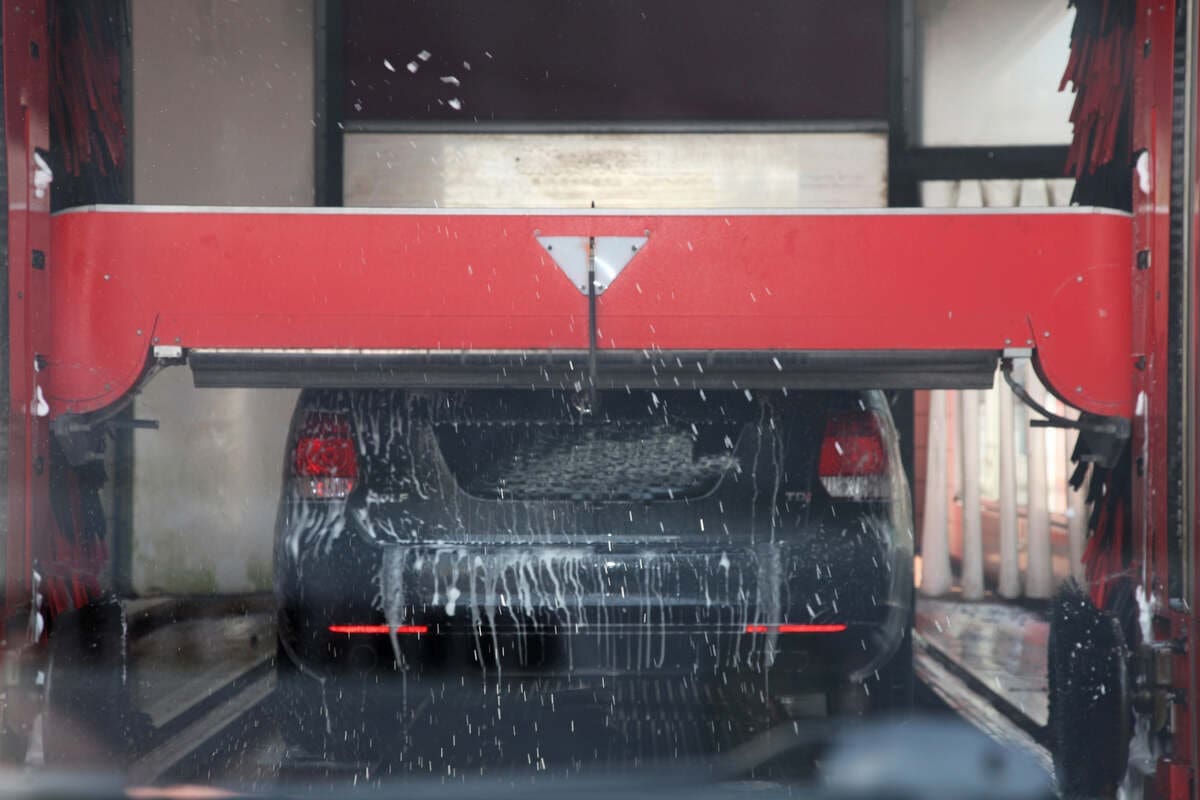
Sustainability messaging only helps when the car comes out clean and consistent. The reality is simple: customers will tolerate fewer “eco claims” than they will tolerate spotting, odour or inconsistent results. Recycling strategies have to protect finish quality.
How Commercial Car Wash Water Recycling Works
A reclaim system works best when it’s viewed as a process train, not a single machine. First, water is captured from the wash bay or tunnel trench and directed to a reclaim pit or collection point. Next, solids settle out in a settling tank, where grit and heavier debris can drop before they wreak havoc downstream. Then filtration removes finer particles and an oil-water separator (or similar step) helps manage oils and floating contaminants that don’t belong in spray equipment. After that, treated reclaim is stored and pumped back into the wash for reuse.
The reclaim loop: capture → settle → filter → store → reuse
In most setups, reclaimed water is typically used for high-volume, early-stage applications (presoak, undercarriage and main wash steps) where it delivers the biggest freshwater savings with the least risk to customer-visible outcomes. It is generally not used for the final rinse.
Fresh, Softened and RO Water: How Water Quality Tiers Protect Outcomes
Successful sustainable car wash operations tend to use water in tiers. Reclaimed water handles the dirty, high-volume work. Freshwater or softened water is used for steps where mineral control and consistency matter more, such as select rinse stages or chemical applications that perform better with stable hardness. Reverse osmosis water is reserved for the spot-free final rinse, where low total dissolved solids (TDS) is the point, not an optional upgrade.
That tiering is where operators protect wash quality while still capturing meaningful water conservation gains.
The Financial Case: Reducing Freshwater and Sewer Exposure
The financial case for a water reclaim system usually isn’t a single magic number – it’s a chain of variables. Water savings potential generally follows a logic like:
baseline GPV × wash volume × local utility rates × target reuse rate = savings potential
Local water and sewer rates drive the outcome. In some markets, sewer charges are the bigger lever; in others, water costs dominate. Either way, recycling can reduce both freshwater purchases and the volume discharged, which can improve operating costs and shorten the payback period when the system is sized correctly and kept in spec.
Permitting Resilience and Community Acceptance
Permitting and local acceptance can be an underrated advantage. When a facility can quantify water savings and show a clear water conservation plan, conversations with municipalities tend to be more productive. That’s the experts “approval lens” in practice: measurable water reduction, documented maintenance practices and a clear discharge strategy often reduce friction during scrutiny, especially in areas sensitive to water use and drought restrictions.
Operational Benefits
Drought restrictions can have a major impact. Sites with reclaim capability are typically better positioned to maintain service levels, adjust operations without major disruption and avoid last-minute operational scrambling. That business continuity value is hard to see on a spreadsheet until the market hits a dry year.
System Options by Facility Type and Throughput
In-bay Automatic
In-bay automatic reclaim has to deal with variability: fewer cars per hour, start-stop operation and higher carryout and evaporation relative to volume. Reclaim design and programming matter. Operational tuning-triggered arches, timing adjustments, leak checks and nozzle optimization should be treated as part of recycling, not as a separate “nice extra.” Tight programming can reduce wasted flow and improve reclaimed-water performance.
Conveyor / Tunnel
High-volume tunnel wash reclaim tends to benefit from scale. Consistent throughput makes it easier to size tanks, manage solids load and justify more robust filtration and monitoring. Selection criteria that usually matter most include peak cars per hour, reclaim pit and tank capacity, solids load management (what comes in from tires and undercarriages) and redundancy so a pump or filter issue doesn’t shut the tunnel down. With volume, the ROI ceiling can be higher, but only if uptime is protected.
Self-serve
Self-serve locations often get the most practical gains from partial reclaim and targeted efficiency upgrades: capture and pretreatment, efficient spray wand flow and leak control. Full reclaim can be situational depending on layout and usage patterns, but many owners find that “simple and reliable” beats “complex and touchy” in self-serve environments.
Design and Retrofit Considerations
Most reclaim projects succeed or fail on physical constraints. Tank volume, reclaim pit location, piping runs and access for cleaning are usually the limiting factors – not the sales brochure specs. Retrofit planning should include a checklist like:
- Space for tanks and filtration equipment with safe service clearance
- Easy, safe access for pit and settling tank cleanouts
- Plumbing routes that reduce cross-contamination and accidental bypassing
- Bypass modes so the wash can keep operating during maintenance or failures
- Drainage and slope checks so capture actually captures (sounds obvious, but it gets missed)
Operations and Maintenance
Reclaim systems don’t require a lab to run well, but they do require attention. Basic monitoring – clarity or turbidity, odour, filter pressure and tank levels drives consistency. A practical cadence often looks like:
Weekly – visual clarity checks, odour check near reclaim tanks, quick nozzle inspection, filter pressure review
Monthly – deeper filter maintenance, pit observation, separator check, confirm bypass valves and alarms work
Symptoms of a System Asking for Attention
Odour – organic buildup, low turnover in tanks, overdue cleanout
Foam or weird sudsing – chemistry mismatch, excessive detergent carryover, poor separation
Spotting complaints – reclaim used too late in the process, RO issues, high TDS in final rinse path
Clogged nozzles – solids carryover, insufficient settling, filtration overload
Discharge and Solids Handling Planning
Recycling changes wastewater characteristics and solids accumulation. Settling, separation and scheduled cleanouts should be planned from day one. Sludge handling isn’t glamorous, but it is part of the system’s “heartbeat.” Ignoring solids leads to clogged nozzles, pump wear, odour issues and inconsistent water quality – then reclaim gets blamed as the concept, when it was really a maintenance and handling gap.
Chemistry Alignment and Staff Habits
Detergents, waxes and sealants interact with reclaim water. Reclaim-friendly chemistry and consistent dosing matter, but staff habits matter just as much. Small wins that tend to protect reclaim performance include keeping bays and pits cleaner than “good enough”; avoiding dumping chemicals or mop water into reclaim capture areas; documenting adjustments so changes aren’t random shift-to-shift; training staff to recognize early warning signs (odour, foam, pressure changes).
A reclaim system can be engineered well and still be sabotaged by sloppy habits. That’s the uncomfortable truth.
Wastewater vs Stormwater
One of the most common compliance problems is mixing up wastewater and stormwater pathways. Managing wash water through proper discharge routes is as important as reducing freshwater use. Operators should coordinate early with local authorities, engineers and utility providers to understand discharge limits, pretreatment expectations and what is allowed on-site. This isn’t an area for last-minute improvisation.
Images from Depositphotos