
When the first silicon solar cell was developed back in 1954 it had an efficiency of just 6 percent. Fast forward 70 years and researchers in laboratory settings are now developing cells that are nearly 40 percent efficient. Those improvements in efficiency combined with decreasing costs have resulted in rapidly increasing solar energy adoption in recent years.
The new technology also means there are more options to choose from. There are at least 6 different types of solar panels. Learning the different kinds of solar panels can help you choose the right type for your situation.
How Do Solar Panels Work?
The typical solar cell contains 3 distinct layers. There’s a silicon layer that acts as a semiconductor, a boron layer that serves as a positive charge generator, and a phosphorus sheet that produces a negative charge.
When the sun shines, it emits packets of electromagnetic energy known as photons. And when these photons strike the surface of a solar module, the electrons in the silicon layer get excited. As a consequence, these electrons start flowing, kicking off a direct electric current (DC).
If you want a deep dive into how solar cells work watch this:
6 Solar Panel Types

Get the Green Building Project Checklist
Use this handy checklist on your next project to keep track of all the ways you can make your home more energy-efficient and sustainable.
Solar cells differ in terms of performance, construction materials, efficiency, durability and quality. There are basically 6 different options to familiarize yourself with before you begin shopping:
- Monocrystalline solar panels
- Polycrystalline solar panels
- Thin-film solar panels
- Concentrated solar panels
- Bifacial solar panels
- Biohybrid solar cells
Let’s explore what each kind looks like, how it works and where it’s typically used so you can decide on the best solar panels for you.
1. Monocrystalline Solar Panels
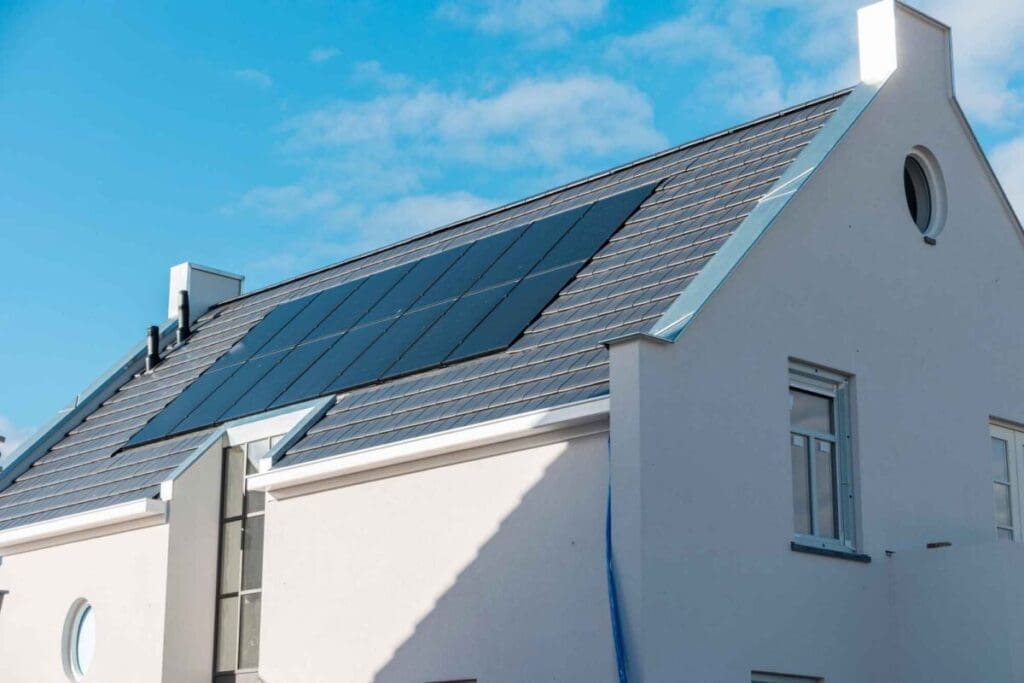
These are solar panels made from a single silicon crystal. You can easily tell this kind apart from others because it’s black in color. To make this panel, the manufacturer wastes tons of silicon, but the end product is pretty pure.
While mono-crystalline panels demonstrate great performance in low light, the performance dips marginally when the sun heats up. Still, they’re one of the most efficient solar panel types that can be had.
They typically have an efficiency rating of 20–25 percent according to The National Renewable Energy Laboratory (NREL). If you don’t have much room on your roof or have many cloudy days each year to contend with, consider installing this type.
Finally, they’re quite durable. In fact, most have a 25-year warranty. Designing a photovoltaic solar system with these cells can cost quite a bit, however costs have been dropping significantly due to the increasing supply of panels that are now available thanks to the extensive production that’s happening in China.
Pros and Cons of Monocrystalline Solar Panels
Pros
- Highly efficient even in low sunshine; they’re one of the most efficient options on the market
- A good choice for small spaces and cloudy or Northern environments
- More durable than most
- A great option in situations that prioritize maximum power output
Cons
- Can be pretty expensive
- Made using a wasteful manufacturing process
- Performance dips to some extent when the temperature increases, but this happens to all types
Where they’re often used – Typically used to power residential buildings as well as commercial properties.
2. Polycrystalline Solar Panels
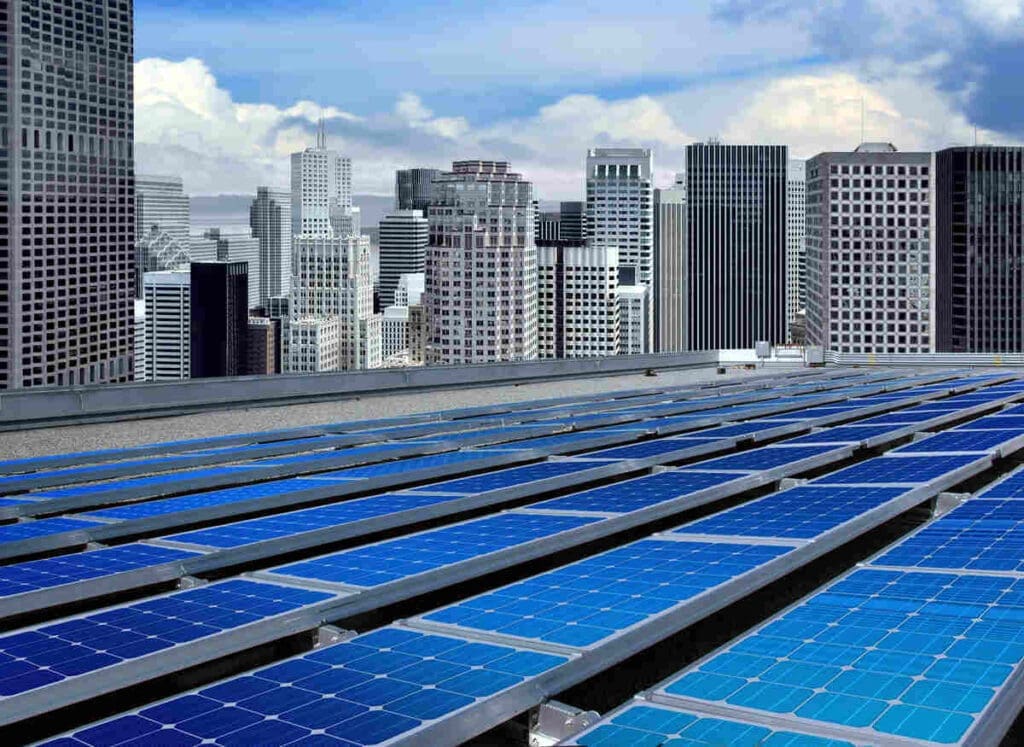
Poly means many. Polycrystalline solar panels are created from a bunch of silicon crystals. To make these units, manufacturers melt down multiple fragments of silicon into a block. They then cut down this block into multiple wafers which are moulded into square-shaped panels.
They’re cheaper to produce compared to their single-crystal counterparts. However, the silicon fragments aren’t as pure, which is why they’re not as efficient. They’re identifiable by their blueish color.
They also post good performance in low-sunshine conditions and their high temperature tolerance is remarkable. But they’re more vulnerable to heat-related degradation versus monocrystalline ones.
Their efficiency rating typically hovers between 15–20 percent, according to NREL.
Pros and Cons of Polycrystalline Solar Panels
Pros
- More affordable compared to monocrystalline panels
- Perform satisfactorily in low-sunlight situations
- Demonstrate reasonably high temperature tolerance levels
- An OK option for large-scale installations
- Less wastage during the manufacturing process
Cons
- A lower heat tolerance level compared to monocrystalline cells
- Not as efficient as monocrystalline options in low-sunlight/cloudy scenarios since the silicon fragments used aren’t as pure
Where they’re often used – If you have to design a really large solar panel system while spending less money, consider installing polycrystalline panels.
3. Thin-Film Solar Panels

One key difference between thin-film and crystalline solar panels is that the former isn’t 100 percent silicon-dependent.
Manufacturers use alternative materials such as amorphous silicon, copper indium gallium selenide or cadmium telluride. “Amorphous” simply means not crystalline.
Several layers of these materials are added to a glass or plastic backing. Note that the CDC does say that cadmium is a cancer-causing agent.
Thin-film panels aren’t as thick or stiff as their crystalline competitors. Being thinner and more flexible makes them easier to work with in different kinds of installation situations.
While they’re cheaper to produce, they’re less efficient than crystalline ones. The efficiency rating can be as low as 6 percent or as high as 18 percent depending on the material used.
The most efficient are copper indium gallium selenide panels at upwards of 20 percent in laboratory tests. Cadmium telluride (CdTe) solar panels take second place at 10–11 percent while the least efficient material is amorphous silicon (a-Si) at about 7 percent, according to EnergySage.
A single-crystal panel of a given size typically produces more power than a thin-film one of the same size. Also, the lifespan of a thin-film panel tends to be shorter.
One advantage thin-film solar panel systems have over crystalline options is a shorter payback time. That said, they’re not the most durable option.
Another advantage is that their construction requires a smaller number of semiconductors, which means a smaller carbon footprint in the final analysis.
Pros and Cons of Thin-Film Solar Panels
Pros
- Lightweight, which makes them suitable for use in cases where portability and convenience are a priority (such as RVs)
- More flexible than crystalline options, making installation easier in different situations
- Lower manufacturing costs, translating to lower costs overall and faster payback time
- Can be suitable for gigantic solar panel system installs because they’re cheaper
- Associated with a lower carbon footprint
Cons
- Have a short lifespan
- Not as efficient as crystalline choices
- Require more roof room to generate the same amount of energy as similarly sized conventional solar panels
- Not as durable as traditional types
- Cadmium is a known cancer-causing agent
Where they’re often used – They’re best suited for super-sized solar power projects where installation costs could quickly stack up and become a monstrous concern.
They’re also a suitable choice for applications where weight and ease of installation are a priority.
4. Concentrated Solar Panels (CSP Systems)
Concentrated solar panels count on flat or parabolic mirrors or lenses to focus sunlight onto a small surface area of a photovoltaic material. Once harnessed, the energy from the sun powers turbines which in turn generate electrical energy.
They’re the best performing PV systems efficiency-wise, currently standing at 20–40 percent, according to NREL.
What’s more, they’re great at energy storage, which makes them reliable pre-sunrise and post-sunset energy providers. However, they need tons of space to function optimally so they’re generally used in large-scale commercial power plants.
Advantages and Disadvantages of Concentrated Solar Panels
Pros
- High-efficiency solar power systems; the most efficient solar system available
- Suitable for generating massive amounts of renewable energy
- A reliable source of energy even when the sun isn’t shining
Cons
- Not viable in densely populated areas
- Large quantities of water needed for driving the steam engines and cooling the system
Where they’re often used – They’re pretty common in large-scale solar power plants.
5. Bifacial Solar Panels
While mono facial solar panels (traditional ones) rely on one surface to harness solar radiation, bifacial solar panels put two sunlight-trapping, tempered-glass surfaces to work.
They deliver a higher energy yield compared to conventional solar panels of the same size, up to 11 percent more, according to Energy Link.
Small wonder they’re costlier than single-surface panels. Since they’re more efficient, however, you need fewer panels or less room on the roof.
With this technology, consumers could get a 30-year warranty versus the usual 25-year warranty. These solar panels are of better quality than conventional ones, perform better, look nicer (because they’re frameless) and last longer.
Pros and Cons of Bifacial PV Solar Panels
Pros
- Generate more energy compared to regular panels of the same size
- Last longer and perform better than most PV panels in diffuse light/low-sunshine environments
- Are frameless and made from tempered glass, which many find more aesthetically pleasing
- Longer warranties
- Great for consumers with space constraints
Cons
- Pricier than conventional panel systems
- Heavier than regular panels and require specialized equipment for installation, which bumps up installation costs
- Way less flexible, making installation more challenging
Where they’re often used – Homes and offices without much roof space
6. Biohybrid Solar Panels
While still under research, this type of solar panel is worth keeping an eye on. When making biohybrid solar panels, manufacturers combine organic matter with inorganic matter.
Like regular solar panels, hybrid solar panels convert photonic energy into electrical energy, but hybrids work a little differently. They convert the sun’s energy into chemical energy through a photosynthesis-like process before creating an electric current that flows through the cell.
This new type of solar panel could cost less to make and they have a high solar radiation conversion rate compared to regular solar cells. However, their reliability as a continuous energy source may not be guaranteed. Besides that, their lifespan and durability could be questionable.
These devices are currently inaccessible outside of research laboratories, but this might soon change.
Pros and Cons of Biohybrid Solar Panels
Pros
- Have a super high solar energy conversion potential
- Less costly to make compared to regular panels
- Almost zero power losses when converting chemical energy into electrical power
Cons
- Not available for use in homes and businesses since they’re still being researched and developed
- Durability and lifespan aren’t great
As solar technology has progressed, there are now more options than ever before to choose from. For most residential and commercial applications, monocrystalline and polycrystalline solar panels are ideal because they’re pretty efficient and long lasting.
For specific installations, thin-film panels work great. And for setting up massive and reliable power generators, concentrated solar power panels are the way to go.
Read more on this topic in 7 Different Ways Solar Panels Are Used in Everyday Life.
Get a Quote from a Solar Installer Near You
The following information helps us to find the best local professional to complete your project. You will be contacted by email shortly after submitting the form.