In the realm of interior design, the choice of materials significantly impacts both aesthetics and the building’s sustainability. Sustainable timber ranks as one of the most versatile and eco-friendly options you can choose for the application of internal wall cladding and panels. These materials not only offer a natural and timeless beauty but also lessen our impact on the Earth and contribute to a healthier indoor environment.
As we delve into the world of sustainable timber, we’ll explore some of the best species that combine durability, visual appeal, and environmental stewardship, ensuring your interior spaces are as green as they are gorgeous. Before looking at the specific species for sustainable timber cladding, it’s good to know what makes timber sustainable so you know what to look for.
How is Timber Sustainable?
Wood is one of the best sustainable building materials since it is a renewable resource that’s generally recyclable and will biodegrade at the end of its life. It also requires a lot less energy to process than other building materials like concrete or steel. Since trees grow in most parts of the world, there’s also a good chance they can be locally sourced, reducing the amount of carbon emissions required to transport them.
Despite all that was said above, any resource we take from the Earth has an environmental impact. And that includes timber. The question is how to minimize that impact. When searching for timber run through this checklist of attributes to find the best sustainable timber that will work for your project.
Responsible forest management – Look for certification that the timber has been sourced responsibly. The certifications are intended to provide assurance for consumers that the forests the wood was taken from were managed in a way that preserves biodiversity, maintains ecosystem health, and supports the well-being of local communities. However, certifications are not necessarily a guarantee of sustainability so it helps to ask some more questions about the source of the wood. The largest certification organizations are: Forest Stewardship Council (FSC); Programme for the Endorsement of Forest Certification (PEFC); and Sustainable Forestry Initiative (SFI).
Selective harvesting – Rather than clear cutting all the trees in a given area, through selective harvesting specific trees are carefully selected to cut down, minimizing damage to the surrounding environment and allowing the forest to regenerate naturally. Sometimes the above mentioned certifications assure that wood comes from selectively harvested forests, sometimes not. This report from the WWF points out that PEFC “provides no limits on the size of clear cuts.”
Fast-growing species – Timber from fast-growing species, such as bamboo, pine, and eucalyptus, is considered more sustainable because these trees can be harvested more frequently, reducing pressure on slower-growing species.
Get the Green Building Project Checklist
Use this handy checklist on your next project to keep track of all the ways you can make your home more energy-efficient and sustainable.
Agroforestry and reforestation – Integrating timber production with other agricultural practices or replanting trees after harvesting helps maintain a continuous supply of wood without depleting resources.
Reclaimed wood – Taking it a step further, if you can source reclaimed wood for your cladding, you’ll be getting the most sustainable option since you don’t need to cut down any new trees to get your material. Add bonus points if that reclaimed wood also happened to be of a more sustainable variety and you source it locally.
Engineered wood products – Products such as cross-laminated timber and plywood are also worth looking into. By utilizing smaller pieces of wood and byproducts that might otherwise be wasted, they use wood quite efficiently. The manufacturing process often involves less energy and fewer emissions compared to solid wood. They require adhesives and chemicals though to hold the wood pieces together so the sustainability can vary depending on how much and what materials are used.
6 Top Sustainable Timber Cladding Options
American Oak
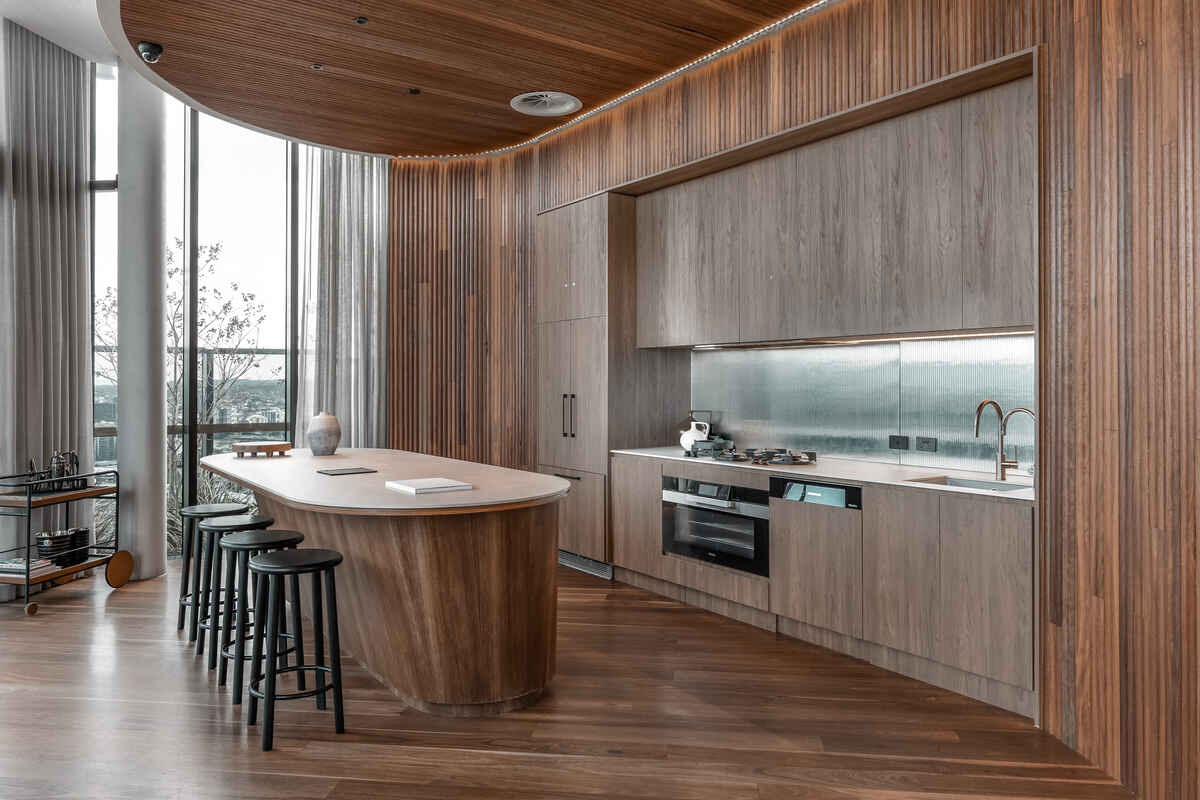
American Oak is a timeless favourite in interior design, known for its robust character and versatile beauty. With its prominent grain patterns and warm tones ranging from pale beige to rich, golden brown, American Oak adds a touch of classic elegance and warmth to any space.
From an environmental perspective, American oak is a sustainable option when sourced from responsibly managed forests. The tree has a good regenerative capacity and sports a moderate growth rate, which further contributes to its sustainability.
Cork

Cork is an excellent interior design choice as its natural, earthy appearance adds a distinctive, stylish element to a space that can enhance both modern and traditional interiors alike. Available in various finishes and colours, cork is highly versatile, allowing for creative design solutions.
Since cork is harvested from the bark of cork oak trees, which regenerate their bark every 9-12 years, it’s a renewable resource that supports environmental conservation and biodiversity. Its natural insulating properties, both thermal and acoustic, enhance energy efficiency and comfort in indoor spaces. Cork’s durability and resistance to moisture, mould, and mildew ensure longevity and minimal maintenance, making it a practical option.
Bamboo
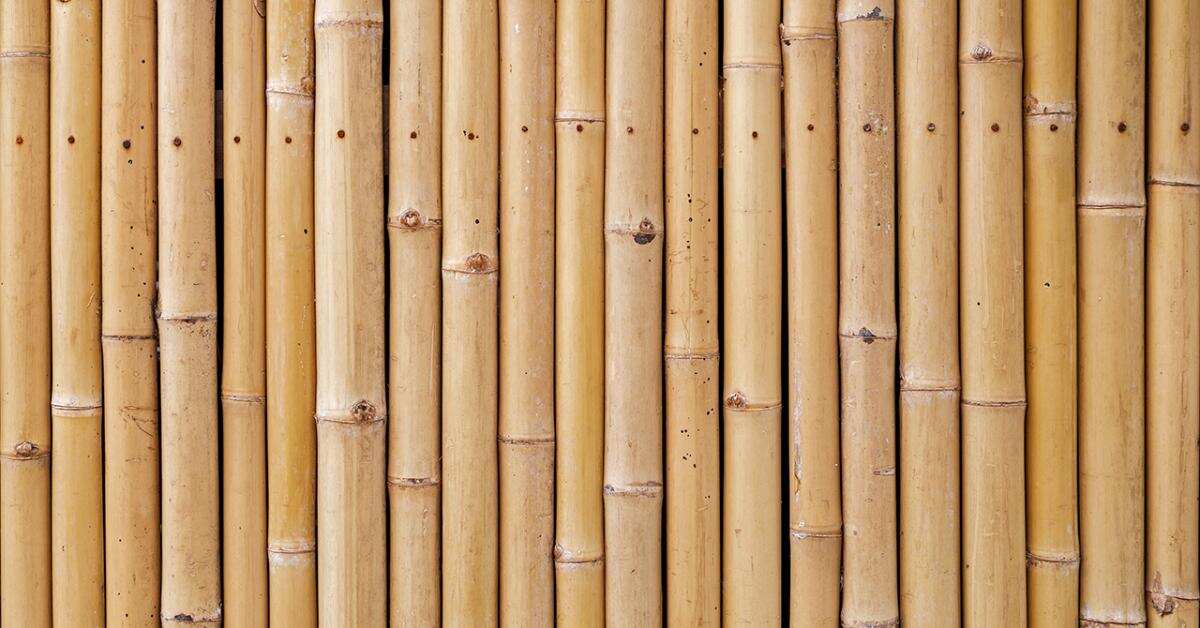
The natural, light colour and smooth texture of bamboo brings a sense of warmth and elegance, while its versatility allows it to fit seamlessly into both contemporary and traditional design schemes.
Bamboo is an excellent sustainable choice for internal wall cladding due to its rapid growth and renewability. As one of the fastest-growing plants, bamboo can be harvested in 3 to 5 years, making it a highly renewable resource that doesn’t deplete natural forests.
Its production has a low environmental impact, often requiring minimal pesticides and fertilizers. Bamboo is durable, resilient, and resistant to pests and moisture, ensuring long-lasting performance with minimal maintenance.
Pine
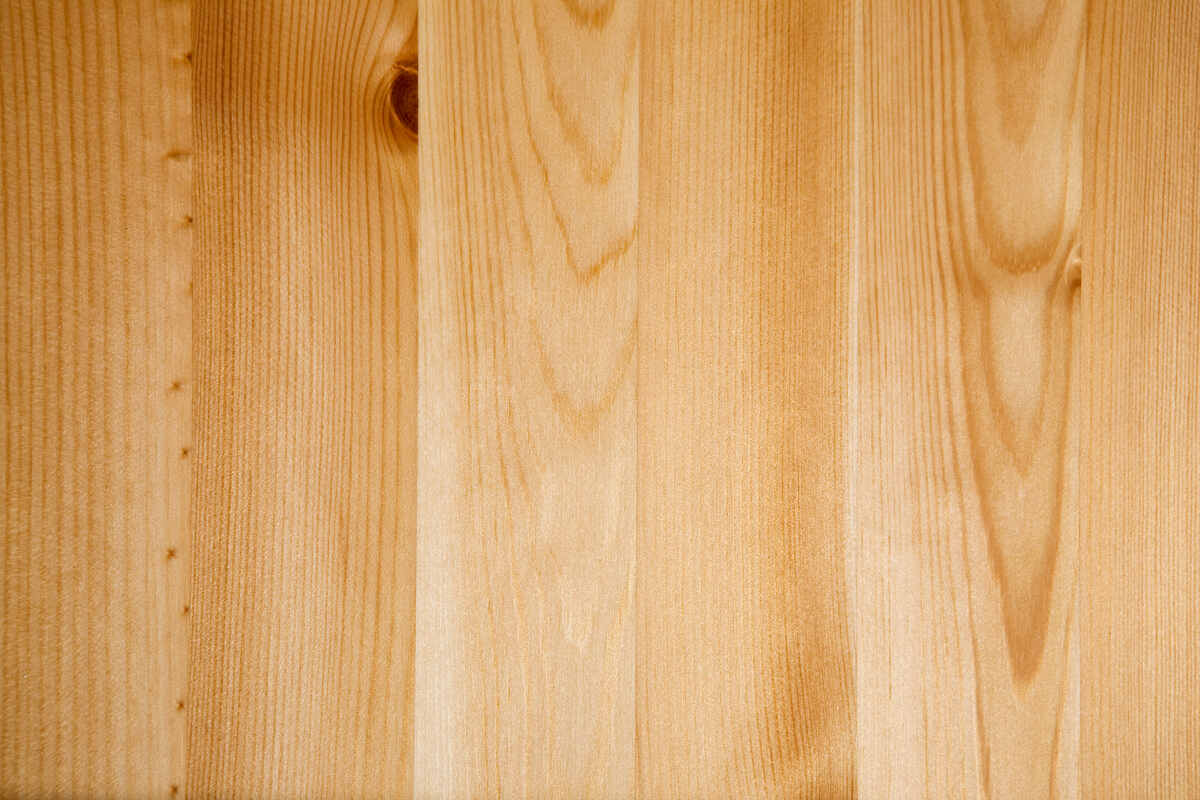
If you’re looking for warm, light tones and distinctive grain patterns, have a look at pine. This softwood can accept stains and finishes so it can be customized to match various design styles, from traditional to contemporary.
Pine scores high sustainability marks for its renewability and availability. Pine trees grow relatively quickly compared to hardwoods though the wood is more likely to develop dents and scratches than hardwoods. It’s also not as resistant to decay or insects as hardwoods. Since it’s a stiff wood, it’s rather durable and resistant to shrinkage and swelling, so it retains its shape well.
Spotted Gum
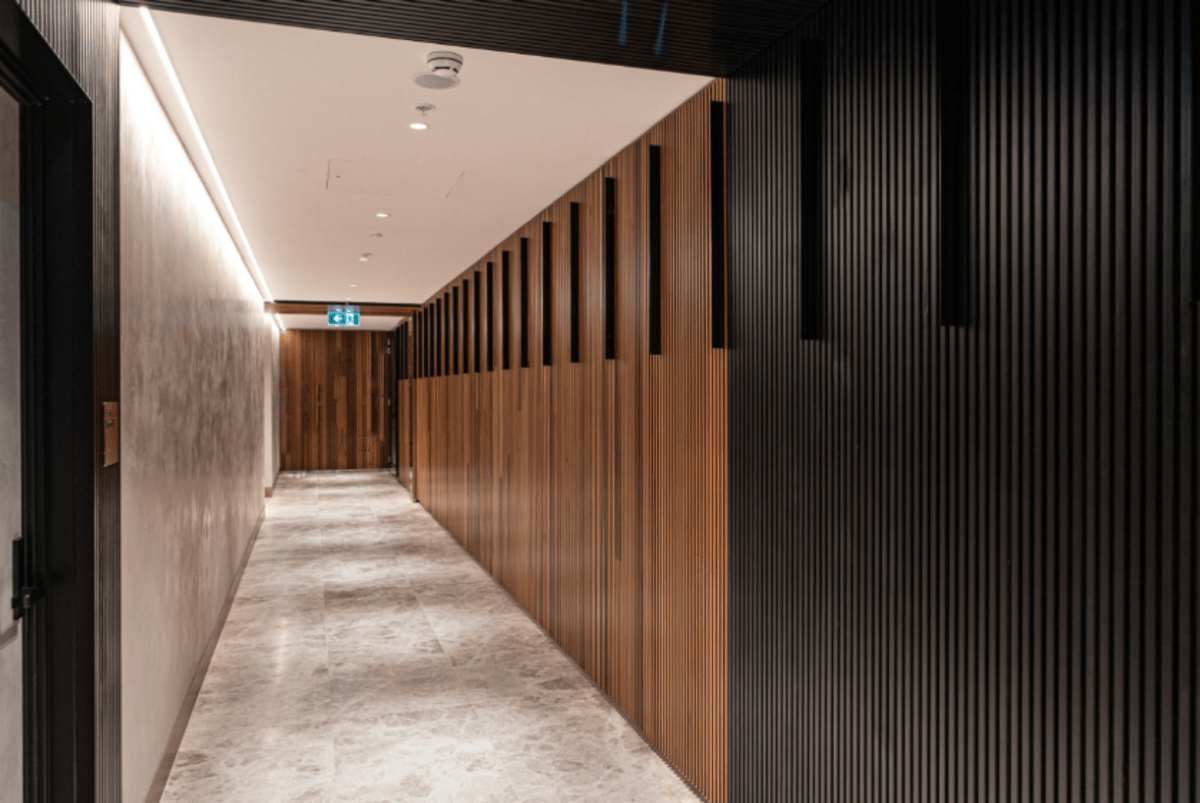
Spotted Gum stands out as a premier choice for interior cladding, celebrated for its striking appearance and robust performance. Its distinctive wavy grain and varied colour palette, ranging from light honey to deep chocolate, bring a dynamic and sophisticated touch to any interior space. This unique aesthetic makes spotted gum a versatile material that complements both modern and traditional design styles.
The timber’s natural density also provides excellent acoustic properties, reducing noise transmission and enhancing the comfort of indoor environments. Additionally, spotted gum has inherent fire-resistant qualities, which adds an extra layer of security and peace of mind for homeowners and designers alike.
In terms of sustainability, spotted gum trees grow relatively quickly compared to other hardwoods and they also have good natural regeneration capabilities, particularly in their native habitats. Since it’s a hardwood, it is denser than softwoods and consequently it sequesters more carbon.
Blackbutt
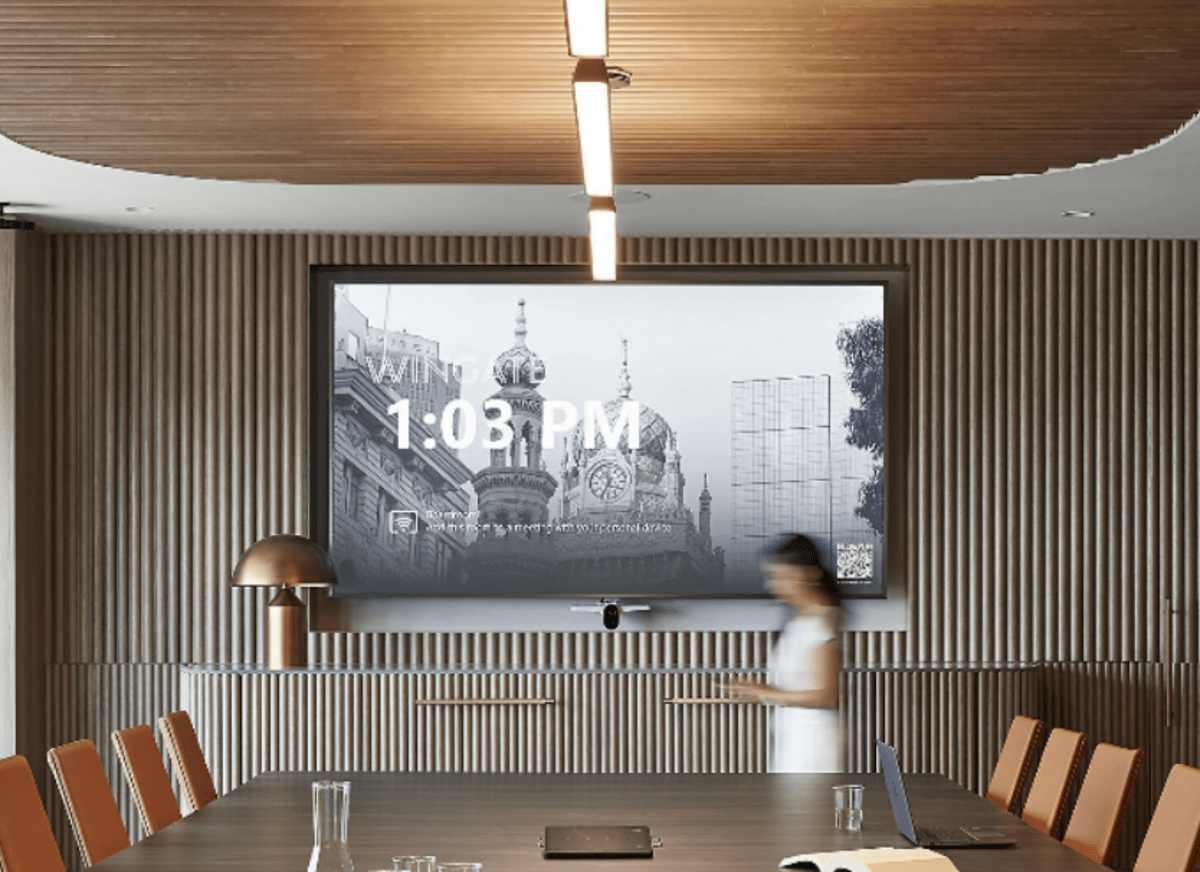
Blackbutt timber is a highly sought-after material for internal wall cladding, prized for its elegant appearance and exceptional durability. Its uniform, straight grain and attractive color palette, which ranges from pale cream to golden brown, lend a warm and sophisticated ambiance to any interior space. This versatility makes blackbutt an excellent choice for various design styles, from contemporary to classic, adding a touch of natural beauty and refinement.
A standout feature of blackbutt is its impressive durability and hardness. Like spotted gum, it’s highly resistant to wear and tear. Additionally, its natural resistance to termites and decay ensures that installations remain pristine and structurally sound over time. All that combined means a longer lifespan, which means you won’t need to replace it as often, thus saving resources and money, which is one way it’s an eco-friendly choice. Other factors supporting its sustainability include its relatively fast growth rate, natural regeneration capabilities, and resistance to pests and diseases.