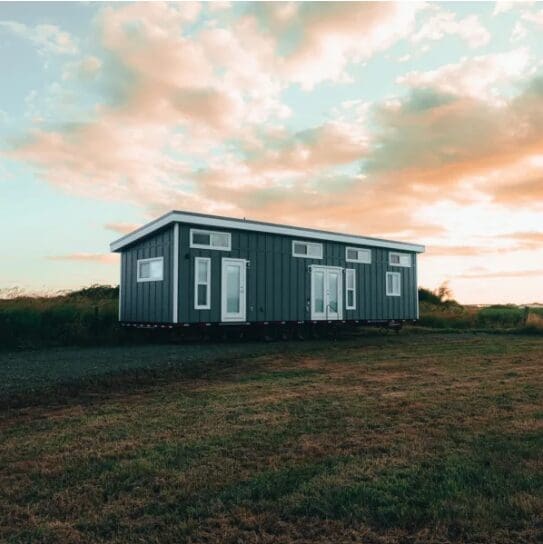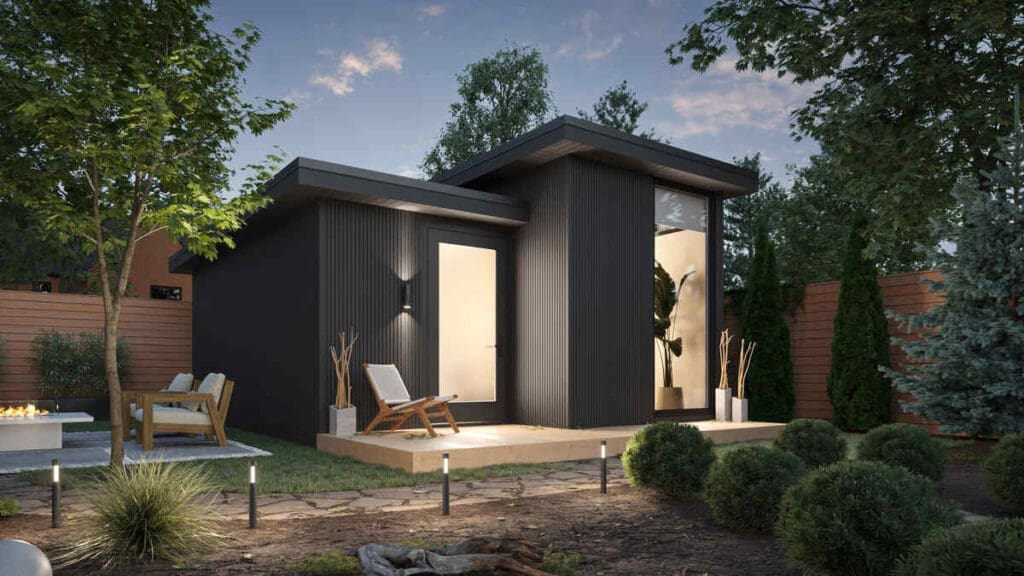
Living in a small space is inherently sustainable since your home likely required less resources to build and consumes less energy to maintain than a larger one.
Now want to take that sustainability a step further? Great! Because you have lots of options to get creative and combine environmental friendliness with functionality and beauty. Have a look at these sustainable design ideas for some inspiration.
1. Optimize Natural Light
Maximizing natural light in a small living space reduces the need for artificial lighting, cutting down on energy use. Use sheer curtains, strategically placed mirrors to reflect light, and light-coloured walls to make the space feel larger and brighter. Skylights or solar tubes, if possible, are excellent additions to bring in more daylight.
Read more on this topic in Daylighting 101 : How to Get the Most Natural Light into All the Rooms of Your Home.
2. Multi-Functional Furniture
Get the Green Building Project Checklist
Use this handy checklist on your next project to keep track of all the ways you can make your home more energy-efficient and sustainable.
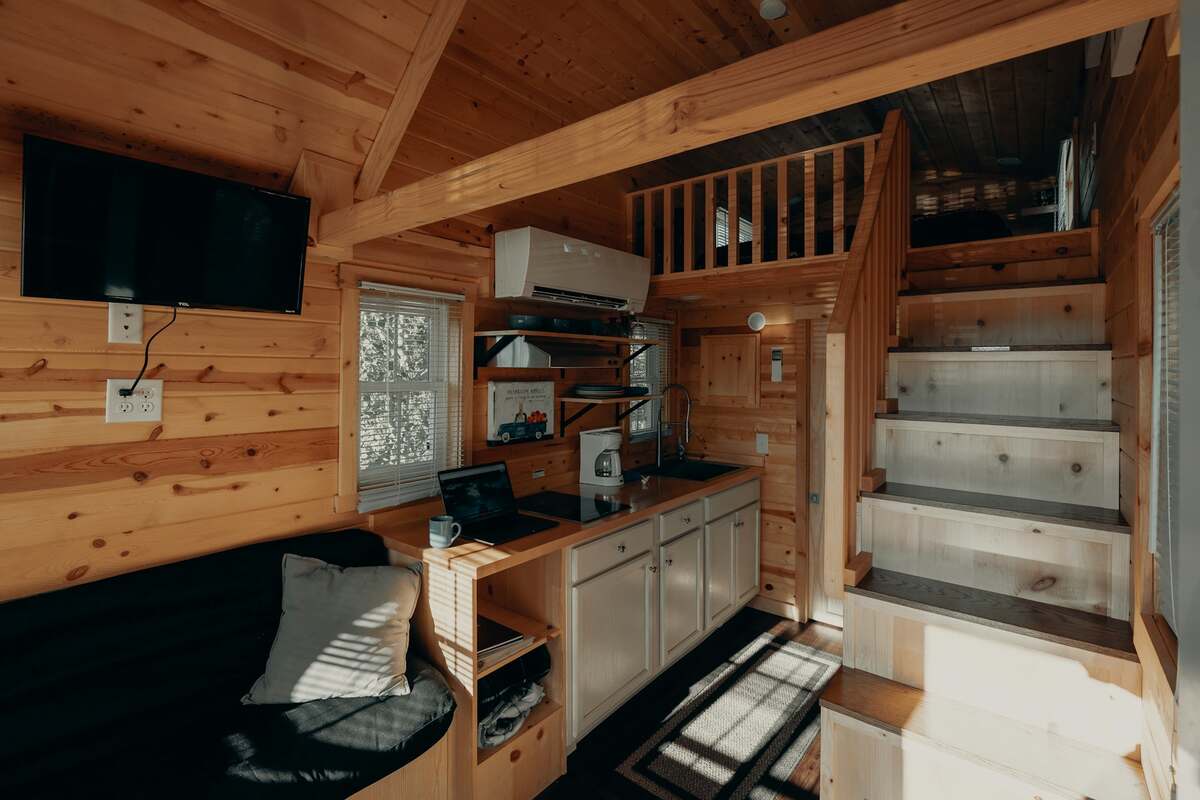
Invest in multi-purpose furniture to save space and reduce material consumption. Here are some examples of this:
- A sofa that converts into a bed.
- Solid wood coffee tables with built-in storage.
- Wall-mounted desks that fold away when not in use.
- Modular seating or tables that can be rearranged as needed.
Choosing furniture made from sustainable materials like bamboo, FSC-certified wood or recycled metals enhances eco-friendliness.
3. Consider Eco-friendly Flooring
Your flooring is a great chance to improve the sustainability of your space. Instead of using synthetic materials like vinyl tiles or carpet you can opt for eco-friendly flooring options, such as reclaimed wood, bamboo or recycled tiles. These flooring options have less environmental impact than traditional alternatives. Look especially for durable materials that will last a long time so you don’t have to replace them as often.
Read more in Eco-Friendly Flooring Options You’ll Love.
4. Choose Sustainable Furniture
Consider the material of your furniture as much as the size and design. Buy furniture made only from sustainably sourced materials. Reupholstering and retrofitting furniture is another excellent approach to sustainable furniture. It allows you to recycle and design new furniture from older ones, reducing environmental waste.
For more on this topic read Sustainable Furniture in Canada: A Buyer’s Guide.
5. Energy-Efficient Appliances & Lighting
In small spaces, every appliance counts. Opt for energy-efficient models with Energy Star certifications. Compact, dual-function appliances, such as a washer-dryer combo, save both space and energy.
Depending on your budget, you can power your living space with solar power. However, if you can’t afford this, consider prioritizing energy efficiency.
For example, you can design your space with fewer lighting fixtures and appliances and use energy-efficient LED lights instead of incandescent bulbs.
6. Use Sustainable Wall Treatment and Decor
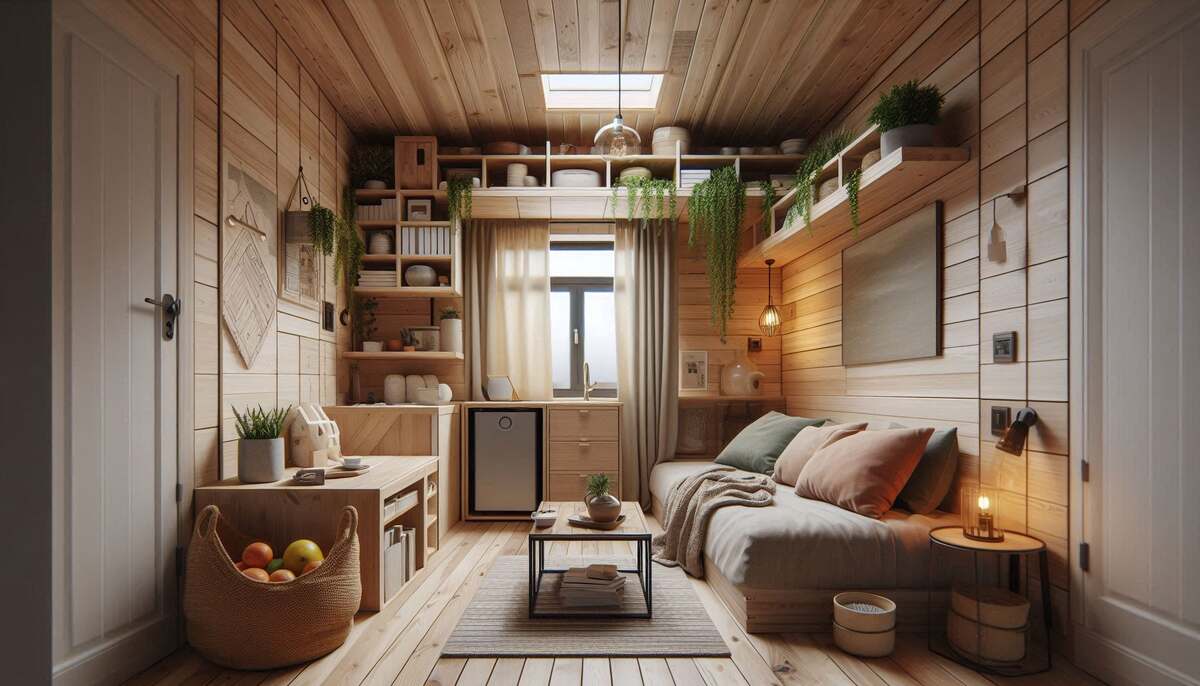
A good idea and sustainable materials are all you need to produce captivating designs that will elevate your home and reduce its impact on the environment.
For instance, you can build accent walls behind your TV or bed using reclaimed wood. You can also hang local and fair-trade products on your walls. When you paint, use low-VOC paint made from natural sources.
7. Introduce Vertical Planter Screens
Vertical planter screens are excellent for introducing plants into small spaces. These screens come in different designs and materials. They’re good for nurturing indoor plants without taking up space.
You can also use tournesol screens to demarcate sections in a small space. When plants are established on a planter screen, they effectively screen off room sections and naturally insulate your space.
8. Upcycle and Reuse
Decorating with upcycled or repurposed items adds character to your space and keeps materials out of landfills. Here are just a few ideas:
- Use old wooden crates as shelves.
- Turn vintage suitcases into storage units.
- Refurbish thrifted furniture with eco-friendly paints or finishes.
- Use old window frames as photo displays, mirrors or chalkboards.
- Transform an old wooden ladder into a vertical shelving unit.
- Turn wine bottles into elegant vases or pendant light fixtures.
- Turn pallets into furniture like coffee tables, bookshelves, or wall-mounted racks.
9. Eco-Friendly Building Materials
When renovating or building your small living space, prioritize sustainable materials. These can be either natural materials like strawbale, cork, sheep’s wool or hemp fibre (e.g. using cork for flooring) or materials that are recycled or reused (e.g. using reclaimed wood for countertops) or at the least, materials that are low impact (e.g. products that require less resources to make than their conventional counterpart – opting for bamboo flooring over regular hardwood flooring). Eco-friendly also means non-toxic and healthy, so focus your purchases on natural materials or products that don’t offgas harmful chemicals (e.g. Zero-VOC paint).
Read more in our Green Building Guide To Sustainable Materials.
10. Minimalist Approach
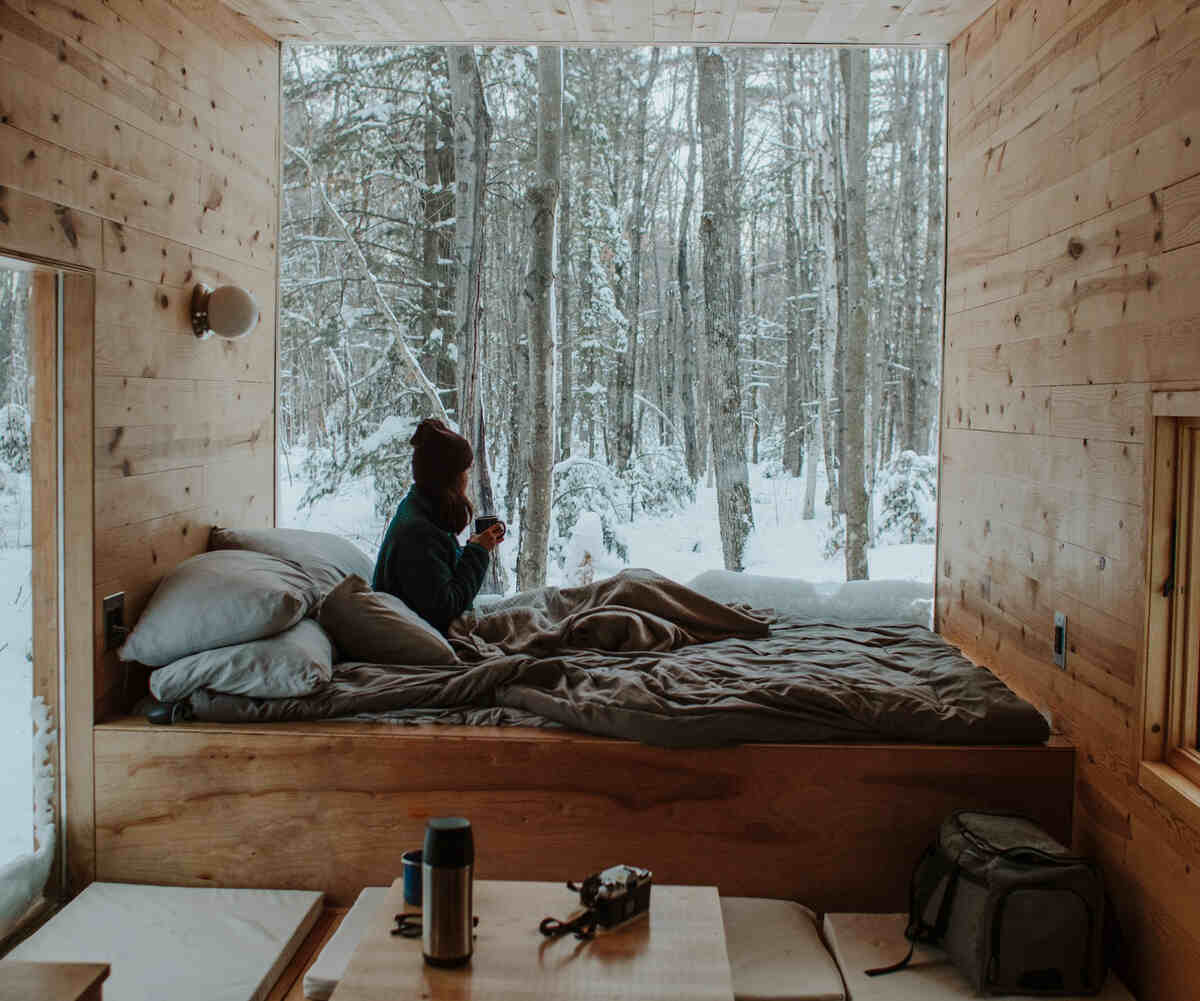
Designing for sustainability is not just about what you use, but what you don’t use. The less stuff you put in your space the more sustainable it is, since you’re using less of the Earth’s resources and there will be less waste.
Adopting a minimalist design philosophy reduces material use and emphasizes quality over quantity. Focus on neutral, timeless colour schemes so that you can keep your decor longer, reducing the need to consume more resources to redecorate. Use simple, multifunctional decor and purchase fewer, higher-quality items that last longer.
A sustainable small living space isn’t just about conserving resources; it’s about creating a harmonious and intentional environment that suits your needs while respecting the planet. By incorporating these design ideas, you can transform your home into a haven of sustainability and style, no matter its size.
Learn about sustainable design in our Green Building Guide to Sustainable Building Design.