On a quiet morning after a heavy rain, have you ever stepped outside and noticed how fresh everything smells – until you see the grime left behind on your patio, driveway or garden furniture? Nature may give things a rinse, but true cleanliness takes a little more effort. The trouble is, many common outdoor cleaning products contain harsh chemicals that can seep into the soil, harm nearby plants and pollute waterways.
The good news? You don’t need to choose between a spotless property and a healthy environment. With a few smart, sustainable cleaning swaps, you can keep your outdoor spaces looking their best – without leaving a toxic footprint.
8 Sustainable Cleaning Tips
1. Use a Pressure Washer with Care
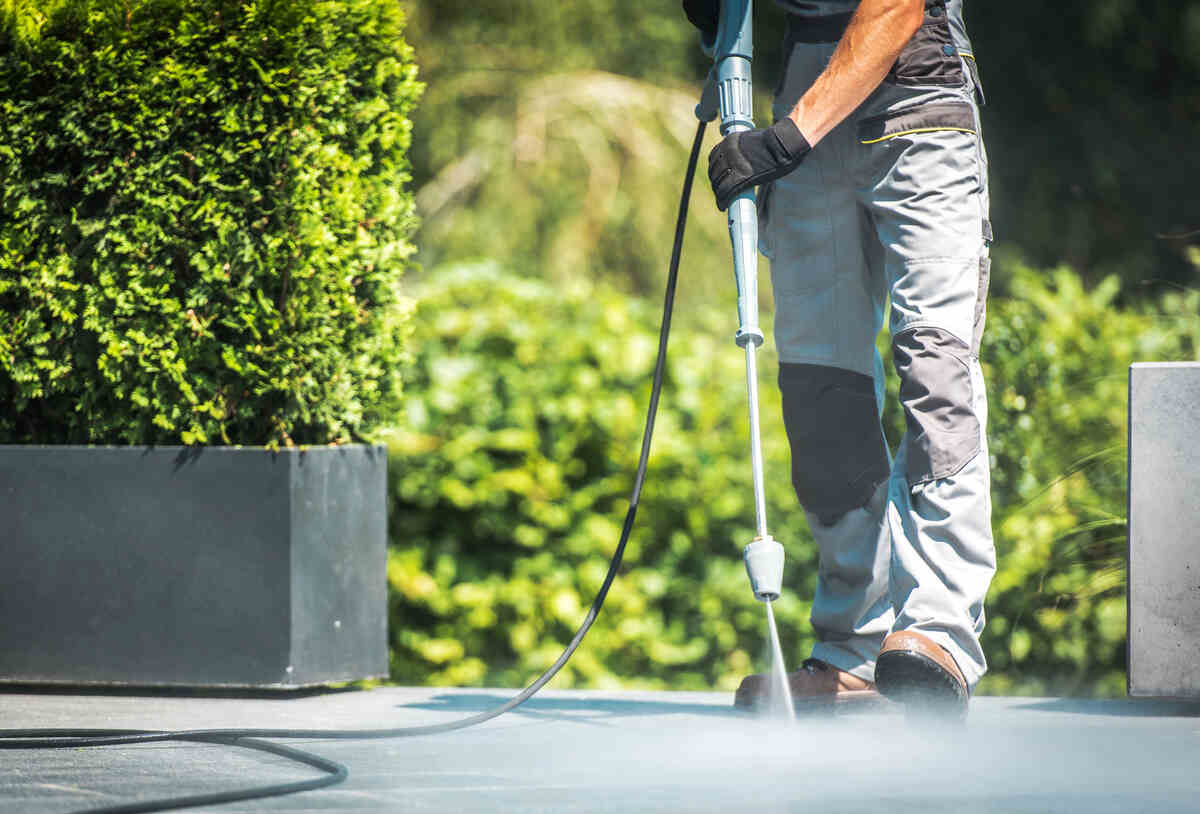
One of the main advantages of pressure washing is its ability to clean large surfaces using significantly less water than traditional methods like hosing or scrubbing. However, they can use up large amounts of water and energy if not used properly. The key is using the right pressure settings and techniques to minimize waste.
Pressure washers are really useful things to have around the house – they particularly excel at cleaning large outdoor areas like driveways, decks and fences. However, they’re not exactly cheap. If you don’t have a pressure washer there are other options as you can always hire pressure washing services to handle the job.
TIP
Opt for a high-efficiency pressure washer that has adjustable settings, and use it only when needed. Reduce the pressure when cleaning delicate surfaces and always aim to target specific problem areas rather than blasting entire spaces unnecessarily. This way, you conserve water and energy while maintaining effective cleaning.

Get the Green Building Project Checklist
Use this handy checklist on your next project to keep track of all the ways you can make your home more energy-efficient and sustainable.
2. Choose Eco-Friendly Cleaning Products
Many conventional cleaning products are filled with chemicals that can harm your plants, pets and local waterways. Luckily, there are plenty of eco-friendly cleaning agents that break down naturally without leaving harmful residues.
TIP
Instead of reaching for chemical-laden cleaners, try using natural ingredients like vinegar, baking soda and lemon juice, which are both safe for the environment and effective at removing dirt, stains, and grime. When shopping, look for products labeled as biodegradable, non-toxic and phosphate-free. These ingredients can work wonders on surfaces like windows, outdoor furniture and stone walkways, helping you clean sustainably without the need for harsh chemicals.
3. Use a Rainwater Harvesting System
Watering your garden or cleaning large outdoor areas can require significant amounts of water. By setting up a rainwater collection system, you can reduce the environmental impact of using municipal water, which is often treated with chemicals and pumped great distances.
Rainwater is as local as it gets. It’s also free, non-chlorinated and perfect for watering plants or cleaning outdoor surfaces.
TIP
Install rain barrels around your property to collect rainwater. This water can then be used for cleaning driveways, washing windows or irrigating your garden, reducing your reliance on potable water and conserving energy in the process.
4. Sweep First, Wash Later
Before grabbing the hose or pressure washer, take the time to manually remove debris like leaves, twigs or dirt. Sweeping or raking can eliminate a large portion of the mess without wasting water or detergent. This process can save both time and resources, as fewer chemicals or water will be needed to finish the job.
TIP
Use a broom or a rake to remove large debris before washing. Sweeping or raking ensures that you’re only using water where it’s truly necessary, conserving both water and energy while still achieving a clean result. Sweep outdoor areas frequently to prevent debris buildup.
5. Avoid Harmful Chemicals for Stain Removal
Stubborn stains like oil or rust can sometimes require heavy-duty cleaners, but many of these products contain harmful chemicals that can leach into the environment. Rather than relying on these toxic substances, consider using natural alternatives that are safer for the environment.
TIP
For oil stains, try using cornstarch or kitty litter to absorb the oil before washing the surface. For rust, create a paste of baking soda and vinegar to break down the stain without introducing harmful chemicals. These DIY methods are safe for the environment and reduce the need for toxic cleaners that can pollute runoff water. It’s best to clean up spills promptly to avoid stains and minimize the need for harsh cleaning.
6. Mulch and Compost Yard Debris
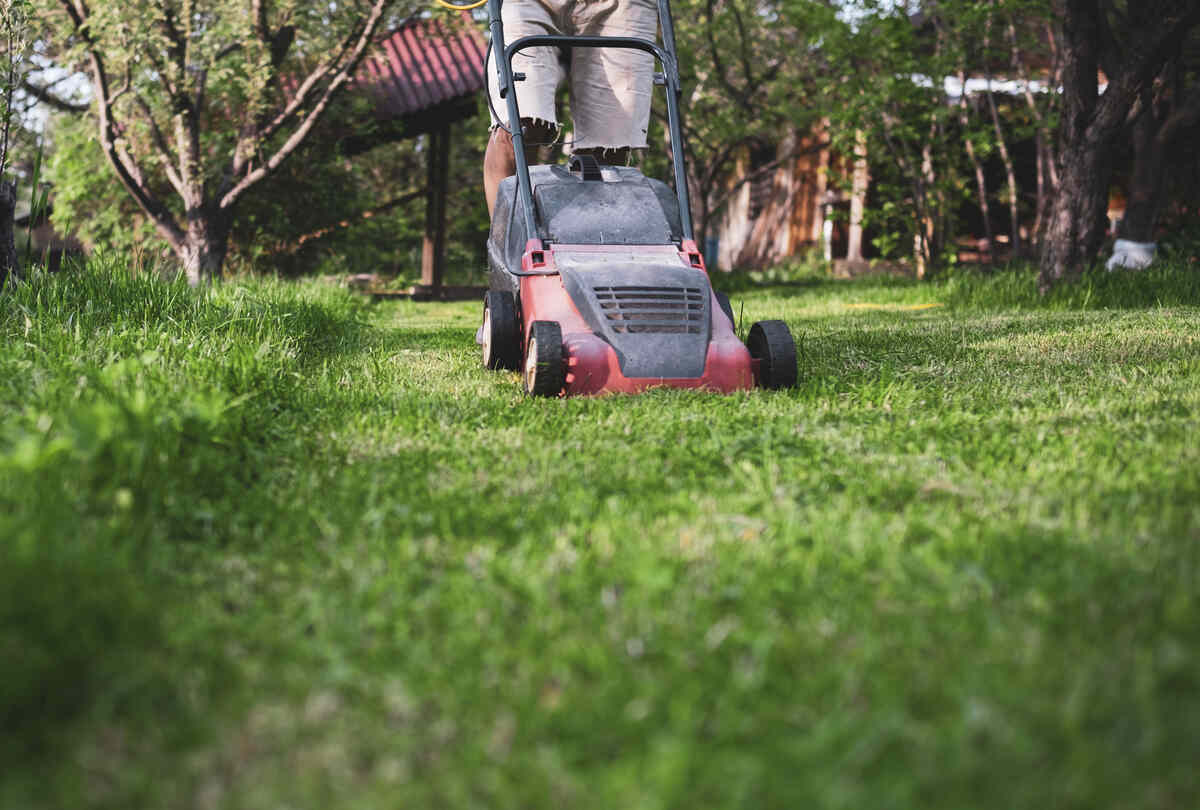
Yard debris such as grass clippings, fallen leaves and plant trimmings don’t have to end up in the landfill. Instead, you can turn them into mulch or compost, which benefits your garden by providing natural nutrients and reduces greenhouse gas emissions from dumping into landfill.
TIP
Use a mulching mower or start a compost pile to turn organic waste into valuable fertilizer. Mulching your grass clippings can also help maintain moisture in your soil, reducing the need for additional watering and improving your garden’s health.
7. Opt for Solar-Powered Outdoor Tools
Almost all garden tools have an electric or battery-powered option you can choose over gas. These are great alternatives, especially when paired with a solar-powered generator or solar PV system. Clean your property in this way and you’ll be doing the work without any fossil fuels.
TIP
Hook up your electric power tool, such as a leaf blower or chainsaw, directly to a solar-powered generator or charge up the batteries using the generator or hooked into your solar PV system.
8. Maintain Outdoor Equipment Regularly
Proper maintenance of your outdoor tools is essential for prolonging their lifespan and ensuring they operate at peak efficiency. Well-maintained equipment uses less energy, reduces waste and lasts longer, saving both money and resources in the long run.
TIP
Regularly clean and inspect your pressure washers, leaf blowers and other outdoor equipment. Change filters, clean parts and lubricate moving components to keep everything running smoothly. This not only improves performance but also reduces energy consumption and extends the life of your equipment.
Images from Depositphotos