With Canada’s pledge to achieve net-zero by 2050, Canadian builders have increasingly been shifting their mindset towards sustainability by creating buildings that are more energy efficient and have less impact on the environment. In this article, we will look at just a few of the coolest sustainable buildings in Canada.
Vancouver Convention Centre West
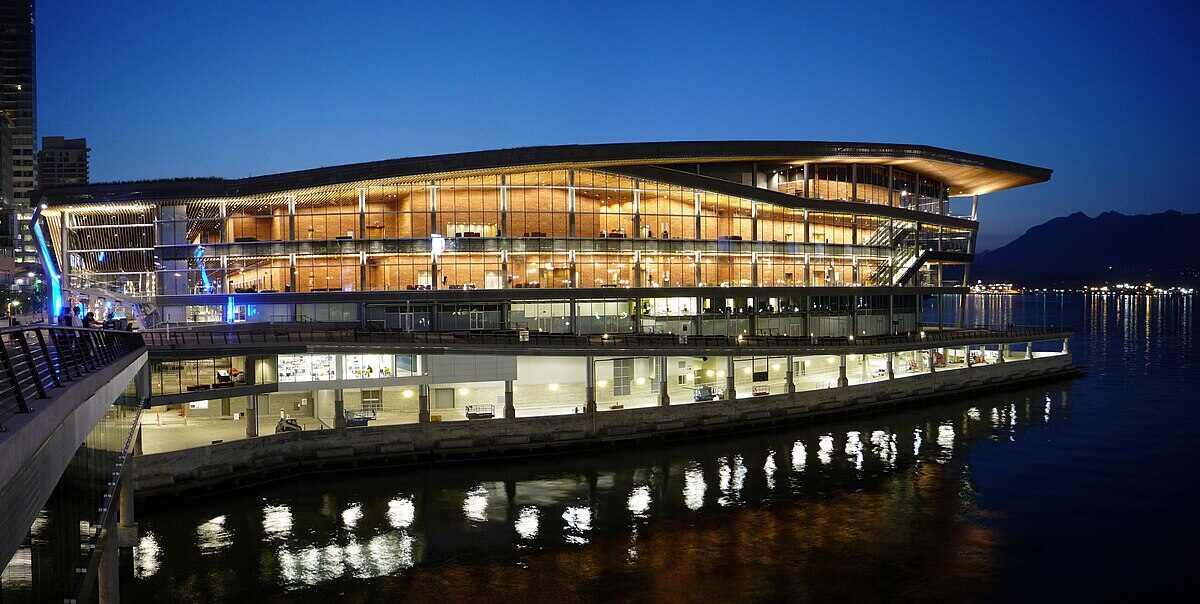
Vancouver Convention Centre West is a stalwart of sustainable design and operation. The facility, recognized as the world’s first double LEED Platinum-certified convention center, features a six-acre living roof – the largest in Canada and the largest non-industrial living roof in North America – planted with over 400,000 indigenous plants and grasses. The roof insulates the building by reducing summer heat gains by up to 95 percent and winter heat losses by 26 percent while creating vibrant habitats for local wildlife.
The centre, which used local BC wood products from sustainably managed forests throughout its construction, incorporates innovative systems to minimize its environmental impact. Its sophisticated black water treatment plant recycles grey and black water for toilet flushing and rooftop irrigation, cutting potable water use by approximately 70 percent. The seawater heating and cooling system taps into the adjacent Burrard Inlet to efficiently regulate indoor temperatures year-round with almost zero carbon emissions. In addition, the restored marine habitat built into the building’s foundation has dramatically improved local water quality and supported diverse sea life.
Calgary Central Library
Get the Green Building Project Checklist
Use this handy checklist on your next project to keep track of all the ways you can make your home more energy-efficient and sustainable.
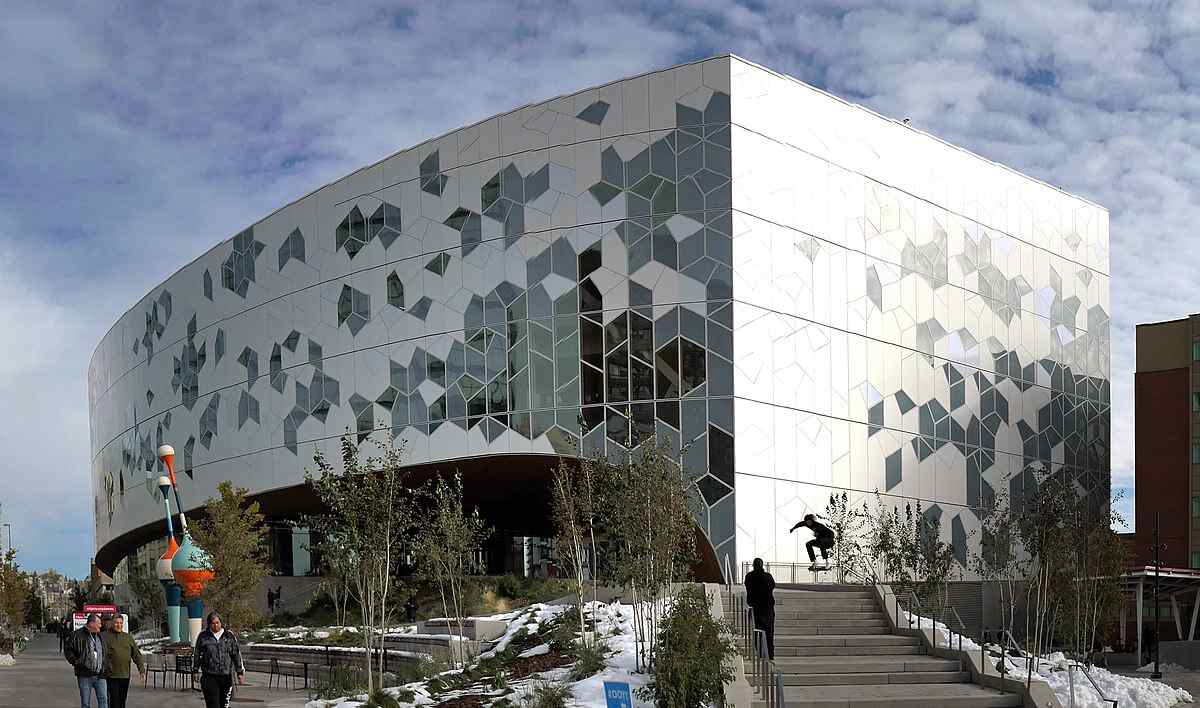
Calgary Central Library is a benchmark of sustainable design, with a LEED Gold standard showcasing environmentally conscious strategies that dramatically reduce its operational footprint. Designed by Snøhetta and DIALOG, the building incorporates sustainably sourced red cedar from British Columbia, ensuring that 100 percent of the wood used meets Forest Stewardship Council standards. The library also champions water conservation; low-flow fixtures and stormwater storage systems reduce indoor water use by 30 percent and irrigate drought-tolerant landscaping around the entry plaza and outdoor amphitheatre. During construction, an impressive 79 percent of waste was diverted from landfills, reflecting a deep commitment to resource efficiency.
The library integrates advanced climate control and cutting-edge ventilation and air filtration systems. The library boasts energy-efficient upgrades that support indoor environmental quality and achieve over 26 percent energy cost savings. The advanced HVAC system was also pivotal during the COVID-19 reopening efforts. To further enhance energy performance, designers incorporated an ingenious technology: thousands of reflective ceramic dots on the exterior windows, which prevent solar heat gain. They also strategically positioned solar shades in the Oculus skylight to mitigate glare.
Moreover, the construction ensured a direct connection to Calgary’s public transit network and included a secure bicycle storage area to promote low-carbon commuting. As Kate Thompson of the Calgary Municipal Land Corporation noted, the project aims to be a long-lasting public space that adapts to environmental changes.
Brock Commons Tallwood House, UBC, Vancouver
Brock Commons Tallwood House, completed in 2017, redefined sustainable construction as an 18-storey student residence at UBC. The 53-meter tower became the world’s tallest mass timber building (at the time) and a model for rapid, cost-effective, and environmentally responsible design. The project uses 2,233 cubic metres of timber, which actively sequesters 1,753 metric tons of CO2 and avoids 679 metric tons of greenhouse gas emissions, an impact equivalent to taking 511 cars off the road for a year.
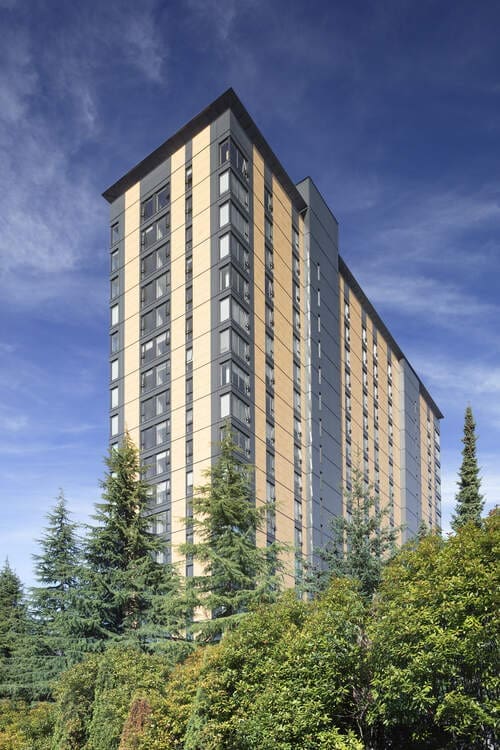
Engineers embraced a “keep it simple” design that employs prefabricated cross-laminated timber (CLT) panels and glue-laminated columns, allowing the structure to rise at an impressive pace of two floors per week – erected in just 66 days. This off-site prefabrication method reduced construction waste and minimized on-site disruption while proving that mass timber construction can match the costs of conventional concrete structures.
Brock Commons targets LEED v4 Gold certification and conforms to ASHRAE 90.1 standards, with a life cycle analysis demonstrating a 43 percent reduction in global warming potential compared to concrete alternatives. The building’s adaptable design demonstrates its sustainability by enabling easy deconstruction, reuse and recycling of materials, which sets a new benchmark for green construction.
Bibliothèque du Boisé
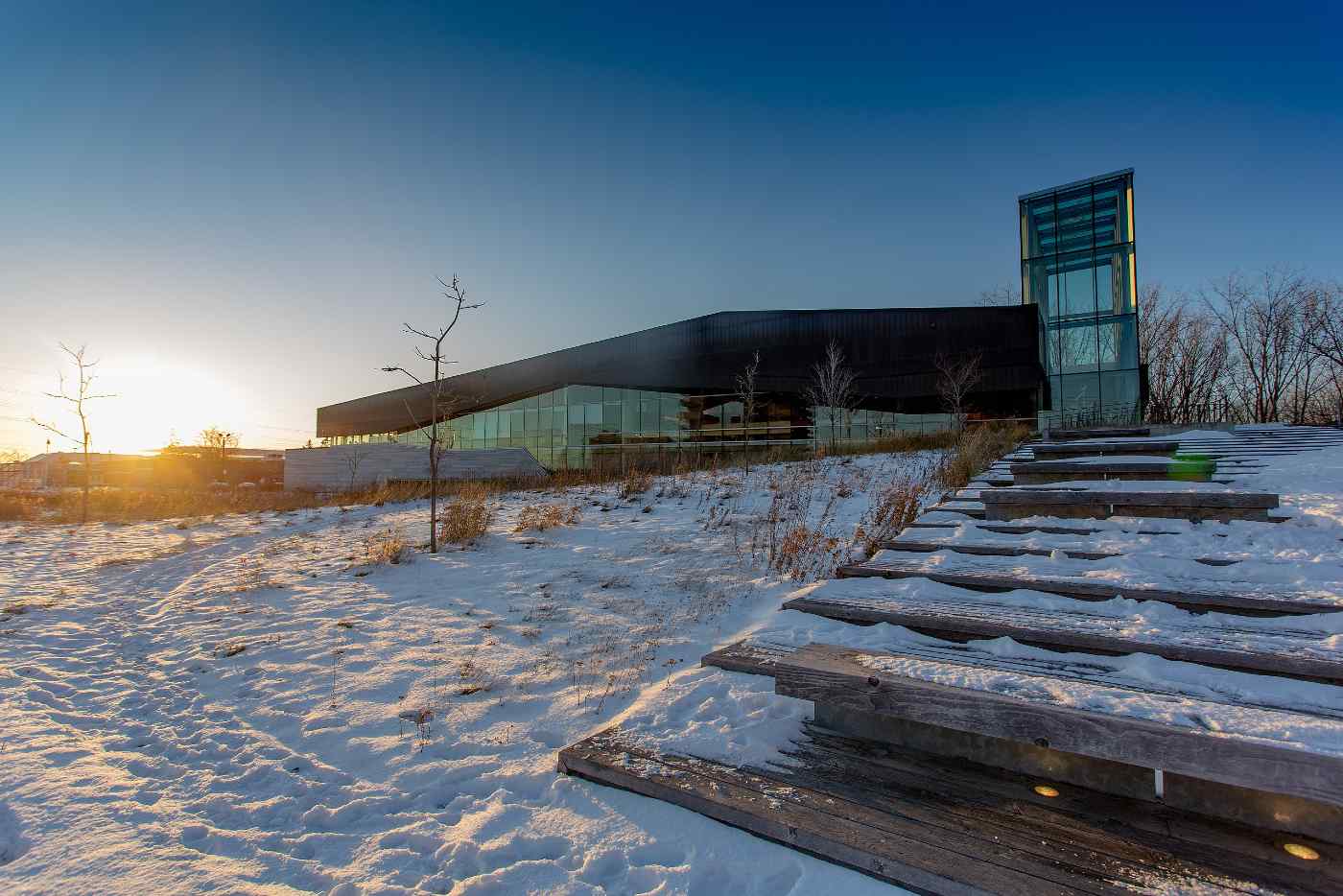
Winner of the 2017 Royal Architectural Institute of Canada (RAIC) Green Building Award, Bibliothèque du Boisé is located in Montreal’s largest borough, Saint-Laurent.
Achieving the highest level of LEED (Leadership in Energy and Environmental Design) certification, winning Platinum for its sustainable design and construction and high-performing green building materials and techniques, this Montreal library has been built in such a way as to minimize its adverse effects on the environment while promoting the health and well-being of the people who use its facilities.
This 6,000 m2 building is made from certified wood and other low-emitting materials, features a vegetative roof and manages to seamlessly integrate its interior with its natural surroundings. With minimal disruption to its existing trees, architects also ensured 100 more trees were planted to replace any lost during construction.
Other sustainable design features include a passive heating system that traps heat from the sun to warm the building as well as to ensure maximum exposure to natural light within the entire building.
BC Passive House Factory
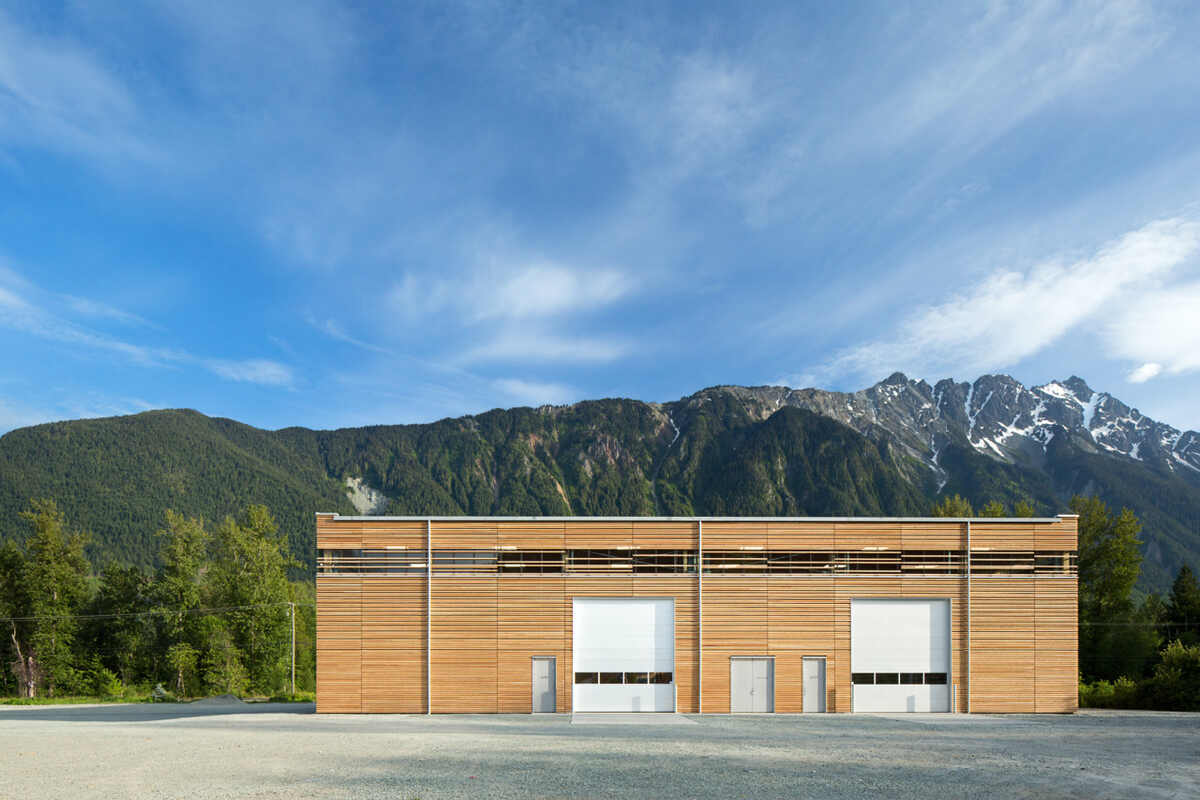
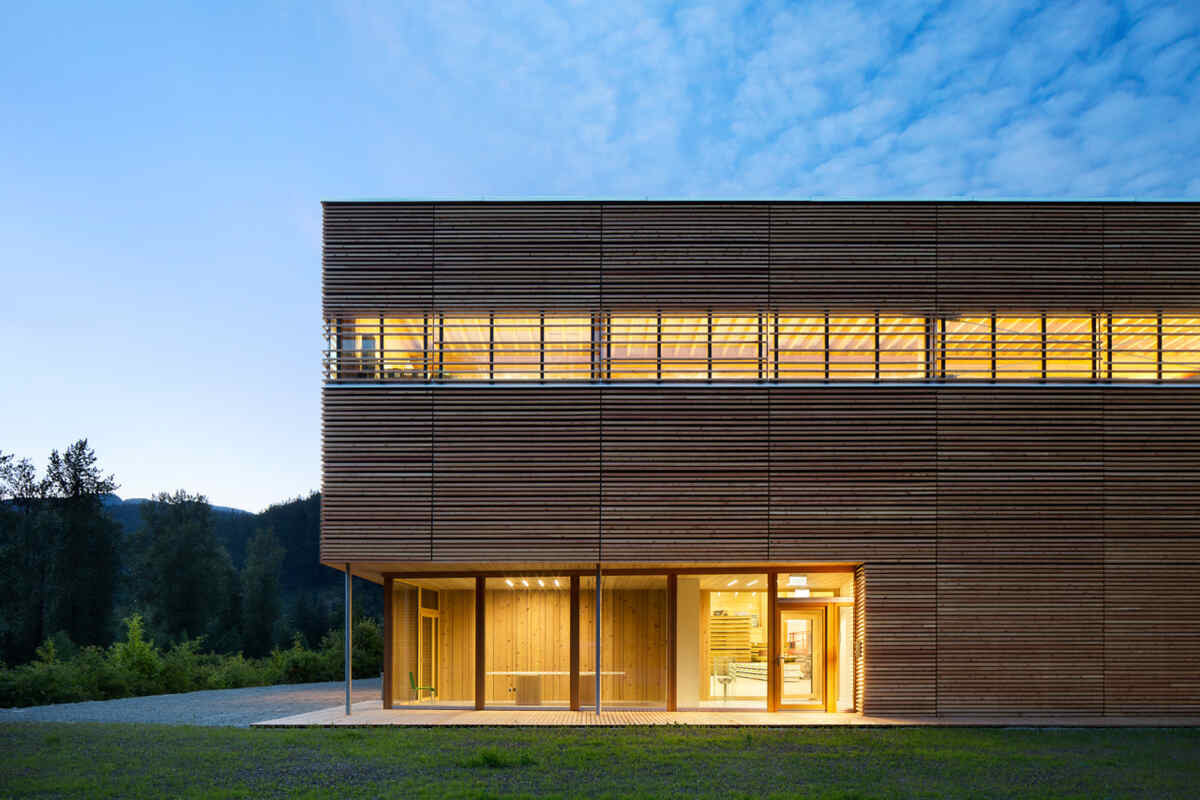
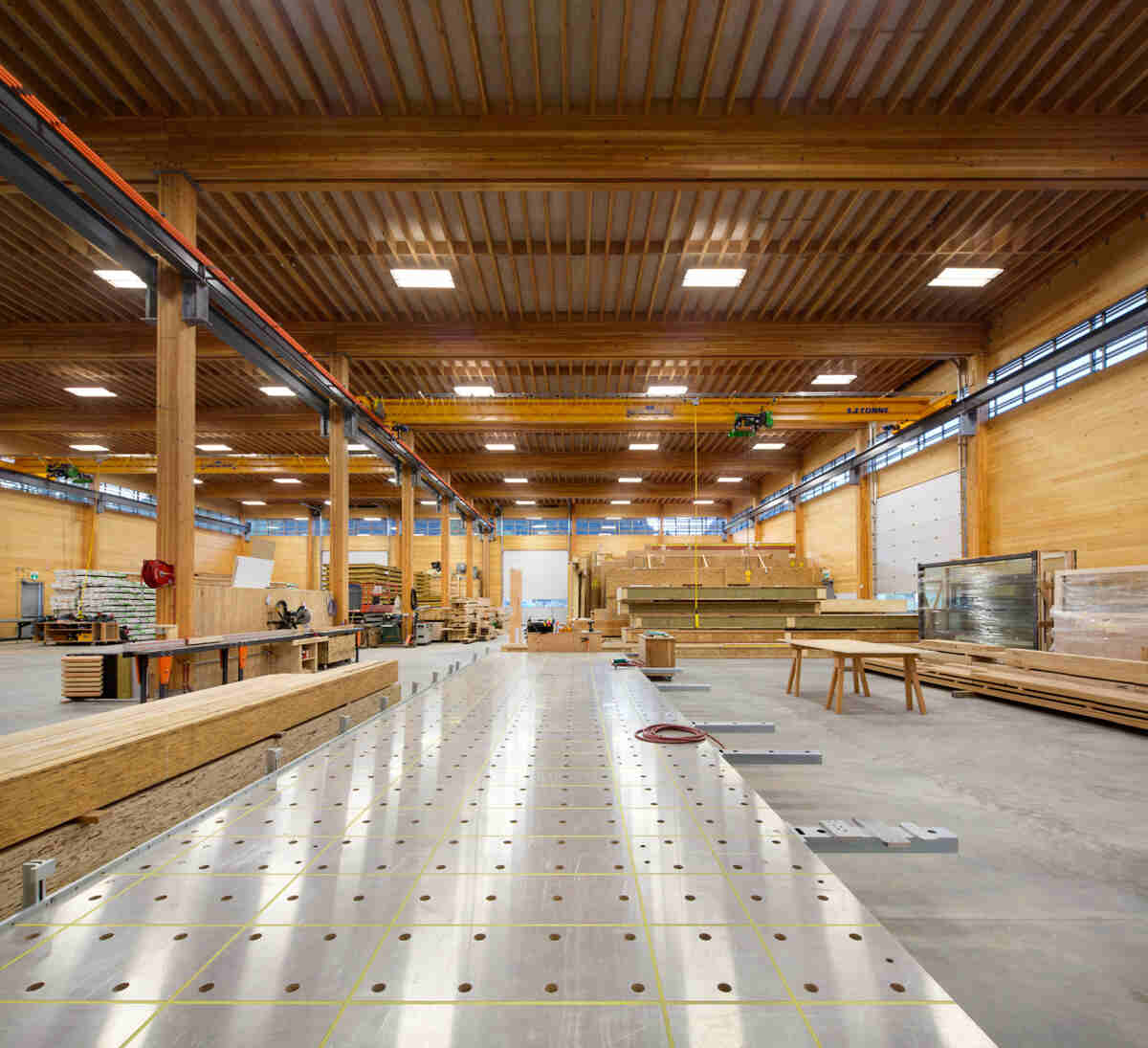
This eco-friendly factory situated in Pemberton, British Columbia is constructed entirely of wood, thereby reducing its carbon emissions by 971 tonnes compared to the use of concrete. Carbon emissions are also lowered due to its energy-efficient heat-recovery ventilation system.
The building is also fitted with high-performing wood windows that allow sunlight and heat entering the building to meet most of the building’s heating requirements.
The 1,500 m2 structure is designed to manufacture prefabricated passive house panels. It contains clerestory windows that provide natural daylight and 360-degree views that include a spectacular mountain range.
The influx of natural light combined with the factory’s wooden interior create a warm and inspiring work environment.
MEC Head Office
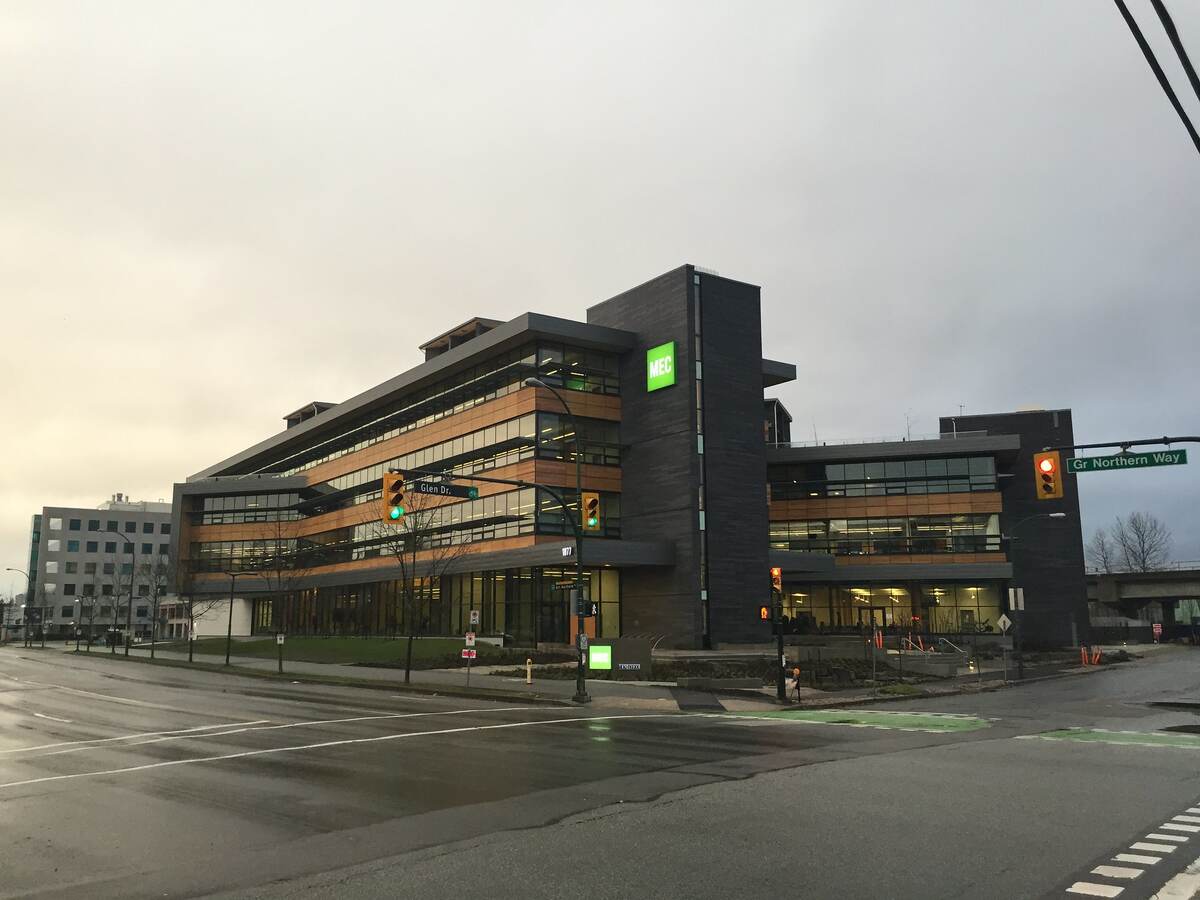
The head office of Mountain Equipment Co-operative, located in British Columbia, is a high-performing sustainable building that offers a number of environmental benefits (to read more about sustainable buildings in BC, take a look at Feds Invest in Energy Efficient Buildings for British Columbia).
The 12,100 m2 building is constructed of wooden components and can be taken apart and reused at the end of its useful life. Receiving ample daylight, the building only requires artificial light for a few hours each workday and operates on a lighting schedule, ensuring maximum efficiency.
Other green features include a series of geothermal wells that heat and cool the building through a ground source heat pump (GSHP) system. To cool the building, its wind towers draw in air from outside, directing it into fans within the structure.
Water conservation methods include low and no-flow plumbing fixtures and a rainwater harvesting system that collects water for irrigation and landscaping purposes. The building’s accessible green roof offers panoramic views of the mountains and city helping to promote the well-being of its occupants.
The Mona Campbell Building
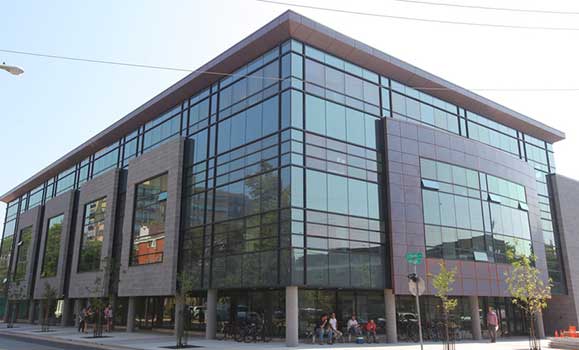
In 2012 the Mona Campbell building, situated in Halifax, Nova Scotia, was the first university building in Canada to receive LEED Gold certification.
The building used Bubbledeck technology in its construction, which involves using hollow plastic balls reinforced with steel to allow for less concrete usage in slabs that support the structural weight of the building.
Other sustainability features include a rainwater harvesting system for toilets and exterior use, low-flow plumbing fixtures, a drought-resistant green roof, SolarWall technology to heat ventilation air and OptiNet sensors which improve energy efficiency through monitoring indoor air quality. Also, 90 percent of the waste materials produced in construction were also reused or recycled rather than sent to landfill sites.
These buildings are important to the green building industry, not just because of their reduced environmental impact, but because of the ways their cutting-edge designs will inspire and influence future architects. They prove that sustainable buildings can be both environmentally friendly and beautiful.
For a larger list of sustainable buildings in Canada, check out Green Buildings in Canada: A Collection of Some of the Country’s Finest