
This guide is for anyone interested in the world of sustainable building design. It’s intended as a very brief primer on some environmental issues and possible solutions that you might consider in the designing and planning stages of a project you’d like to make greener, whether that’s a new build or a renovation.
The guide is divided into 2 parts. The first will cover some definitions and objectives of sustainable design. Part II will dive into some approaches, philosophies and practices currently being used to meet those objectives.
Although our focus will be on residential buildings, the information we present can be applied to commercial, industrial and public buildings, as well. We offer further reading resources as we go so you can explore each topic in more depth.
I. Sustainable Building Design Objectives
In the planning stages of a sustainable building project, it’s good to think about goals. Let’s start by considering what we even mean by “sustainable building” so we know what we’re going for.
What is Sustainable Building Design?
Like many terms in the sustainability field, what people mean by sustainable building design is flexible and changing. Architect and scholar Elizabeth Donovan writes in “Explaining Sustainable Architecture” that even within academic and professional writings on sustainable architecture, there’s a tendency to “acknowledge that it cannot be defined and further that there is no agreed-upon definition.”
Get the Green Building Project Checklist
Use this handy checklist on your next project to keep track of all the ways you can make your home more energy-efficient and sustainable.
That ambiguity is present in broader discussions of sustainable building design, as well, although definitions do tend to share some features. Most definitions specify that sustainable designs attempt to reduce a building’s negative impact on the environment and to lower that building’s consumption of energy and resources over the course of its life.
Many definitions specify habitat fragmentation, emissions and construction waste as just a few of the negative impacts that buildings tend to create and that sustainable buildings try to mitigate. It’s also common for the term to include improving occupant health, community vibrancy and economic sustainability in its definition.
How a building achieves those reductions and improvements is where design really gets interesting, since the sky is the limit in terms of innovative approaches to solving these problems.
Objectives of Sustainable Building Design
The U.S. National Institute of Building Sciences’ Whole Building Design Guide (WBDG) offers 6 objectives for sustainable design. They are:
- Optimize Site Potential
- Optimize Energy Use
- Protect and Conserve Water
- Optimize Building Space and Material Use
- Enhance Indoor Environmental Quality (IEQ)
- Optimize Operational and Maintenance Practices
We’ve covered a few of these aspects in our other guides, so we won’t repeat them here. If you’d like to learn more about them, you can read our Green Building Guide to Water Efficiency, our Green Building Guide to Energy Efficiency and Renewable Energy, our Green Building Guide to Sustainable Materials and our Green Building Guide to Indoor Environmental Quality.
Let’s turn our attention, then, to site potential and operational and maintenance practices.
Optimize Site Potential
Since buildings impact local ecosystems, it’s essential to consider what is being impacted and how. As the WBDG states, buildings “fundamentally change the function of land,” meaning not just that, for example, we’ve turned a field into a residential property, but that the land’s ability to function as it was designed to within its larger ecosystem has been radically disrupted.
To mitigate that disruption, we need to pay careful attention to site selection and design.
Site Selection
In Sustainable Architectural Design: An Overview, Professor of Architecture Kuppaswamy Iyengar says that to reduce environmental damage, sustainable site selection should:
“[m]inimize urban sprawl; be responsive and respectful to the land, the environment, habitat, and green space; and encourage high-density urban development over low-density development to preserve valuable green space and preserve key environmental assets.”
Site selection will impact not just local ecosystems, but also the building’s carbon footprint, as well as ongoing energy use associated with the building. Everything from the distance building materials have to travel to the length of the occupant’s commute is dependent on the site.
Optimizing site selection could include choosing a site close to public transit and amenities or a site on previously disturbed or developed land or even retrofitting rather than building new.
Existing buildings, by virtue of already being built, contribute fewer emissions, use fewer materials, generate less waste and fragment less habitat than new builds. Overall, the more existing infrastructure a project can make use of, the less damage it will cause.
Site Design
Iyengar offers some strategies for making a building site sustainable (they’re quoted here in full):
- Prevent any kind of environmental damage (do not cut down old-growth trees).
- Make every effort to bring back a degraded site to environmental productivity and biological diversity.
- Preserve historic landmarks (an old house, for instance), windmills, bridges, and barns.
- Understand conditions for maximum solar benefit.
- Understand how the wind can be utilized for passive energy uses and ventilation.
He invites designers and developers to (re)turn to the ideas of American naturalist Aldo Leopold, whose concept of a “land ethic” reminds us that there’s no such thing as vacant land, and that every being already living on that building site has an equal right to exist on it and is deserving of our care.
In optimizing site design, Iyengar urges designers to go beyond minimizing site disturbance and “regenerate and preserve valuable habitat, green space, and ecosystems” for any creatures who have been displaced.
As Iyengar suggests, site design should further include a consideration of the site’s potential for passive lighting, heating and cooling, as well as its potential for active renewable energy systems like solar, geothermal or wind.
A site’s water resources can be maximized by planning for rainwater harvesting. The WBGD states that the site should be designed to reduce and control stormwater runoff, and landscaped in order to support native species. Iyengar suggests that terracing could be considered for slopes to help with these goals.
Optimize Operational and Maintenance Practices
Designing for sustainability involves considering energy and resource use from the planning stages on.
The WBDG suggests including building operators in the design phase of the project to gain insight into how the building might be designed to perform optimally under real conditions.
If that’s not possible for you, or if you will be the building’s primary operator, think of the design from the perspective of an end user—not just occupants, but maintenance tradespeople and any service workers who might be employed in the building.
User perspectives can assist with building design by pointing out logistics like where occupants might most benefit from natural light and when, how basic maintenance will be done, where plumbing should go to minimize hot water wastage, when and where additional modules might be added in a modular home, and so on.
Designing energy-efficient features to be operator friendly and intuitive greatly increases the chances that people will use them. Incorporate smart metering technologies from the start to help occupants track their energy use.
Further Reading:
If you are interested in this field and have an estimated 13 weeks to spare, MITx offers this free online course on sustainable building design, with a focus on heating and lighting.
II. Approaches to Sustainable Building Design
Below is an introduction to some of the most common approaches to sustainable building design. Again, terms are a bit loose, but we’ve focused on design approaches rather than construction methods. There are many types of green building methods (natural building, for example) that could be incorporated into some or all of the design approaches below.
Biophilic Design
The International Living Future Institute explains that biophilic design “is the practice of connecting people and nature within our built environments and communities.” It operates on the philosophy that humans are innately drawn to nature, and that our health and well-being depends on retaining that connection, even in our built environments.
Biophilic designers often work to incorporate natural shapes and materials into their buildings and, if that’s not possible, to mimic the look, feel and sounds of nature in the building.
That could entail strategies as diverse as indoor gardens, dynamic lighting, playing with the concept of space in a building, natural textures for surfaces and blending indoor and outdoor spaces.
In this philosophy, the emphasis is on creating a connection to local environments, so which strategies and features are utilized will depend on the local geographies of a given place.
While the focus of the design strategies here are to foster connections to local environments and therefore increase human well-being, there’s a lot of room for consideration of building performance within this philosophy. Likewise, designers striving to meet high-performance goals through other design approaches could integrate biophilic principles and practices into their work.
Further Reading:
Terrapin Bright Green offers this exploration of the historical and neurological importance of biophilia and biophilic design.
The International Living Future Institute created this guide for Living Building Challenge project teams to help them create biophilic environments in their projects.
Passive Design
“Passive building is a set of design principles for attaining a rigorous level of energy efficiency while also creating comfortable indoor living spaces,” says the Passive House Institute. The primary goal is to rely as much as possible on natural building site features to heat, cool, ventilate and light the home, and to rely on mechanical systems like HVAC systems as little as possible.
To do this, passive designers work to make the most of site orientation, elevation and topography, as well as microclimates and natural resources such as shade trees.
Building material selection is also key in this approach. Passive home designers put a lot of focus on the thermal performance of the home to minimize the loss of conditioned air. Thermal mass, continuous insulation and airtight construction are common tools designers utilize to moderate indoor temperatures.
“In building design,” Kuppaswamy Iyengar states, “passive technologies must predominate over active ones, which require the use of fuel for operation.” Iyengar notes that since energy use in a building is “directly proportional” to the demands of the occupants, limiting that demand “in an economically sound and psychologically acceptable way” is an important component of a passive design.
Designers typically minimize energy use through features such as strategic daylighting, high-performance equipment and energy tracking measures, to name a few.
Further Reading:
The Passive House Institute U.S. (PHIUS) offers a wealth of information here.
For a Canadian perspective, and for courses and other training in this design approach, find PassiveHouse Canada here.
Whole House Systems Design
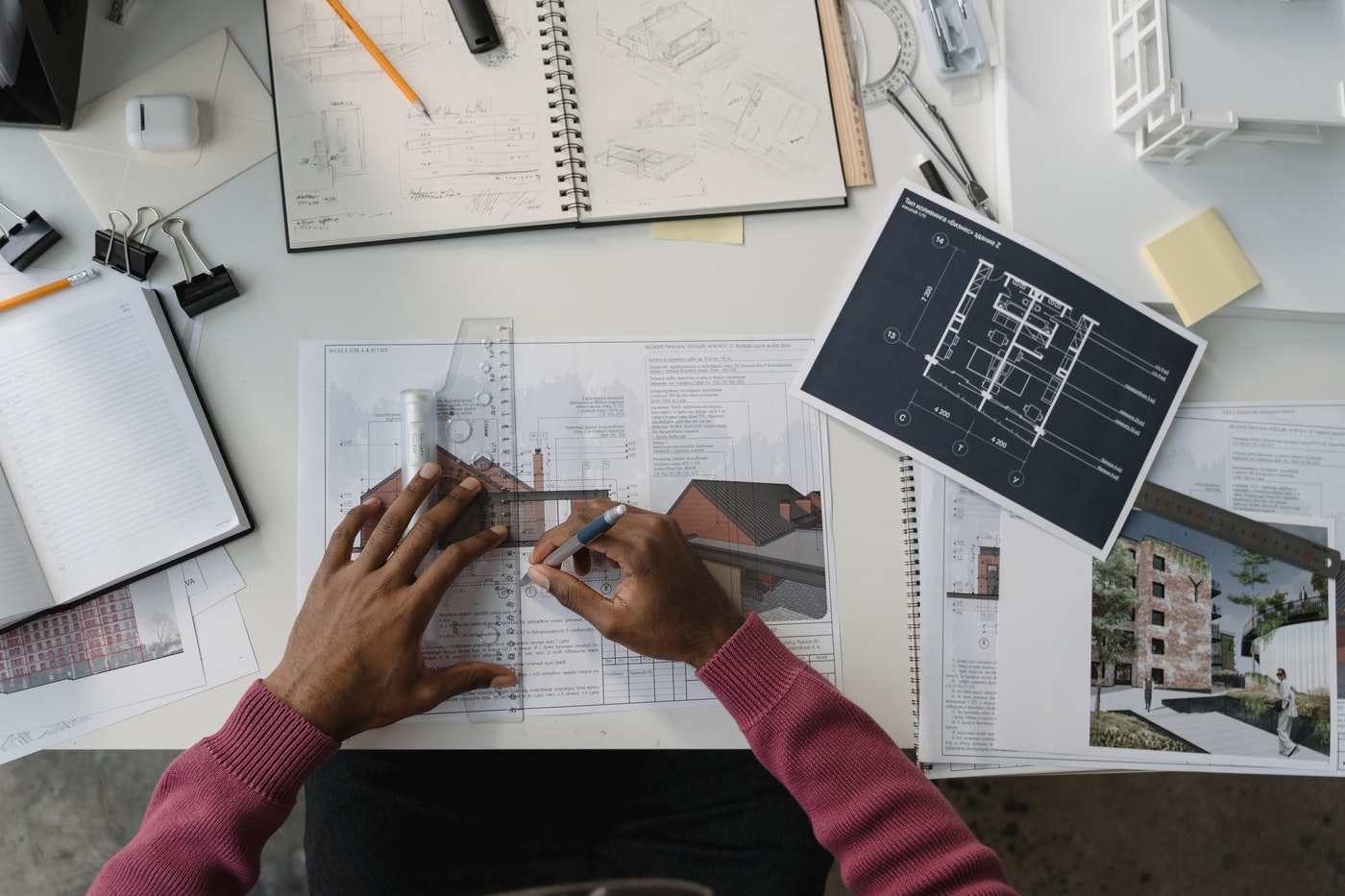
This is a holistic way to approach design that recognizes that building components don’t operate individually, but interdependently. It recognizes that, for example, a top-notch furnace won’t improve energy efficiency much if the home is uninsulated and the windows are leaky.
One emphasis of this approach is building performance. Designers maximize efficiency and occupant health by considering how all the components of a building work with or against each other to produce specific effects like airflow or moisture. Ideally, that involves professionals across industries, like architects, electricians and HVAC specialists, consulting together on a project in the planning stages.
They’ll offer insights into how the building elements will impact each other, troubleshoot problems and design solutions that will help the component parts support each other over the life of the building.
Another emphasis is on understanding how building assemblies impact the environment over the entirety of their life cycles, from material extraction to decommission. Attention to life cycle analyses (LCAs) help designers and builders choose the materials that will best allow a particular project to meet sustainability goals.
Further Reading:
For a deeper dive on the subject, Maria Sexton’s article on Rise is a great start.
And for a very deep dive, the WDBG offers this resource on building science.
Permaculture Design
Permaculture design is inspired by the agricultural term permaculture, which ecologist Bill Mollison (who coined the term) defines as “the conscious design and maintenance of agriculturally productive ecosystems which have the diversity, stability, and resilience of natural ecosystems.”
Permaculture design works with the natural world to integrate buildings into their natural surroundings. It thinks of buildings as one system within a much large ecological system. This is a slow, ecological approach that often involves using natural building materials, fostering diverse human (and non-human) communities and working towards a zero-waste, circular economy.
Designers make use of passive building strategies and site optimization. They emphasize the capture and storage of resources like water and energy when they’re plentiful, but also the adaptation of occupant expectations and behaviours in times when they’re not. Permaculture design is about living in harmony with nature instead of fighting against it.
Landscaping is a big component of permaculture design as it applies to buildings. Creating landscapes that are biodiverse, pollinator-friendly, low-maintenance and productive is a priority.
Further Reading:
José Tomás Franco explains how to apply the 12 principles of permaculture to architectural design here.
The Permaculture Research Institute features this wide-ranging archive of resources on permaculture building design.
Net Zero Architecture
Net zero buildings produce as much energy as they consume over the course of a year. It’s a design approach focused on energy, both generating it and reducing the consumption of it.
There are two cornerstones to this approach: efficiency measures that lower the energy load of the building and renewable energy systems. Building designers and architects will typically work with energy consultants to create energy systems that will meet occupant needs and perform well over the long haul.
Achieving net zero is a complex feat, however, and designers will usually also incorporate strategies from passive design and whole house systems design to reduce heating, cooling and other energy needs.
Building orientation is a prime consideration, as is building size. Going net-zero typically involves an investment in high-performing materials for the building envelope, as well as the selection of low-energy fixtures and appliances. As you might expect, net zero homes also involve a lot of ongoing energy monitoring.
Getting to net zero is more flexible than it might sound, though, and designers have a lot of options to reach it. A building might be powered by off-site renewable energy, for example, if it can’t reasonably incorporate its own renewable energy system.
Further Reading:
Architectural Digest’s Anna Fixsen explains how to design a net-zero home here.
Over at the American Institute of Architects, Chad Edwards and Terry Liette offer advice on how to design net-zero ready buildings on a budget.
Conclusion
As Elizabeth Donovan says, the ambiguity around the term “sustainable building” actually provides some advantages, in that it’s flexible enough to accommodate many visions and a “plurality of possible approaches” and solutions to the environmental problems that conventional buildings pose.
Designers, homebuilders and homeowners can pursue sustainability goals without forfeiting their own priorities and preferences. And that means we have a wealth of options to build homes that are sustainable for the environment and for occupants and to create projects that bring balance, comfort, community and joy.
Feature image: Oleksandr Pidvalnyi; Image 1: Ron Lach; Image 2: Kelly L; Image 3: Ante Hamersmit; Image 4: Tima Miroshnichenko

Great article, would encourage more of the same including exploring aspects of each design approach in more detail! Thanks for the great overview!
Good Sunday afternoon Mary Read:
I have spent time reviewing the Green Building Guide to Sustainable Building Design and it has been very well done, except for the Site Design, Iyengar offers some strategies for making a building site sustainable:
The first statement “Prevent any kind of environmental damage (do not cut down old-growth trees”. The world including right here across Canada and around the world, we have too many trees that are way older than Canada and millions of trees throughout and across Canada are dead. They are dead and millions of Canadian trees are lying on the ground. Many people in charge of overseeing these dead and dying trees just say, “let the bugs heat these dead trees and branches that are on the ground”. The power authorities throughout Canada’s cities and communities have simply told me, “let the little bugs and insects eat the fallen trees”. Well some years ago that was okay, but now the world’s dead trees are giving off negative carbon and invasive bugs and insects are entering specific trees and putting a hole in the bottom of the tree and letting negative carbon leave the dead tree and poison the air we breathe. Many of Canada’s dead trees are starting to fall down when a major wind storm comes to town.
The most recent new Invasive Specie is the Oak Wilt, that came across from New York into Niagara Falls and it is entering many Oak trees in Ontario and going to other provinces.
We have to remove these dead and dying trees to protect our youth and seniors and everybody in between. I will be glad to work with you and your team and help to clean up these dead and dying trees that are on the ground and also the dead and dying trees that are still dying.
I do not have a website thanks to hackers, but we have leading and needing technologies to remove these trees and protect our kids and seniors.
All the best,
Garry Spence
1-519-631-6035