

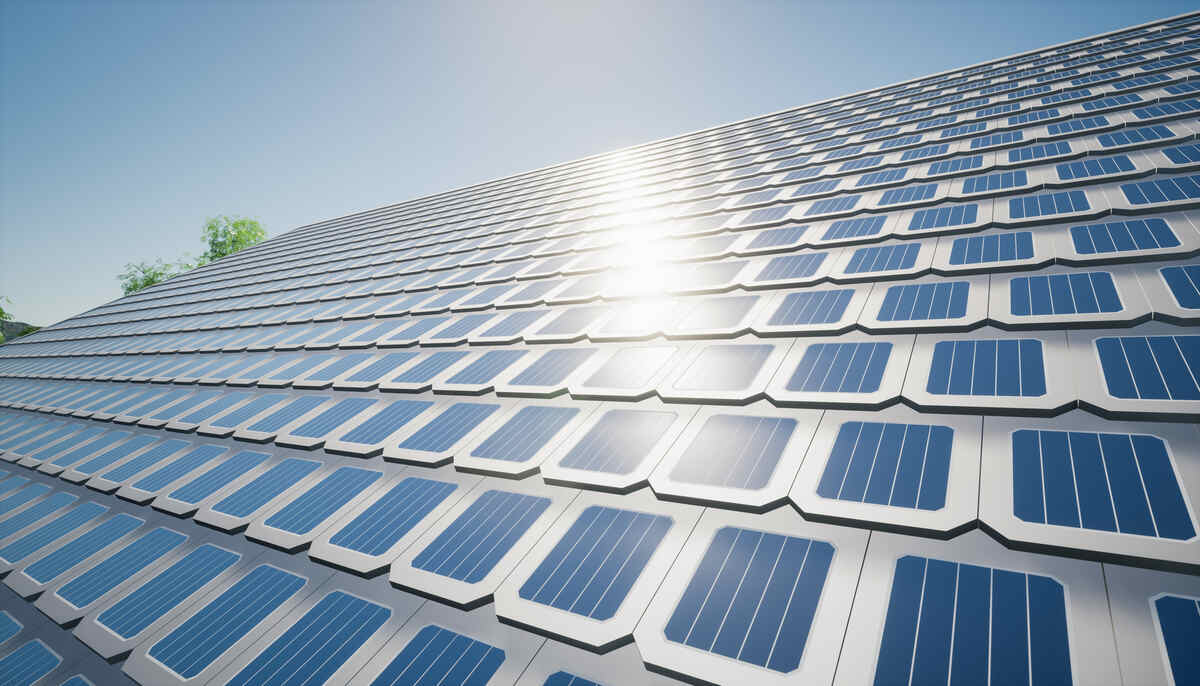
A very attractive quality of solar roof shingles is that they both protect the home and provide it with power, hinting at a “two-for-the-price-of-one” bargain.
Solar shingles are a form of building integrated photovoltaics (BIPV for short). They’re attractive and blend nicely with traditional buildings, but how do they compare to modern solar panels in terms of performance and cost? Here, we weigh the advantages of a solar-tiled roof compared to a solar panel installation.
Costs
There are two very different scenarios where cost comparisons should be made. The first (and more favourable) scenario for solar shingles is the new build and the second is where an existing roof needs to be replaced. The cost of a conventional roof shingle should be subtracted from the price of the solar shingle to arrive at the actual cost of the solar shingle.
Whether you install solar panels or solar shingles, the cost of the ancillary equipment, such as batteries and inverters, will be the same, so it’s only the cost of the generating equipment that will change. Luckily, the price of both of these options is on a downward trajectory.
We need to establish some reference points for the costs, so for this study, let’s use the following figures, although they may differ somewhat in your particular area:
Asphalt shingles – $3 to $6 per square foot
Metal roof – $7 to $25 per square foot
Get the Green Building Project Checklist
Use this handy checklist on your next project to keep track of all the ways you can make your home more energy-efficient and sustainable.
Slate shingles – $25 to $40 per square foot
Let’s compare this with an average cost of $22 per square foot for solar roof shingles. If we use a 6kW system as our ideal system for an average household, then the comparative cost of a standard solar panel system is approximately $18,000 versus a solar shingle system, which is $36,000 – a difference of double the cost.
As a general rule, solar panels can produce a watt of power for a little under $3, while solar tiles will do the same for between $4 and $7, according to a survey conducted by MarketWatch.
Solar panels are cheaper. However, other factors may make solar shingles the more attractive option. For example, the cost difference is reduced when new or replacement roofs are being considered – since solar shingles double as both the roofing material and the solar photovoltaics, there’s less material you’d need to buy.
What’s the Estimated Payback Period for Solar Shingles?
You need to quantify a few factors to know how long it will take to break even on your solar shingle investment. Start with the cost of the system, less rebates or incentives and then deduct the cost of the conventional shingle roof – that gives you the actual added expense of the shingles. You will need to add the cost of the inverter and batteries to get the total solar cost.
Now, you can estimate the electrical savings every month, and once the savings have accumulated to match the cost of the system, you can start planning that once-in-a-lifetime holiday. Well, sadly, not quite so quick. You’ll also need to factor in replacing the battery and possibly the inverter over time.
One final hurdle to overcome is that the more frugal you are with electrical consumption, the longer it will take to reach the break-even point.
The Environmental Cost
Another factor to consider along with cost, is the impact on the environment. A lot of material goes into roofing, which therefore creates a lot of waste. It’s a great argument for investing in durable roofing materials that last a long time, such as slate or clay tiles.
If you can get your roofing material and your solar photovoltaics in one package rather than having to buy both shingles and solar panels, you’re using a lot less material, which means a lot less that will end up going into landfill at some point.
That’s a great option for a new build or if you need to completely reroof your house, but what if you want to add solar to an existing house? If you’re going to install solar shingles on an existing roof you’d likely be tearing out the existing shingles. Luckily, there are various roofing waste solutions that you can opt for, such as recycling, reusing or repurposing. More and more facilities are recycling asphalt shingles, but it depends on what’s possible in the facilities where you live.
Do Solar Shingles Make Sense in Canada?
Generally not. Due to Canada’s cold climate, solar shingles are not a common choice because the freeze thaw cycle results in their getting cracked, unlike solar panels that sit high enough off the roof that snow and ice can slide off the roof from underneath the panels.
Two other big issues are the lack of supply and the shortage of installers who want to install them. These two go hand in hand. Because solar shingles are a niche product there’s not nearly the number of manufacturers producing them so there’s less to choose from and they are more expensive.
Installers also don’t like to install solar shingles because they typically stick with what they know how to install and trust to work well so they don’t have to deal with lots of maintenance issues. That lack of installer interest creates even less interest in the solar shingle market.
When you combine the above with the other general drawbacks like higher price and lower efficiency (read the comparison sections below for more details about these drawbacks), the vast majority of Canadians end up opting for solar panels.
Aesthetics
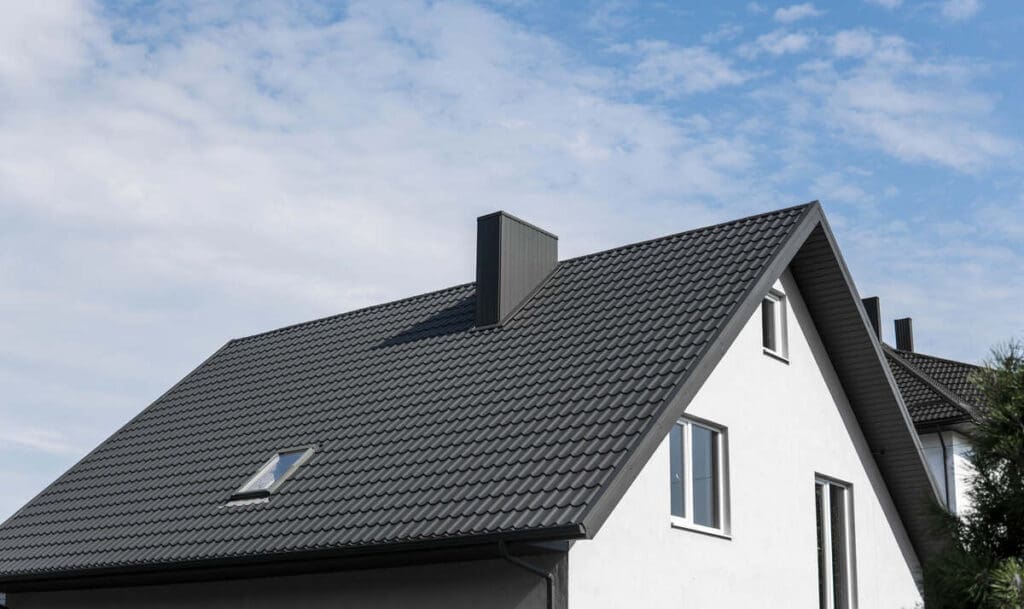
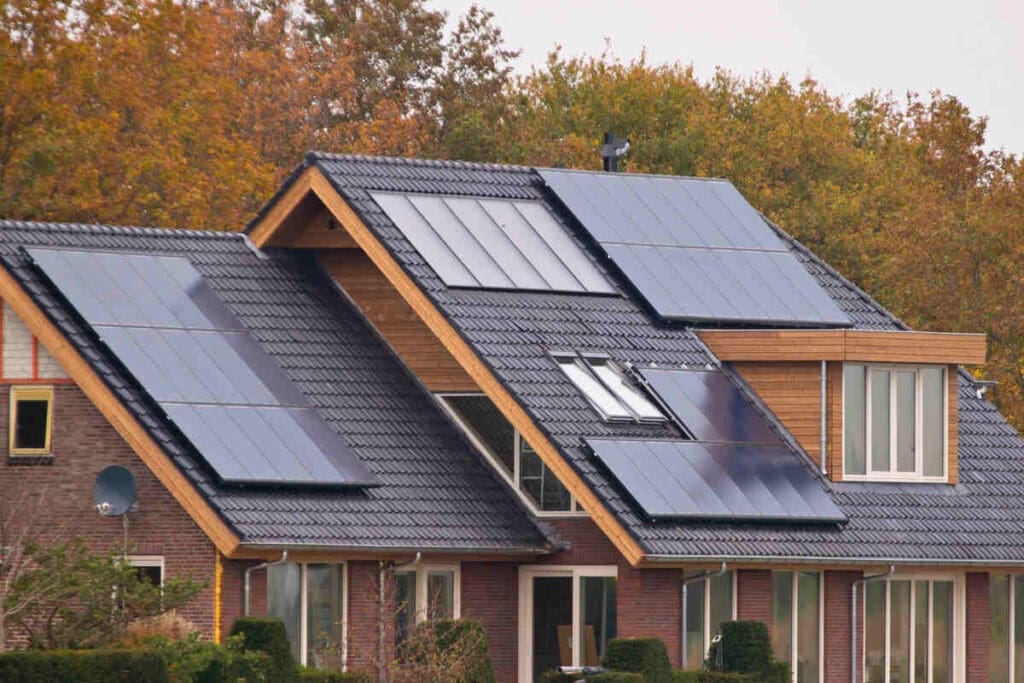
Solar panels lean towards practicality. They may be effective, but I’ve never heard anyone mention how beautiful a solar panel is. They lie on top of a roof and always appear as a forgotten add-on, and in most instances, they’re an afterthought.
The other rather annoying thing about solar panels and conventional roofs is that solar panels are rectangular. In contrast, roofs are angular, so the panels are arranged in a “best of fit arrangement,” which leans towards efficiency at the expense of aesthetics.
Solar shingles blend with the home’s design, almost as if hiding their efficiency behind well-designed camouflage. They fill the entire roof, adding area in an attempt to compensate for their inferior efficiency compared to solar panels.
Buildings with historical significance or classified as heritage buildings would look decidedly odd with an array of solar panels on the roof. Solar shingles are the ideal combination of traditional appearance and modern technology for these buildings.
Efficiency
Solar panels have a significant efficiency advantage over solar shingles; however, if utilizing the entire roof area for solar shingles, a similar power output can be achieved from both.
Industry standards indicate that solar panels can achieve efficiency levels of 21 percent on average, and the very best will get to 24 percent. In comparison, solar shingles struggle to get to 20 percent. It must be remembered that these figures will change as technological advances continue to improve efficiency rates.
Efficiency Ratings
The amount of solar energy potential varies across Canada. If you live in a region with lower solar potential, getting solar panels with a higher efficiency rating could make more sense than solar shingles to compensate for the lower solar potential.
Highest solar potential – Southern Saskatchewan, Southern Manitoba, Southern Alberta
Good solar potential – Ontario, Quebec and interior of British Columbia, New Brunswick, PEI
Moderate solar potential – Nova Scotia, eastern BC
Low solar potential – Coastal BC, Newfoundland and the north
For a detailed look at the solar potential rankings of individual provinces and cities in Canada read Solar Energy in Canada: Discover Your PV Potential in This Ranking of Provinces and Cities
Roofing Aspect
Solar panels have a flexible aspect function. They can be fitted on roofs from flat to pitched without too much trouble. Admittedly, there are times when specific foundations are required to provide the optimum angle for power production; however, when it comes to solar shingles, there’s minimal scope for angle adjustment. In addition, the orientation is fixed for solar shingles because they’re dependent on the house design.
You’ll only have to choose between the two systems if the house has a suitable orientation and roof aspect for solar shingles. Happily, these considerations will be taken into account at the design stage for new buildings.
How Do Solar Shingles Compare with Solar Panels?
| Solar Shingles | Solar Panels | |
| Aesthetics | ✔ | |
| Efficiency | ✔ | |
| Orientation | ✔ | |
| Cost | ✔ |
Aesthetics – Solar shingles have the edge in the aesthetics stakes. As they fit seamlessly into the existing roof, they enjoy the support of homeowner associations, where conformity and the external appearance of the individual houses are strictly maintained. While the view of solar panels on a rooftop may seem unappealing, particularly if the building possesses a historic character, they do offer the advantages of greater efficiency and reduced costs.
Efficiency – The reduced efficiency of solar roof shingles compared to solar panels means that solar shingles will need to occupy a larger roof area to supply a similar amount of electricity. Fortunately, solar shingles can fit into angled roof areas where the rectangular shape of solar panels becomes problematic.
Orientation – Canada’s northern latitude plays an important role in determining the efficiency of solar panels. While solar panels can be set to provide the most efficient angle for energy generation, solar shingles are resigned to being fixed at the roof’s pitch. Now, if you consider that the sun moves between 23.5°N and 23.5°S, a difference of 47°, you will have some idea of how the apparent solar position influences the efficiency of solar panels and solar roof shingles.
Cost – Solar panels are a lot cheaper since their supply is much greater and the availability of installers is a lot higher, which drives down costs as compared to solar shingles – they are a niche product that are not nearly as common to install.
Solar panels will always have the advantage in terms of cost, efficiency and orientation, which is what matters to most people, but solar shingles will always win the aesthetics league. It’s a question of what suits you more.
The Best Types of Solar Roof Tiles
When deciding on solar shingles that will best suit your situation, there are several issues you need to consider:
- The size of the shingle needs to fit the roof construction.
- The material used in the shingles. Monocrystalline shingles are more expensive but are more efficient.
- Appearance is a major concern in choosing solar shingles.
- The warranty indicates the service life, and for this reason, going with a well-known company may be beneficial in the long run.
Solar Rebates In Canada
As we discuss costs, remember that both types of solar systems are eligible for rebates and incentives. There are a number of programs available. Provincially there are incentives such as the Solar Homes Program in Nova Scotia and the Solar Electric Rebate Program in PEI.
Then there’s net metering programs like the ones available in Ontario and in BC, which offer homeowners the chance to reduce their energy bills by selling excess electricity generated by home solar installations back to the grid.
The Federal Clean Technology ITC offers businesses the opportunity to claim 30 percent of their cleantech investment back in taxes.
As the funds run out of these programs or as the government in power changes its priorities these incentives can come and go or get modified. Keep up to date with the latest incentives available in our Solar Incentive Finder.
Get a Quote from a Solar Installer (For Solar Panels NOT Solar Shingles)
The following information helps us to find the best local professional to complete your project. Your information is safe with us – view our privacy policy.

I am a housing provider in the City of Toronto. I am considering the submission of a business case to provide long term savings. Can you please send a sample of solar shingle and colours and sizes available.
Hi Frank
Several suppliers are available in Canada, and you may want to contact Solar X in Toronto. Here is a link to the website.
https://solar-x.ca/the-all-new-solar-roof/
Wishing you great success with your project.
Who to contact in the Powell River in BC
I would like to consider solar shingles for our home in Ottawa. Who are the experienced solar shingles seller-installers in Ottawa area
Hi, I’ve just connected you with our solar broker who can help you to find the right installer.