
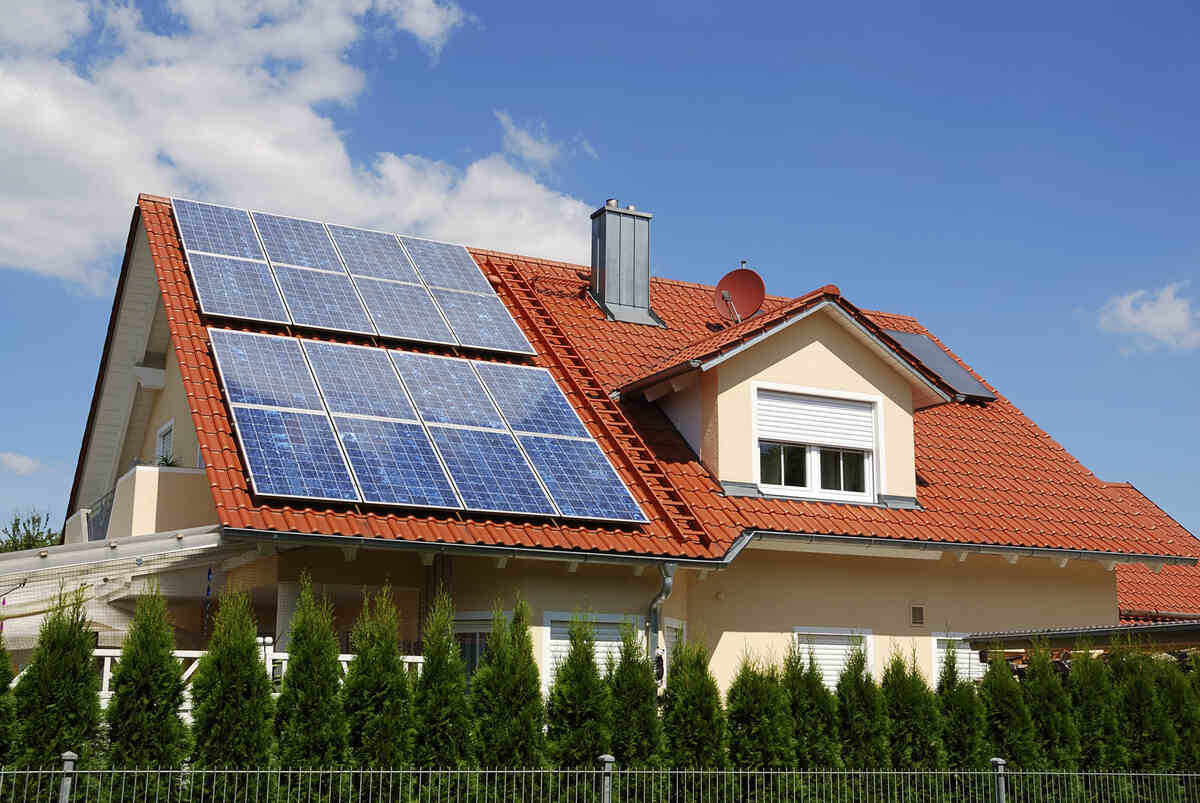
Making the decision to install a solar photovoltaic system seems to rest on three legs. There’s the financial argument of saving money in the long term as utility prices steadily rise, the environmental nudge to utilize power that has no carbon taint and, finally, the idea of being self-sufficient has an appealing ring to it. So, just how feasible are all of these ideas?
The Big Lessons
Well, it’s been eighteen months since I installed my solar system, and these are the things I learned along the way.
The most striking lesson was finding out how much power we waste—leaving lights on, running an air conditioner in an empty room, or leaving an unattended oven. And then the main culprit, the water heater.
Next to waste is timing. Solar power requires a lifestyle that fits neatly into the pattern of sunshine and darkness. Put a hair dryer on early in the morning, together with a kettle and toaster, and your batteries will cry out in pain.
Installing solar PV is expensive, and if money were no object, I would have happily installed a unit twice the size. But we do what we can, so I chose a 5kW unit that I hoped would be able to handle the power requirements for my wife and me.
The next lesson I learned was that assessing your power requirements is a guessing game. Yes, you can do a spreadsheet of all the power requirements for your domestic appliances, and it’s a necessary process to complete, but the trouble is that your panels are not going to give you a constant supply of power. To add a little complexity, you have to factor in an amount for nighttime when the batteries receive no supply from the panels.
My experience is that during the night, the lithium batteries need to supply about three hundred watts per hour to keep items like fridges and freezers working. Not making a provision for nighttime use will result in a rather uncomfortable morning, as the batteries will be dangerously approaching the minimal amount of charge, which ranges between thirty and forty percent, depending on various battery manufacturers.

Get the Green Building Project Checklist
Use this handy checklist on your next project to keep track of all the ways you can make your home more energy-efficient and sustainable.
In addition to the solar panels, I have a solar water heater, which I can also power from the batteries. The heater draws a little over 3,500W, which is the upper end of the battery’s abilities. The trick here is to let the batteries heat the water when they are 100 percent charged, so around midday, the water gets heated up, which seems to work very well.
Cost and Size. Bigger is Better.
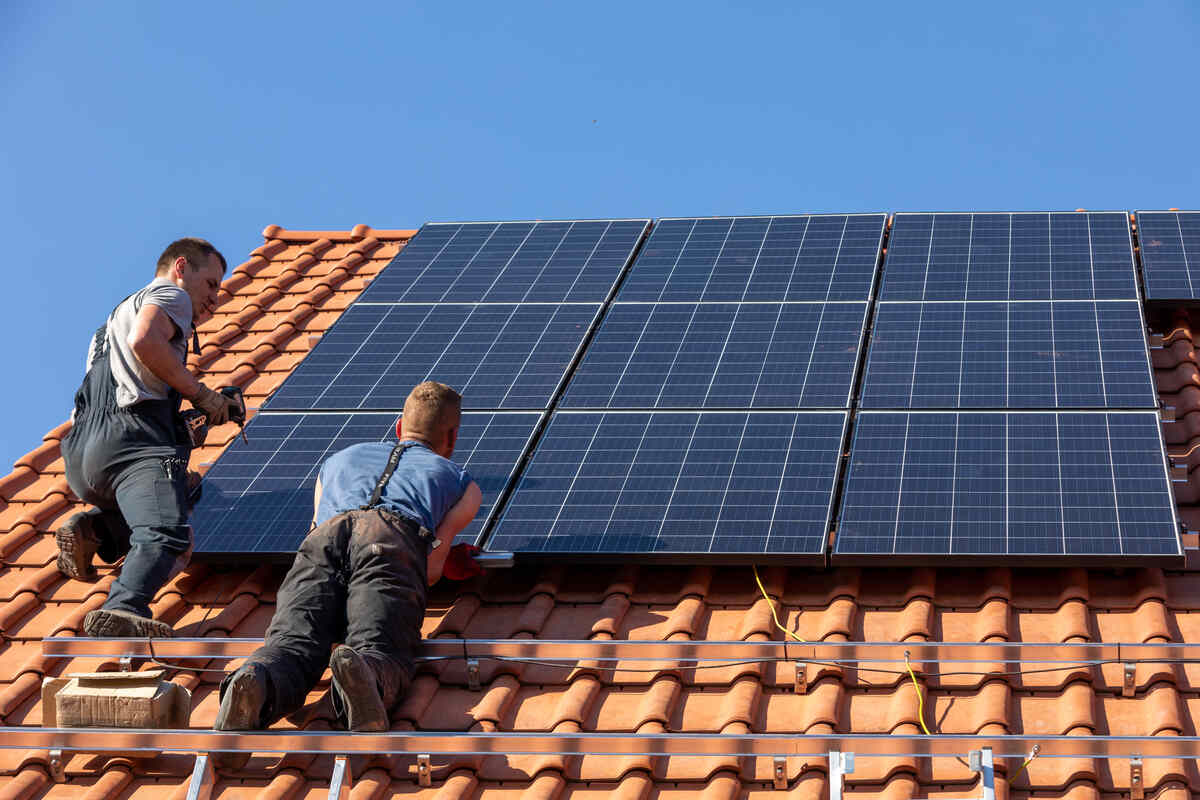
Solar companies are quick to provide a calculation showing you just how much you will save with the installation; however, the reality is nowhere near as rosy as they would have us believe. I’m not suggesting that you should not install a solar system, far from it; I’m very glad that I put it in even though over the last eighteen months, the price of the system I installed has dropped by around twenty percent. And I’m pretty sure that the price will fall a little more and the systems will become more efficient in the future.
If you’re planning to go completely off-grid, then the 5.5Kw system is not going to cut it for you. It may handle your requirements during bright, long summer days with at least twelve hours of good sunshine, but that, I’m afraid, won’t last, and a day or two of cloudy skies will deplete the batteries.
The biggest advantage of having your own solar PV system, if it’s hooked up to the grid, is that it provides a convenient backup should the grid go down. You can charge the batteries when the grid is operational and the sunny skies have disappeared.
Monthly Consumption and Counting Dollars
Typical Month’s Electricity Usage

Here is a graphic representation of a typical month’s electricity usage. Sadly, we can’t sell our surplus electricity back to the grid, so that makes things a little less efficient. The vast majority of the imported power was used to recharge the batteries during the night and prevent them from running below 40 percent charge. During winter, this is significant because of the reduced number of daylight hours and the corresponding increase in hours of using lights.
Total Energy Consumption (18 Months)

This shows the total energy consumption and usage over the last eighteen months. What is important is the ratio of the energy produced by the solar panels (the green bars) to the consumption, which is the red bars. So, we are using a little more power than we’re producing but not that much more, which leads to the question of how much money you’ll save.
If you’re trying to reduce your electricity consumption by installing energy-efficient equipment and being relatively frugal with electricity use, every effort you make will reduce the economic benefits of installing solar panels. Use less electricity, and the period to recoup your solar panel costs will lengthen unless you can sell your surplus electricity back to the grid at a realistic price.
In my case, the app installed with the system provides a running account of the economic performance. After eighteen months I’ve recouped eight percent of the cost of the solar installation by virtue of the reduction of my monthly utility bill. This would mean that in eighteen years or so, I would have paid for the system, but that’s a little simplistic for a couple of reasons.
Companies selling solar systems will be the first to highlight the fact that utility costs are sure to rise in line with inflation or perhaps a little more, so the value of a saved kW of power will increase. If you factor in an annual 5 percent increase for your electricity, that would indicate that your rate per kW in fourteen years will be double that of today.
These same companies will also emphasize the longevity of the solar panels. Still, they won’t be as keen to tell you that when you are recouping your installation costs, you will very likely need to replace the batteries and may have to replace or at least suffer some maintenance costs on your inverter.
And then there are the other feel-good items that the solar companies promote. I tried to get some additional details regarding statistics that the solar company so efficiently adds to the app every month. Apparently, I’ve saved 3.2 trees during the eighteen months, but quite how this was calculated was not readily available.
My solar system has also reduced the amount of carbon dioxide in the atmosphere by at least five tons and almost one hundred fifty kilograms of sulfur dioxide. The app also assumes the grid provides power derived from coal and informs me that my solar installation has saved nearly two tons of coal.
Final Thoughts
After a year and a half of solar, was it the right decision? The definite answer is yes. I am very happy that I installed the solar system because it provides an opportunity to slow down the ravages of energy production on our environment.
Does it make economic sense? Well, maybe if you’re using a lot of power and can sell your surplus back to the grid at a fair price, it holds some economic merit.
There is the satisfaction of being able to supply your own power, and whenever I bake bread using the power from the solar panels, I always feel that the bread tastes a little better, perhaps with a bit of sunshine in its heart.
Feeling inspired to reach for the stars and go solar? Check out ‘An In-Depth Look at Choosing Solar Panels‘ to help guide your decision.
Solar PV FAQ
1. Does temperature affect the efficiency of the solar panels?
The short answer is yes, but the sad thing is that there’s not much you can do about it. Energy loss due to high solar panel temperatures ranges between 10 to 25 percent. The simplest way to reduce the temperature of the solar panels is to make sure they’re installed with a gap between them and the roof to allow good air circulation.
2. Do solar panels require cleaning?
A layer of dust or bird droppings on the panels is going to reduce their efficiency. I tried to measure this a week or two ago, and admittedly, the testing procedure is a little rudimentary, but the results were very clear. Clean panels are substantially more efficient.
I cleaned my panels with a weak solution of dishwashing liquid and clean water about an hour after sunrise. It took me about twenty minutes to clean the eight panels and the difference between the production readings before and after cleaning was in the region of 30 percent.
I know that there would have been an increase simply because the sun was rising, but not by that margin in the short space of time. I should have checked the next day, but as luck would have it, the clouds moved in overnight, and the following morning was decidedly wet.
A monthly cleaning will keep the panels in top condition, so next month, I’ll be more rigorous with my readings.
3. Snow on solar panels. What’s the result?
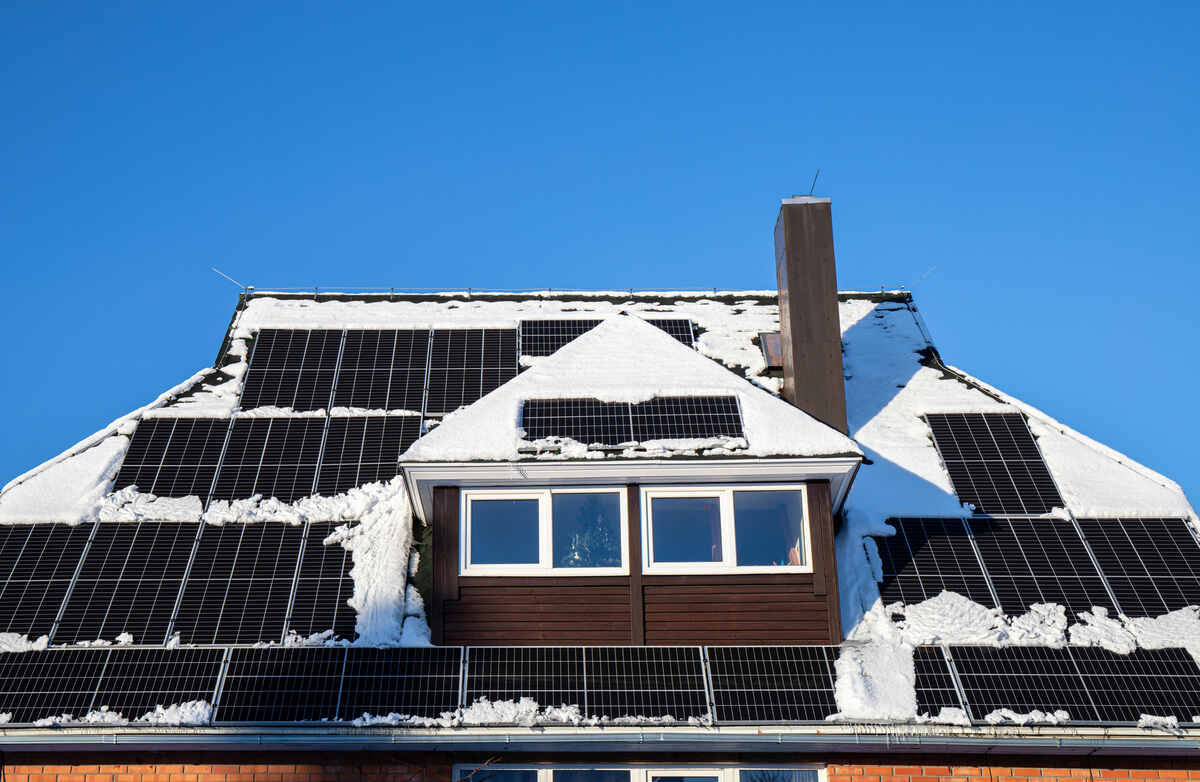
A layer of snow on the solar panel is going to shut it down, but that is the only damage it should cause. Usually, the angle of the panels will result in the snow sliding off pretty quickly, and as an added bonus, snow sliding off the solar panel is a great cleaning agent.
Images from Depositphotos; Charts from Mike Lillyman

I had to laugh at the water heating comments. It is for this reason that I have determined that thermal PV is much more advenatgeous. During the winter time you might need to double or even triple the number of solar panels due to the massive drop in real output durning the winter months. Pre heating the water in your tank even in winter months gives one around 12000 Btu /hour on average even in cloudy days. It is for this reason that most of the world actually does preheat the water in their tank.
During the summer time PV might only need 1200 to 2000 watts of solar to heat the water. Now assuming that one has a heatpump water heater if it only needs to raise the water temp by perhaps 10 degree delta. Well you can easily imagine that your 5KW system can easily keep up with demand.
Suggest that your readers look up Drainback solar. 90% of the time there will be only the draw of a 1/6 hp pump and a thermister to regulate when the system. I say 90% because I know that there will be days when one has to use back up power to heat the water. Reality is that if one does this as a DIY project that you can expect ROI of 18 months or so. Solar heating companies are in business for profit.. Expect their costs to be $6000 to $10000 for this instal.
https://basc.pnnl.gov/sites/default/files/WH153_drainback_cartoon_9_29_14.png
https://basc.pnnl.gov/resource-guides/drain-back-solar-hot-water#edit-group-description