
Did you know the average Canadian household now owns 5.9 IoT-connected devices? And the market is growing fast, expected to increase 26 percent by 2026. This surge in smart home adoption isn’t just about convenience – it’s enabling homeowners to save energy and save money.
Smart technology has quietly become one of the most powerful tools for sustainable living. While solar panels and insulation get most of the attention, a growing number of apps and home devices are helping people track, reduce and better manage their energy use and environmental footprint. For homeowners and renters alike, these tools offer real-time insights and automation.
Smart Thermostats for Efficient Climate Control
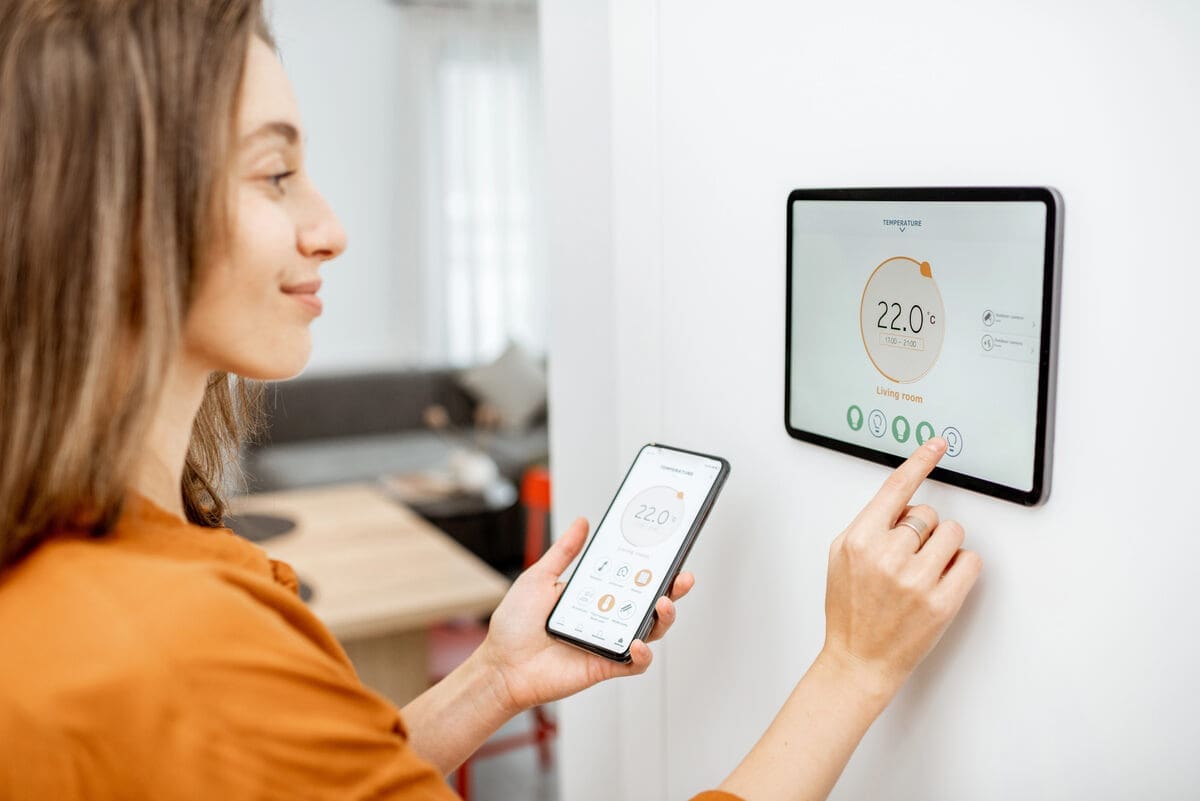
Since 63 percent of Canadians’ utility bills goes towards heating and cooling (61 percent of that just for heating), one of the most impactful steps a homeowner can take is to keep temperature regulated in the home. Many homes waste energy heating or cooling empty rooms. Intelligent thermostats, equipped with motion sensors and weather forecasting, can adjust indoor climates automatically.
A smart thermostat like the Ecobee is recommended as it can direct energy where and when it’s needed most – cutting bills while improving comfort. These thermostats can also learn your habits to make more precise adjustments over time.
Home Energy Monitors
Get the Green Building Project Checklist
Use this handy checklist on your next project to keep track of all the ways you can make your home more energy-efficient and sustainable.
Home energy monitoring is another key area for smart upgrades. These monitors connect directly to your electrical panel to detect and identify which appliances are running as well as their specific energy patterns.
The Sense energy monitor is a good option. It helps users identify energy hogs, uncover waste from devices left on unnecessarily and prioritize which appliances might be worth replacing. Schneider Energy Monitor is another solution that supports solar integration and detailed energy tracking.
Smart Water Monitoring Systems
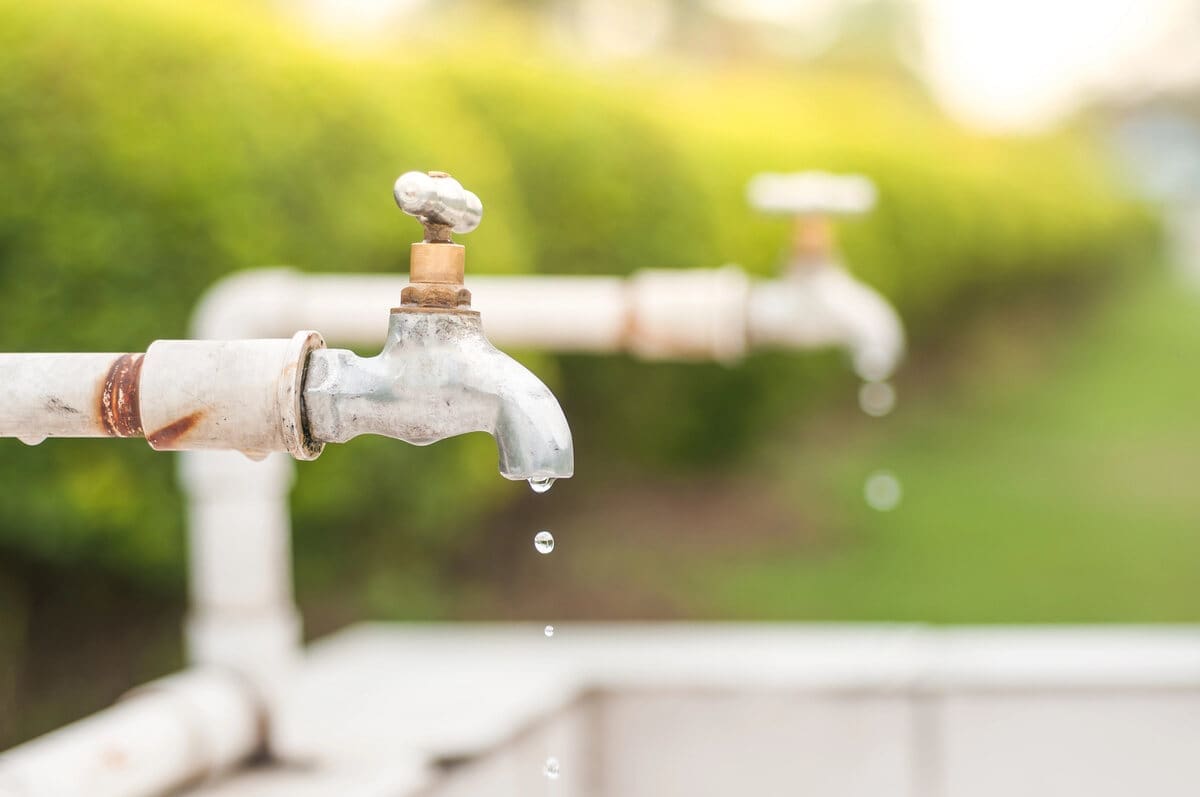
Water efficiency is often overshadowed by energy-saving upgrades, but it’s just as important – especially in regions facing drought conditions or rising utility costs. Undetected leaks, overwatering and inefficient fixtures can waste thousands of litres each year.
Smart water monitoring systems connect to your home’s main water line or meter and provide real-time usage data, helping you spot problems like leaky toilets or burst pipes before they cause major damage. Many systems send alerts to your phone, so you can act quickly if something’s wrong.
Some models, such as Flo by Moen, don’t just provide leak detection but also include automatic shutoff valves – offering both conservation and protection. These tools also help track long-term habits, making it easier to set and meet water-saving goals, reduce waste and potentially lower your monthly bill. In short, smart water tools turn invisible waste into actionable insight.
Smart Plugs and Lighting Controls
Energy-efficient home automation doesn’t stop at heating and water. A growing number of households are adding smart plugs to control lights, TVs, routers and other electronics. When connected to a broader smart system, these tools allow for automation such as turning off non-essential devices when no one is home or reducing phantom power overnight.
Smart Irrigation Controllers
Smart irrigation controllers are a powerful upgrade for homeowners looking to conserve water and maintain healthy landscapes without waste. Unlike traditional sprinkler timers that operate on a fixed schedule, smart controllers use real-time weather data or soil moisture sensors to determine exactly when and how much to water.
Some systems even factor in plant type, slope, sun exposure and local climate data. The result is a more precise, efficient watering schedule that adapts to daily conditions – saving water during rainy periods or cooler days. These tools can reduce outdoor water usage by 30–50 percent in many cases, making them especially valuable in drought-prone regions or homes with large gardens. App-based control adds convenience, allowing you to manage zones, see usage trends and make adjustments remotely. A popular option ss the Rachio 3 Smart Sprinkler Controller, which connects to your home’s wifi and uses local weather data to optimize watering without manual input.
Browser Extensions for Data Security
As more homeowners adopt smart thermostats, home monitoring apps and IoT-based energy controls, digital privacy becomes an important thing. These devices and apps often require internet connectivity and remote access, meaning that sensitive data – like your home’s energy usage patterns, heating and cooling schedules, and even occupancy habits – can be transmitted over networks that may not always be secure, especially when accessed remotely or over public wifi.
This is where a VPN proxy extension comes into play. They help encrypt your internet traffic, protecting your data from interception, eavesdropping, or unauthorized access. When you use a proxy while accessing, for example, your home monitoring system, your connection is routed through secure servers that mask your IP address and encrypt your activity, protecting access to your smart devices and energy monitoring platforms to ensure that your home’s energy-saving systems remain secure and reliable.
Indoor Air Quality Monitors
Indoor air quality monitors provide essential data on the often-invisible pollutants in your home. These devices continuously measure levels of particulate matter (PM2.5), volatile organic compounds (VOCs), humidity, carbon dioxide (CO₂) and sometimes carbon monoxide (CO) or radon. Many also provide a real-time air quality index (AQI) score and suggestions for improvement.
Smart models can integrate with HVAC systems or air purifiers to automatically respond when pollution levels spike. For energy-conscious homeowners, these tools also help balance ventilation and energy efficiency, ensuring that your home stays comfortable and healthy without overworking heating or cooling systems.
They’re especially useful in homes with gas appliances, wood stoves or residents with asthma or allergies. Over time, insights from air quality monitors can lead to smarter habits, like opening windows during specific times or replacing filters more effectively. The Airthings View Plus stands out for its comprehensive monitoring (including radon detection) a critical feature for many Canadian homes.
Smart Occupancy Sensors for Lighting and HVAC
Smart occupancy sensors are an easy and effective way to reduce energy waste by automatically managing lights and climate control based on room usage. Installed in rooms, hallways, or workspaces, these sensors detect motion or body heat and trigger lights or HVAC systems to turn on or off accordingly. More advanced models use ultrasonic or infrared detection to distinguish between movement and presence, minimizing false triggers.
In multi-zone HVAC systems, occupancy sensors can dynamically adjust heating or cooling only in areas that are in use, leading to significant savings. When connected to a broader smart home system, they also contribute to automation routines like turning off everything when the last person leaves. These sensors are especially valuable in large homes, rental units or high-traffic areas where lights and temperature settings are often forgotten. The Lutron occupancy sensor offers reliable motion sensing to manage lights efficiently without needing a smart hub.
Sustainable Shopping Apps

Living sustainably goes beyond managing what’s already in your home – it also extends to what you bring into it. Several apps now allow consumers to shop more ethically by rating brands on sustainability, labour practices and transparency. For example, Good On You provides sustainability ratings on fashion brands, helping consumers align purchases with their values.
Demand-Response Energy Platforms
As electricity grids face more strain during extreme weather events, utilities are increasingly turning to demand-response (DR) programs. They reward homeowners for reducing their electricity use during peak demand periods –usually hot summer afternoons or cold winter evenings – when the grid is under the most pressure.
Demand-response works by encouraging voluntary reductions in energy use for short intervals, typically 1 to 3 hours. Participants may be asked to delay using major appliances like air conditioners, electric dryers or EV chargers during these times. In return, they may receive rebates, credits on their bill or even direct payments. It’s a win-win: the grid avoids blackouts or the need for fossil fuel-based backup power and consumers get paid for helping out.
In smart homes with connected devices, participation is especially easy. Smart thermostats, for example, can be automatically adjusted during DR events, reducing air conditioning slightly without noticeable discomfort. Smart plugs and battery systems can also be configured to reduce load temporarily. For residential, contact your hydro utility to find out about a demand response program or for industrial and commercial facilities you could check out a company like Peak Power.
Read more on this topic in Demand Response and Its Role in Energy Efficiency
Recycling Education and Waste Sorting Apps
Reducing waste also means knowing how to dispose of it properly. With municipal recycling rules often varying block to block, apps now exist to quickly find out what belongs in your bins just by taking a picture of an item and when pickup happens. WasteSync and EcoScan are a couple of helpful options here.
Smart Appliance Dashboards
Modern smart appliances now come with their own dashboards or apps that allow for scheduling, energy monitoring and remote operation. Platforms like Samsung SmartThings Energy offer a unified view of compatible devices, making it easier to manage electricity use across appliances.
Solar Monitoring Apps
For homes with solar panels, mobile apps and dashboards allow you to monitor how much electricity your system is generating, how much you’re using, and how much you’re selling back to the grid. Typically, solar monitoring apps are specific to the inverter brand that you have installed as part of your solar photovoltaic system.
With the rapid growth of connected devices in sustainable homes, tools that offer insight and automation are no longer luxuries – they’re essentials. Whether you’re just beginning your sustainable living journey or already off-grid with solar and batteries, these smart tools help maximize impact while minimizing hassle.
Images from Depositphotos