
Robotic Process Automation
5 Ways RPA Can Transform Construction and Building Operations

Published:

Construction demands speed, precision and innovation. Delays in gathering documents or coordinating material suppliers can stall progress. Sustainable building requires an even greater burden of documentation for the purposes of certification and sourcing. All of these tasks raise costs, cause delays and reduce environmental performance. Robotic Process Automation (RPA) changes this by streamlining critical processes. Tasks that once took weeks to be done manually can now be completed in hours, freeing teams to focus on high-value decisions.
The technology connects data, schedules and systems in ways that make green goals easier to reach. From sourcing materials to aligning performance metrics, it eliminates manual bottlenecks. The result is faster projects, reduced waste and measurable progress towards sustainable building targets.
What is Robotic Process Automation (RPA) and How Does it Work

Robotic Process Automation, or RPA, is a technology that uses software “bots” (not physical robots, but rather software programs that run on a computer or server) to automate repetitive, rules-based digital tasks previously performed by humans, such as data entry and creating reports. Think of it as having a digital assistant who can take over the tedious, predictable parts of your job, freeing you up for more complex and creative work.
These bots interact with applications and systems just like a person would: they can understand what’s on a screen, make calculations, enter data and perform a wide range of defined actions. They essentially mimic human interactions with graphical user interfaces (GUIs) to carry out tasks.
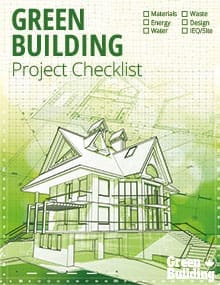
Get the Green Building Project Checklist
Use this handy checklist on your next project to keep track of all the ways you can make your home more energy-efficient and sustainable.
Here’s a simple breakdown of how the process works:
Process mapping – A developer or business analyst first carefully documents the step-by-step actions a human takes to complete a specific task on a computer.
Bot development – Using RPA software, the developer then creates a script or workflow that instructs the bot to perform those exact steps. This often involves a user-friendly, drag-and-drop interface.
Deployment and execution – The bot is then deployed and can be scheduled to run automatically or triggered by a specific event. It will then execute the task in the background, often much faster and more accurately than a human could.
For example, a bot could be programmed to open an email, download an attached invoice, extract key information like the invoice number and amount, enter that data into an accounting system and then archive the email.
To clear up one common source of confusion: RPA is not AI. The simplest way to understand the difference is to think of RPA as the “hands” and AI as the “brain.” RPA is a technology that follows a strict set of pre-programmed rules to perform a task by mimicking human actions like clicking, copying and pasting data. It’s incredibly efficient at executing repetitive processes, but it doesn’t think, learn or adapt to changes. In contrast, AI is designed to simulate human intelligence, allowing it to analyze data, recognize patterns, make predictions and handle complexity.
The true power emerges when these two technologies are combined in a partnership called Intelligent Automation (IA). In this scenario, AI provides the cognitive “brain” to the RPA “hands.” For instance, an AI technology first processes complex, unstructured data, like reading an invoice in any format, and makes a decision. It then triggers an RPA bot to execute the repetitive, transactional steps based on that decision, such as entering the extracted invoice data into an accounting system. This combination allows for the automation of more complex, end-to-end processes that require both thinking and doing.
5 Ways Robotic Process Automation Can Expedite Sustainable Construction and Building Operations

1. Accelerating LEED & Green Certification Documentation
Green building certification such as Leadership in Energy and Environmental Design (LEED) requires strict adherence to specific standards. Every credit demands documented proof, accurate formatting and timely submission. Manual tracking consumes resources and increases the risk of missed details that can delay approval. RPA eliminates these inefficiencies by processing data consistently and reducing the margin for error.
RPA collects and verifies information from construction plans, supplier reports and performance data. It matches each entry to the correct certification category, attaches the necessary evidence and prepares complete documentation packages. Automated validation ensures that files meet submission rules before they are sent for review, minimizing the chance of rejection.
The technology can manage multiple certification tasks at once, monitor deadlines and flag missing components. This continuous oversight keeps projects moving and reduces last-minute bottlenecks. Project teams can prioritize improving building performance while the system maintains compliance.
Using advanced robotic process automation tools, teams gain accurate, traceable and fully standardized documentation. This leads to faster approvals, fewer compliance issues and stronger outcomes in sustainable building projects.
2. Smart Sourcing of Eco-Materials
Sourcing eco-friendly materials involves reviewing supplier data, certifications and environmental performance records. Manual evaluation slows progress and increases the risk of missing critical compliance details. RPA accelerates this process by scanning multiple data sources at once, ensuring that selected materials meet defined sustainability criteria.
RPA accesses supplier databases, product catalogs and compliance registries simultaneously. It verifies certification validity, checks environmental ratings and filters out non-compliant options. This automation ensures procurement decisions rely on accurate, up-to-date information rather than incomplete or outdated records.
The system can compare performance metrics, cost and environmental scores across several products in seconds. It flags expired certifications, inconsistent data or suppliers with poor sustainability histories. These early alerts reduce procurement risks, prevent costly reorders and keep projects aligned with environmental goals.
By embedding RPA into procurement workflows, teams can direct their expertise toward negotiations and supplier partnerships while the system handles verification and analysis. This leads to faster, more reliable sourcing decisions and strengthens the overall environmental integrity of sustainable building projects.
3. Aggregating and Analyzing Energy & Performance Data
Efficient energy management depends on accurate, continuous performance tracking. Manual data collection from HVAC systems, lighting controls and renewable energy sources often results in delays and gaps. RPA eliminates these issues by extracting data directly from building management systems in real time.
The technology gathers data from various sources into one central platform. It standardizes formats, filters inconsistencies and ensures every metric is ready for analysis. This gives a clear and accurate view of building performance without the need for manual intervention.
RPA can also generate automated reports that highlight inefficiencies or abnormal patterns. It identifies areas where energy consumption exceeds benchmarks and flags opportunities for optimization. This rapid insight allows facility teams to act before minor inefficiencies turn into costly problems.
By maintaining a continuous flow of accurate performance data, RPA enables data-driven decisions that improve operational efficiency and environmental outcomes. The result is reduced energy waste, lower operational costs and measurable progress toward sustainable performance targets.
4. Scheduling Retrofitting & Preventive Maintenance
Sustainable building performance relies on timely upgrades and consistent upkeep. Traditional scheduling methods often depend on manual logs or reactive repairs, which can lead to costly downtime and resource waste. RPA replaces these inefficiencies with proactive, automated scheduling that ensures every task is completed on time.
The system tracks equipment usage, sensor alerts and maintenance records in real time. It uses this data to predict when systems will require servicing or replacement. By automating task assignments and timelines, RPA reduces the likelihood of unexpected breakdowns and extends equipment life.
It can also coordinate multiple contractors and suppliers simultaneously, aligning work schedules to minimize disruption. Automated notifications keep all stakeholders informed of upcoming work, ensuring smooth execution from start to finish.
With RPA handling scheduling and coordination, facility teams can focus on high-impact improvements rather than reacting to emergencies. This results in lower maintenance costs, more reliable buildings and better long-term sustainability.
5. Integrating Legacy Systems into Intelligent Dashboards
Many buildings still operate with legacy systems that store data in outdated formats. These systems often cannot connect directly to modern analytics platforms, creating information gaps that hinder decision-making. RPA resolves this by acting as a bridge between old infrastructure and new technology.
RPA extracts data from legacy applications without requiring costly system replacements. It standardizes and transfers the information into compatible formats, making it ready for integration with smart dashboards. This process ensures that historical performance records remain accessible and useful.
Once integrated, the dashboards present real-time and historical data in one location. Facility managers can monitor energy use, maintenance schedules and sustainability metrics without switching between multiple platforms. This unified view improves operational oversight and enables faster responses to performance issues.
By connecting legacy systems to modern analytics through RPA, organizations preserve their existing investments while gaining the benefits of advanced monitoring. The result is better-informed decisions, streamlined operations and measurable progress toward sustainability targets.
Benefits and Limitations of RPA
| Benefits | Limitations |
| Increased efficiency and speed | Cannot handle tasks that require critical thinking, judgment or interpretation |
| Improved accuracy | If the underlying process changes, the script needs to be updated |
| Cost savings | It requires significant amount of initial set up |
| Can be integrated with existing systems, helpful to companies with legacy systems | Struggles with non-standardized data, requiring ongoing maintenance |
| Enhanced employee morale | Creates security and compliance risks |

RPA is no longer a niche tool for back-office tasks. In construction and building management, especially in regards to sustainable buildings, it is a direct driver of efficiency, compliance and environmental performance. By automating complex workflows, it turns slow, error-prone processes into streamlined, reliable operations.
From certification tracking to energy analysis and maintenance scheduling, RPA ensures every stage of the building lifecycle benefits from accuracy and speed. The technology bridges old systems with new intelligence, allowing decisions to be made with full, real-time insight. As sustainability standards rise, RPA offers a clear path to achieving them while protecting both budgets and resources.
Images from Depositphotos