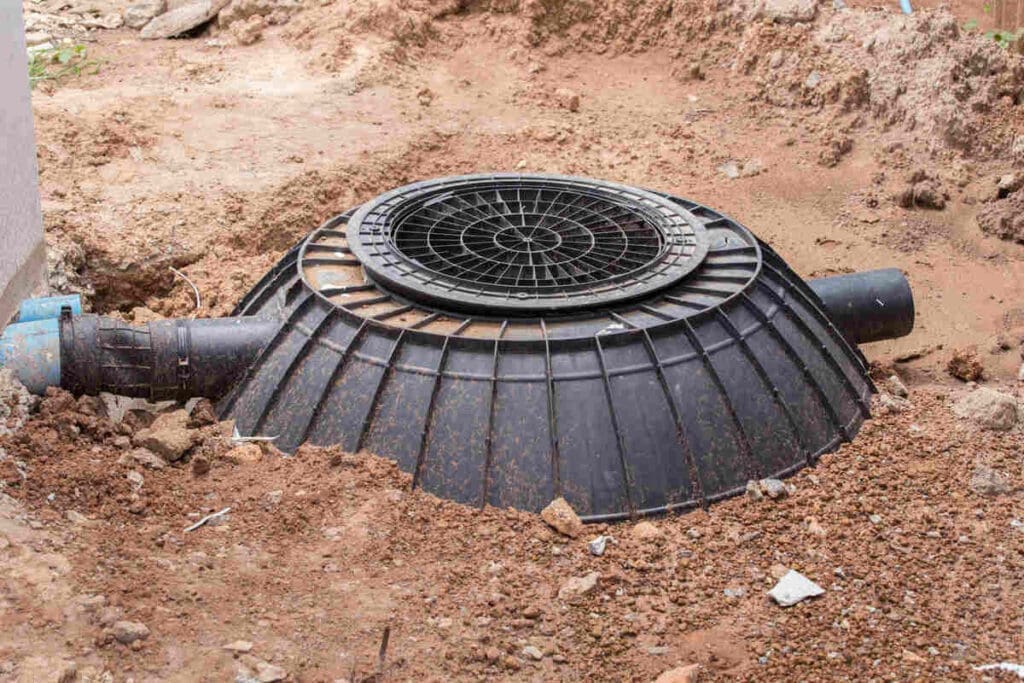
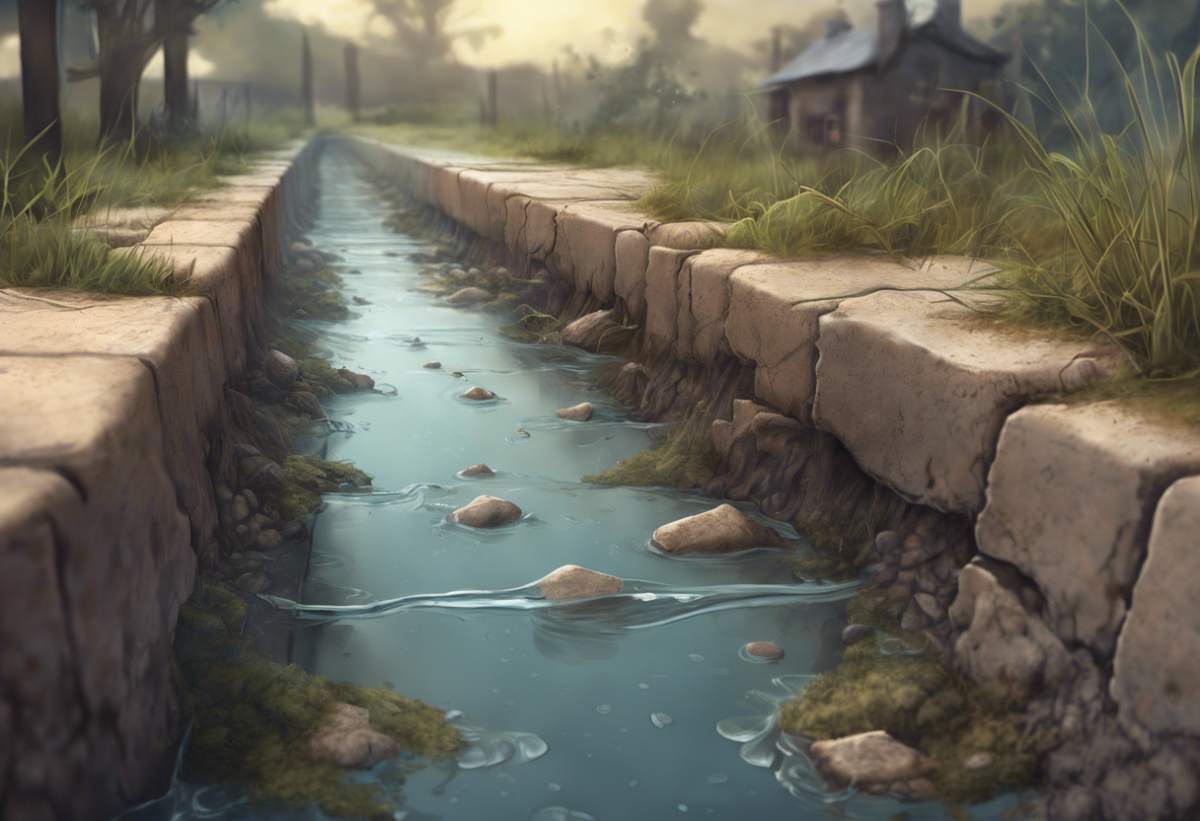
Improper drainage can cause extensive damage to your home’s foundations and lead to health hazards due to mould growth and dampness. Whether you’re experiencing a standing water issue or your basement is repeatedly getting damp, staying proactive about proper drainage is crucial for keeping your home safe and healthy.
Here we look at some effective residential drainage solutions that can solve your problems, but before we get to the solutions, we’re first going to look at the causes that lead to these problems.
Causes of Drainage Problems
Different factors contribute to poor drainage around homes. The first major culprit is the home’s design. If a home is improperly graded, rainfall can end up being trapped in low points or directed towards the house rather than away from it. Having an insufficient or improperly installed drainage system exacerbates these issues.
The second potential issue is landscaping. Many homeowners don’t realize that their gorgeous backyard could be the source of their drainage difficulties. Inappropriate landscaping can cause water pooling around your property. For example, you have to be careful how you hardscape your yard as it could easily drain water right back towards your house if you haven’t graded the pavers away from the house. As well, if you have bare soil without vegetation that could also create drainage issues.
Other contributors include heavy rainfall and climate change. While you have no control over these factors, it’s essential to consider the climatic conditions of the area and implement measures to prevent waterlogging or flooding at your property. If soil gets excessively waterlogged you could run into a situation where the soil turns to mud, which can then cause the foundation to sink.
Lastly, clay soil makes it difficult for water to seep into the ground, naturally leading to surface pooling at your property. Proper drainage systems can make a significant difference in such situations.
Maximizing Exterior Drainage Systems
Get the Green Building Project Checklist
Use this handy checklist on your next project to keep track of all the ways you can make your home more energy-efficient and sustainable.
A well-designed exterior drainage system can help direct water away from your home, reducing the risk of water damage. If you don’t already have them, the first step would be to install gutters and downspouts strategically around the property as these capture roof runoff and divert it safely away from your home’s foundation.
Consider positioning rain barrels beneath your downspout as an eco-friendly solution to managing excess rainwater. You can use collected water for irrigation, saving on your water bill while conserving resources. See ‘The Role of Rain Barrels in Drainage’ section below for more details.
Slope landscaping ensures gravity does its part in pulling the water away from your home. A yard that slopes towards the house can lead to serious problems. A slight adjustment to the slope can help maintain a healthy yard without water pooling near the house.
Installing French Drains
French drains are an effective way of diverting water away from your house when gravity alone isn’t enough. These drains work on the principle of capturing and redirecting surface and groundwater away from an area.
The process involves digging a trench around your property with perforated pipes laid in it and covered with gravel. The drain carries the water from high areas to lower ones, protecting your property against possible structural damages due to standing water.
Designs may vary depending on how much water you usually deal with. Coupled with regular maintenance, French drains are a reliable way to safeguard your property against water damage. See below video for an overview of the installation process.
Channel Drains for Patios
Channel drains form an effective solution for places that require rapid, effective water dispersion like driveways or patios. They act as an intermediary between top layers and subsoil, quickly draining off standing water before it infiltrates the soil.
Installing channel drains involves creating a linear trench in the centre or edge of your patio/driveway. A prefabricated channel drain will then sit within this trench, capturing runoff and directing it through the connected piping system.
The beauty of this system lies in its simplicity and effectiveness. Not only does it help ward off potential drainage issues, but it can also prevent ice patches from forming during winter, reducing slip-and-fall hazards.
Green Roofs
If you’re looking for a sustainable solution to your drainage issues that also offers a beautiful aesthetic touch to your home, green roofs are an excellent choice.
A green roof utilizes your roof space to grow vegetation. The plants absorb rainfall, reducing the amount that could otherwise become a runoff. Additionally, water transpired by the plants or evaporated from the roof helps in cooling the surrounding air, offering energy-saving benefits.
Green roofs comprise several layers including a waterproof membrane, a root barrier, a drainage system, and a growth medium for plants. Due to its complexity and intricacies, professional installation is crucial to achieving maximum benefits and avoiding damages.
However, once installed properly and maintained adequately they can provide you with long-term drainage solutions while enhancing your property’s visual appeal.
Green roofs are costly and can prove to be a difficult addition to an existing home as they require a roof that can support the additional weight of the roof. For that reason, they are more practical for new construction, but they are unique, so if you like the idea it’s well worth exploring. Read our Guide to Green Roofs for a more detailed look at this topic.
The Role of Rain Barrels in Drainage
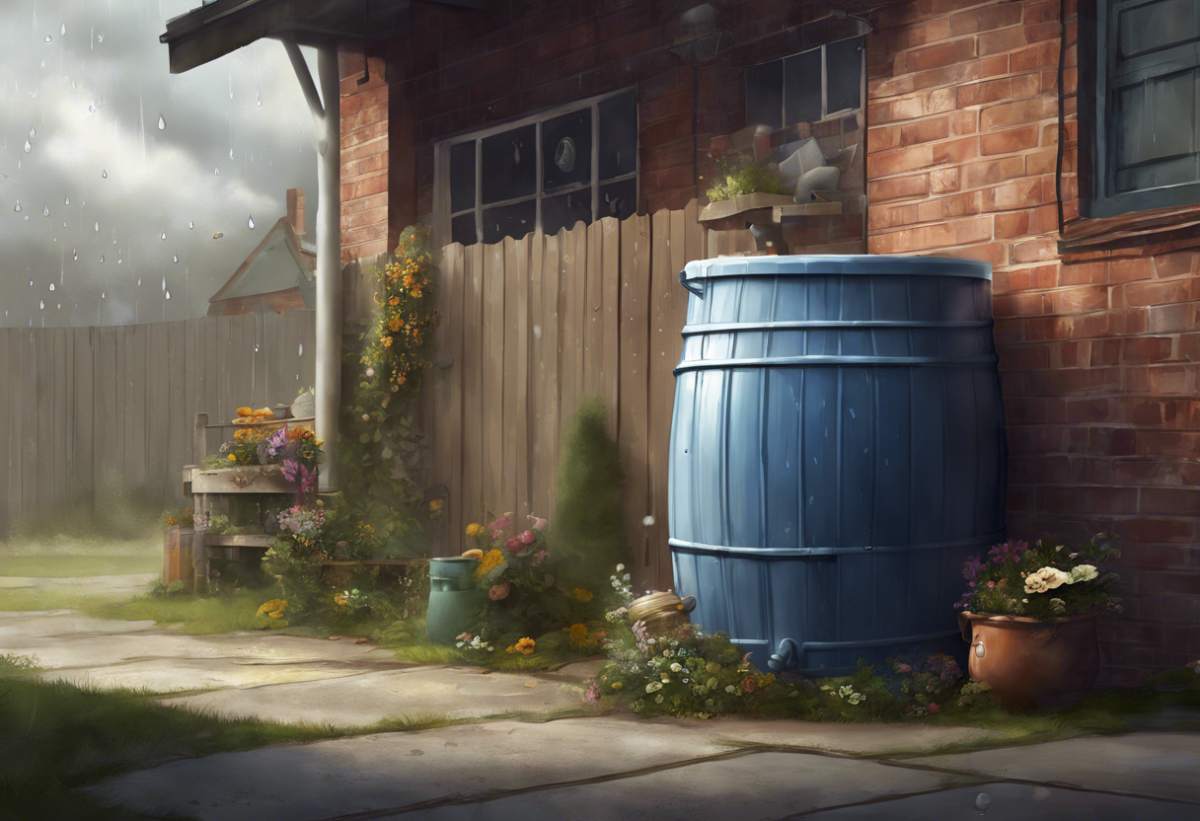
Rain barrels play an integral role in managing home drainage effectively while promoting sustainability. They catch rainwater from rooftops through downspouts before it hits the ground and becomes runoff.
The collected rainwater stored in these barrels can then be used for irrigation purposes, conserving water resources and cutting down on water bills. Thus, they help in mitigating surface water runoff and serving your gardening needs simultaneously.
In case of large volumes of rainwater, ensure your rain barrel is outfitted with overflow valves that can redirect excess water away from the house, keeping your foundation safe.
If you want to go a step beyond rain barrels, a more intensive approach would be to install a full-on rainwater harvesting system where you collect large amounts of water in a water storage tank.
Automated Sump Pump Systems
Dealing with water pooling in your basement? Automated sump pump systems could be your answer. These systems are designed to detect rising water levels in your basement and automatically pump the water away from your property.
A sump pit collects water entering your basement. When the water level in the pit rises to a certain point, the sump pump gets triggered to expel it out – often to the exterior yard or storm drain.
You can also add battery backups to your system as a safety measure during power outages. A flooded basement during heavy storm periods when power is knocked out can lead to devastating damages.
These automated systems require regular maintenance and checks for proper performance.
If you’re on the fence about whether to fix up your water drainage problem, I’ll leave you with a quote by the philosopher Lao Tzu. “Water is fluid, soft, and yielding. But water will wear away rock, which is rigid and cannot yield. As a rule, whatever is fluid, soft, and yielding will overcome whatever is rigid and hard. This is another paradox: what is soft is strong.” Never underestimate the power of water. Over time, it can inflict serious damage on your home.