
Reno-Green Column
An Introduction


When Green Building Canada approached me recently about writing a weekly Q&A column on helping readers understand the complexity of renovating a home it brought back many good memories. For 20 years, up until 2021, I wrote similar weekly columns for a newspaper in Ontario, the Kingston Whig Standard. I tried early retirement and quickly got tired of the “rocking chair on the porch” so turned to writing books. I admit I thoroughly enjoyed the rapport with readers, especially when I got replies like “Thank you so much, we were stuck on where to go.”
A bit of information about the number of Canadian homes in need of major repair is worth sharing. CMHC did a series of studies in 2021 which estimated that there were just under 15 million households in Canada, 69 percent of which were owner occupied.
They went on to break it down by periods and this is quite interesting. Before 1946 there were 1,432,955 homes in Canada, of which just over 13 percent needed major repairs. From 1946 to 1960 1,594,095 homes were built with just under 10 percent needing major repairs. From 1961 to 1980 building in Canada boomed, we built just over 4 million homes. That boom generated 8 percent of those homes needing major repairs by 2021. The building boom continued from 1981 to 2000 where 3,788,500 homes were built. On average just under 5 percent of these homes now need major repairs. From 2001 to 2021 we built 3,991,850 homes, up only marginally from the previous 20 years.
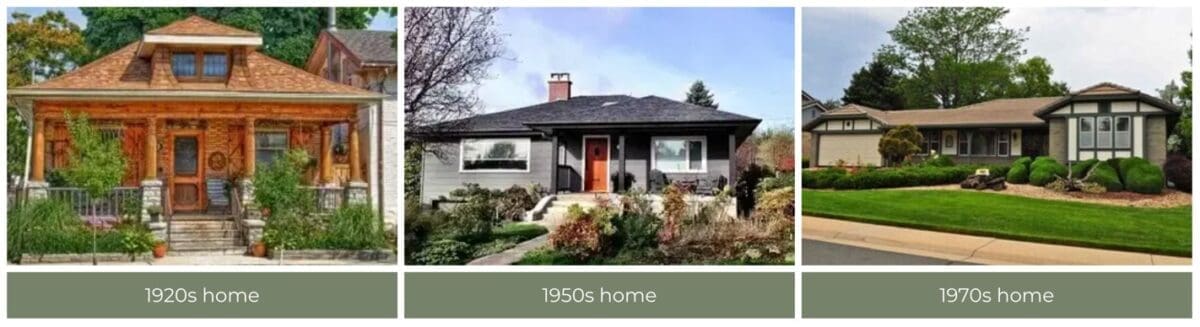
Those statistics run contrary to the common complaints I often hear “homes today are not well built” or “older homes were better built.” Though statistics can be interpreted in different ways, I do not feel the level of major repairs Canadian homes need is dramatic, or has been through the generations. One has to also consider that Canada did not have an “official” building code until 1941 and it took some years for every province and territory to adopt the National Building Code. It remained as written until 1953, some 12 years. From 1970 to 1990 it was upgraded six times in that 20-year period. This speaks to the advancement of materials like manufactured floor trusses and laminated veneer lumber along with the burgeoning level of building that went on in Canada.
So why do most homeowners retrofit or renovate? The largest single reason is changes in lifestyle and occupancy, then finally having access to the funds to make those changes. From various studies I have seen over the years this makes up over 50 percent of the reasons to upgrade. For years the remaining reasons were financial, increasing the resale value and attracting more buyers, which still hold true today to some degree.
Get the Green Building Project Checklist
Use this handy checklist on your next project to keep track of all the ways you can make your home more energy-efficient and sustainable.
It’s nice to see more people are renovating for energy efficiency in hopes of increasing interior comfort and lowering utility bills. This factor has risen to second spot on most surveys I see. The cost of living has driven home the simple fact, houses cost a lot to occupy and the more you contain those costs, the better. There is a simple saying in the building trades “it’s all about the envelope” and this is so true. That said, understanding how this home envelope affects not only your “creature comfort” but your wallet should be one of the, if not the primary reason, to upgrade your home.
You may by now wonder who this person is that is making these statements. I spent over 40 years in the building trades as a builder/contractor. Today with my former business partner we are authoring a series of books on housing and the climate. If you go to www.fragileshelters.com, click on “About the Authors,” which will hopefully fill in any blanks on my background. My intent, as this column proceeds, is to answer your questions, all questions (and there are no stupid ones), to help you better understand your home.
I will not be alone here. I have a portfolio of master trades in all the disciplines of home building and assembly to back me up. Along with myself these gentlemen have hundreds of years of hand-on experience that they wish to share. They recognize the need for down to earth, understandable, unbiased replies to your questions. We may guide you to a trusted source or government program to assist you in both starting and making the right decisions as your renovation progresses.
Once you start down the path of retrofitting and renovation it will test your patience. You will be making decisions that affect not only your bank account, but the interior air quality, safety, security and function of your home. Once completed, in many cases homeowners will look back with pride on their accomplishment and how they have upgraded the energy efficiency in their home. Most will reflect on the knowledge learned and the relationships they developed with skilled tradespeople they met who helped them on this path. We hope to be one of those people. Submit your questions in the form below.
Over the next four weeks, I will be contributing a two-part series on the how’s and why’s of renovation followed by a two-part series on basic home upgrades to secure your home from climate extremes. Once these introductory articles are done, we will be selecting readers’ questions to answer. If we get multiple similar questions, they will receive a reply first. Rest assured that every question will get answered.
Have a home renovation question? Write it down below and we’ll get back to you with an answer – every week, we’ll pick one question to answer in the column.


Hello Cam…a lifelong commitment and passion…the Greenbuilding Team has offered exceptional guidance on the Ecolosynergy Membrane for its excellent energy efficiency, from heating/cooling in the 30% plus….this low cost, immediate installation, plus
Less energy spent, more balanced thermal environment, quieter, low glare, nicer visual ( enhanced blues and greens), low condensation, longer lasting windows/doors,better lighting ( allows 88% of daylight), longer lasting buildings so lower environmental impact.
Please add this awareness for all the proactive environmental stewardship….low income folks are greatly supported, plus the charitable associations are highly motivated to see relief here!