
How to Relocate an Office Sustainably
A Comprehensive Guide Detailing the Core Pillars of Sustainable Office Moving


As Canadian businesses big and small embrace a whole building approach to sustainability, the principles of green design, from materials selection to energy efficiency and waste management, are now applied at every stage of a building’s lifecycle. This philosophy extends beyond the physical structure itself to include the processes that sustain it, with office relocation being an often-overlooked opportunity for a business to demonstrate its environmental commitment.
A corporate move is a complex, multi-faceted logistical event, but when approached through a green lens, it transforms into a powerful exercise in sustainable practice. By treating a move as an integral part of a building’s operations and maintenance, companies can significantly reduce their environmental footprint and align their brand with the values of the green building community.
This article serves as a comprehensive guide for businesses, detailing the core pillars of a sustainable office relocation, from pre-move asset management to the relocation itself to post-move waste reduction.
The Strategic Business Case for a Green Move
The value proposition of a sustainable office move extends far beyond environmental stewardship. For a business, green relocation is a strategic decision that offers tangible benefits, including significant cost savings, enhanced brand reputation and alignment with modern corporate values. Companies with a focus on green practices often find operational efficiencies that are directly reflected in their bottom line.
For instance, a methodical approach to pre-move decluttering and responsible disposal can reduce the volume and weight of items being moved, leading to lower transportation costs, especially for long-distance moves. Furthermore, by choosing to recycle or donate unwanted assets, businesses can reduce disposal fees.

Get the Green Building Project Checklist
Use this handy checklist on your next project to keep track of all the ways you can make your home more energy-efficient and sustainable.
In a competitive market where stakeholders, from clients to employees and investors, are increasingly prioritizing sustainability, an eco-conscious move can be a powerful public relations tool. It provides a clear, measurable story of commitment to environmental, social and governance (ESG) goals. By partnering with eco-friendly vendors and publicly showcasing a dedication to responsible practices, a business signals that its values are more than just a marketing message. This is particularly relevant in Canada, where there are various government-backed sustainability incentives for businesses, and a growing number of green building certifications shaping the commercial real estate market.
Pre-Move

The most impactful part of a green office move happens before a single item is packed. Decommissioning, the process of responsibly clearing out a business’ old space, is a critical opportunity for waste diversion.
A single office cubicle can represent between 300 and 700 pounds of waste, and over 10 million tons of furniture waste ends up in landfills annually in Canada and the United States. Traditional moves often result in large quantities of office furniture, electronics and supplies ending up in landfills, but this can be avoided with a strategic approach.
Office Furniture and Equipment
For large-scale corporate moves (typically 75 employees or more), specialized services can be a game-changer. Companies like Green Standards offer turnkey solutions for the redistribution of surplus office furniture, fixtures and IT equipment.
Their paid service provides a comprehensive approach that prioritizes resale, donation to local non-profits, and recycling, achieving landfill diversion rates as high as 98.6 percent. This not only keeps valuable assets out of the waste stream but also provides a positive social impact by benefiting community organizations.
Electronic Waste (E-waste)
Canada’s electrical and electronic waste has more than tripled in the last two decades, generating close to a million tons in 2020 alone. E-waste is a significant environmental concern due to the hazardous materials contained within electronics and IT equipment. A responsible move must include a plan for its proper disposal.
The non-profit organization ERA (Electronics Recycling Association) provides secure e-waste recycling services across Canada, with an added benefit of donating refurbished devices to charities and schools. These services offer convenience through on-site pickup or drop-off depots, along with transparent tracking and certification to ensure compliance with environmental regulations.
The Move Itself
Once a space has been responsibly decommissioned, the focus shifts to the physical move. The goal is to minimize waste and emissions during transport.
Eco-Friendly Packing Materials
The days of using only single-use cardboard boxes and petroleum-based packing peanuts are over. A green move prioritizes reusable and recyclable materials.
Reusable bins – Renting reusable plastic bins is a popular, eco-friendly choice for businesses. These bins are more durable, stackable and eliminate the repeated waste of traditional cardboard boxes.
Recycled cardboard boxes – If new boxes are necessary, opt for those made from high post-consumer recycled content. Many companies also offer programs to take back used boxes for reuse or recycling after the move. Rather than buying new, you could ask them about getting these used boxes instead.
Alternative packing – Instead of conventional plastic wraps and packing peanuts, businesses can use biodegradable or compostable alternatives. For fragile items, repurposing soft materials like towels, blankets and curtains not only saves money but also reduces waste and space since you’d have to pack those items anyways. Paper packing tape with a plant-based adhesive is another simple switch that makes the entire box recyclable or compostable.
Efficient Logistics and Transportation
The carbon footprint of a move is most heavily influenced by the transportation of goods. Green moving companies mitigate this by using advanced technology and fleet management practices. This point is especially important when it comes to long-distance moves.
Route optimization – Professional moving companies use route optimization software to plan the most efficient paths, minimizing distance and fuel consumption. This technology considers factors like traffic, weather and road conditions to reduce idling and delays, which lowers emissions and can lead to cost savings for the client.
Sustainable fleets – Many moving companies are transitioning their fleets to more fuel-efficient vehicles or using alternative fuels like biodiesel, which is made from renewable sources and is less toxic than conventional diesel.
Post-Move
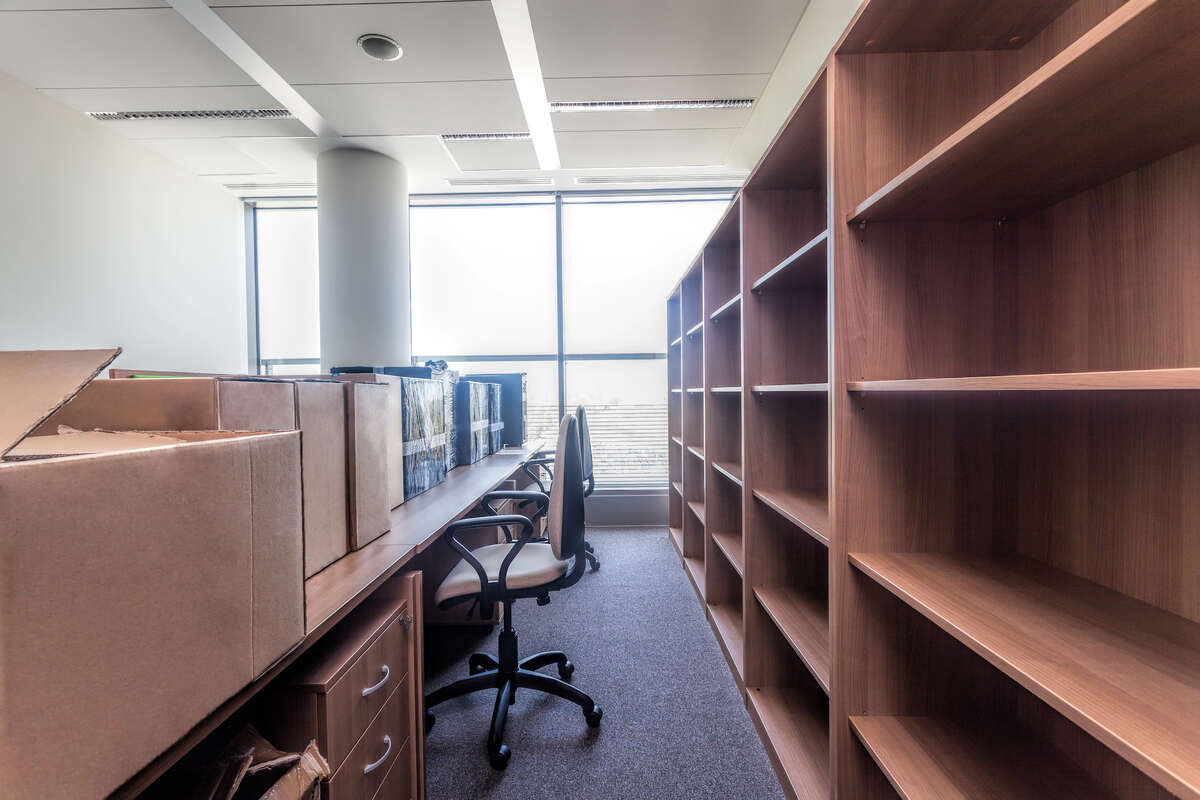
The sustainability of an office move doesn’t end when the last box is unpacked. The post-move phase is an opportunity to establish new, greener routines.
Waste Management and Reduction
Implement a clear, accessible waste disposal system from day one. Set up designated bins for recycling, compost, and garbage, and ensure all employees are educated on the new system. For businesses, this can be managed in partnership with the building’s custodial services. Both waste reduction and green cleaning (mentioned below) are key components of BOMA BEST certification.
Green Cleaning
Before the move-in, consider an eco-friendly cleaning service to ensure the new space is clean and free of harsh chemicals. Using products with plant-based, biodegradable formulas and without volatile organic compounds (VOCs) improves indoor air quality, which is a major focus of green building principles.
VIDEO | Get details on scheduling your move and access a free checklist
Images from Depositphotos