There’s something special about jumping into a mountain pool. The crystal-clear water, free of any harmful chemicals, has a vibrancy about it. There’s no dry skin or burning red eyes. There’s no chlorine smell, just fresh, clear, oxygenated water.
It’s an image so beautiful that it features prominently on so many outdoor websites. So, what about replicating the naturalness of the mountain pool in your garden? OK, we can’t always do the cascading waterfall, but we can do an outstanding job creating a swimming pool that harmonizes with nature.
A natural swimming pool, sometimes called an organic or bio pool, is built using natural resources rather than conventional materials like concrete and cement.
Instead of the continuous requirement to dump harmful chemicals into the water of a conventional pool, a natural swimming pool uses no chemicals. Power consumption to pump the water is drastically reduced as there’s no need for powerful pumps to force the water through a filter. Natural swimming pools also have a positive impact on the environment. They invite the wildlife to join in and live together.
So if you’re going to build a pool, here’s a chance to take the other road. On this road, natural design and materials create a living body of water that requires no chemicals and a swimming environment that invigorates naturally in healthy, clear water.
How Does a Natural Swimming Pool Work
A natural swimming pool replaces a conventional pool’s chemicals, high-powered pump and filter equipment with natural plants and microbes that filter out the nutrients and pathogens, creating a healthy swimming environment.
Plants, soil, gravel and microbes remove nutrients from the water, eliminating the food source for algae. Consequently, the water is clear and algae-free.

Get the Green Building Project Checklist
Use this handy checklist on your next project to keep track of all the ways you can make your home more energy-efficient and sustainable.
The big difference between the chemicals needed to keep a conventional pool clean and clear is that the chemicals are continuously required to stem algae growth. In contrast, the biological filtration of a natural swimming pool harnesses those nutrients to positively impact the environment with beautifully clear and healthy water.
The Design of Natural Swimming Pools
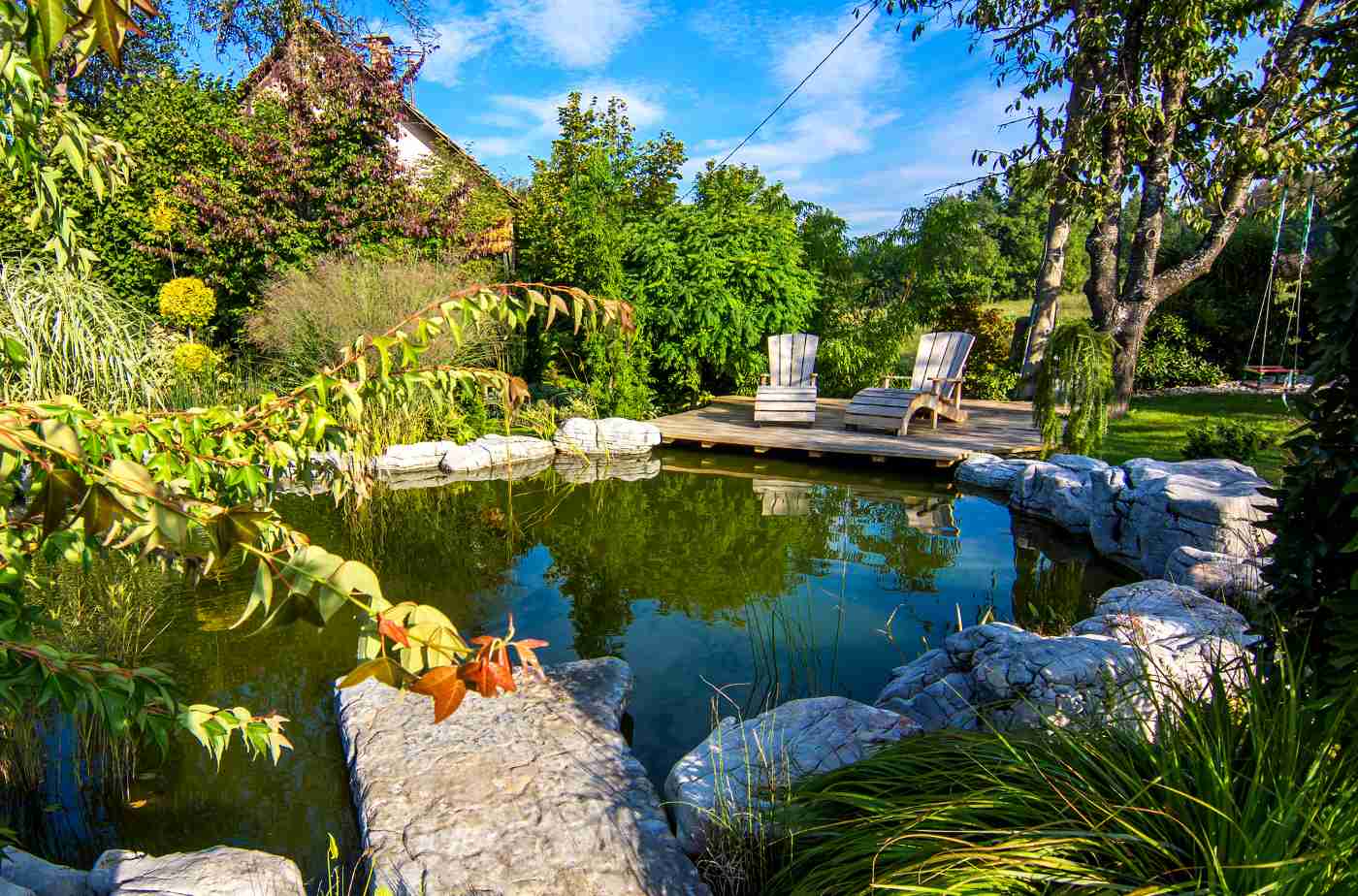
The natural swimming pool is divided into a swimming zone and a biological zone. In the swimming section, you do what you built the pool for: swimming in clear, healthy water. In the biological area, the plants filter out the bits and pieces we’d prefer not to swim in.
If you are looking for a natural design where the pool blends into the adjoining garden features, then the biological area would surround part of the pool. It is also possible to have the biological section some distance from the swimming area. The two areas are then connected by piping that draws water from the swimming area, which is then filtered by the plants and delivered back to the pool.
Plants for Natural Swimming Pools
Before you head off to the local plant shop or nursery, spend an afternoon at a nearby lake or another natural body of water. Have a good look at the types of vegetation that grow around the edges of the water. Chances are, if the plants you see are happy in their environment, they’ll also do a great job of helping to filter the water in your natural swimming pool.
However, you’ll need a variety of plants, from marginal plants that grow naturally in wetlands to floating plants like duckweed and water hyacinth. If you’re buying plants, it’s a good idea to check and see that they’re not listed as alien invader plants. These are non-native species of plants that could potentially be harmful to the natural environment.
My personal favourite non-invasive plant is watercress, which grows wild in ponds and streams and is an excellent choice for your natural swimming pool. Aside from being an attractive plant, it’s also great in salads. Keep in mind that watercress needs to be planted with other plants that have submerged roots.
Tall, reed-like plants add to a natural swimming pool’s aesthetics, provide height and are attractive to birds. Their roots do a splendid job of filtering the water and providing comfortable hiding places for frogs.
Basic Guidelines to Get You Going
There are a couple of things you need to consider before finalizing your natural swimming pool’s position. First, if there are any trees around, you need to remember that leaves will fall from time to time, and the shade may or may not be welcome.
Next, have a good look at the position of the sun as it makes its way from hemisphere to hemisphere. You’ll want the sun to warm the water during the swimming season, but you may also like to have a little shade in the afternoon when it becomes uncomfortably hot.
I can’t tell you how valuable a couple of hours of working these details out will be to the success of your pool. For me, an ideal situation is a pool that receives direct sunlight in the morning to help warm up the water a little (yes, I know I’m way too delicate, but I don’t do ice swimming, and any water below 25 degrees Celsius isn’t for me), and a little shade in the afternoon for comfortably lounging around the pool.
The relative size of the swimming area and plant zones will depend on where you are and the natural growing rate of the vegetation. It’s essential to get this right, and as a guide, I’d suggest favouring a larger plant area to ensure sufficient filtration. You should also avoid a steeper slope than a one-in-three gradient around the periphery of the natural swimming pool.
The biggest difference between a conventional pool and a natural swimming pool is the shape of the sides. Natural swimming pools have sloping sides where the plant growth acts as a bio-filter, although the swimming zone may have straight sides that fall within the pool area.
People get put off if they have to squish through the mud on the side of a lake, and similarly, they’ll want to avoid squishing through the mud to access your pool. A small deck that passes over a section of the plant area is normally sufficient for easy and comfortable access to the swimming area. Remember that easy access will also involve getting out of the pool, so make sure you offer swimmers an easy exit, too.
Aerating Natural Swimming Pools
Adding oxygen to the water in your natural swimming pool is essential to ensuring that the water circulates through the regenerative area and prevents anaerobic bacteria from growing. Having a waterfall will add oxygen to your pool, but that’s not always possible. To be honest, you don’t want a high-pressure pump when a small compressor that can create a fountain of bubbles is all that’s required.
PVC piping supplying a small diffuser planted in the deepest area of the swimming zone will provide enough oxygen to promote the growth of aerobic bacteria and destroy anaerobic bacteria. You will, however, have to ensure that the positioning of the piping creates a flow from the regenerative area into the swimming area.
The amount of time the compressor needs to run depends on the pool size, but normally, four to eight hours out of 24 will be sufficient.
A Change of Mindset
A conventional pool entails adding chemicals to destroy what nature wants to promote. For instance, we use chemicals to kill algae and keep the pool clear.
Harmful chemicals like chlorine and hydrochloric acid do an efficient job, but they’re also detrimental to our health. Chlorine has the unfortunate ability to make the eyes turn red and sore, and drying out the skin while breathing in chlorine fumes isn’t good for our respiratory systems.
With a natural swimming pool, we’re trying to work with nature. We want to encourage it to filter out unwanted elements and create a system that’s not only naturally effective but also beautiful. In many ways, maintaining your natural swimming pool is a lot like gardening.
Unlike conventional pools, which require continuous applications of harmful chemicals, natural swimming pools offer everyone the opportunity to swim in a healthy environment. A natural swimming pool will also enhance the beauty of your garden and provide a natural habitat for wildlife.
3 FAQs About Natural Swimming Pools
1. Will leeches grow in natural swimming pools?
Keeping your natural swimming pool clean and clear will go a long way towards preventing leeches from lurking in it. Additionally, staying in the swimming area will help you avoid contact with these pesky guys. Beneficial bacteria will help a lot, and so will removing algae and dead vegetation that has accumulated on the bottom of the natural swimming pool.
2. Can conventional pools be converted into natural swimming pools?
A floating natural filtration system can transform large conventional pools into natural swimming pools. To ensure that the water stays clear, the filtration system must occupy at least 35 percent of the pool area.
3. Can you heat natural swimming pools?
The short answer is yes, but you’ll need to address several issues to ensure that the equilibrium of the pool environment isn’t negatively affected. For this purpose, let the idea of heating a fish pond guide you. Installing a solar cover over the swimming zone is one of the easiest ways to preserve the pool’s temperature.
Images from Depositphotos