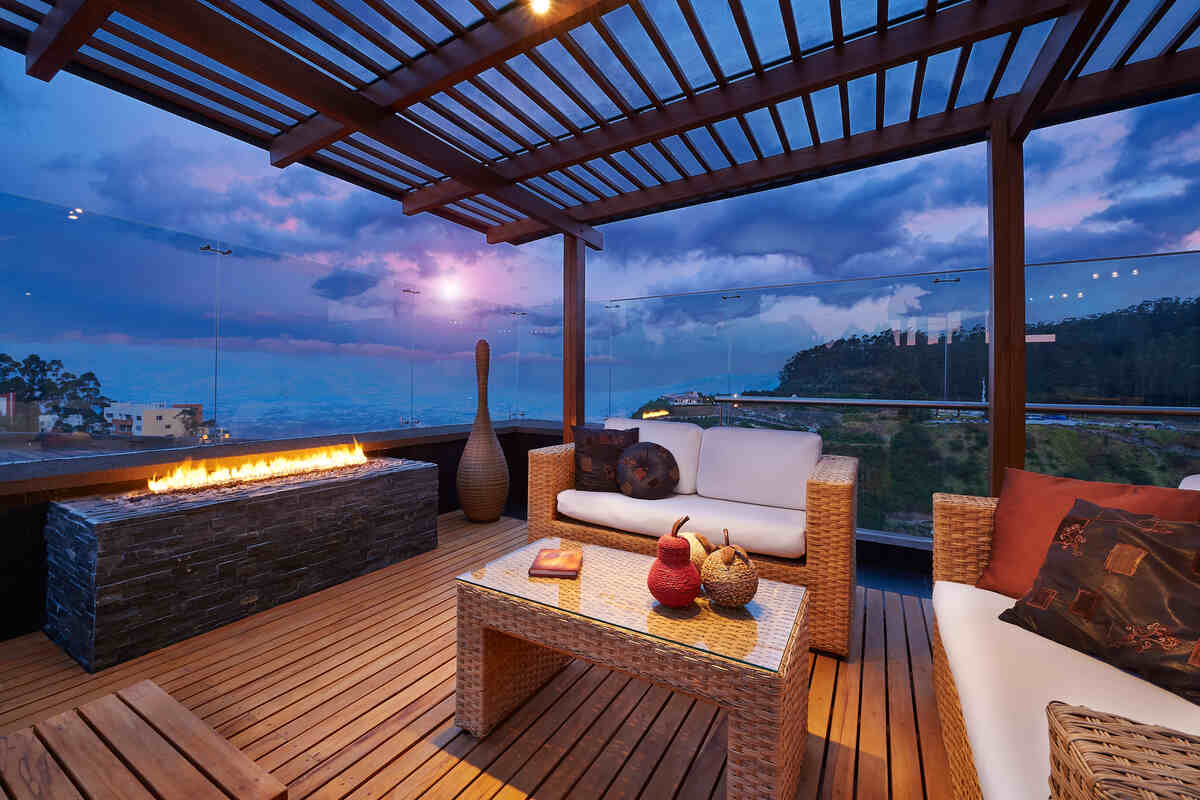
A patio is your interface between the indoor and outdoor world. It’s a special place to go where you can leave the everyday behind and connect with nature. A spot to silently sip your morning coffee and listen to the birds or linger with the fading afternoon sun with a gentle glass of wine.
So, to complement that connection to the natural world, some people find it beneficial to use natural materials for their patio. Both for the aesthetics and for the feel of walking barefoot on it.
There’s a limited amount of natural materials suitable for a patio, so if you can’t find the right natural material or if it’s not the right look, the next best choice is to choose something that’s sustainable. Here we’ll examine both.
Wooden Decking
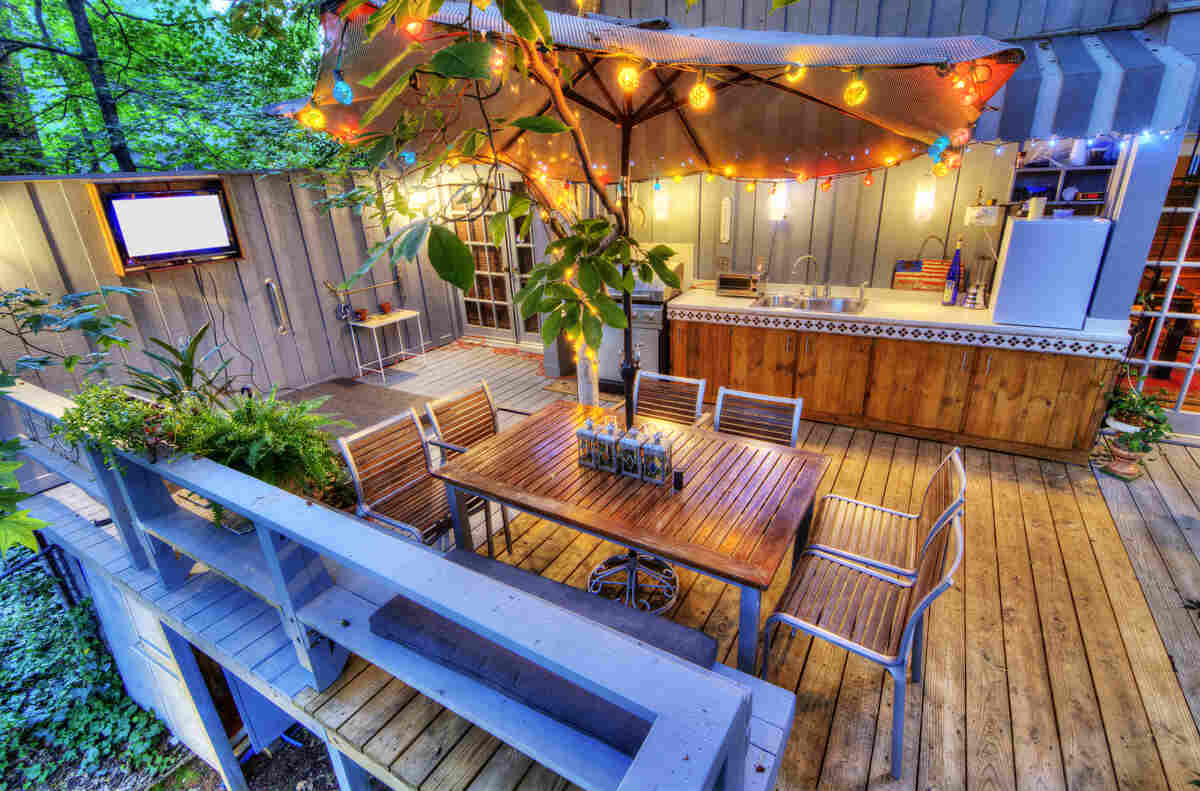
Wooden decking ticks all the boxes on both sides of the coin. It looks great but needs a fair bit of maintenance. It has a lovely soft feel and is easy on bare feet, even on a hot summer day, but left untreated it will rot. Many of the wood species excellent for decking are not sustainably sourced from tropical forests. So, once you have waded through all the pros and cons, is it right for you?
Canadians are fortunate to have cedar readily available for decking. This ethically sourced species is a great choice because it can store carbon and release oxygen while growing.
Western red cedar is one of the more affordable decking options, with a material cost per square foot between $4 and $12. Cedar is durable (with regular maintenance) and looks stunning with beautiful colour tones and a smooth finish.
Get the Green Building Project Checklist
Use this handy checklist on your next project to keep track of all the ways you can make your home more energy-efficient and sustainable.
However, it’s a soft wood so you need to avoid rough treatment. Western red cedar is better on a raised deck rather than at ground level, where it is prone to rotting.
Wood, in general, is highly susceptible to damage from patio furniture compared to the other options on this list. To minimize damage it’s helpful to use furniture pads, avoid water damage and, in general, be more careful moving furniture around.
If you want to avoid the regular maintenance required for wooden decks but still want that wooden look, composite decks are your go-to material.
Composite Decking
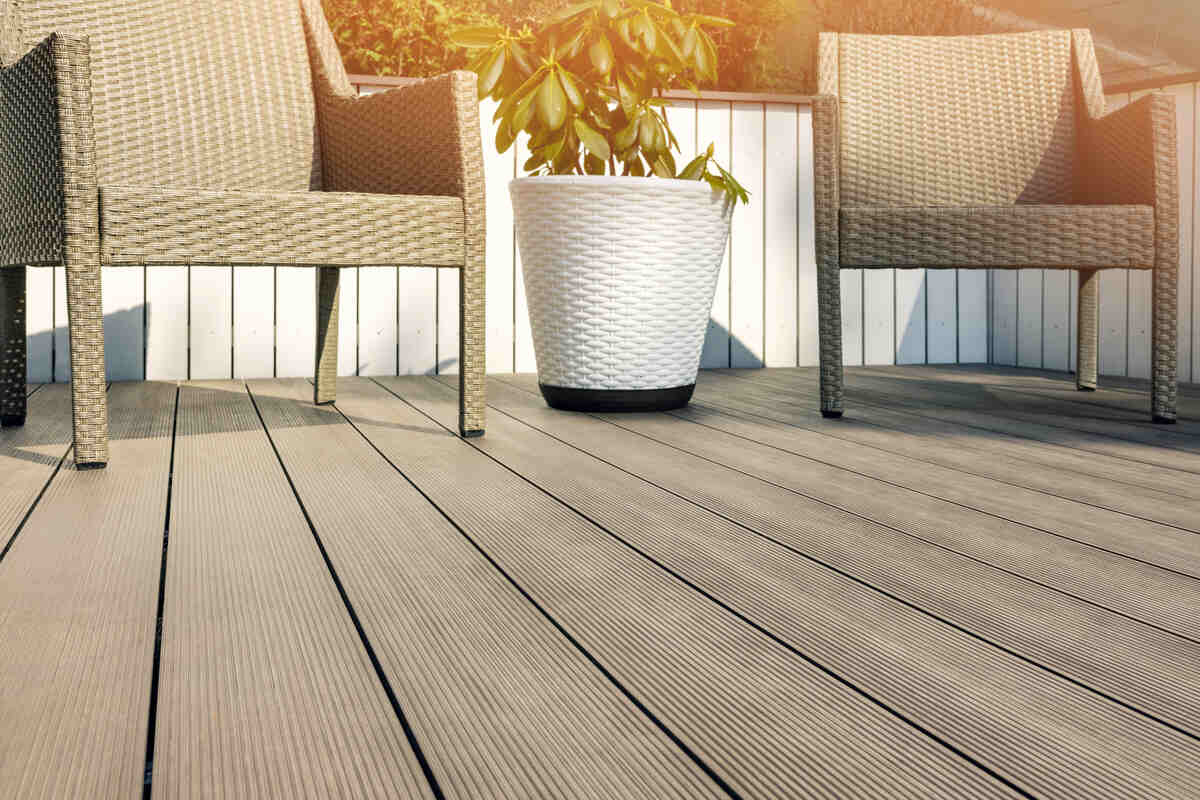
Composite decking has gained considerable popularity due to its appealing combination of a natural wood appearance and the substantial reduction in maintenance required. It uses a large percentage of recycled products to manufacture composite boards, so it scores big points on the environmental charts.
Composite decking is available in three price ranges. The cheapest decking is scalloped on the underside and almost uniform in colour, and it generally comes with a 25-year no-fade guarantee.
Moving up to the mid-range, the boards have a more natural appearance with realistic wood grain and carry a 25-year no-fade guarantee. Some decking in this range has a full-thickness board.
Top-of-the-range composite decking offers a 50-year warranty and has excellent durability and non-slip features. The boards in this range are all full-thickness, and some boards offer dual-facing, where both sides of the board are finished.
Mineral-based composite (MBC) boards offer additional advantages in terms of thermal dimensional stability, which allows the fasteners to maintain their grip as the swelling and shrinking of the boards are reduced to a minimum.
There are no wood fibres in MBC boards, so they are immune to rotting or playing host to mould and mildew. In areas prone to getting wet, MBC boards offer more traction compared to other composite decking.
Bamboo Decking
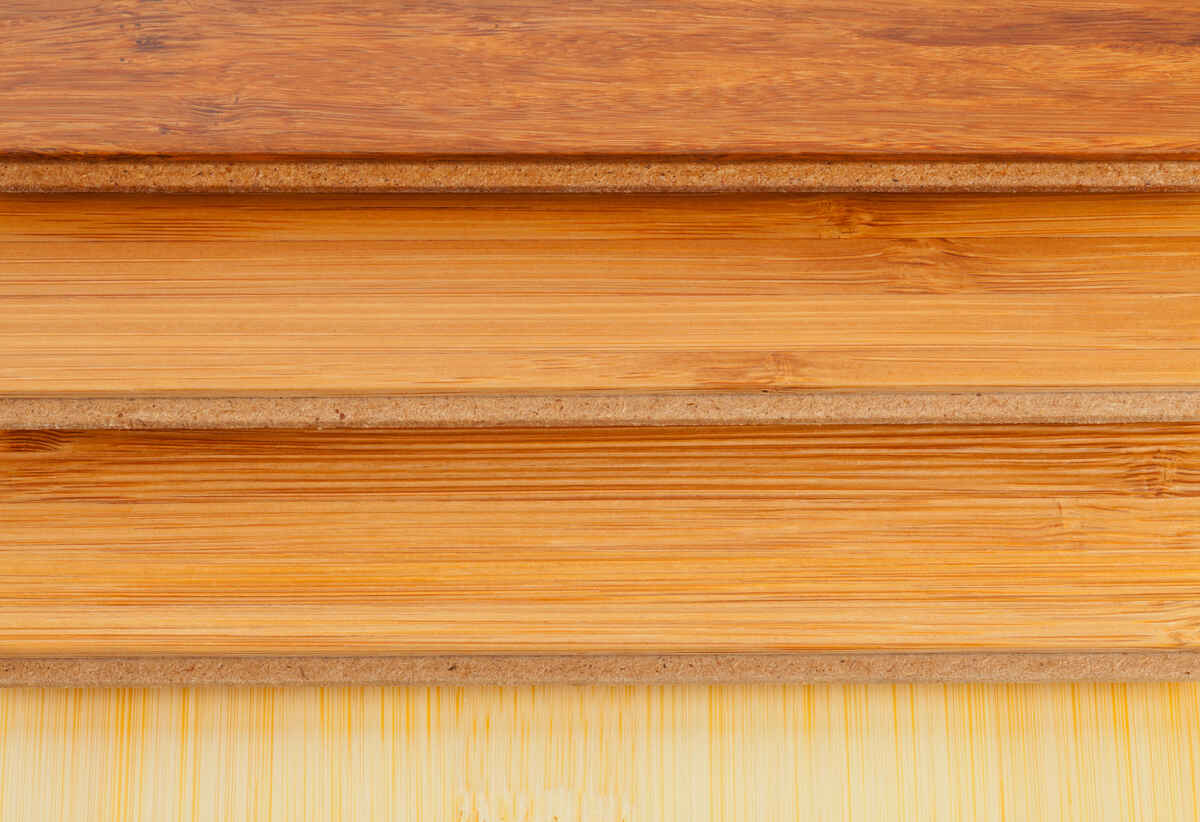
Bamboo is highly rated as an eco-friendly alternative because it’s harvested without killing the parent plant and it grows back really quickly. The material’s density ensures it is tough enough to endure the bumps and scratches common to all decks.
While the initial cost of bamboo decking may be higher than the wood equivalent, the potential long life of the product, coupled with the minimum amount of maintenance required, makes it a competitive material.
Once treated, bamboo decking can withstand moisture, sunshine and snow and creates a low-maintenance, attractive and eco-friendly deck.
Reclaimed Cobblestones
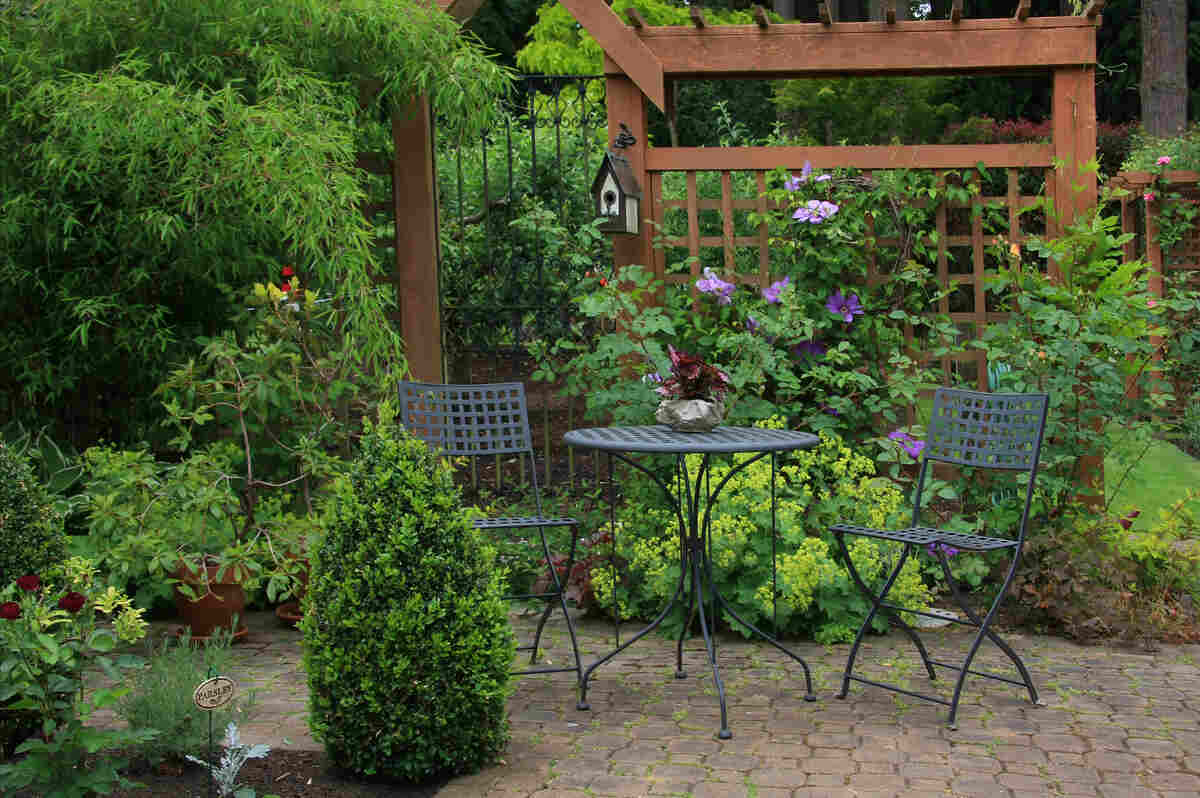
Using reclaimed old cobblestones is an excellent way to connect with both nature and history. The unique charm that comes from their well-worn imperfections creates a timeless elegance.
Although the initial cost of cobblestone paving is high, it is one of the most durable products and requires almost no maintenance. If you can buy them used, especially if you can source them from nearby, it’s the most sustainable choice of all these patio flooring ideas.
By cutting the old cobblestones to make them thinner, the material cost is reduced; however, the labour cost of cutting the stones raises the price. Another advantage of cutting the cobblestones is that it provides a smooth and flat surface, which makes for a more regular paving surface.
Cobblestone and other stone patio pavers can withstand all weather and the sun without deterioration, making it one of the most durable decking products. While installation times may be lengthy compared to other materials, the beauty, longevity and natural quality should more than compensate for this.
Rubber Decking
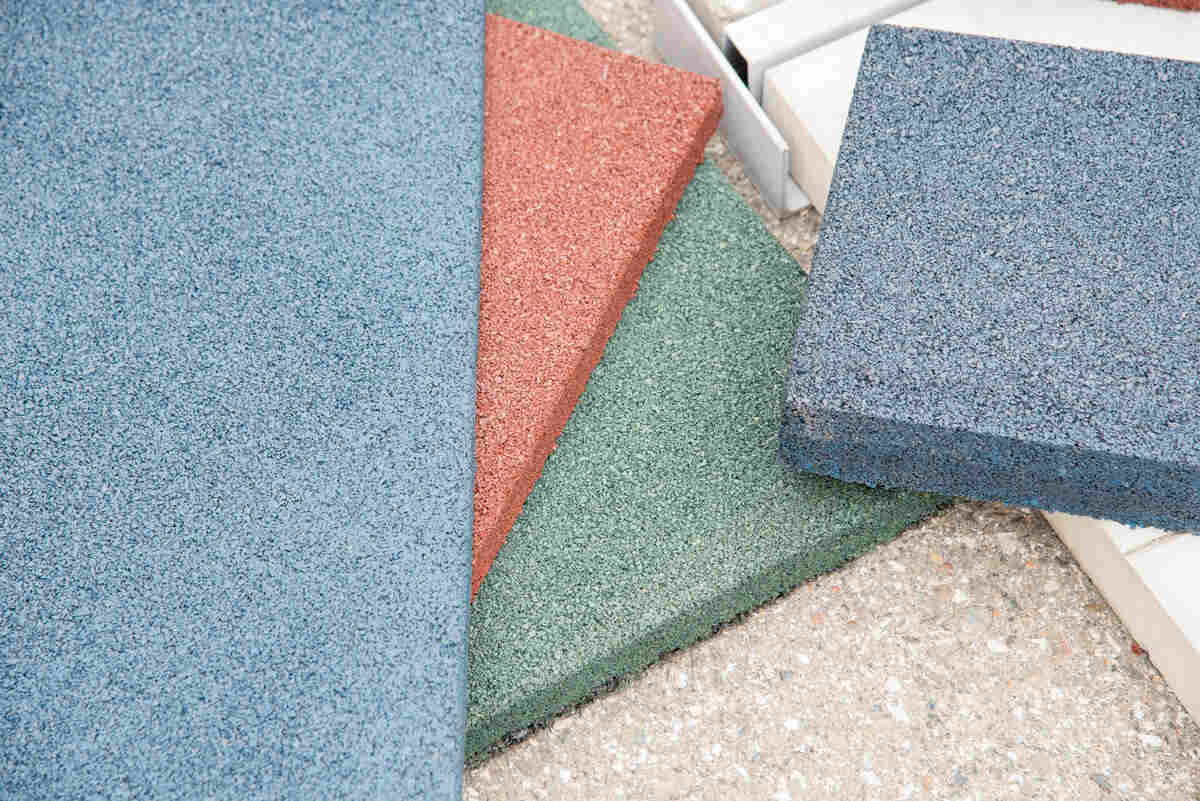
One of the top eco-friendly products for decks is recycled tires. And no, the decks look nothing like tires so don’t worry about that. Recycled rubber patio pavers are incredibly durable and can easily withstand sun, rain and snow. Depending on the particular product you’re looking at, they could also be partly natural as tires are generally made from a blend of natural and synthetic rubber.
Rubber patio paving’s non-slip feature creates a safe walking area even when wet, making it an excellent choice around the pool. Its UV resistance means the colours won’t fade or crack, and the paving is tough enough to withstand heavy traffic. As a bonus, on this list it’s the most highly resistant material to patio furniture damage.
Maintaining your recycled rubber patio tiles consists of sweeping to remove loose dirt and hosing down occasionally without needing specialized cleaning detergents.
Rubber patio pavers can be laid on a prepared base of compacted crushed stone topped with a layer of sand. While the initial cost may seem high, the product’s longevity and ease of maintenance make it one of the most economical patio paving options.
Aluminum Decking
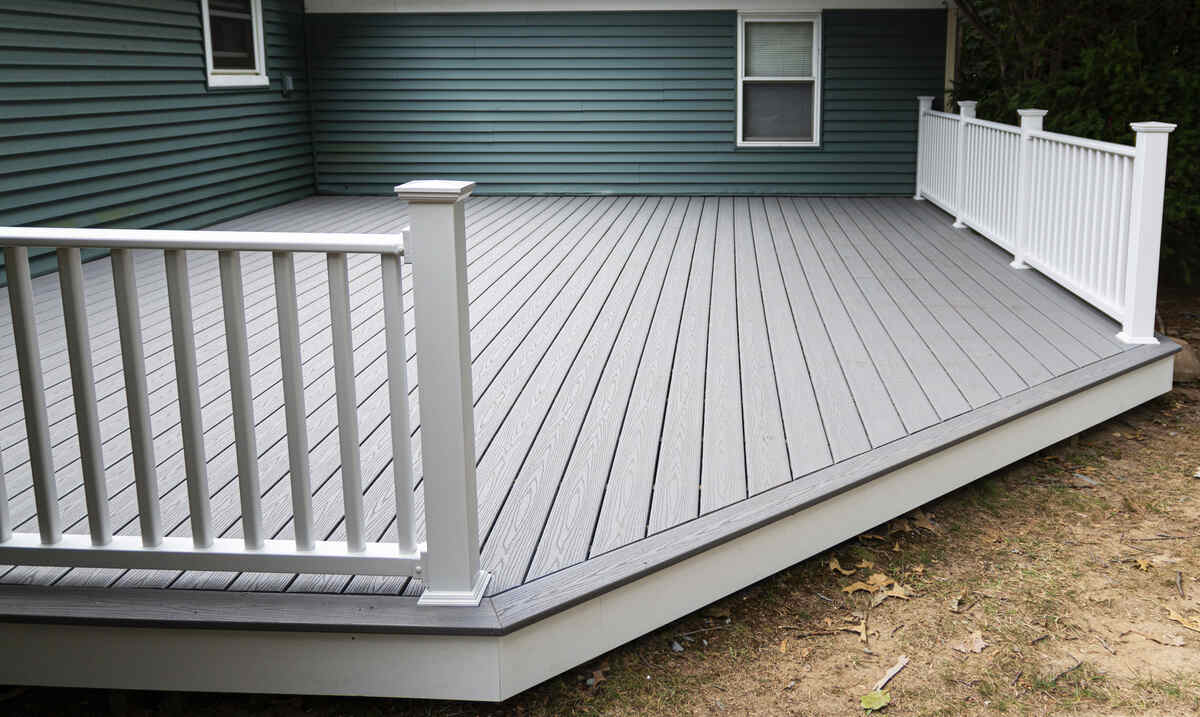
Aluminum is recyclable, so it rates well as a sustainable alternative. Pricing is not its forte, as aluminum decking comes with a heavy initial price tag. This can be partially offset by its longevity and the odd quality of getting a good price for the material if you decide to scrap the deck.
Aluminum decking incorporates clean, modern lines and is virtually maintenance-free. Another attractive feature is the decorative finish that comes come with it. The weight-to-strength ratio of aluminum makes it an ideal choice for weight-sensitive construction projects.
Design features like ridging or drainage holes ensure that any water on the deck is quickly removed, providing the deck with good non-slip qualities.
Regarding the heat factor. There are companies that promise their decking stays cool, even up to 30 percent cooler than wood or composite. So if you don’t have shading on your patio and, especially if you live in a hot climate, this is something to look for.
Checklist of Requirements
Before forking out your hard-earned cash for a pricey patio, consider the points on this checklist to make sure you’re making the right decision.
Read more on this topic in How To Create A Sustainable Outdoor Living Area