
Mobile home ceiling tiles can come in many sizes, shapes, and types. However, whatever the case may be, all mobile home ceiling tiles will eventually wear down, start to sag, get old, become discoloured and will need replacement. Or perhaps you might just want something more colourful. Or in the worst case scenario they could be old ones made with asbestos so you’ll want to change them out.
So in this guide to mobile home ceiling tiles we cover when it’s time to replace your tiles, how to replace them, the types of tiles you can choose from and we’ll finish off with the average costs of the different kinds of tiles.
Knowing When It’s Time to Replace Old Mobile Home Ceiling Tiles

The first step in this whole process is for you to know when it’s time for those old mobile home ceiling tiles to be replaced. So, what are some of the signs that your old mobile home ceiling tiles need to be replaced?
First and foremost, if you notice any kind of discolouration or stains, then it might be time to replace them. Now, appearances alone don’t always warrant a replacement, but discolourations and stains may be caused by mildew, mould or water leaks. This not only affects their appearance, but also their overall integrity.
Speaking of their integrity, if you notice any kind of cracks, breaks or other forms of physical damage, this not only looks bad, but may also lead to further issues. One of these issues might be sagging. If you see that the ceiling tiles in your mobile home are sagging, it could be due to physical damage, structural problems or moisture damage to the tiles.
Another reason why it might be time to replace your ceiling tiles include if they are covered in mildew or mould, as this can be hazardous to your health. Furthermore, older mobile home ceiling tiles might contain asbestos, a poisonous substance that should in no way be present in your mobile home.

Get the Green Building Project Checklist
Use this handy checklist on your next project to keep track of all the ways you can make your home more energy-efficient and sustainable.
Cause of Sagging Ceiling Tiles in Mobile Home
In case you’re wondering what’s causing the ceiling tiles in your mobile home to sag or droop down, it could be a combination of issues. First and foremost, it could just be that your mobile home is starting to get old, and the integrity of the ceiling and roof aren’t the best, therefore causing it to sag down.
It could also be the case that the ceiling of your mobile home, as well as the tiles, suffered some sort of prolonged water damage that weakened structural integrity, causing the sag over time. It may also be the case that poor installation techniques were used, or possibly the wrong type of adhesive.
Sagging ceiling tiles are not only unattractive, but may also be dangerous and lead to longer term structural issues. Therefore, replacing sagging ceiling tiles is essential.
The Issue of Asbestos Ceiling Tiles in Mobile Homes
Something you also need to consider is that your old ceiling tiles in your mobile home may have asbestos in them. While it makes for a good insulating material, it’s also highly poisonous, particularly when it’s agitated and inhaled.
It’s known for causing serious respiratory issues, even lung cancer so if you think you have mobile home ceiling tiles with asbestos in them, they should be replaced immediately.
How to Replace Ceiling Tiles in a Mobile Home
Choosing the Right Kind of Ceiling Tiles for a Mobile Home
Generally speaking, there are four kinds of mobile home ceiling tiles you can choose.
Vinyl – It’s both moisture resistant and durable. Vinyl tiles may not always be the most visually attractive, but they’re very easy to clean and maintain, which makes them popular among many.
Gypsum – They’re visually appealing with a smooth finish and they also happen to be easy to install. They’re relatively fire resistant, although they can be expensive.
Polystyrene – These are more or less just styrofoam. This type of ceiling tile is ideal for soundproofing a mobile home. As far as installation goes, it’s relatively easy. They’re also lightweight and low cost. That said, they don’t look overly visually attractive.
PVC – Though they’re not the most visually appealing, they’re very moisture and damage resistant, making them ideal for high traffic and humid environments.
Whichever of these four types of tiles you choose, they all come in many different textures, patterns and colours, so you can still match them with the rest of your mobile home. Also consider other factors such as moisture resistance, fire resistance and insulation properties.
How to Take Ceiling Tiles Down in a Mobile Home
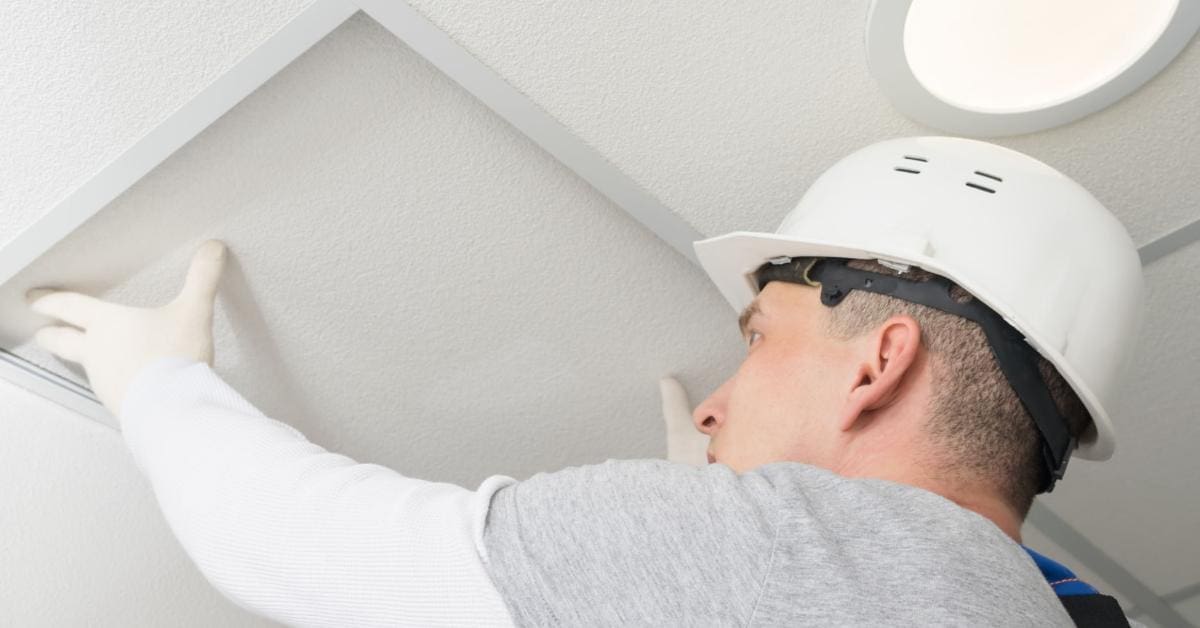
Assuming you know that the ceiling tiles in your mobile home do not contain asbestos you can take them down yourself. If they do contain asbestos or you’re unsure, you’ll want to contact a licensed professional because it’s such a harmful substance that it requires special handling and protection. As well, certain jurisdictions have particular legislation requiring licensed professionals to do the work. OK, so with that out of the way, let’s take a quick look at how to take your old ceiling tiles down.
- Start by wearing appropriate safety gear, including a respiratory protection mask, gloves and safety glasses. You also want to move all furniture out of the way and cover your floors to protect them against any falling debris.
- To remove the ceiling tiles, start at a corner of your choosing. If there is any edging, such as trim or moulding, remove it carefully, and if possible preserve it for future use.
- Using any kind of flat tool like a putty knife, pull the tiles off of the ceiling. Once they are loose, use your hands to pull them down.
- Dispose of them as required by your local waste department.
How to Install New Ceiling Tiles in a Mobile Home
With the old mobile home ceiling tiles removed, now it’s time to install the new ones. There are a few different installation methods here, and we’ll try to cover them all.
To install new mobile home ceiling tiles, you’ll first want to measure the area of the ceiling so you know how many tiles you’ll need. You may then also need a saw or a utility knife to cut tiles to shape, especially for edges and corners. Before you start, also make sure that the surface is completely dry and clean.
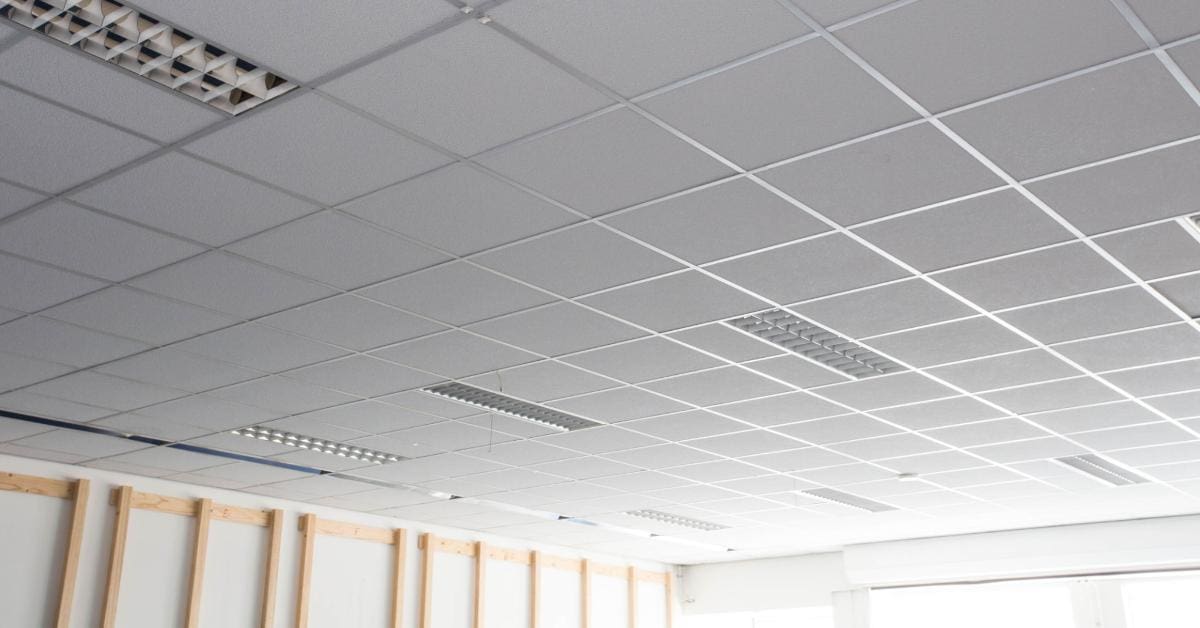
In terms of installing your new ceiling tiles, there are a few different methods, with one of them being a grid system. If you are planning on using a drop ceiling grid system, you’ll first need to install the grid according to the directions as provided by your manufacturer. You can then simply place the ceiling tiles within the grid as needed.
A much more common installation method is to use a direct adhesive. Here, you need to get yourself an adhesive specifically designed to stick tile to the ceiling material in question. Create a zigzag pattern with the adhesive on the back of the tile and then firmly press it onto the ceiling.
Once all of your tiles are up, the only thing left to do is to install the moulding and trim over the edges and to cover any gaps. If you’ve got tiles that can be painted, you may do so now as well.
How Much Do Mobile Home Ceiling Tiles Cost?
The only thing you’re probably interested to know now is how much it’s going to cost you to replace the ceiling tiles in your mobile home. Some really simple vinyl or polystyrene mobile home ceiling tiles might cost as little as $0.50 per square foot, or up to $2 per square foot.
If we’re talking about PVC or gypsum tiles, these can cost anywhere between $2 and $5 per square foot.
However, if you’re going for something very decorative and high end, you might pay up to $10 per square foot. Keep in mind if you’re not going the DIY route that professional installation can also cost you up to $3 per square foot.