
Green building is such a fast-evolving field that it doesn’t matter whether you’re an architect or whether you’ve literally never thought about how houses work until right this minute—we can all learn a little more about it. The question is, where do you start?
Below, we’ve highlighted resources from across the country and into the U.S. Many of them are better suited to professionals or people who have building experience but want to learn more about how to do things sustainably. But there are also plenty of resources out there for complete novices who are learning about building for the first time. This post offers a mix of possibilities for rookies and pros.
We’ve included a range of learning formats, from conferences to full courses, online and in-person options. While it’s difficult to judge how challenging a course would be for any individual, we’ve tried to give you some idea of who the courses were designed for so you can better decide if an option is right for you.
Where possible, we’ve included the cost of the course or event, although students should confirm registration fees with the organization, since fees are subject to change.
As a note, sustainable building is a big industry, and you can pay as much or as little as you wish to become better informed about it. We’ve suggested learning opportunities at a range of price points. Be aware that in the realm of education, more expensive doesn’t mean better and free doesn’t mean bad.
Also please note that this guide is intended to show you some opportunities that are available. It isn’t a recommendation for any of the resources we’ve listed. Before you sign up for anything, think about what you want out of the experience. Ask questions of the organizers and consider whether what they’re offering will meet your aims.
In-Person and Hands-On Learning
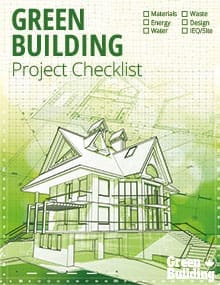
Get the Green Building Project Checklist
Use this handy checklist on your next project to keep track of all the ways you can make your home more energy-efficient and sustainable.
Not everyone can take the time out for an in-person course or workshop, but if you can, in-person learning is a fantastic opportunity to get information, ask questions and, ideally, try your hand at the techniques you want to learn.
Conferences and Workshops
The best first step is to explore the options your own community has to offer. There are community groups across the country who specialize in everything from green retrofits to renewable energy to sustainable cities. And there are so many of them who are offering one-off talks and workshops (often free or low-cost) that we couldn’t begin to list them all here.
Below are just a few suggestions for regularly occurring events that might be helpful.
Green Building Festival, Sustainable Buildings Canada
Location: Toronto, Ontario
Cost: $345 for an in-person pass, $100 for a digital pass
Who It’s For: Professionals
The Green Building Festival features industry experts speaking on topics such as decarbonization, sustainable urban design, tiny homes and more. The day-long festival also offers networking opportunities for attendees.
Building Lasting Change Conference, Canada Green Building Council (CaGBC)
Location: Toronto, Ontario
Who It’s For: Professionals
CaGBC’s annual conference brings expert speakers and workshop leaders together to offer those in the green building industry a chance to hear presentations and panel discussions, as well as attend hands-on workshops. Check the website for dates and fees.
Mudgirls Collective Workshops, The Mudgirls Collective
Location: various sites, British Columbia
Cost: $400, including camping, childcare and meals
Who It’s For: Everyone
The Mudgirls Collective offers 5-day long workshops in natural building techniques where participants get hands-on experience building homes and other structures. Students work with natural and salvaged materials, learning techniques such as cob building. Check the website for the project each workshop is focused on.
The Art of Natural Building, The Living Centre
Location: London, Ontario
Cost: $250 ($175 reduced rate for those who need it, $300 for those who wish to support them)
Who It’s For: Everyone
The Living Centre runs 2-day workshops on cob and cordwood building. The workshop is a mix of theory and hands-on experience, with students learning building basics as well as practicing cobbing and cordwood construction.
Solar and Wind Workshops, Canadian Solar Institute
Location: Various locations across Canada
Cost: $550 (2-day solar workshop), $1199 (3-day wind workshop) $995 (4-day solar workshop)
Who It’s For: Novices to professionals, depending on course
The Canadian Solar Institute offers a few different workshops for people wanting to learn more about renewable energy. There’s a 2-day advanced workshop on solar PV installation, a 3-day workshop on small wind turbines and a 4-day short course on solar PV design and installation. Some options are currently online but expected to return to in-person formats.
Courses
The best place to look for courses if you want to learn about specific aspects of green building is your local post-secondary institution.
Colleges and universities don’t just run formal degree programs or programs for people looking to be certified in something—they offer shorter courses and continuing education options that are often geared towards people who just want to learn more about a subject.
They’ll vary in format, length, cost and intensity, but they’ll all be taught by experts in the field and will give you opportunities to engage with them about your specific interest.
That said, here are a few privately-run courses that might be of interest to you.
Green Building Program, YMCA-YWCA of the National Capital Region
Location: Ottawa, Ontario
Cost: Free if you qualify
Who It’s For: People employed in the building industry and interested in enhancing their skills
The YMCA-YWCA’s program is an 8-week course that introduces students to technical skill training in construction and green building. The training is followed by a 6-week paid job placement.
Solar Panel Installation Training Course, Gridworks
Location: Edmonton, Alberta
Who It’s For: Entry level students to professionals
Gridworks runs a 5-day course on solar panel installation that’s CSA certified and run by a master electrician. Students receive 3 days of in-class instruction on topics such as PV system components, site analysis and mounting solutions, followed by 2 days of hands-on installation practice. The course does not certify non-electricians, nor does it qualify them to install PV systems.
Solar PV Design and Installation, The North American Solar Academy
Location: Toronto, Ontario
Cost: $995
Who It’s For: Novices
Students who sign up for this short program complete an online component and a 2-day hands-on workshop, where they assemble roof, pole and ground mounted solar systems. Co-op job placement programs are an option if students want additional training.
Online Learning

Those with the ability to learn remotely can find themselves with many more educational options. As you might imagine, online learning can often be low-cost, as well, if not free.
Webinars and Video Resources
Webinars and videos can be a great way to absorb a lot of information in a little time. While most are geared towards very specific topics rather than general overviews, it’s a good opportunity to hear an expert speak on a technical subject from their own perspective.
Various Webinars, Green Building Initiative (GBI)
Available: On demand
Cost: Free
Who It’s For: Professionals and those with a working knowledge of building practices
GBI records many of their live webinars and makes them available on their website. Most focus on GBI’s Green Globes rating system, but others include building redesign and onsite renewable energy.
Check their site for upcoming webinars and in-person seminars, too.
Conference Videos, Ontario Natural Building Coalition
Available: On demand
Cost: Free
Who It’s For: Novices to professionals
The Ontario Natural Building Coalition features videos from their annual Natural Building Conference. While only a few years’ worth of presentations are available, the topics will be of interest to anyone wanting to learn more about natural building practices and techniques.
Video Resources, Green Built Alliance
Available: On demand
Cost: Free
Who It’s For: Novices to professionals
Green Built Alliance has collected an impressive gallery of informative videos, which you can scroll through by topic. They include recorded webinars and presentations, case studies, lectures and tutorials. Running the gamut from introductions to green building to seminars on biophilic design, there’s something for everyone here.
Online Courses
Online courses offer opportunities for people to learn a subject in-depth, often at their own pace. While they might lack the interaction and the hands-on elements of in-person learning, they’re a solid way to gain technical knowledge and ideas.
DIY Solar Workshop, Unbound Solar
Available: On demand
Cost: Free
Who It’s For: Novices
Unbound Solar is a U.S. based solar installation company, but they feature DIY solar resources to help folks who want to set up their own renewable energy systems. This online workshop offers videos and written guides to help DIYers manage their own solar projects, whether they’re intending to hire contractors or do everything themselves.
Various Courses, Builders for Climate Action
Available: Check individual courses for dates
Cost: $199-299, depending on course
Who It’s For: Professionals and those with a working knowledge of building practices
Builders for Climate Action runs a small number of courses on topics such as hempcrete, sustainable home design and using BEAM (Building Environmental Assessment Method). Courses vary in length and include both downloadable content and also live Q and A sessions.
Accelerating to Zero, CaGBC
Available: On demand
Cost: Varies for both members and non-members ($19-$100; see individual courses for fees)
Who It’s For: Novices to professionals, depending on course
CaGBC features a series of online courses and workshops designed to support those interested in zero carbon building and retrofits. Topics include thermal energy demand intensity, embodied carbon, energy use intensity and the zero carbon building standard.
Courses are generally one hour in length, although CaGBC has grouped sessions from their 2020 Building Lasting Change conference together into one 8-hour session. Students can pay for individual courses or bundle them together to receive a 25% discount.
Users can access the courses for 3 calendar months after they receive the link. Many of these courses count as one GBCI general education hour.
Various Courses, CaGBC
Available: On demand
Cost: varies depending on course
Who It’s For: Novices to professionals
CaGBC also offers a number of individual courses on topics interesting to those in the green building industry and those who want to learn more about sustainable building. Topics include healthy buildings, LEED certification, energy performance and building materials. Introductory courses are labelled as such.
Courses are anywhere from 45 minutes to upwards of 8 hours. Many of them count towards continuing education hours for LEED certification.
Various Courses, USGBC
Available: On demand
Cost: Free
Who It’s For: Novices to professionals
The U.S. Green Building Council (USGBC) has almost 500 free courses on a wide range of topics from certification to case studies, air quality to energy. The site has a useful filter so students can find exactly what they want to study. Courses are labelled Basic, Intermediate, Advanced or Expert and typically run from 30 minutes to 2 hours.
Students can pay for courses to access more options. Some courses qualify as continuing education hours for LEED certification. See individual courses for details.
Various Courses, Living Architecture Academy
Available: On demand
Cost: varies depending on course
Who It’s For: Novices to professionals
The Living Architecture Academy focuses on green infrastructure such as green roofs, living walls and biophilic design. Courses are self-paced and students have lifetime access to them. Introductory courses are labelled, and there are options for professionals who need continuing education hours, as well.
Certification Courses
Certifications have become an increasingly popular way for builders and industry professionals to demonstrate their knowledge of sustainable building concepts and their familiarity with green building practices. Below we’ve highlighted training options for a few of the major certification systems in Canada.
Built Green Canada
Built Green Canada offers several courses designed for professionals interested in working with this system.
Training with Built Green Canada
Available: On demand
Cost: Varies depending on course ($150-$395)
Who It’s For: Professionals
The courses offered by Built Green Canada introduce students to Built Green practices and policies, as well as building science, construction technology and net zero energy. Students have access to these self-paced courses for 12 months. Courses qualify for professional development points for BC Housing and the Professional Home Builders Institute.
LEED Credentials
LEED credentials are administered through the USGBC. The USGBC and CaGBC run both prep courses for certification exams and courses for those who need to fulfill continuing education hours.
LEED Green Associate (GA) Prep Course, CaGBC
Available: On demand
Cost: $159 for students, $199 for members, $239 for non-members
Who It’s For: People preparing to take the LEED GA exam
LEED Green Associate (GA) credentials designate that a professional has a knowledge of the general principles and practices of green building. CaGBC runs an 8+ hour, self-paced exam prep course to help students prepare for the LEED GA exam.
The course includes study guides, slides and videos as well as practice questions. Users will have access to the course for 90 days after it’s made available to them.
LEED AP with Specialty, USGBC
Available: On demand
Cost: varies, depending on the material accessed
Who It’s For: Professionals preparing to take the LEED AP exam
USGBC features exam prep courses, four-week study plans and practice exams for those preparing to take the LEED Accredited Professional (AP) exam. For some of the specialties, students can bundle the materials, while other specialties feature individual educational products.
Students can also subscribe to the USGBC course catalog, which gives them access to more than 1000 courses.
LEED Credit Hours, CaGBC
Available: On demand
Cost: varies depending on course
Who It’s For: Professionals earning LEED credentials
LEED professionals needing to earn continuing education hours can access on-demand courses from CaGBC. Users can fulfill rating system-specific hours in BC+C, O+M, Homes, ID+C and ND, depending on topic. Topics can be bundled together to receive a 25% discount on course fees.
Passive House Canada
Passive House Canada offers training for anyone interested in learning about the Passive House Standard, from homeowners to industry experts.
Training with Passive House Canada
Available: Check individual courses for dates
Location: Check individual courses for locations
Cost: varies depending on course ($50 for the introduction up to $2488 for a bundled Certification program)
Who It’s For: Homeowners, realtors and industry professionals
Passive House offers both introductions to their standard, as well as comprehensive courses and exam prep for professionals intending to pursue certification. Online, in-person and hybrid learning formats are available. On-demand courses are accessible for 60 days after purchase.
Conclusion
There are a lot of options here, but this is really just the start. Research opportunities that are available close by and you might be surprised at how much local knowledge is around you.
Feature image: Okan AKGÜL; Image 1: Christina @ wocintechchat.com; Image 2: Alejandro Escamilla; Image 3: ThisisEngineering RAEng