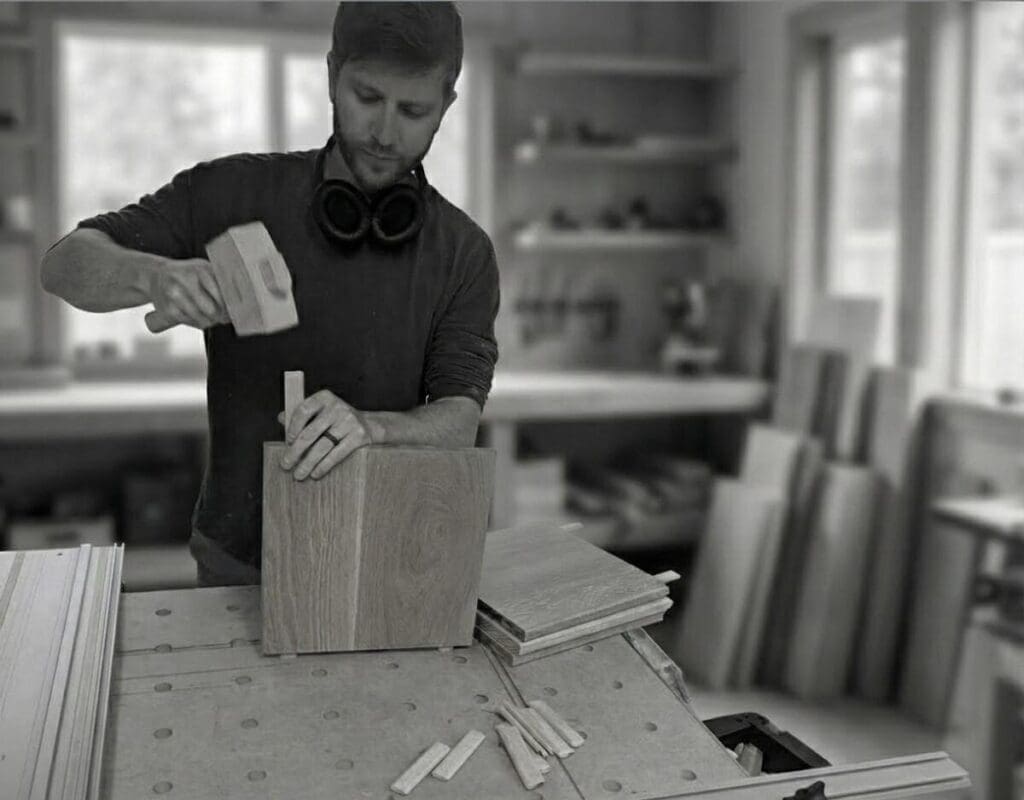
Woodworking tools have transitioned from racks of dull and dusty hand tools to bright-coloured boxes of power tools with guides and adjustments, effortlessly elevating the home woodworker to levels of professionalism once the realm of the highly skilled craftsman.
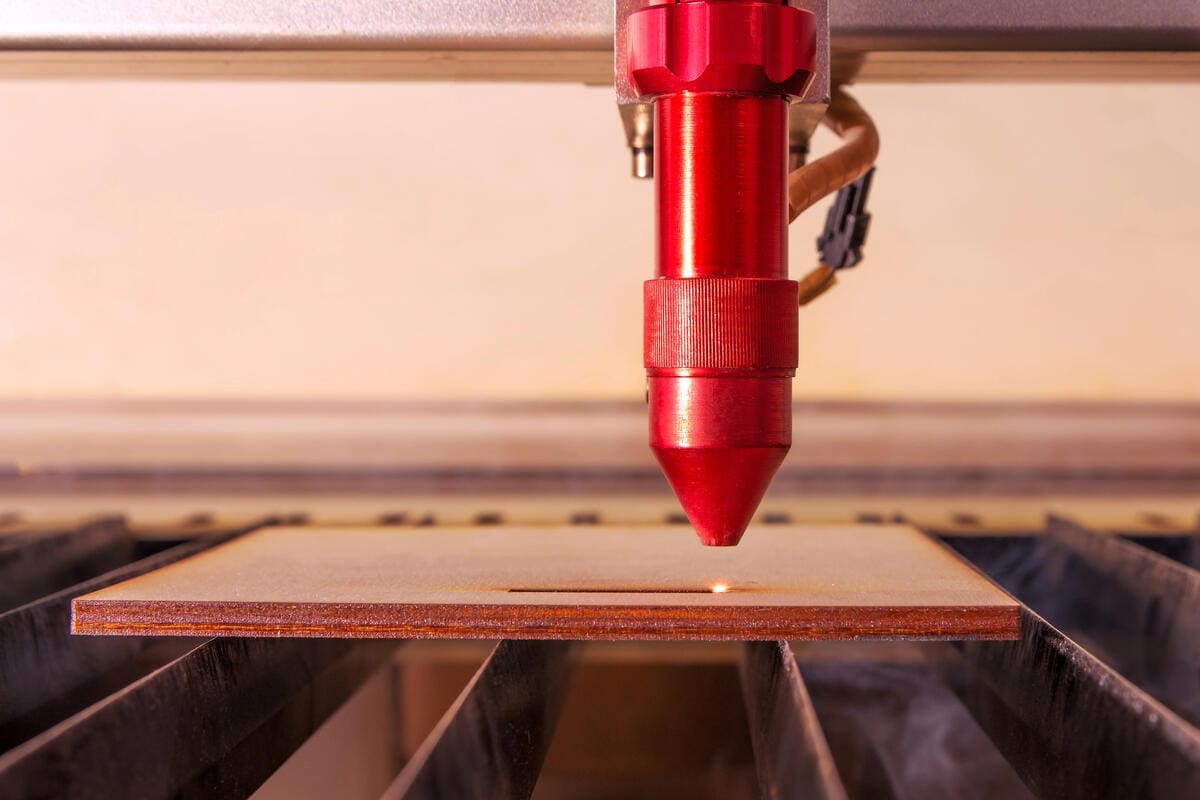
Modern routers, jigsaws and miter saws all have laser guides to alert the woodworker about their intended action, but lasers have a much wider application. Laser engravers have opened up a whole new world of opportunity for woodworkers to engrave, cut, carve and label, all with the aid of computer technology, resulting in objects of consistent precision and accuracy.
What Types of Projects are Suitable for a Laser Engraver?
A laser engraver can easily, accurately and quickly produce a wide range of decorative items. Even designs that would require sharp and intricate design work are easily produced. The only limitations are the laser’s power and the thickness of the material. As a general guide, a laser in the 50 to 150-watt power range will perform well on wood up to ¼ inch or 6 mm thick.
Lasers are superb at creating signs and labels. For anyone who has tried to use a pentagraph, advancing to a laser machine is like moving from a cave to the corner suite. That’s the true beauty of laser machines: they allow for a level of control hand tools struggle to reach.
While CNC router machines operate on a similar principle to laser engravers, they are more geared toward larger projects. Laser engravers are excellent at small, delicate projects where intricate cutouts are efficiently and accurately made. The one drawback is that lasers discolour the material at the cut because of the heat produced by the laser beam.
However, apart from the slight inconvenience of the darkened edge, lasers also have another specialty: they can engrave internally, which puts them in a league above CNC machines. A green laser machine can engrave internally in glass or crystal, creating an image inside the material without damaging the surface of the material.
Basic Wood Projects That Can Be Done With a Laser Engraver
Get the Green Building Project Checklist
Use this handy checklist on your next project to keep track of all the ways you can make your home more energy-efficient and sustainable.
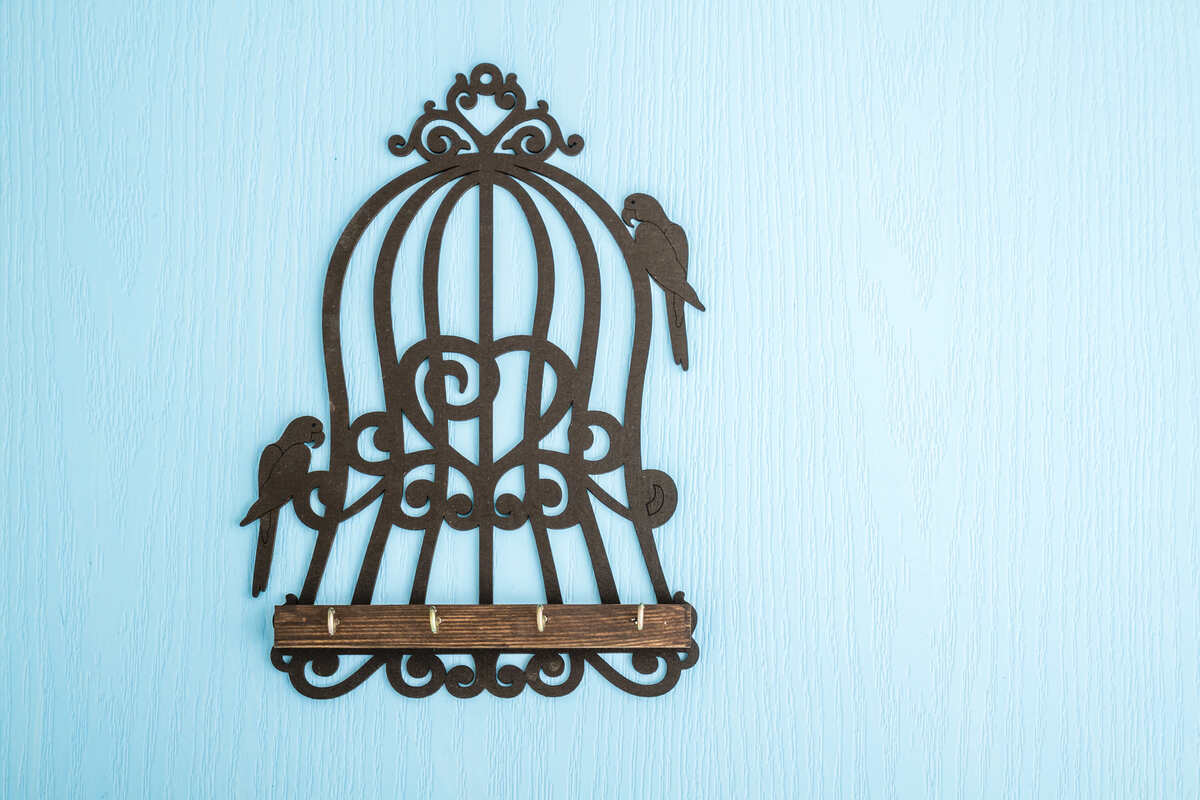
It’s good to gain experience with your laser engraver by starting with simple designs and using cheap materials such as wood offcuts or cardboard. Simple lettering or numbering to make signs is a perfect way to begin finding out about the abilities of a laser engraver. Some sign ideas include: your house number, personalized door signs for each bedroom, inspirational quotes, welcome home and a no soliciting sign.
Laser engravers are excellent at making small boxes, such as a recipe box or jewellery box, with thin plywood. Accurate cutting and clever design allow the units to be assembled without any tools required. To add a personal touch to the box, consider adding a name or even an engraved photo to the sides. The laser engraver allows you to give free rein to your imagination.
In terms of commercial ideas, designing and engraving your logo on, for example, handmade bread and cutting boards, is an excellent way to hone your skills and simultaneously raise the visual appeal of your product. Restaurants are fertile ground for laser engraving. The restaurant’s name can be engraved on menus, table numbers, signs and boards.
Toys are another category where laser engravers excel. If I can suggest just one type of toy that will thrill kids, it is a jigsaw puzzle made from 3 mm plywood. Jigsaw puzzles are an excellent project because familiar images can be engraved onto them. Here, you can combine the ability of the laser to etch a photo of a child, the family pet or siblings onto the plywood and then cut out the individual pieces of the jigsaw puzzle.
The great thing about laser engraving is that puzzles aren’t limited to the traditional 2D variety; 3D puzzles can be easily designed and cut using a laser engraver.
Some Other Laser Engraving Ideas
- Engraved picture albums
- Wall art
- Wooden key holder
- Coasters
- Serving tray
- Family growth chart
- Decorative wood panels
- Pet name tags
- Engraved photo frames
- Wooden desk organizer
- Wooden tablet or book stand
- Wooden clock
- Wooden bookmarks
- Wooden gift boxes
- Wine bottle holders with engraving
- Engraved charcuterie or cheese boards
- Laser-cut and engraved ornaments
- Wooden kitchen utensil holder
- Wooden phone stand
Factors that Influence the Efficiency of the Laser
Like every DIY tool, laser engravers require regular maintenance to ensure the laser operates at peak performance. Here are some tips on how to keep your tool in good shape as well as techniques to operate at peak efficiency.
- It is essential that the lens is kept clean, as a dirty lens can reduce the cutting power of the laser.
- The speed of the cut influences the precision of the laser. Remember, slow and steady wins the race. Taking advantage of high-quality precision optics helps maintain consistent focus throughout the cutting process. This consistency improves edge quality and reduces errors during detailed or complex laser work.
- The cutting power of the machine will play a large role in dictating the thickness of the material able to be cut.
- Lasers can get through soft woods like pine much faster than hardwoods like oak.
- Woods with high resin content tend to make things messy and are best replaced with plywood equivalents when possible.
Types of Laser Engravers Suitable for Wood
There are two types of laser engravers suitable for DIY woodworking projects:
CO2 lasers – These lasers emit infrared light and are versatile enough to perform well on wood, stone, glass, textiles and plastic. For a regular DIY machine, expect to pay upwards of $2,500.
Diode lasers – Great for wood etching, but their cutting capabilities are limited to soft and thin pieces because of their low power ratings (typically below 20 watts). The budget pricing of these machines, between $150 and $2,000, makes them ideal for DIY enthusiasts.
Laser Engravers Used for Other Materials
Fiber lasers – More suited to metals, where they can create delicate and precise details. They can be used for hardwoods like mahogany, but there is a fire risk when using fiber lasers with open-grained woods.
Nd:YAG lasers – These are good at cutting metals, especially stainless steel, aluminum, copper, brass, plastics and ceramics.
Looking for some more project ideas or visual inspiration? We’ve collected a bunch of designs in our ‘Laser Engraving Ideas’ board on Pinterest.