Congratulations on your decision to purchase a green home! Green homes not only help to reduce your carbon footprint but they will also reduce your utility costs in the long-run, making them a great financial and environmental investment. Here’s a list of six important factors to keep in mind as you decide on purchasing your green dream home.
1. Get Familiar with Concepts of Sustainability
You cannot buy a green home without truly thinking through the concepts and definitions of sustainable building. This is necessary, as many agencies and homeowners try to sell their homes by labeling them as ‘sustainable, which is not always true.
Before you begin viewing green homes, clarify the concept of what the seller and their realtor mean by “green,” and what you think green should mean. This includes studying the materials used, the kind of appliances and systems installed, and the standards defining the term “energy-efficient.” This holistic approach will help you determine whether or not the house you are buying is truly as green or eco-friendly as you want it to be.
Read “What is Green Building” from our Green Building Basics Guide to get a better understanding of what makes a home sustainable.
2. Look into the Type of Materials Used
What kind of building materials and elements are used to make the home green? In what ways are they sustainable and eco-friendly? In what ways have they posed a threat to the environment? Ask such questions related to the materials and elements to analyze the different facets of its construction.
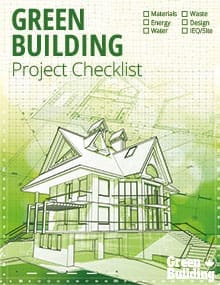
Get the Green Building Project Checklist
Use this handy checklist on your next project to keep track of all the ways you can make your home more energy-efficient and sustainable.
While green homes are often made with sustainably sourced elements, some contractors mix non-sustainable materials to reduce costs. Some materials are natural, but their methods of production are emissions-intensive. Some materials are used because they’re energy-efficient, but are made from toxic materials. Knowing what’s in a potential green home is important because the seller may be asking a green home premium, and if the home is not what it’s billed as, the sale could put you at a potential loss down the road.
Read our Green Building Guide to Sustainable Materials for a detailed look at this topic.
3. Check What Your Insurance Will Cover
The green home of your choice should be insured as it protects the property from damage and unwanted repercussions. Beyond having the mandatory basic insurance, you want to make sure your policy will cover any extra features, like wind turbines or other renewable energy systems.
Since the extras a green home comes with can be expensive to maintain, pick a policy that covers the repair costs and damages along with the standard types of coverage.
Read this article on Green Home Insurance for more details.
4. Examine the HVAC and Renewable Energy Systems
For every green home, the cooling and heating system is a major factor determining its carbon footprint and utility costs. If the home comes with a heat pump the house will be a lot more efficient than if it had an old furnace installed. Particularly the case if that heat pump was powered by solar panels.
Equally important is the renewable energy systems in place. Does the home have a solar PV system or wind turbine?
Green homes could be equipped with renewable energy systems that power the cooling and heating system along with other appliances. Check the condition of these systems and have an inspector examine the condition of the cooling and heating system. If the appliances are too old, they may not work as efficiently and use up more power. In such cases, the prospect of having to replace them soon could knock a bit off the price.
Read our Green Building Guide to Energy Efficiency and Renewable Energy for more on this.
5. Analyze the Location
Living in a green home is not just about the building, it’s about the lifestyle. To encourage yourself to walk or cycle more often, consider the location and surroundings of the green home as they can help determine your commute distances and time. With this, you can calculate the amount of fuel you would be consuming on a daily and weekly basis.
The location of your home should be strategic and easy to access from all directions. You should have nearby access to a grocery store, a pharmacy, a hospital, public transportation, and a gas station from your home.
6. Consider the Maintenance
While green homes are alluring in terms of energy efficiency and reduced costs, they may increase maintenance in the long run if they feature a lot of cutting-edge technology like solar panels. Make sure to ask about any anticipated repairs and upgrades, so you can be ready for the long-term maintenance costs. With some consideration and a plan in place, you can easily handle the maintenance process of your green home.
Feature image: Kindel Media; Image 1: BENCE BOROS