
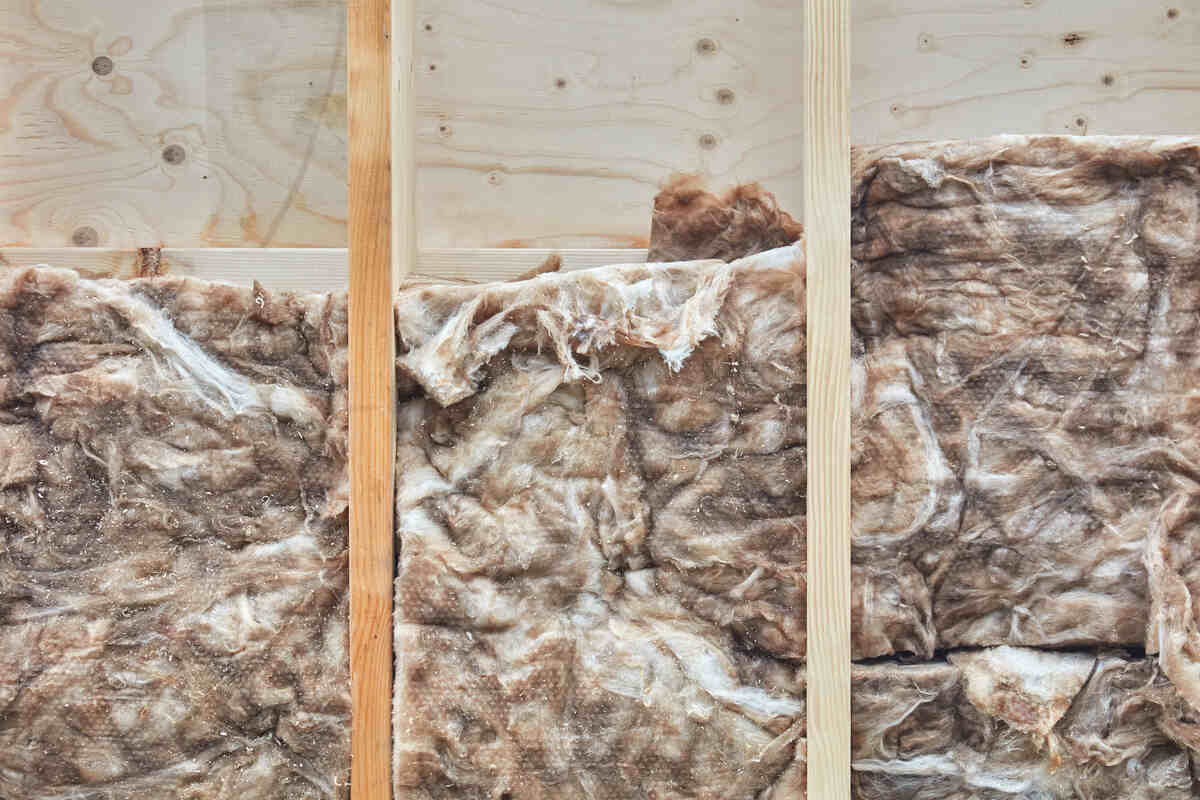
While the intention of insulating a home is always to save energy and make your home more energy efficient, not all insulation is created equal. Some types of insulation may get a five-star for fire prevention, but a one-star for health and safety, as they contain harsh chemicals.
Insulation options for a green home should use materials that are natural, highly recyclable and don’t contain harmful substances. While there are many options, we picked six materials that provide exceptional and safe performance.
Icynene
Castor oil has been popular for its use in hair care, but did you know it can also be used in home insulation?
Probably not.
It’s the base of the spray foam insulation named Icynene. We put it number one on our list for a bunch of reasons. First, it is free from HFCs (hydro-fluoro-carbons) and it can be applied with PBDE-free water-based blowing system, which is much better for the environment.
It comes with an R-value of R-3.6 per inch of thickness, which is about the same as fiberglass and cellulose, but since it is blown in it has a number of advantages, including: creating a complete vapour barrier which blocks drafts, does not settle over time like fiberglass or cellulose does, adds structural integrity to house, can access hard-to-reach places, thus providing better coverage.
Icynene is the best option if you want to restore your old roof or wall since it expands to over 100x its natural volume, thus making sure all the cracks are perfectly sealed.

Get the Green Building Project Checklist
Use this handy checklist on your next project to keep track of all the ways you can make your home more energy-efficient and sustainable.
Cotton
One of the best uses of scrap denim is to recycle it as insulation material. Cotton is famous for its resistance to moisture and insect infiltration, two known pitfalls of eco-insulation materials.
Compared to other recyclable insulators, cotton provides better sound dampening. Cotton can be rolled into batts, like fiberglass insulation. But what makes it a better option is that, unlike fiberglass, cotton insulation doesn’t contain formaldehyde, a component directly linked to cancer.
The best part is the denim gets treated with boric acid, which makes cotton flame retardant.
The only downfall of this insulation is the price. But there’s great news for folks in the U.K. Starting in April 2023, the Great British Insulation Scheme aims to aid eligible households in insulating their homes.
The project is expected to run until March 2026 and benefit up to 70,000 homes.
So, if you’re living in England, Wales or Scotland and are planning to insulate your home, you may be eligible for their Free Insulation Scheme.
Wood Foam
Wood foam is another popular insulation material because of its robustness and sturdiness.
It comes from grinding wood into tiny particles, which then undergo a process that turns them into frothy foams. Once the wood foam is applied as insulation, it will harden naturally and retain its effectiveness and efficiency.
While the current method of making wood foam depends on harvested trees, scientists are currently investigating the possibilities of creating this foam from recycled wood and wood waste, which would make it a greener option.
Cellulose
Wondering what to do with your old newspapers? How about recycling them and turning them into an amazing insulating material called cellulose?
Made from recycled newspaper and borate fire retardant, cellulose is one of the most eco-friendly, effective and long-lasting insulating materials.
This material is great for filling out holes, cavities, cracks and joints. Cellulose is also quite effective in reducing heat loss and saving energy. Since it’s made from recycled newspaper, it’s relatively cheaper than the other options available in the market.
Sheep’s Wool
Sheep’s wool can do more than just be a comfortable sweater or nice pair of socks. It can be repurposed as an incredible insulation material, thanks to its natural fire-resistance.
Sheep’s wool can retain heat in the dampest, coldest weather. It doesn’t settle or clump and is completely safe to work with. It’s not widely available on the market, however, and its high cost makes it more suitable for small projects than it is for entire homes.