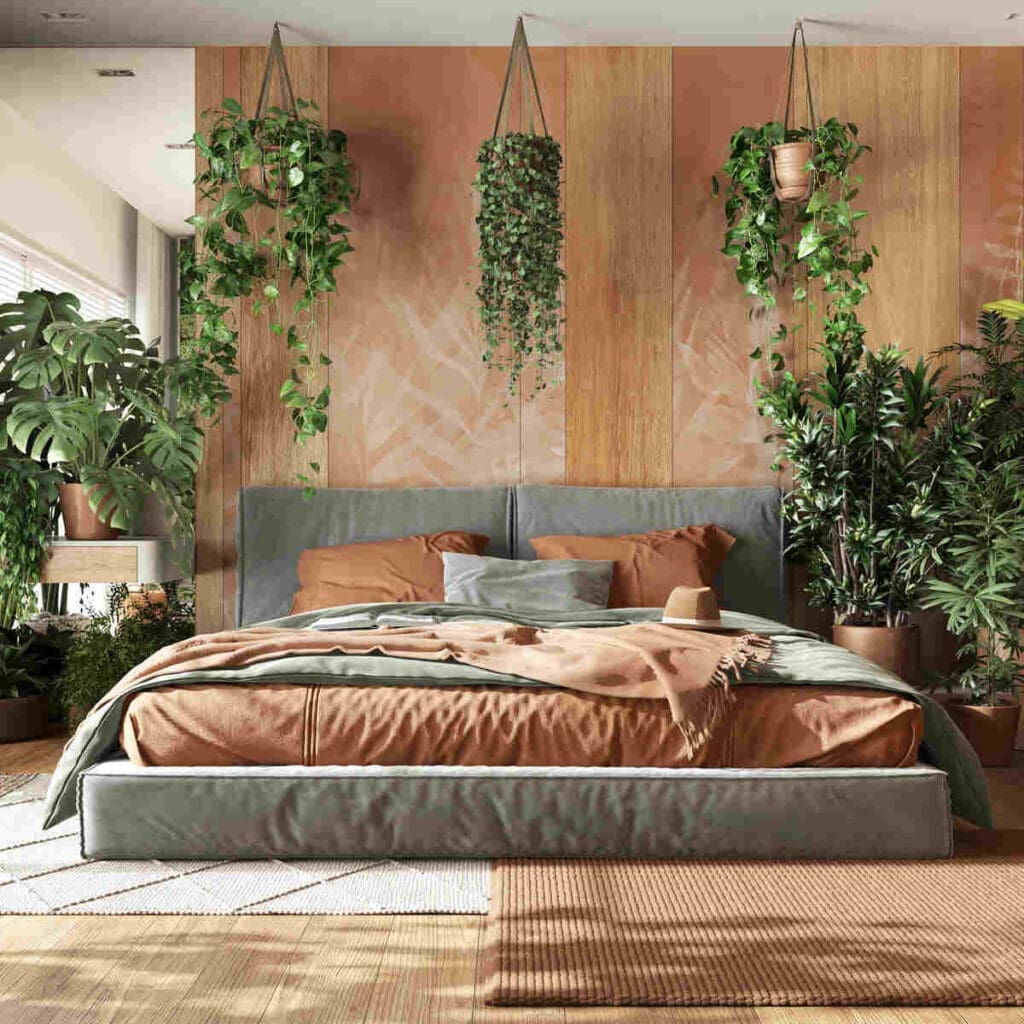
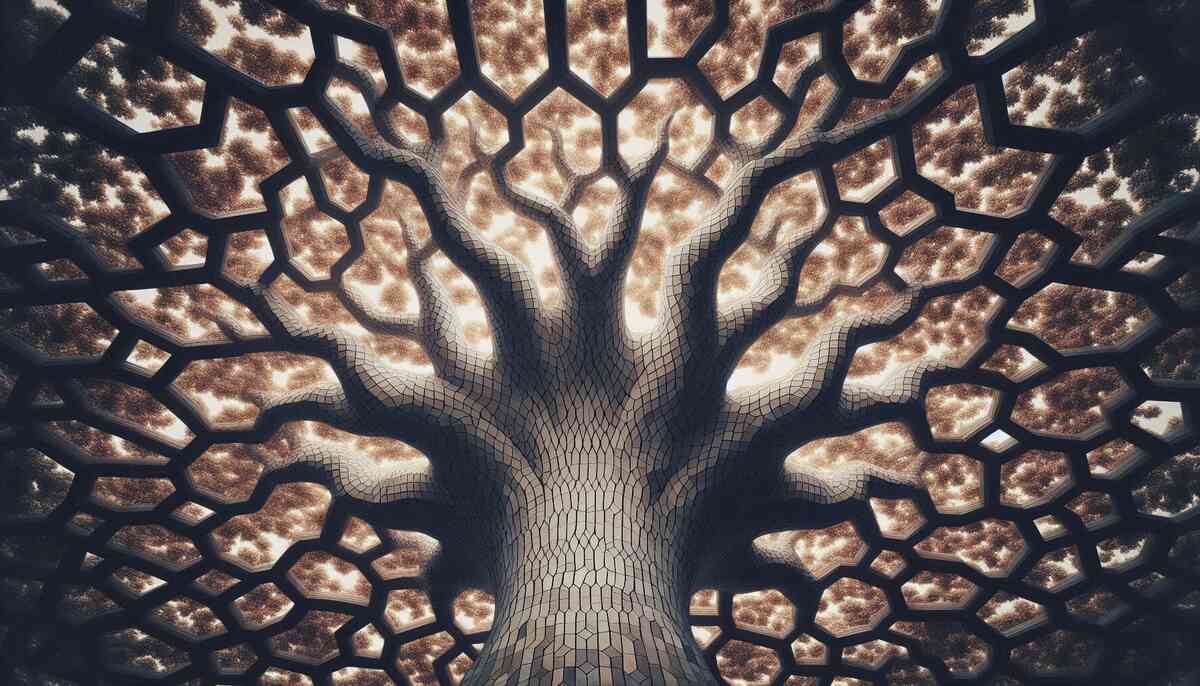
Humans emerged from the natural world yet are constantly in conflict with it. Our persistent anthropocentric worldview has led us to believe that nature exists to serve us, leading to dominating nature instead of living in accordance with it.
Our modern built environment reflects this mentality through harmful building materials and practices that construct our world with right angles, hexahedrons and straight lines. And we need to use heavy and energy-intensive building materials and processes to build those structures. While such practices have served humanity’s developmental strivings, they have come at the expense of our environment.
In recent years, building scientists, architects, engineers and contractors have been developing new ways to build that harmlessly take from nature. By adapting designs for buildings and materials that mimic what the natural world has done from the beginning of time, they are creating efficient, lightweight and sturdy structures.
In this article, we explore emerging technologies and materials at the forefront of biophilic design that reduce material usage, improve structural resiliency and lead to improved material performance. From leaf-inspired concrete formwork to 3D-printed steel beams modelled after bone structure, the field of biophilic design is pushing the limits of sustainability, efficiency and green building.
Life’s Principles

By drawing on the ideas of biomimicry, Life’s Principles and resilient infrastructure, industry visionaries are creating sustainable, innovative designs capable of adapting to unforeseen changes, mirroring the inherent resilience of natural ecosystems.
Developed by the Biomimicry Institute and popularized by Janine Benyus, Life’s Principles is a concise set of design guidelines derived from nature’s time-tested approaches to survival, efficiency and resilience.
Get the Green Building Project Checklist
Use this handy checklist on your next project to keep track of all the ways you can make your home more energy-efficient and sustainable.
Biomimicry looks to replicate flexibility strategies by using modular components and optimizing resource use. There is a tangible future value in these concepts. Research from the School of Engineering and Information Technology at the University of New South Wales reveals that “Bio-inspired materials and structures can play a crucial role in making our buildings greener, more energy-efficient, more sustainable and more resilient.”
Benyus and her team have achieved notable results with their principle theory. For instance, the Lavasa project, a forward-thinking, biomimicry-driven urban plan designed to create a monsoon-proof community near Mumbai, India, exemplifies how harnessing biological intelligence can revolutionize environmental performance. By emulating natural systems, the project reduced waste by 95 percent, cut carbon emissions by 30 percent, slashed potable water consumption by 65 percent, and restored 70 percent of deforested land.
Mimicking Nature
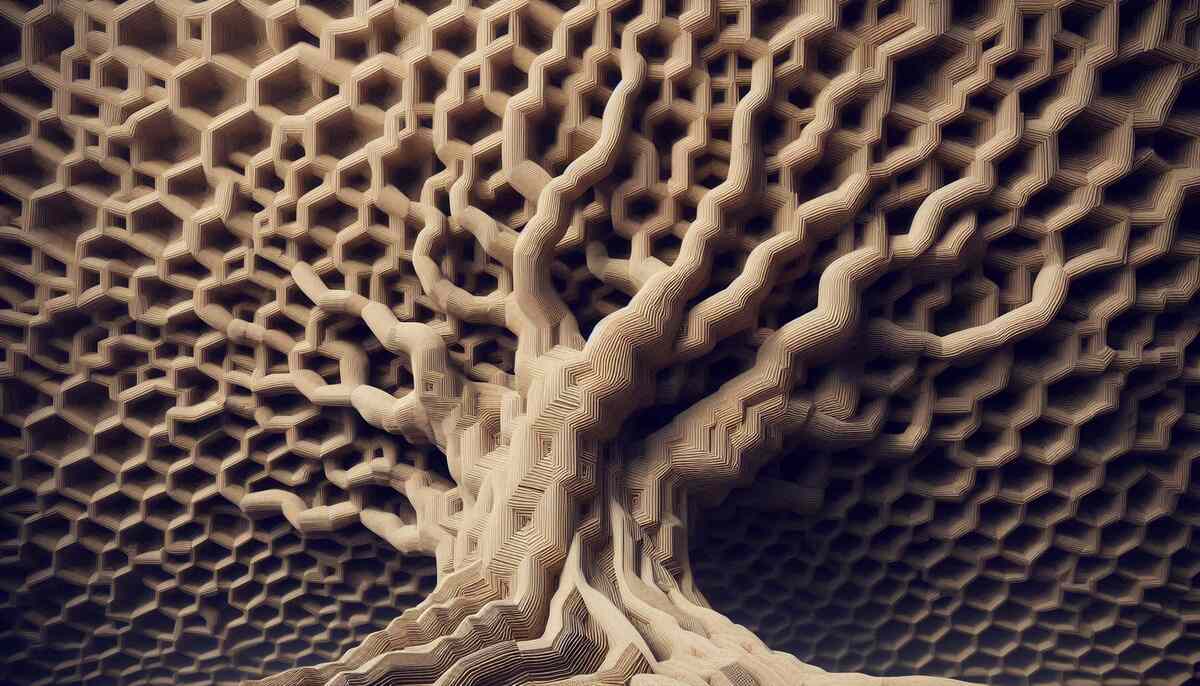
Trees Provide Not Only Wood but Knowledge
While our eyes often see flat surfaces and straight lines, such geometric patterns don’t actually exist in nature. Magnifying what appears to be a smooth surface reveals a series of minute curves and irregular shapes tightly assembled into a small area, then fractally repeated. This characteristic is a key feature in nature and the basis for innovative approaches to modern building materials influenced by biomimicry and the Life’s Principles concept.
Flow Wood, created by Strong by Form, an innovative company leveraging biomimicry and digital optimization, is one product looking to revolutionize building materials. Their nature-inspired engineered wood solution offers exceptional strength while significantly reducing material usage. The Strong by Form team achieves this with a high strength-to-weight ratio – mimicking the efficient geometries found in trees to enable a lighter, more sustainable, and structurally resilient component compared to traditional materials like concrete and steel. In addition, the approach reduces embodied carbon, lowers construction costs and opens new avenues for creative and adaptable architectural designs.
The Strength of a Leaf
Another fascinating development is underway by PhD student Lotte Scheder-Bieschin at ETH Zurich, a public research university in Switzerland. Inspired by the organic efficiency of natural forms, Scheder-Bieschin is looking to reshape our approach to construction with her innovative origami-inspired formwork system, Unfold Form. By harnessing folding geometries and intricate rib patterns reminiscent of the delicate structures found in nature, this system creates vaulted, ribbed floors that require 60 percent less concrete and 90 percent less steel – achieving notable structural performance without compromise.
While Unfold Form presents a breakthrough in material cost reduction and low environmental impact, it also exemplifies a scalable, sustainable construction method, echoing the resourcefulness and adaptability of nature.
No Bones About It
Bone lattice architecture, also known as a triply periodic minimal surface (TPMS) – characterized by a hierarchical, porous network that optimizes load distribution – has already become a key inspiration in additive manufacturing but is now making headway in the design and manufacturing of construction materials. Engineers mimic this natural design by creating lattice structures that replicate the lightweight and sturdy frameworks found in bone, butterfly wings, sea urchin skeletons, achieving exceptional strength-to-weight ratios and improved energy absorption. This biomimetic approach minimizes material usage and waste and creates sustainable and high-performing components for the construction sector, among other industries.
Cornell University’s research has demonstrated the efficacy of these designs. Researchers 3D-printed several metal beam specimens modelled after mammalian and avian bone structures and subjected them to static three-point bending tests at 65 percent density. The results demonstrated that the bio-inspired designs effectively reduced weight while maintaining acceptable resistance, opening new avenues for innovative, lightweight material designs.
Spirals of Change
In addition to copying the inner workings of bone, researchers are exploring other efficient geometries and turning them into innovative designs. One such prevalent form being replicated is the spiral. Nature abounds with spiral architectures, as observed in the intricate microstructure of dragonfly wings and the conical, hexagonally tessellated patterns seen in trees. Recent research has taken cues from these forms to develop bio-inspired damping systems for seismic zones that mimic the adaptive movement of the twisting tendrils of climber plants, which function as natural, helical springs. This spiral-based approach can enhance energy absorption, facilitate graceful failure in extreme events, and offer scalable solutions for adaptive facades and resilient structures.
Embracing Nature for a Regenerative Future

As we’ve seen, integrating nature-inspired designs into modern construction empowers architects, engineers and builders to create systems as flexible and responsive as the living organisms that inspire them. Embracing these innovations helps bridge the gap between our built environment and the natural world, fully embodying the tenets of Life’s Principles.
Moreover, these practices align seamlessly with the Living Future initiative, which strives to transform the built environment by setting the highest regenerative design and sustainability standards. As we push to 2050, the building industry can significantly reduce energy usage, lower emissions and optimize resource consumption with groundbreaking technologies like those discussed above. These forward-thinking initiatives push us beyond traditional sustainability and pave the way for a net-positive future where buildings and communities are resilient, restorative and harmonious with nature.
Want to learn biophilic design? Check out our Roundup of Online Biophilic Design Courses.