Canada’s Housing Design Catalogue
See the Designs That Could Shape Future Communities

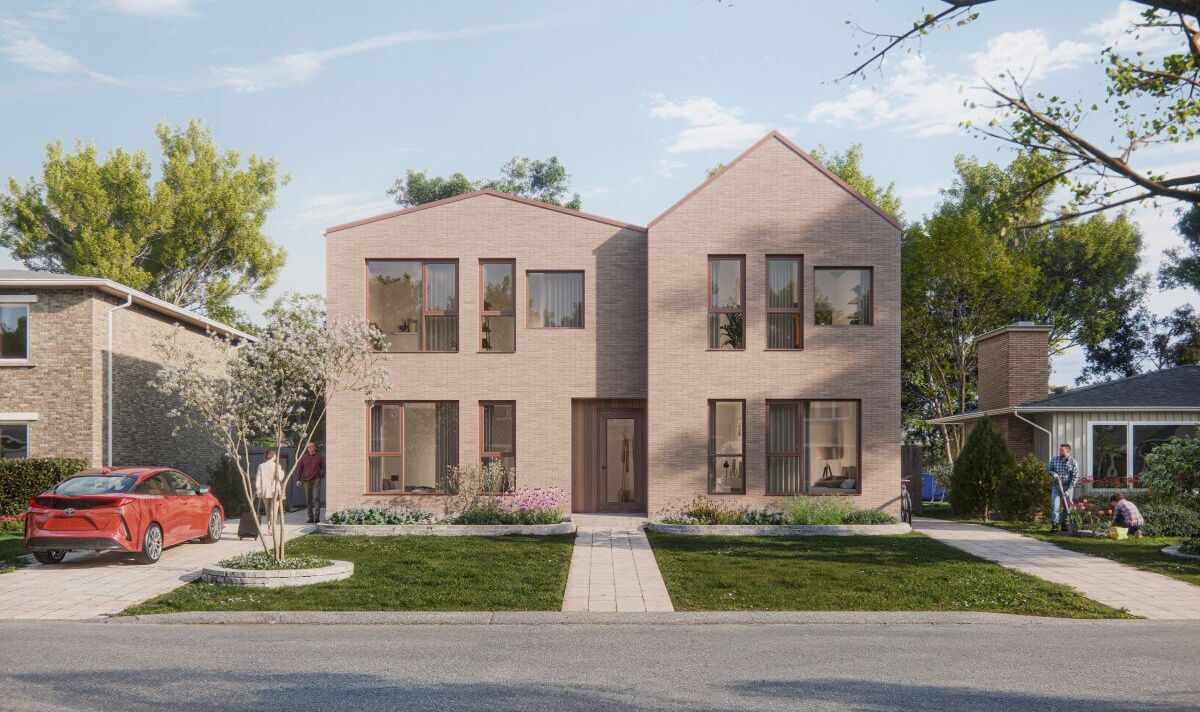
With a mandate to build affordable housing at scale, Build Canada Homes is employing the Housing Design Catalogue, an approach first used by the Canada Mortgage and Housing Corporation (CMHC) from 1947 through 1977 to address the post-war housing shortage.
Building on decades of experience, the current Housing Design Catalogue is a compilation of approximately 50 standardized designs tailored to each province, ranging from accessory dwellings to multifamily residential buildings. The aim is to give home seekers, communities and builders a practical starting point to make the construction of affordable housing easier and faster.
The floor plans and elevations were designed by architects and engineers familiar with the unique environmental conditions, building codes and planning rules for specific provinces. The designs incorporate built-in flexibility to accommodate specific site conditions. Each design package aims to address accessibility, energy efficiency, cost-effective construction and aesthetic appeal.
Overview of Designs in the Housing Design Catalogue
The Housing Design Catalogue includes a range of designs for different housing types that can be produced in a manufacturing facility and then assembled quickly on site. These well-executed architectural and engineering drawings are available for free download by all parties interested in pursuing affordable and sustainable housing options. The designs include accessible plans for people with special needs and seniors. When perusing the catalogue, keep in mind that several design aspects are customizable during the fabrication process. Here are some examples of the designs included in the catalogue.
Accessory Dwelling Units
Get the Green Building Project Checklist
Use this handy checklist on your next project to keep track of all the ways you can make your home more energy-efficient and sustainable.

Accessory dwelling units (ADUs) are smaller structures, approximately 50 square meters (540 square feet), that can be placed on a property that has an existing principal residence. An accessory dwelling unit is often referred to as an in-law suite or granny flat, since they are suitable for seniors. These are commonly single-floor apartments or houses with a compact footprint that is ideal for smaller plots of land. The ADU plans include all the amenities of an apartment or cottage with a living/kitchen area, bedroom and full bathroom.
Rowhouses

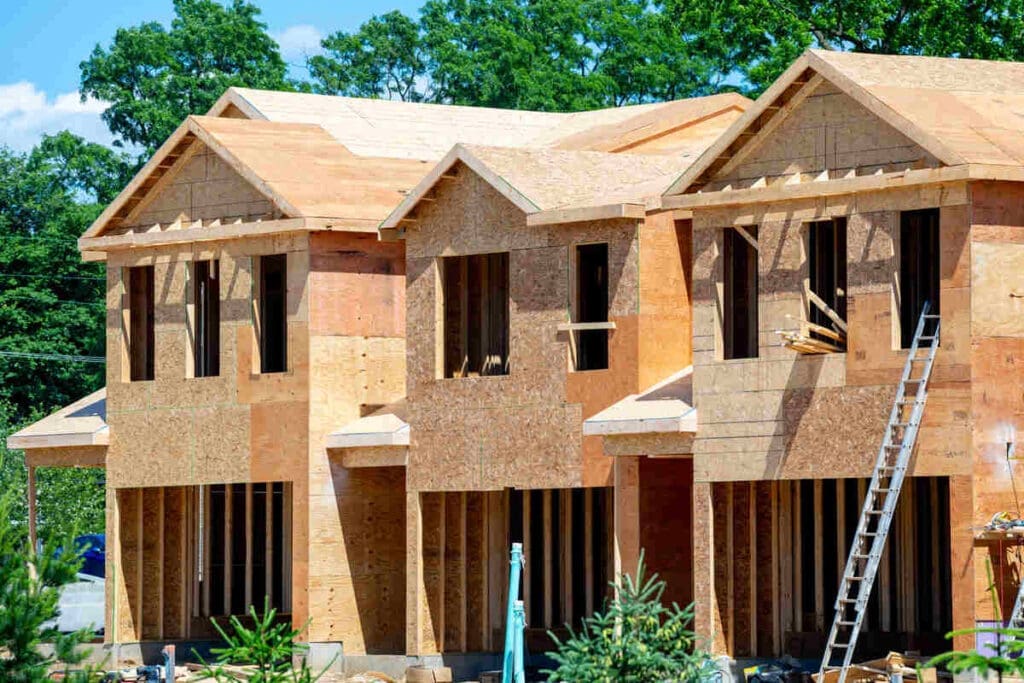
A rowhouse is a series of attached dwellings, where units share a common wall or two common walls. The rowhouse model is commonly two to four joined units. These multifamily residential units are also referred to as townhouses or garden homes. Each dwelling unit occupies a single footprint without having any other dwellings either above or below. This type of housing offers a sense of independence while being compact enough to fit onto tight lots. The first floor of each unit has its own street-level access. There is no need for elevators, unless the plan is modified to be accessible.
Duplexes

Duplex housing is designed primarily for construction on lots with smaller side yard requirements. They are ideal for more densely populated urban spaces where there are similar one and two-family houses. Duplexes are generally two-and-a-half-story residences with two attached dwelling units. Each unit is approximately 272 square meters (2,927 square feet) with three bedrooms. Duplexes are perfect for young families in need of comfortable, affordable housing that is close to schools and retail.
Sixplexes

The sixplex plans are for 6-unit low-rise apartment buildings intended to provide additional density in a variety of neighbourhood contexts. Each unit will be approximately 90 square meters (957 square feet) with two bedrooms each. The ground-floor units are desirable for their ability to be accessible. A sixplex is an option for those who enjoy a sense of community in a convenient municipal setting.
Advantages of Using the Housing Design Catalogue
The purpose of the catalogue is to present thoughtfully researched and executed designs for affordable housing solutions for a wide range of Canadians, from single occupants to families. These designs are intended to be fabricated in an off-site facility and assembled at the construction site for ease of construction.
This method of housing construction is estimated to reduce greenhouse gas emissions by more than 40 percent, according to a 2009 study conducted by the University of Alberta. Pre-fabrication of building components is an extremely sustainable practice with a goal of net-zero waste through precision of construction in a controlled environment and the use of recycled materials.
Building modular homes is also energy-efficient because the majority of the construction activity takes place in a single location requiring fewer trips to the site. The Modular Building Institute references a study published by the Journal of Building Engineering reporting that modular construction can reduce energy consumption by up to 67 percent during the building phase of a project. This percentage is at the high end of energy savings potential and will be different for each site’s location and condition.
When combining modular construction with the help of the Housing Design Catalogue, it may be possible to reduce construction costs by 10 to 20 percent, dependent upon customization and location. Much of this is due to reduced labour costs. An accessory dwelling unit can be erected in weeks once the foundation is in place. A residence built using traditional construction methods might take several months or longer.
The housing plan intends to start with 4,000 homes being built on federally owned sites in major cities, with an ambitious goal of constructing up to 500,000 sustainable homes a year by 2031.
The Housing Design Catalogue, an online resource initiated under Canada’s Housing Plan, features approximately 50 easy-to-build low-rise housing designs from one to six units. This publication offers floor plans and 3D renderings for use by homeowners, builders and communities to build affordable housing. Key features and goals of the designs are accessibility, customization opportunities, speed of construction, energy efficiency and sustainability. Go to housingcatalogue.cmch-schl.gc.ca to access the catalogue.