
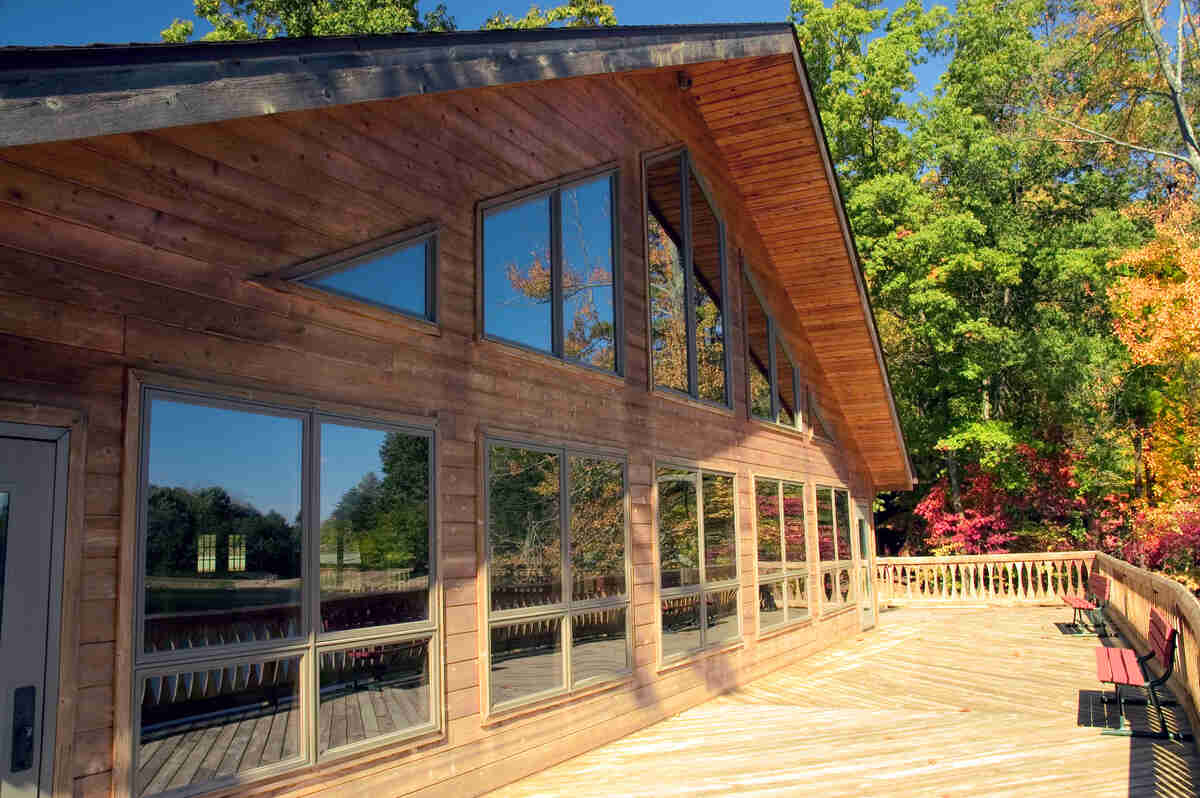
High-performance windows do a whole lot more than allow light into the home. They provide excellent temperature and sound insulation while reducing condensation. And European windows are widely considered the gold standard for high performance. Let’s have a look at why that is.
Features of European Windows
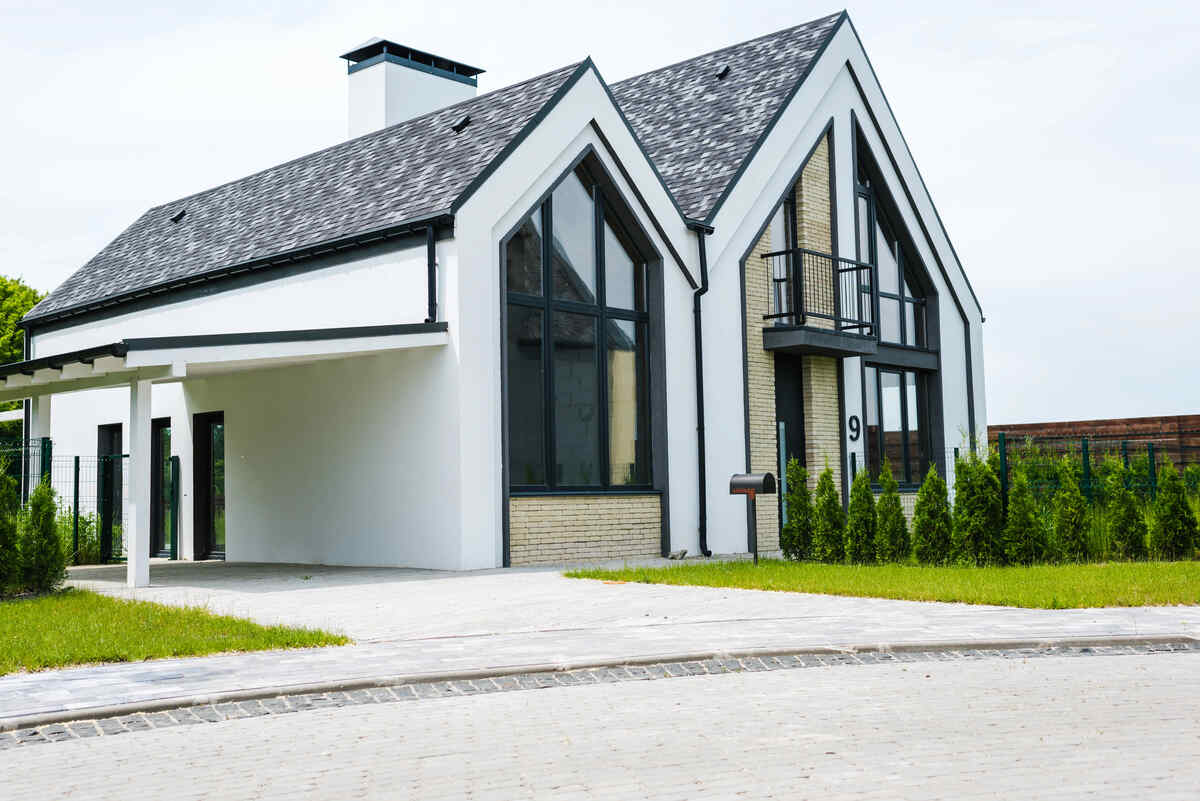
European windows are made with excellent attention to detail. Their sleek and elegant designs promote clean lines and a range of features. One of the most popular European window designs is the tilt and turn.
Tilt-and-Turn Windows
These windows offer the opportunity to open by tilting the upper edge inwards and keeping the lower edge fixed or by turning the window like a door with the hinges fixed on one of the vertical sides. In either function, the window opens inwards, making it easy to clean, but it does mean that curtains or blinds will restrict the window if it is opened fully in the turned position.
Premium tilt and turn windows are gaining popularity because they offer superior energy-saving qualities, greater security and durability. The tilt function allows fresh air to flow into the home even when it’s raining.
Frames

Get the Green Building Project Checklist
Use this handy checklist on your next project to keep track of all the ways you can make your home more energy-efficient and sustainable.
European window frames have gained market share across North America due to their superior construction methods. European frames tend to be much thicker than their Canadian and American counterparts, which results in better insulation and a more rigid construction.
Security
The European-favoured tilt-and-turn window system provides excellent security features. The window is secured on all four sides. The closing mechanism securely closes the window and the gasket ensures a tight insulation fit. The multi-point locking system makes forcing the window open extremely difficult.
While window security focuses on preventing unwanted entry, the ability to prevent children from opening windows and falling out is a significant security feature. The ‘TiltFirst’ technology locks the opening mechanism in the tilt mode, preventing the window from opening sufficiently to allow children to fall through.
Energy Efficiency
European window manufacturers have raised the level of sophistication and precision in creating windows with excellent energy-efficient qualities. European windows have exceptionally high levels of manufacturing precision that results in enhanced insulation performance and weather-tight functionality, providing protection against drafts and air leaks.
Since Europe, in general, has high energy efficiency standards that have to be met, their windows have naturally had to keep pace with the increased demands. Adding to that higher standard is Passivhaus. The demands of achieving Passivhaus certification raise the bar even higher for builders. Germany, in particular, is known as a pioneer in building energy efficiency and for their quality manufacturing. With Passivhaus also originating in the country, it comes as no surprise that German windows are known to be among the highest quality you can get.
How Window Efficiency is Measured
Windows need to perform multiple functions. They should let light enter the home without allowing the building to overheat from sunlight during summer. Conversely, they need to insulate the house during the winter months, limiting the loss of interior warmth. They should also allow for fresh air ventilation, provide protection from intruders, block noise and add to the look of a building. Let’s examine the various numbers used to identify a window’s performance:
Solar Heat Gain Coefficient (SHGC) – A high SHGC number is a welcome winter trait because it admits warmth into the home; however, in summer, low SHGC figures ensure a limited amount of heating. So, houses in cold climates should favour windows with SHGC values around .39 or higher. Houses in warm climates should have windows with SHGC values lower than .30.
U Factor – Measures how efficient a window is at limiting heat transfer. Triple-glazed windows are rated superior to others because they can reach values lower than .20. Double-glazed windows typically have U values around .30.
Visible-light Transmittance value (VT) – This number indicates the amount of visible light that passes through the window. Numbers around .50 to .55 are pretty typical.
Low-E glass – The type of glass plays a crucial role in raising the level of energy efficiency of windows. Low-emissivity coatings (low-E glass) on double or triple panes are highly efficient at allowing the sun’s rays to enter the home and reflecting the internal heat to keep the interior warm and reduce heating bills. Conversely, solar control coatings allow light to enter the home but provides protection against excessive heat entering through the glass. Read more about low-E glass in ‘The Pros and Cons of Low-E Glass‘.
G value – Glass’ reflective performance is rated according to a ‘G’ value (or solar energy transmittance). A high ‘G’ value indicates that the glass allows the sun’s rays to pass through it and heat the interior, while a low ‘G’ value indicates a substantial amount of heating will be reflected. So, the efficiency of the glass depends on the two values, ‘U’, which measures the thermal transmittance (or how well the window insulates) and the ‘g’ value.
Energy Balance rating – Some European countries like Denmark and the United Kingdom provide consumers with accurate ratings by combining the U and G values and incorporating climatic conditions to generate an Energy Balance rating. Energy-efficient glass achieves an energy balance score close to zero.
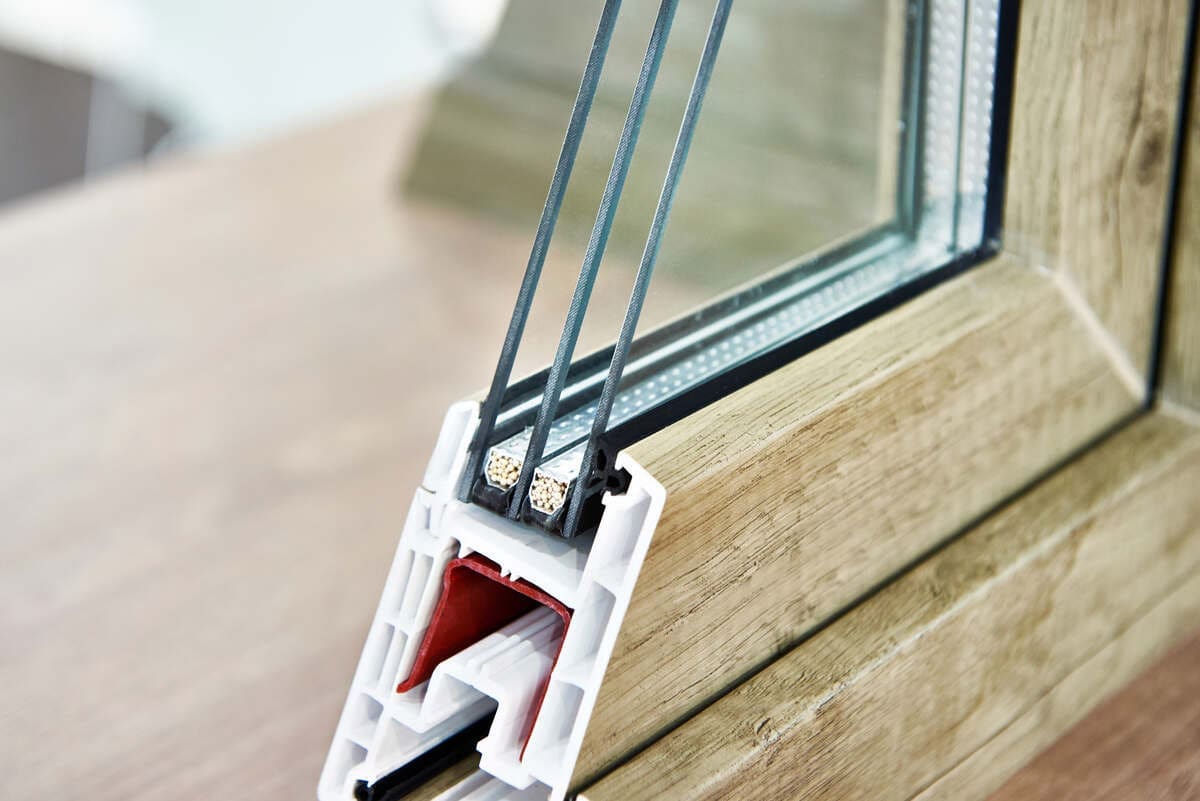
Frame insulation – Along with the glass’ efficiency rating, the frame’s insulation ability is critical to the window’s overall performance. Thermal breaks prevent the frames from conducting heat and reducing the insulation quality of the window. Thermal breaks are air gaps or layers of material with low thermal conductivity (or both) that separate the inside and outside parts of the window frame. Thermal breaks are found in most window frame designs and can have a positive effect on reducing condensation.
Number of Panes – Double and triple glazing have an additional weapon against heat transfer: the space between the glass is filled with inert argon or, sometimes, krypton gas, which perform excellent insulating functions. Sealing the gas within the frame helps curb condensation. Read more about triple pane windows in ‘Triple Pane Windows in Canada – Are They Worth It?‘
Manufacturing Differences Between European and North American Windows
The European manufacturing process involves a system where different companies provide parts of the process. One of the leading European window companies, Schüco, delivers the design and profiles to the glass company, and a third company, like Winkhaus, supplies the hardware, and then another company assembles the window.
This process is not usually followed in North America, where a single company typically handles all facets of manufacturing the finished product.
Another positive feature of European windows is that they are custom-made. The Canadian market pre-supposes an additional charge if ordering non-standard windows; however, this does not apply to European manufacturers.
In many instances, European windows are manufactured at a much lower cost than North American windows. This is due to lower production and labour costs and advanced technology, especially in the automated manufacturing process.
Passive House Standards and Cold Climate Conditions
Houses built in areas with very low winter temperatures can benefit from installing windows that comply with the Passive House Standard with U values less than 0.15. To achieve this rating, the windows would typically be triple panes with low emissivity coatings. The glass should have a U value lower than 0.7 W/m2 K (Watts per metre squared Kelvin).
The frames must be made to withstand the cold and thermal breaks are required to counteract the transfer of heat from the interior of the building. UPVC frames with added insulation and efficient thermal breaks are recommended for windows in cold climates.
Maintenance
The high levels of manufacturing accuracy involved in making European windows result in minimal maintenance required to keep them draft-free and fully insulated. Regular maintenance requirements such as re-caulking, sealing and weatherstripping are unnecessary for these windows. European-manufactured windows do not use cranks, pulleys or balancers, which means minimal maintenance is required.
Some Leading European Window Manufacturers
- Josef Meeth Fensterfabrik is one of the leading and oldest German window manufacturers. Founded in 1870, the company produces exceptionally high-quality windows with Passive House certification.
- Fenster Beckmann produces PVC windows and doors, offering exceptionally efficient insulation properties.
- Other well-known German companies that produce high-quality windows are Schüco, Veka and Gaelan.
- Idealcombi is a Scandinavian window manufacturer that produces windows and frames that can withstand harsh winters. They’re the largest window manufacturer in Denmark.
- Because of Europe’s decentralized approach to window manufacturing, windows produced in countries like Poland will use components from other European countries in their manufacturing process. An example of this is the Alumglass Company of Warsaw, Poland. The well-known Polish company uses aluminum profiles from Germany (Schüco), as well as other suppliers from Belgium (Reynaers) and Spain (Cortizo).
Window Energy Performance Ratings
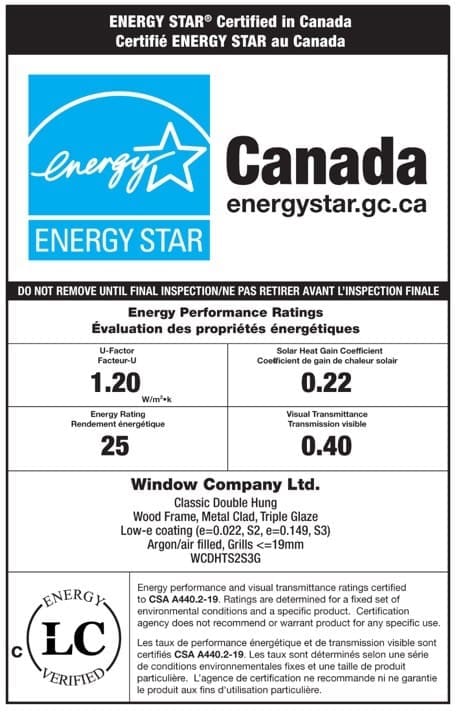
A window’s efficiency can be judged by its rating. Energy Star is the most well known certificate rating in Canada, but the Passivhaus Institute in Germany also provides a certification system to identify windows that comply with its stringent conditions. You can view their certification criteria here. Windows with certification from organizations like these provide exceptional energy-saving performance in Canadian climatic conditions.
Fitting Energy Star windows will reduce your energy bill by around 20 percent and skylights are 35 percent more efficient than standard skylights. Energy Star glass sliding doors achieve even higher energy-saving figures of around 55 percent.
Energy Star windows can limit the need for air conditioning during times of high temperatures by using low-E glass with a special coating of microscopic reflective particles to reflect the sun’s rays.