
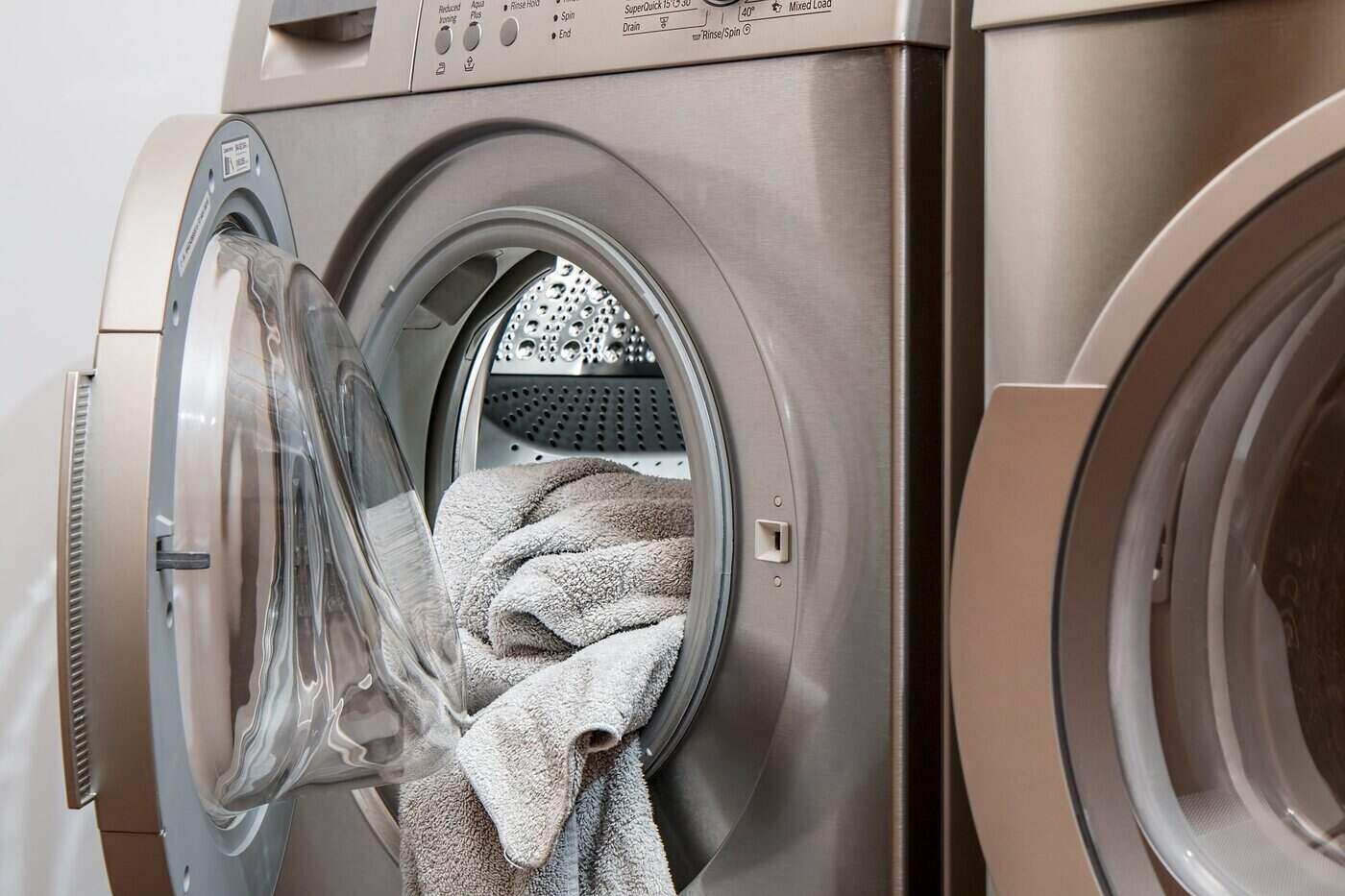
Clothes dryers are a definite energy drain in the average Canadian home. Direct Energy tells us that electric dryers can draw anywhere from 2,000-6,000 watts. So for every hour of drying that translates to 2 to 6 kilowatt-hours of electricity. In terms of cost, that’s about 24 to 72 cents per hour. Though that may not sound like much, depending on the amount of laundry you do, that electricity could be costing you a bundle over the lifetime you own the dryer.
Heat pump clothes dryers are a newer technology that’s supposed to be a better option, but are they worth it? Let’s dive in.
How Are Heat Pump Clothes Dryers Different?
Conventional electric dryers have a heating element that heats the air before it’s blown through the drum. That heat evaporates the moisture from the wet clothes as they tumble around. An exhaust vent then gets rid of that hot, steamy air.
Heat pump clothes dryers also tumble clothes, but they work by recycling the heat they generate. They use refrigerant in a closed loop system rather than venting the heated air.
A compressor heats the refrigerant, which warms the air as it moves through the drum. An evaporator removes the moisture from the warmed air, draining it away or collecting it in a tank. The air is then reheated by the refrigerant and recirculated.
In terms of logistics, there are some advantages and disadvantages to this type of dryer:
Some Pros

Get the Green Building Project Checklist
Use this handy checklist on your next project to keep track of all the ways you can make your home more energy-efficient and sustainable.
- Use less energy, which translates to lower operating costs
- Don’t require venting so less maintenance
- Potential for water recycling
- Better for fabric care since they operate at lower temperatures
- Less of a fire hazard than vented dryers
- Closed system so no risk to indoor air quality
- Versatile and easy to install since they do not require venting
Some Cons
- Longer drying time
- Higher upfront cost
- Drum capacity is usually smaller
- Refrigerant needs proper disposal when the machine reaches the end of its life
In terms of their “green” credentials, these dryers offer a number of extra benefits for the environment. Most importantly, heat pump clothes dryers offer significant energy savings. Testing done by the Super Efficient Dryer Initiative (SEDI) found that European heat pump dryers use only 40–50% as much
energy as North American conventional dryers to dry the same amount of
laundry.
They operate at lower temperatures, so they don’t require any venting to the outside. This means that the dryer isn’t removing heated or cooled air from your home, which in turn means a more energy efficient home overall.
It also means that you can have one less opening to the outside in your walls, which will make your home more airtight.
Speaking of vents, according to the U.S. Fire Administration, “a majority of dryer fires occur as a result of highly combustible lint getting caught in the dryer’s vent and becoming heated to the point of ignition.” And it’s not like dryer fires are a rare occurrence. In the U.S. every year, “there are approximately 15,600 structure fires, 400 injuries and 15 deaths reported annually as a result of dryer fires.”
By design, heat pump clothes dryers are less of a fire hazard than vented dryers since they do not have vents that can accumulate lint. They have lint traps, but they are easy to access (and should be cleaned after every load). Heat pump dryers also operate at lower temperatures than vented dryers so there’s overall less likelihood of a fire happening.
Poorly vented dryers can expel moisture, lint and chemical residues into the home. Even worse, gas dryers could emit carbon monoxide if not installed or maintained properly. You don’t have these worries with heat pump dryers.
In the summer, a heat pump dryer’s lower temperatures won’t raise the temperature of your laundry room, which makes for less work for your air conditioner.
These dryers are condenser dryers, so while some models drain water away, some collect it in a tank. This water could be recycled for plants or for gardening, so you could end up saving not just electricity, but water, as well.
Are Heat Pump Clothes Dryers Worth It?

That depends on a lot of factors. If we just compare heat pump clothes dryers with their conventional counterparts in terms of energy costs, heat pump technology comes out ahead. They cost less to run and use less energy, plain and simple.
Ashley Iredale at Choice states that “heat pump dryers have an average 10-year running cost of $588, compared with an average of $1523 for vented dryers.” He bases that estimation on one load per week, so if you’re running more (or much more) than that, this kind of dryer could be well worth the price tag.
Cost Considerations
They do cost more to purchase, however, so if really you want to know whether this upgrade will pay off for you, you’ll need to do some calculations.
You can figure out how much you would spend per load with a heat pump dryer, based on your current electricity rates and the specifications of the model you’re thinking of buying (check out ‘How much electricity does a dryer use per load?’ for the calculation). Then you can estimate how that compares to the per-load cost of a new conventional dryer.
The per-load costs will allow you to calculate how long it would take you to make up the cost difference between the conventional and the heat pump dryer.
What you’ll find is that the difference between the per load costs of a conventional and a heat pump dryer are measured in cents per load. Depending on how much laundry you do, then, it could take years to recoup that cost.
So it really comes down to usage. If you have a family, especially with young kids who soil their clothes often, you could be doing more loads in one day than a single homeowner or a couple could do in a week.
Cost doesn’t just come down to energy savings vs initial outlay. A few repair visits could cancel out your savings altogether. Vented dryers are supposed to be maintained annually, which creates an added cost. That means that you should also start to factor in brand reliability and warranties into your purchasing decision.
Environmental Considerations
While clothes dryers do suck energy, they don’t do nearly as much energy guzzling as appliances like fridges, humidifiers or space heaters. Appliances that need to be plugged in and running all the time will naturally consume more energy and cost more to run.
If your hope is to find ways to reduce your overall energy bills, or to lower your energy consumption, you might be farther ahead if you focus on upgrading those appliances first.
If you’re simply looking for the least carbon-intensive way to dry your clothes, your best bet is the old-school clothesline. Using the air to dry your clothes uses no energy other than the human energy you expend to hang them.
This is also the least expensive option. You’ll pay anywhere from a few dollars for a rack to a few hundred for an umbrella-style outdoor clothes dryer. Clotheslines and racks are tough to break, so that might be the only time you ever need to lay out cash for this project.
That said, over at The Simple Dollar, Trent Hamm reminds us that we really should be including our labour costs when we try to calculate how much money we’re saving by line drying.
He estimates that the savings we bank from not running the dryer amounts to a wage of about $10 an hour for the time we spend hanging clothes. If time is of the essence for you, a clothes dryer might be the better value.
For a detailed look at how dryers work and a comparison between conventional and heat pump dryers, have a look at this video:
The Final Verdict
With any dryer you choose, what you’re paying for is the convenience of having fluffier towels and dry clothes in comparatively little time.
Heat pump clothes dryers offer that convenience while using much less energy than standard dryers. If both convenience and energy-efficiency are priorities for you, this might be a way to have both. And if you like the other benefits heat pump dryers provide, such as versatility of installation, less wear and tear on fabrics, and lack of a vent, the decision becomes even clearer for you.
Feature image: Steve Buissinne; Image 1: Gerhard G.



I had a whirlpool heat pump clothes dryer several years ago — it failed after 2 years, it never paid for its $1500 price tag or the $300 service call to a whirlpool accredited repairman who couldn’t get a replacement circuit board for it.
its kinda like my ge geospring heat pump water heater, i bought around the same time. but atleast it still heats water…. resistively, never wanting to stay in heat pump mode.
american brands just cant seem to get it right. we have family in norway that have been using their heat pump dryer (approx 4 cu ft) for over 10 years. maybe i should find out what brand they using and generate euro style electricity for that circuit.
Jon, can you find out? I’d seriously import the same one too
I want to get a Heat Pump Clothes dryer that is over 7cuft tumbler size. It must be ventless and be high efficiency. Prefer electric breakers to be in the dual 15A range.
Who is carrying these in the GTA area? Canada.
There’s not much available in those specs, but you could check out the Whirlpool YWHD560CHW. I don’t know of specific stores, but they do sell it on the whirlpool.ca website.
What are the additional energy savings if the house is heated by natural gas. I know this is highly variable and if winter average Temps are low there is some.
I have not seen this topic in energy savings budgets for ventless drying.