Buildings are responsible for approximately 40 percent of greenhouse gas emissions and nearly half of that amount is attributed to a building’s heating, ventilation, and air conditioning (HVAC).
The HVAC industry is well aware of this fact and in recent years has been developing green technologies that are more energy-efficient and result in lower carbon emissions. In this article, we explore some of the latest innovations in green HVAC technologies that promise to make a positive impact on the environment.
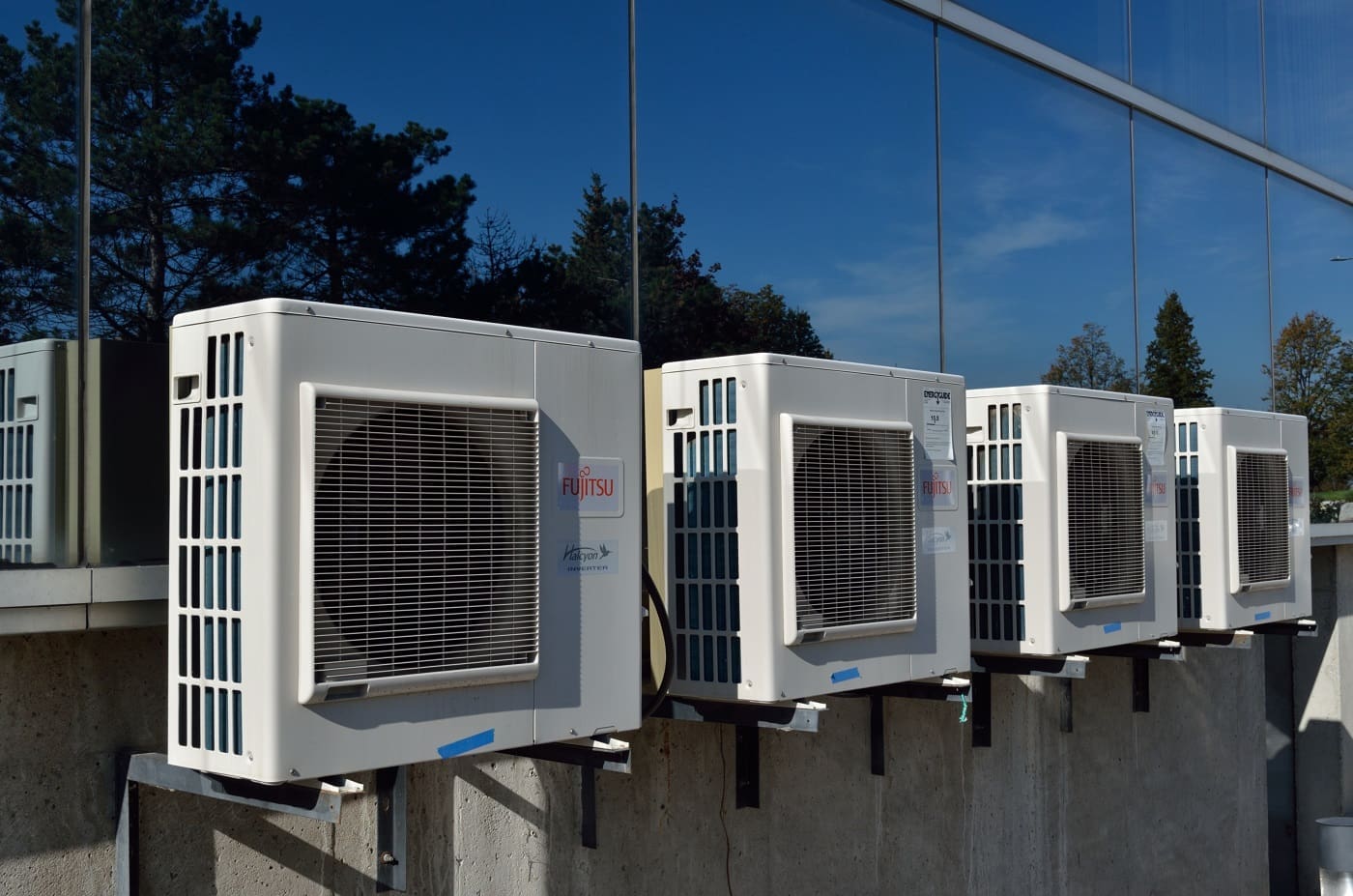
Air Source Heat Pumps
Air source heat pumps (ASHPs) are becoming increasingly popular in recent years as they boast efficiency of 300 percent or more, as compared to a standard boiler that operates at about 100 percent efficiency.
They can achieve this high level of efficiency because they do not rely on combustion, they are simply extracting the existing heat from the outside air (even when it’s cold there’s still some heat in the air) and transferring it indoors to heat your building. They can also operate in reverse to cool indoor spaces.
They work similar to ground source heat pumps mentioned below, except they transfer heating/cooling from the air rather than from the ground. They are less efficient, but they also cost a lot less to purchase and install.
Heat pumps, when combined with a ductless mini split or multi split system are even more efficient as they do not suffer from the inefficiency and additional costs that come with ductwork. They’re great for existing buildings that don’t have ductwork or for new construction that wants to avoid adding ducts in the first place. They’re a flexible option since they can be installed in individual rooms or offices. One outdoor unit can typically hold up to eight indoor units through refrigerant lines.
Ground Source Heat Pumps

Get the Green Building Project Checklist
Use this handy checklist on your next project to keep track of all the ways you can make your home more energy-efficient and sustainable.
The ground source heat pump (aka geothermal heat pump or GSHP) is not really a new technology. The first use of these pumps can be traced back to the 19th century. However, it has steadily been increasing in popularity.
This heat pump system uses the regulated temperature of the Earth below ground to heat or cool indoor spaces. A ground source heat pump extracts heating from the Earth through a looped system of pipes buried underground. The fluid circulating in the pipes absorbs heat from the ground and carries it into the pump, where it is compressed and used to warm the building’s air or water, providing energy-efficient heating. In the summer, it operates in reverse, pulling heat from the house and burying back in the Earth.
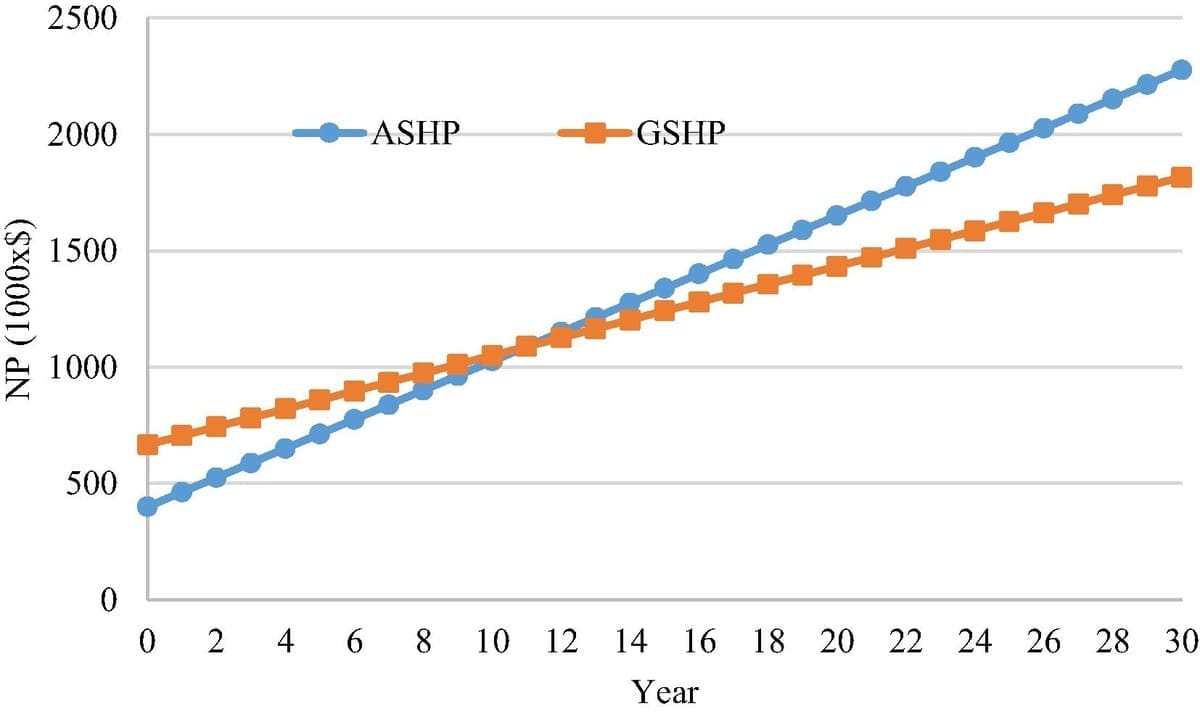
Heat pump installation experts recommend ground source heat pumps as they are the most efficient form of heat pump – they have a higher Coefficient of Performance (COP), meaning they produce relatively more heat than the electricity they consume. Compared to air source heat pumps, ground source heat pumps save electricity, reduce CO2 emissions and save costs. Over the long run they are the cheaper option. This graph below gives an idea of the total operating costs and installation costs of GSHPs versus ASHPs. Though the high initial cost of GSHPs means they cost more initially, after 12 years they end up becoming the cheaper option.
Solar-Powered HVAC
Solar energy usage for residential and commercial purposes has been growing over the past number of years since the cost of this technology has come down significantly. Now, it is also being utilized in heating and cooling systems.
A Solar-Powered HVAC (Heating, Ventilation, and Air Conditioning) system utilizes solar energy to generate electricity for heating and cooling purposes. Photovoltaic solar panels capture sunlight, converting it into electrical energy through an inverter. This electricity powers the HVAC system, driving components like the compressor and fans. During sunny periods, excess energy can be stored in a battery or fed back to the grid.
Taking it a step further is utilizing solar power to power heat pumps rather than conventional HVAC systems since they are more efficient.
Ice-Powered Air Conditioning Systems

A new and innovative alternative for greener cooling of establishments is now emerging. Ice-powered air conditioning utilizes ice as a form of thermal energy storage. This technology can cool residential spaces and small-scale commercial buildings.
Ice-powered HVAC can significantly cut down energy usage, reaching up to a 30 percent reduction. Unlike traditional air conditioner compressors that are usually running during the hottest times, ice-powered HVAC freezes water during the night. When day comes, the stored ice cools the refrigerant, lowering the need for electrical cooling.
Dual Fuel Heat Pumps
This technology is flexible and has great potential in keeping buildings at optimal temperatures in different seasons.
The dual-fuel heat pump is a heating and cooling system that alternates between electric and gas to provide efficient heating and cooling, cutting down expenses and saving a lot of energy.
When the temperature goes above 0 degrees Celsius, the heat pump will operate, which heats the air using electricity. But when it drops below freezing, the furnace will switch to gas to provide heat more efficiently.
During the hottest months, the heat pump will work like a high-efficiency central AC does. When spring or fall arrives, it only gives off efficient heat. But when the temperature drops too in wintertime, the furnace will take over for the heat pump.
Smart HVAC Systems
Smart HVAC systems provide for remote monitoring, control, and automation of your heating, cooling and air quality. By being able to access your system via an app you can keep your system off then turn it on just before you come home to heat your home up or you could set it on a timer. Certain smart HVAC controls when paired with a compatible HVAC system (eg split system with multiple heads) allows the user to control specific zones in the house so you can turn off heating or cooling to a room that is not being used.
Recent advancements in smart HVAC systems leverage artificial intelligence (AI) to optimize energy usage. These systems can learn from user behaviour, adjusting temperature settings and airflow to ensure maximum comfort while minimizing energy consumption.
By efficiently managing heating and cooling cycles, smart HVAC systems reduce overall energy demand and contribute to lower carbon footprints.
Advanced Air Purification Technologies
HVAC systems equipped with cutting-edge air purification technologies such as HEPA filters, ozone generators, and ionizers play a dual role in maintaining indoor air quality and reducing carbon emissions.
By efficiently trapping and eliminating pollutants, these systems ensure healthier living and working environments.
Simultaneously, cleaner air allows HVAC systems to operate more efficiently by keeping filters free of particles that obstruct airflow, thus decreasing energy consumption and subsequently lowering carbon emissions.
Variable Refrigerant Flow (VRF) Systems
VRF systems optimize energy usage by adjusting the refrigerant flow based on the specific heating or cooling requirements of different zones within a building.
This flexibility allows for precise temperature control, reducing overall energy consumption. As a result, VRF systems contribute to lower carbon emissions compared to traditional HVAC systems with fixed refrigerant flow rates.
Feature image: pxhere; Image 1: Rafael Gonzales