
High Performance Construction Techniques
Section 7 of the Green Building Basics Guide
Although we can’t mitigate climate change overnight, there are many important things we can do to get the process started. One of the ways in which we can ensure a more sustainable future is by increasing our use of high-performance construction techniques.
Many people don’t know what high-performance construction is or how it works, so today we want to take a look at exactly what qualifies as a high-performance building and what pros, cons and costs are associated with different high-performance construction methods.
What Is High-Performance Construction?
High-performance construction is about creating buildings that are made out of sustainable materials, reach high standards for energy-efficiency, promote occupant health and minimize waste and pollution, both during their use and after they reach the end of their effective lifespans.
This concept is not new, but it is starting to become more and more popular in the building industry.
A high-performance building can refer to any type of building that integrates major high-performance building attributes and optimizes them to allow for maximum sustainability.
High-performance building design could have additional focus on sustainability, security, safety, productivity, functionality, aesthetics, historic preservation and cost effectiveness.
The Goals and Benefits of High-Performance Construction
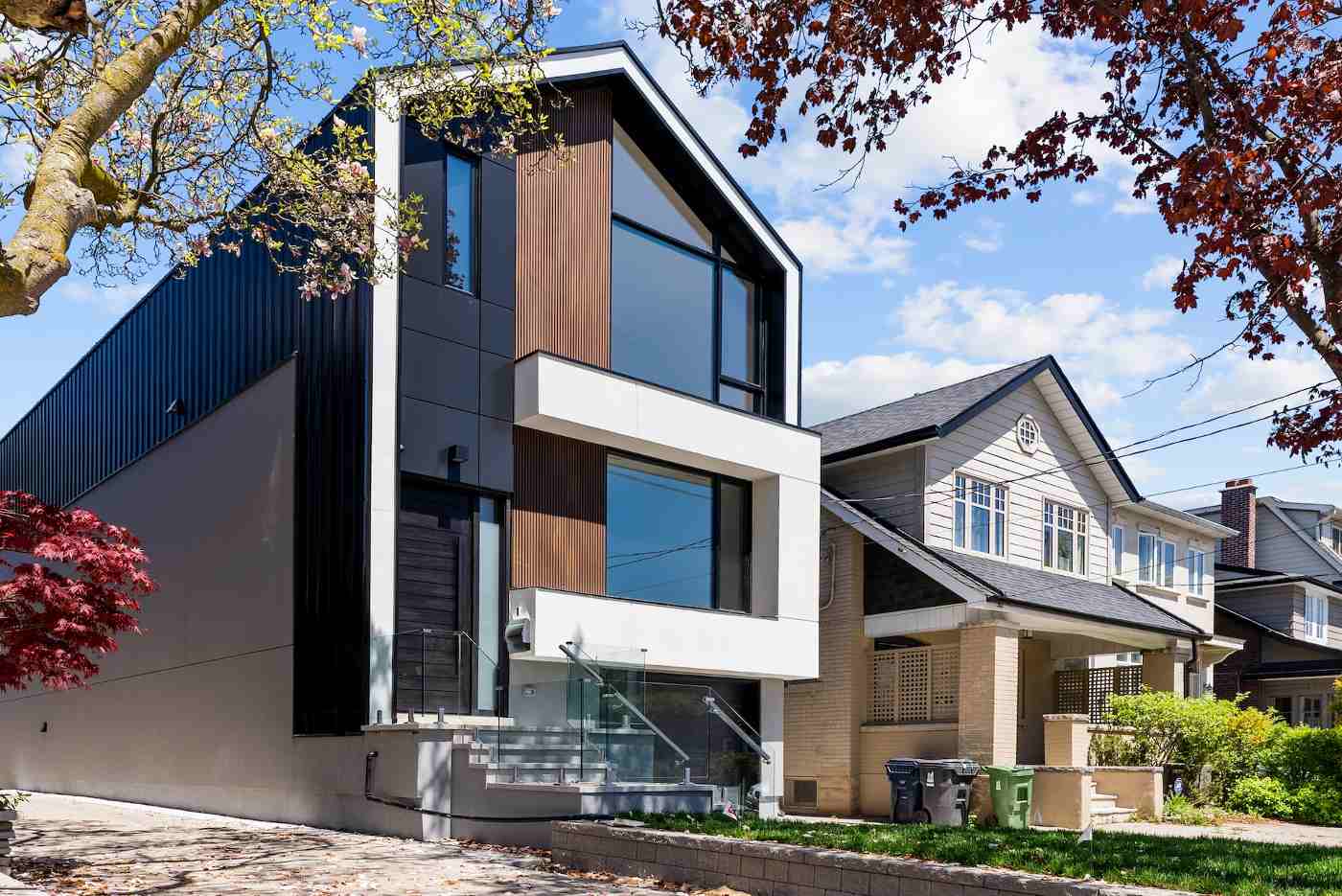
High-performance construction projects will typically incorporate most or all of the following qualities to meet their goals regarding energy performance, occupant health and waste reduction.
Sustainable and Safe Materials
One of the most important goals here is to ensure that all the materials used to construct a building are not toxic to the environment or to the occupants inside and that they don’t end up in landfills.
These materials should also require less energy to produce than conventional building materials and then be reused, recycled, composted or otherwise returned to nature when the lifetime of the building is over.
Longevity
Another main goal of high-performance buildings is to be durable, long lasting and easy to maintain. One of the leading causes of building decay or building rot, as well as mould and building failure, is moisture.
Therefore, one of the main goals of this type of building is to effectively manage moisture and other related factors to ensure that these buildings last for many generations.
The longer these buildings last, the more cost-effective and sustainable they become.
Deconstruction, Not Demolition
High-performance buildings are often designed, in full or in part, with deconstruction in mind. This means that once buildings are at the end of their life cycle, they can be easily taken apart instead of demolished.
Most buildings nowadays are built in a way where various materials are permanently attached together and are inseparable, therefore making it impossible to recycle or reuse them.
At the same time, many materials also release toxic substances into the environment when demolished or sent to landfill. The point of high-performance building is to stop this from occurring.
It’s all about being able to move out of a home knowing that you aren’t leaving behind an ecological disaster, so you can just hire the best move out cleaning company in your area and move on with your life.
Energy Efficiency
Yet another goal of high-performance buildings is to be very energy efficient. The point here is to use as little energy as possible to cool and heat the space and to power the building.
Instead, the goal is to rely on natural daylight through optimal window placement, to retain heated or conditioned air using high quality insulation, to make spaces airtight to eliminate drafts and thermal bridges and to use advanced technologies, such as filtered mesh air heat recovery ventilation systems, to lower a building’s energy consumption.
In addition to using less energy, high-performance buildings will often incorporate renewable energy systems that allow a building to produce some, if not all, of its power on-site.
Quality
Lastly, this building methodology tends to focus on producing high-quality buildings using precision construction methods.
The goal is to help preserve the overall durability and integrity of the building materials, therefore allowing the final product to last much longer.
It’s about using the best possible technologies to allow for the best construction processes and the best possible end results.
High-Performance Building Certifications
To ensure that these buildings are indeed high performing, they are often subjected to various standards and certifications.
For instance, one of the most popular types of certifications is LEED, otherwise known as Leadership in Energy and Environmental Design. LEED has a number of certifications that buildings can meet, and builders and developers will often aim for a LEED designation as a way to demonstrate that a building has met or exceeded strict performance standards.
There are also other standards or certifications which builders might aim to achieve, depending on their priorities. These include the WELL Building Standard, the Living Building Challenge and Green Globes Certification.
Types of High-Performance Buildings
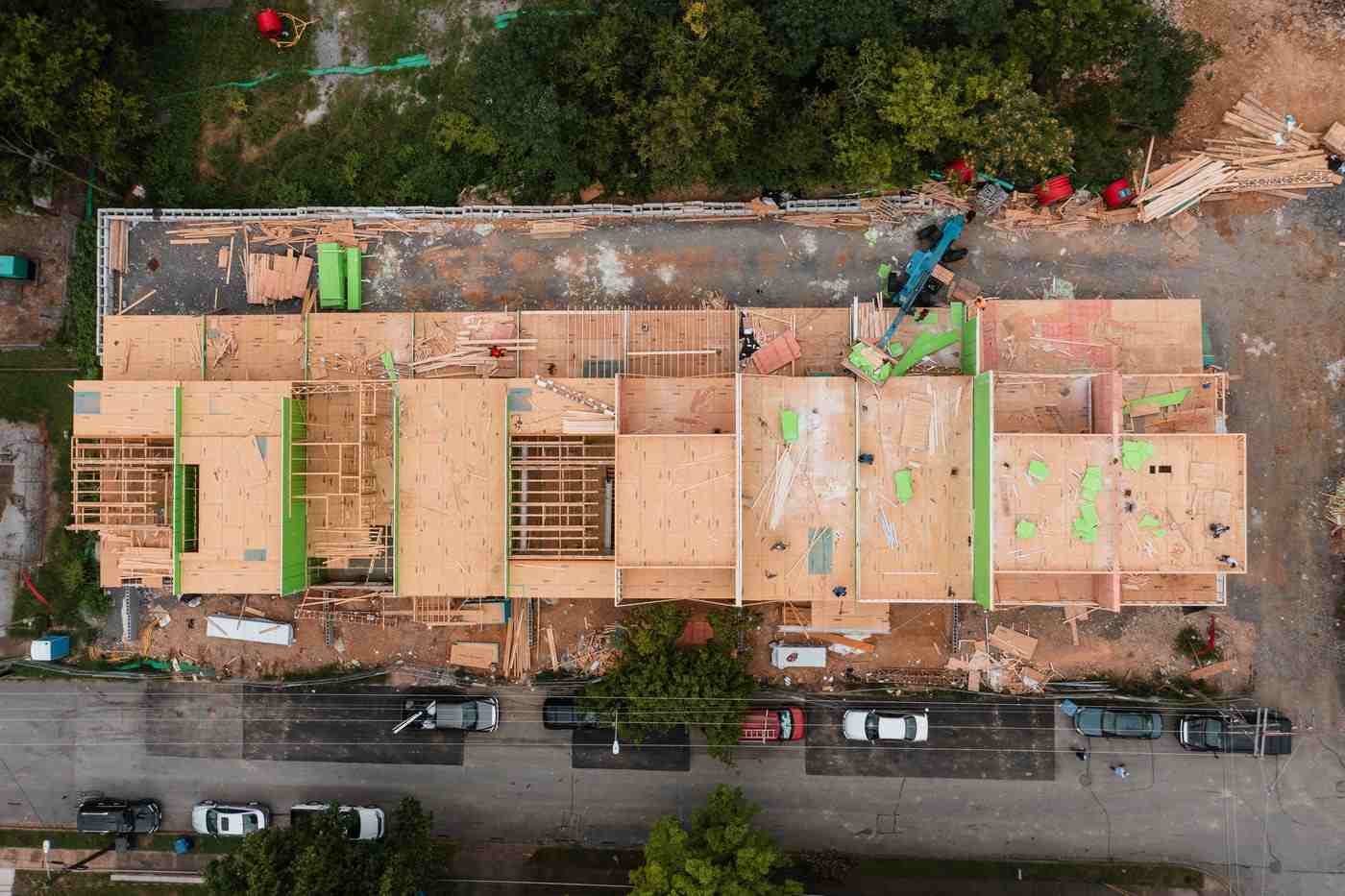
Let’s take a look at some examples of high-performance construction methods, their pros and cons, and what home buyers might expect to pay if they wish to build a new home using these methods.
Cradle to Cradle Building
One of the ways in which building projects meet high-performance goals is by following what is known as a cradle-to-cradle building approach.
A cradle-to-cradle building approach is all about thinking of a building project like a healthy and well-functioning ecological system.
This means that all of the resources that go into the project are used effectively and in a cyclical manner. When resources like building components have reached the end of their life, they can then be disassembled, repurposed or recycled or go back into the natural environment by being composted.
In essence, this requires buildings to be made out of sustainable materials that can be reused or recycled when they are no longer useful, instead of ending up in a landfill to pollute the environment.
Pros
- The biggest benefit of cradle to cradle building is that the materials used are typically considered safe and eco-friendly.
- Cradle to cradle’s focus on sustainable materials can contribute to healthier indoor environments for occupants.
- This approach significantly lowers a building’s embodied carbon.
- Because many products and materials are often reused or repurposed, this type of building may not necessarily be more expensive.
Cons
- One of the biggest drawbacks here is that the supply chain, particularly for recycled materials, can be inconsistent.
- Builders might find it challenging to incorporate this approach within local building codes.
- The market for used and recycled materials is more robust in some areas than others, making this a more difficult approach in certain places.
Passive Building
Another important method to know about is passive building. In essence, a passive house is a low energy building that allows for both cooling and heating savings: up to 90% when compared with typical buildings and up to 75% when compared to new buildings.
This is a concept that focuses on coupling the natural advantages of a build site with airtight construction so as to minimize the amount of energy that needs to come from artificial heating, cooling and lighting.
In this approach, the majority of a building’s heat and light comes from passive solar energy, while the majority of cooling is maintained through strategic shading and ventilation.
This type of building also incorporates things like high performance building facades and high performance wall assemblies, combined with high quality insulation, to assure maximum energy efficiency.
Exactly how much a passive home costs depends on a variety of factors, mainly the level of finishing. Generally speaking, in the U.S. you can spend anywhere from $150 to $500 per square foot on a passive home build.
Pros
- As mentioned above, energy savings with a passive home design can be astronomical.
- If done right, old homes can be converted into passive homes, therefore eliminating the need to demolish and rebuild.
- Due to the way in which passive building works to provide heating and cooling for the building, passive designs tend to maintain constant and comfortable temperatures, no matter the weather. Passive homes are usually quite dry and don’t mould easily either.
Cons
- Getting a passive house certified can be very challenging as the criteria are strict.
- Many of the systems used in passive homes require specialized knowledge to maintain, which means that you may have to hire professionals every time a system goes down.
- Passive homes require a lot of exposure to sunlight, so location could limit your ability to use this approach.
- Turning an old home into a passive one can be very expensive.
- Many people also note that passive homes are noisy, with even the quietest of sounds traveling over large distances.
Net Zero Building Strategies
As you have probably gathered by now, energy efficiency is a really big deal when it comes to high-performance buildings. A net zero building (otherwise known as a zero net energy or zero energy building) is designed to be optimally efficient.
To be specific, over the course of a full year, a net zero energy building generates energy on site in a quantity that is greater than or at least equal to the amount of energy it consumes.
In theory, this means that a net zero building does not require any outside energy from a local power grid. In practice, net zero buildings are still on the grid, drawing from it when energy generation is low (in times when solar panels aren’t producing as much energy as the building needs, for example) and sending extra energy back into the grid when energy generation is higher than what the home can use and/or store.
You can expect a true net zero house to cost you somewhere between $175 and $180 per square foot.
Pros
- A true net zero house is economical over the long run, as one of the main points is to build a house that will not cost you anything in terms of energy.
- These houses tend to have low carbon emissions, making them one of the most climate friendly types of home that you can build.
- The other big advantage here is that this type of home or building also has a higher resale value when compared to a conventional home.
Cons
- The upfront building costs here can be very high, although it’s the long run savings that people aim for.
- Unfortunately, for the most part, you’ll still need to be connected to the power grid, because chances are fairly high that you won’t be able to sustain your home with onsite energy year-round.
- There is also the consideration of renewable energy systems. These additional systems can be expensive to install and can make the home more complicated to maintain.
ICF Construction
ICF, or insulated concrete forms, are a special type of building material used for walls, usually in residential homes and other related applications. This is considered one of the most energy-efficient alternatives to a traditional stick-built construction.
Here, instead of walls being framed with wooden studs, they are created using interlocking expanded polystyrene (EPS) forms, with concrete being poured in the middle of those EPS blocks, which stay in place and insulate the concrete.
This type of construction could cost you around 5-10% more than a traditional wood framed house, or, around $150 per square foot. However, this higher investment could be worth it in recouped energy costs.
Pros
- One huge benefit of this building type is that it can take up to four months off of the building time for your home. This allows you to move into your home much sooner.
- Another big benefit of an ICF building is that ICF does not combust. Even if the rest of your home catches on fire, the walls made with those concrete filled polystyrene blocks will not combust. At the very least, this prevents fires from spreading outside of the home.
- Of course, one of the biggest advantages that you get with an ICF building is that it is much more energy efficient. An ICF building generally has a 58% greater R-value when compared to a wood framed wall, along with roughly 43% energy savings.
- Walls made with insulated concrete forms insulate sound very well.
- These walls are strong enough to withstand winds up to 250 miles an hour. They are also resistant to earthquakes, tornadoes, flooding and most other types of physical damage. These are homes that could technically last for hundreds of years.
Cons
- One of the disadvantages here is that you sacrifice a bit of floor space because those walls are so thick.
- Another disadvantage here is that remodeling a home built with ICF can be difficult because you have to cut through concrete.
- EPS and concrete are not environmentally-friendly materials. If you want your project to have lower embodied carbon, you would need to source concrete that incorporates recycled materials.
The Bottom Line on High-Performance Construction
With governments at the federal, provincial and municipal levels all concentrating on addressing the current housing shortage by increasing stock, it’s crucial that we consider what kind of housing we intend to build and how we want to build it.
If we start taking better advantage of high-performance building methodologies, we can start to meet our considerable housing needs in a more sustainable way that will help Canada reach its climate targets, rather than moving us farther away.
Feature image: Wynand van Poortvliet; Image 1: André François McKenzie; Image 2: Kelly L