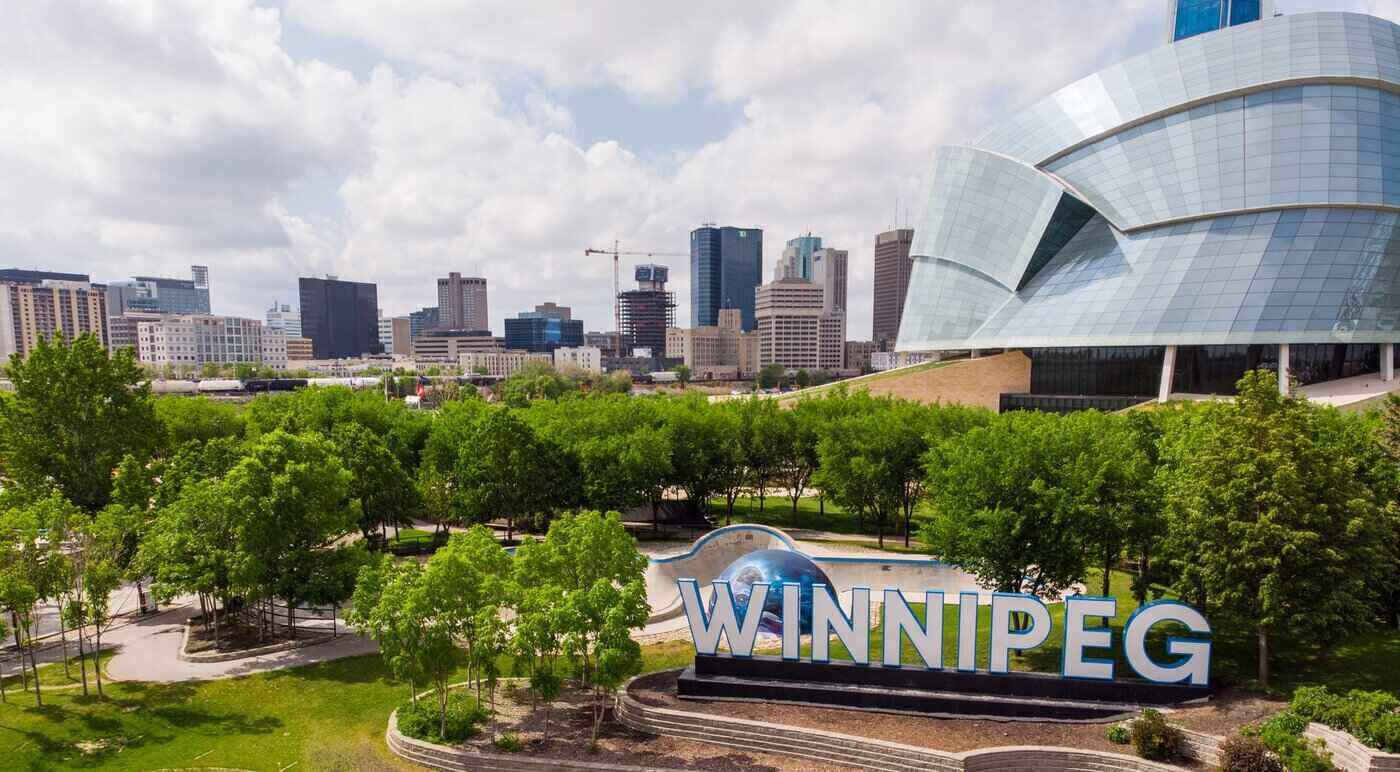
In May of 2021, drilling began for a major district geothermal system for a new residential development in the historic downtown Forks area of Winnipeg. The new development, Railside at the Forks, will be a mixed-use neighbourhood built with an emphasis on sustainability.
The geothermal project will provide heating and cooling for as many as 1,200 residential units, as well as 100,000 sq. ft. of commercial space, according to the Winnipeg Sun.
On August 5, the project got a sizeable funding boost of $1.8 million from the federal government’s Low Carbon Economy Fund. The fund invests in projects that reduce greenhouse gas emissions and support Canada’s goal to exceed its Paris Agreement commitments.
The Forks Renewal Corporation (FRC), the community development corporation responsible for the Railside at the Forks site, is contributing $2.7 million funding for the system. Additional financing comes from the City of Winnipeg and the province of Manitoba.
Railside is a part of the FRC’s ongoing reclamation of the CN East Yards. The East Yards span almost 12 acres adjacent to Union Station, at the junction of the Red and Assiniboine Rivers. Currently, the site is taken up by surface parking space.
Reducing GHGs at the Forks
“The district geothermal system was key to the vision for Railside as a green development and as part of our overall Target Zero goals” says Sara Stasiuk, VP of Finance and Operations for The Forks North Portage.
The Forks is no stranger to alternative energy sources—the Forks market switched its HVAC system to geothermal in 2010. It also powers some of its diesel equipment with biofuel from onsite waste vegetable oil.

Get the Green Building Project Checklist
Use this handy checklist on your next project to keep track of all the ways you can make your home more energy-efficient and sustainable.
Environment and Climate Change Canada says the new geothermal project will result in “a cumulative reduction of approximately 26,000 tonnes of greenhouse gas emissions (GHG)—equivalent to saving about 11 million litres of gasoline.”
By fueling Railside’s projected 248,000 sq. ft. of buildings with clean renewable energy rather than natural gas, Environment and Climate Change Canada believes GHG emissions directly related to the buildings will be eliminated. The system will also allow for future expansion as new developments at the site commence.
Image credit: Brydon McCluskey