

One of the most destructive forces out there is, of course, fire. For any construction company building new homes or buildings, fire protection and fire retardation are always primary concerns.
We’re always improving the ways in which we build structures to minimize the risk of fires. However, the reality is that sometimes fires start no matter the precautions we take. Some building materials are extremely flammable and there’s nothing that we can do about that.
This is where the fire extinguisher comes into play. Fire extinguishers are (obviously) designed to put out fires by spraying some kind of fire retarding chemical or substance onto the flames with the aim of extinguishing them.
The issue here, however, is that fire safety equipment isn’t always that eco-friendly. The older and more common version of fire extinguishers that most of us are familiar with are unfortunately not very environmentally friendly at all.
That said, there are new and more advanced fire extinguishers being developed as we speak, ones which are more effective at putting out fires, yet also more sustainable. Today, we want to compare the older and the newer fire extinguishers to see just how far this fire safety equipment has come in terms of being eco-friendly.
Main Types of Fire Extinguishers
There are a few main types of fire extinguishers that you should be familiar with; ones that you may already have around your home or workplace. Let’s find out what these main types of fire extinguishers are, what they’re used for, and what their environmental impacts are like.
Dry Chemical Fire Extinguishers

Get the Green Building Project Checklist
Use this handy checklist on your next project to keep track of all the ways you can make your home more energy-efficient and sustainable.
Dry chemical fire extinguishers are highly effective at suppressing fires in various classes, including Class A (ordinary combustibles), Class B (flammable liquids and gasses), and Class C (electrical fires). These also include class BC extinguishers.
Dry chemical fire extinguishers, like those that use monoammonium phosphate, sodium bicarbonate or potassium bicarbonate as their extinguishing agents, have both advantages and disadvantages when it comes to their environmental impact.
One significant environmental drawback of dry chemical extinguishers is the residue they leave behind after use. This residue can be corrosive and may damage or contaminate materials and equipment. Cleanup efforts can be costly and time-consuming.
The chemicals used in dry chemical fire extinguishers can vary, but they often contain substances that may be harmful to the environment. For example, some formulations contain ammonium compounds, which can contribute to nutrient pollution when released into waterways.
The chemicals used in dry chemical fire extinguishers are typically non-biodegradable, meaning they do not break down naturally in the environment over time.
Inhaling or coming into contact with the fine powder released by dry chemical extinguishers can pose health risks to humans, as well. It can irritate the respiratory system and skin. Proper ventilation and personal protective equipment may be necessary when cleaning up after using these extinguishers.
Class D Fire Extinguishers
Class D fire extinguishers are designed specifically for suppressing fires involving combustible metals, such as magnesium, sodium, lithium and titanium. These metals can ignite and burn intensely, and extinguishing them requires a specialized extinguishing agent, typically a dry powder or sand-based material.
While the extinguishing agents used in Class D fire extinguishers are not entirely eco-friendly, they do not typically leave a harmful residue that poses environmental concerns after use.
The agents used in Class D fire extinguishers are often proprietary mixtures of dry powders or sand. While they are effective at suppressing metal fires, the specific composition of these agents may vary, and their environmental impact can depend on the ingredients used, regardless of the residue they leave behind.
One of the biggest considerations here is that the production of the dry powder or sand-based agents used in Class D fire extinguishers may involve energy-intensive processes and the use of natural resources, which can have environmental impacts.
CO2 Fire Extinguishers
Carbon dioxide fire extinguishers quite literally suffocate flames by removing oxygen from the equation. Carbon dioxide (CO2) fire extinguishers are often considered more environmentally friendly than some other types of fire extinguishers for several reasons.
CO2 fire extinguishers leave no residue after use. This characteristic is environmentally advantageous because it eliminates the need for cleanup and minimizes potential damage to sensitive equipment or materials.
Carbon dioxide is non-toxic to humans and does not produce harmful byproducts when used as a fire suppressant. This is in contrast to some other extinguishing agents that can release toxic fumes or residues.
CO2 is not an ozone-depleting substance. It does not contribute to ozone layer depletion, which is an environmental concern associated with some older fire suppressants.
While carbon dioxide is not an ozone-depleting substance, it is a greenhouse gas. In large quantities, its release into the atmosphere can contribute to climate change. However, the small amount of CO2 released during the discharge of a fire extinguisher is typically not a significant environmental concern when compared to other sources of CO2 emissions.
Another issue is that this type of fire extinguisher is not overly effective for ordinary combustible materials like wood and paper or for fires involving oils and fats.
H20 Fire Extinguishers
H2O fire extinguishers, which literally spray out a mist of water, are only effective for Class A fires, or in other words, for regular combustibles such as paper and wood. This type of fire extinguisher doesn’t work very well for most other types of fires. That said, it is better for the environment than most other options out there.
Water is a natural substance and is non-toxic to humans and the environment. It does not release harmful fumes or residues when used as a fire suppressant. Unlike some other extinguishing agents, water does not contribute to ozone layer depletion or greenhouse gas emissions.
Water fire extinguishers do not contain potentially harmful or synthetic chemicals that can have negative environmental impacts. Regrettably, even though this type of fire extinguisher is fairly eco-friendly, it also doesn’t have many applications that it can be used for.
Introducing the Halotron Fire Extinguisher
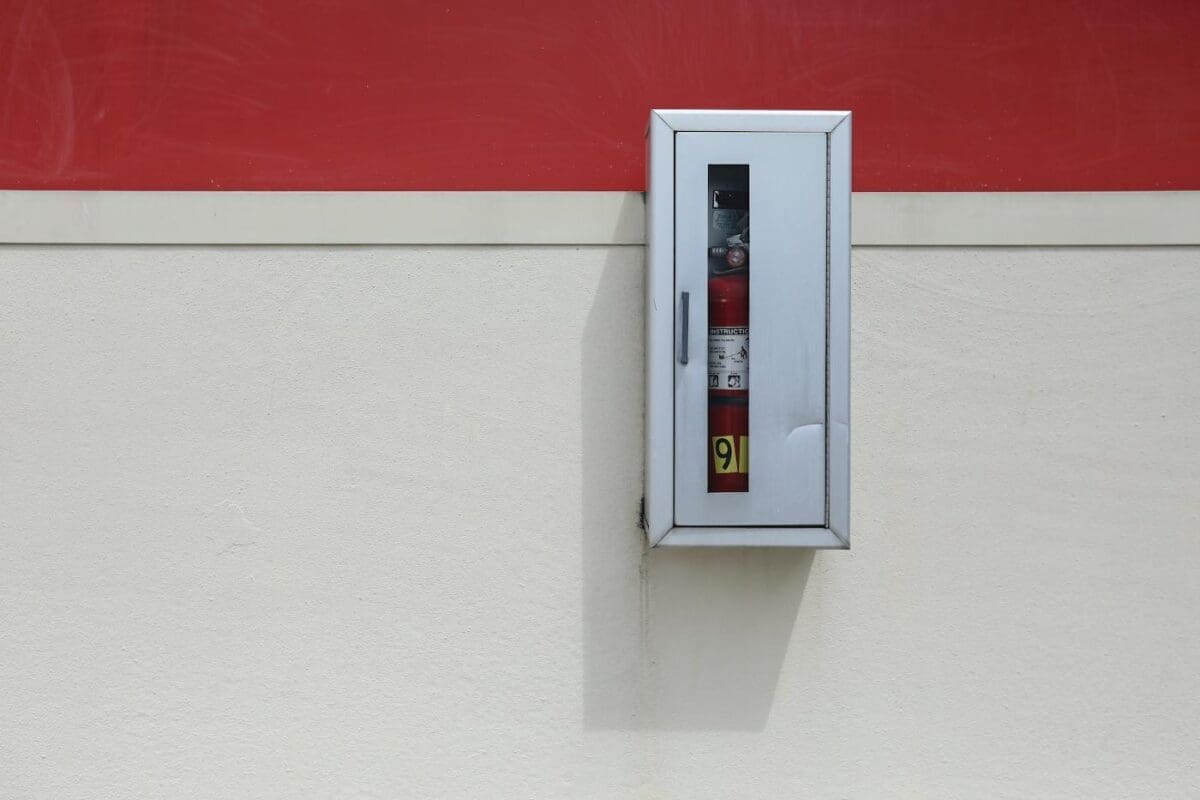
We wanted to give you a good overview of what different fire extinguishers offer in terms of eco-friendliness. Keep in mind, however, that regular dry chemical fire extinguishers are the most common ones used around the home.
As we’ve seen, they’re not very eco-friendly at all. Better for the environment than a raging house fire, certainly, but we could probably do better. This is where a new type of better extinguisher comes into play, the halotron fire extinguisher, which is set to replace the regular dry chemical fire extinguisher.
The reason why this type of fire extinguisher is becoming so popular, especially for construction and commercial purposes, is because it doesn’t leave behind any kind of residue. This means that a halotron fire extinguisher can be used around sensitive electrical equipment without risking damage from the residue left behind.
There are a few reasons as to why this new type of fire extinguisher is more eco-friendly.
Halotron extinguishing agents, such as Halotron I and Halotron II, have a lower ozone depletion potential (ODP) compared to older fire suppressants like halons. Halons were phased out because they significantly contributed to ozone layer depletion, which has harmful environmental effects. Halotron agents were developed as a more environmentally responsible alternative.
Halotron agents also have a lower global warming potential (GWP) compared to some other alternatives. This means that they have a reduced impact on global warming when released into the atmosphere.
Conclusion
The bottom line here is that much older firefighting equipment is not overly eco-friendly, but there are constantly advances being made.
One such advancement is the halotron fire extinguisher, which can easily take care of Class A, B, and C fires, all without being very damaging to the environment.
Therefore, any commercial property or construction service that has plenty of delicate equipment and electronics on site should definitely consider the halotron fire extinguisher. It’s much more eco-friendly and it won’t damage your equipment.
Feature image: Piotr Chrobot; Image 1: Mick Haupt