
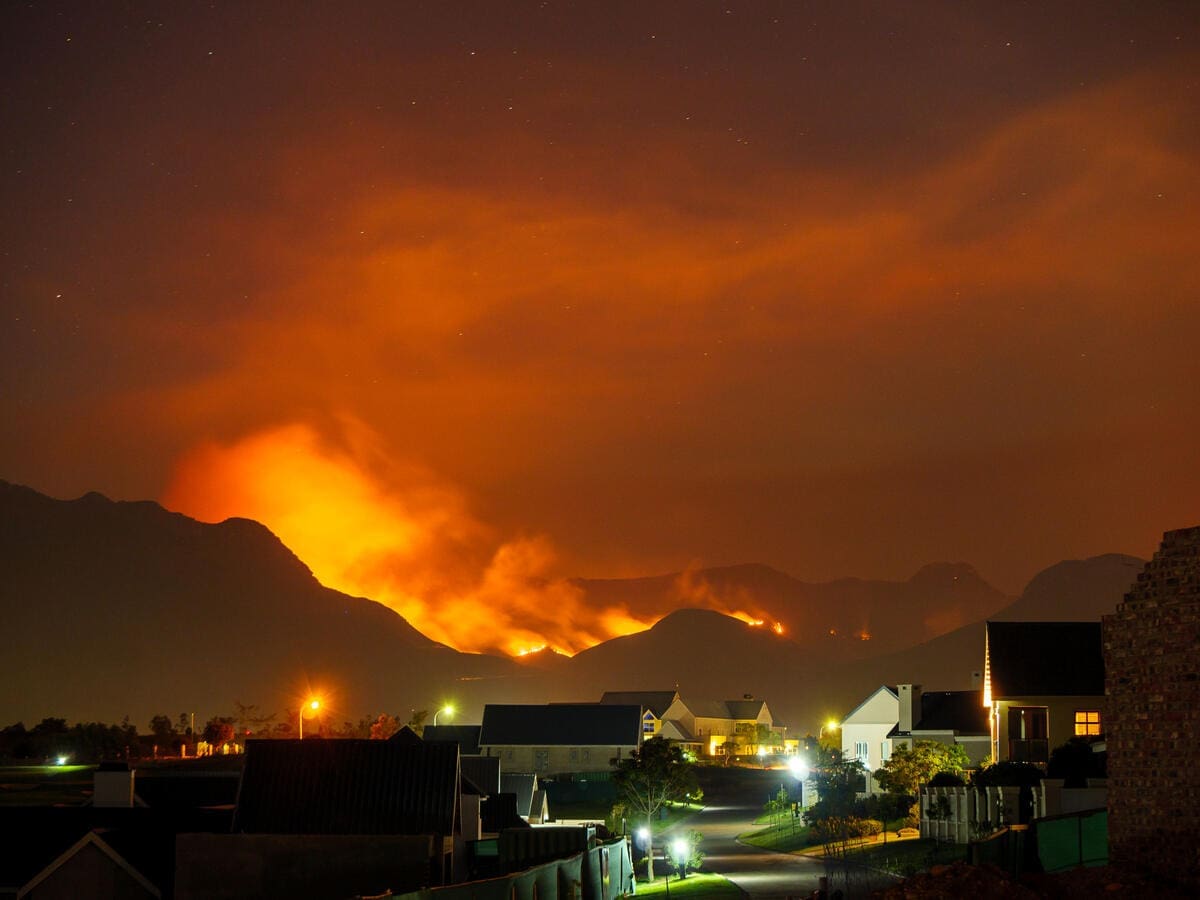
As we’ve all seen on the news, the recent fires in California’s Pacific Palisades and surrounding areas were devastating. Unsurprisingly, the fires sparked much debate about climate change, building codes and home design as the affected communities seek future reconstruction.
As some fires still rage, it has become increasingly evident that how we construct buildings contributes to the destruction. The density of urban areas and the materials used to build them enhance the spreadability of fire, feeding them with highly flammable fuel sources.
When coupled with the housing affordability crisis, urban developments push to the edge of wooded areas, removing all buffers from wildfires, and create a path for fire to move straight into densely developed urban centres.
As California looks to rebuild, constructing in the same old ways is no longer reasonable, especially when climatologists project an increased quantity and intensity of wildfires.
Research out of Dalhousie University in Nova Scotia revealed that climate change increased “global burned area by almost 16 percent for 2003 to 2019, and increased the probability of experiencing months with above-average global burned area by 22 percent. “
Given these environmental pressures, construction in wildfire-prone areas will need to focus on the fire resistance rating of building materials to limit the destruction caused by future events. Fire-resistant wall assemblies are called for, and in this element, alternative materials like earthen walls can excel where conventional wood-frame wall assemblies do not.
Fire Ratings
The fire rating of a wall assembly ultimately determines how a building will hold up against the spread of fire. Fire ratings incorporate critical factors that determine a wall assembly’s overall fire resistance, measured in minutes or hours, and provide key indicators of how long the materials and assembly can withstand fire exposure.
Combustibility – Whether a material ignites and burns.
Flame Spread Index (FSI) – How quickly flames spread across a material’s surface.
Smoke Development Index (SDI) – The volume of smoke produced during combustion.
Heat Release Rate (HRR) – The rate at which a material releases heat energy.
Structural Integrity – Whether the material maintains its load-bearing capacity when exposed to fire.
The Current State of Conventional Wall Assemblies
Get the Green Building Project Checklist
Use this handy checklist on your next project to keep track of all the ways you can make your home more energy-efficient and sustainable.
It’s pretty obvious, given the outcome of the current devastation in California (and Fort McMurray in 2016), that conventional wall assemblies don’t hold up in an urban wildfire. While wood frame construction is standard, highly regulated by code, affordable and widely available, it has minimal fire-resistant properties under intense conditions.
In Canada, “exterior walls, interior bearing walls, and party walls have a minimum one-hour fire resistance rating,” according to the Canadian Wood Council’s Building Performance Series No. 2: Fire Safety in Residential Buildings. When coupled with standard roof ventilating practice, which can suck embers into attic spaces in a firestorm, the ideal conditions for the spread of fire become present in many homes.
Wood, Concrete, and Steel
Now, this isn’t to say that rebuilding with wood is futile. Fire resistance in conventional lumber wall assemblies can be improved using fire retardant insulation and non-combustible layers, like gypsum and cement-based products.
The same CWC report explains how “wood frame walls, floors and roofs using conventional wood framing, wood trusses and wood I-joists can be designed to provide fire resistance ratings up to 2 hours.”
While that may provide time for fire suppression services to mitigate damage caused by fire in a regular emergency scenario, is that enough to protect buildings in an urban wildfire, which need significantly more resistance against prolonged fire exposure?
Even conventional cold-formed steel “will fail in less than 10 minutes under standard laboratory fire exposure test methods,” according to a CWC Fire Safety document.
Furthermore, research demonstrates that reinforced concrete is not immune to fire either. While concrete structures rarely collapse in a fire, “concrete will spall under elevated temperatures, exposing the steel reinforcement and weakening structural members.” Due to these findings, better alternative wall assemblies are called for.
Alternative Materials for Fire-Resistant Buildings
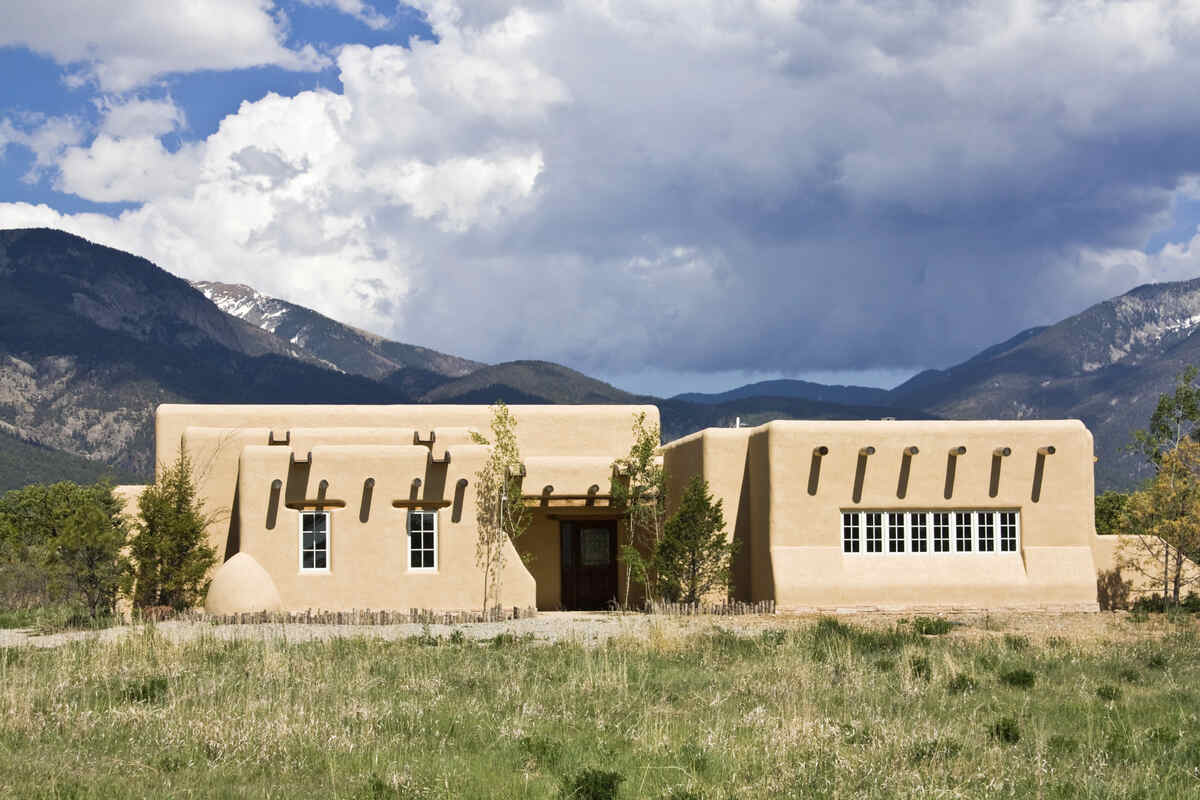
Eco-friendly and alternative building methods like rammed earth, compressed earth blocks (CEBs), adobe brick and cob have seen increased interest and adoption over the last 20 years, especially in the western U.S. and Canada, areas prone to large and uncontrollable wildfires.
Meanwhile, the aftermath of the California fires revealed several cases of earthen wall assemblies’ resilience to fire. An article in Reuters provided an example of an outdoor kitchen made of cob that “survived the Eaton Fire when the adjoining home burned.”
How Do Earthen Wall Assemblies Resist Fire?
Simply put, dirt doesn’t burn and has been used to construct homes, ovens and fireplaces worldwide for centuries. The material remains fire-resistant even when mixed with organic materials and fibres, like cob and adobe brick. Since the fibres act as a binding agent within the wet mixture, the surrounding compressed earth remains non-combustible even after drying. This makes it one of the best alternative wall assemblies possible for fire resistance.
Fire Ratings of Earthen Walls for Alternative Wall Assemblies
Rammed Earth
According to Earth Structures’ report Physical Properties and Compliance with UK Building Regulations, fire-ratings tests performed by Australia’s national science agency, CSIRO, classified Stabilized Rammed Earth (SRE) as non-combustible.
The CSIRO tests demonstrate that a 250mm (~10”) thick earth wall achieved a 4-hour fire resistance rating, as well as a rating of 3 hrs 41 minutes for a similarly constructed 150mm (~6”) thick earth wall.
The document explains that rammed earth walls are stronger than conventional block construction due to their thickness and monolithic nature, which doesn’t contain vulnerable mortar joints.
Cob
Another monolithic earthen wall assembly is cob. Because of its fire resistance, cob has made significant inroads in the alternative and sustainable building industry. In 2019, the International Code Council (ICC) accepted cob and officially included it in the 2021 International Residential Code (IRC).
As a result, it has become part of modern building safety codes in the U.S., Guam, Puerto Rico and the U.S. Virgin Islands. As mentioned above, cob is now proving its effectiveness as a fire-resistant building material.
While official fire ratings have yet to be established, industry professionals agree that cob has a minimum fire-resistance rating of 2 hours. Nevertheless, tests are underway.
Quail Springs Permaculture, a nonprofit organization located in Southern California’s Cuyama Valley, in association with ICC, documented a preliminary fire test on a cob wall. Their results revealed that after four hours of burning a 2000° F fire against one side of a 12” thick wall, the opposite side never exceeded 72° F, achieving a 4-hour rating.
Adobe
Like cob, tests reveal that adobe construction has improved resistance to fire compared to standard wall assemblies. Like its other earthen counterparts, adobe has a 4-hour rating but has the additional feature of becoming harder when exposed to fire.
Engineers at UC Davis, in California, conducted a side-by-side comparison of adobe and wood, in which they exposed an equally sized block of each material to a blow torch at 3,400° F, a temperature the researchers say is well above that of most wildfires. “Within seconds, the wood block chars and is set aflame. Meanwhile, the earth block appears unaffected except for some nearly imperceptible colouring.”
The research team also placed the earth block in a furnace reaching 2,200° F, demonstrating that “the earth block reacts much as it would in a kiln, becoming more like red brick” when subjected to high temperatures.
As a result, adobe is seeing wider adoption as an alternative wall assembly. The BBC documented the reconstruction efforts after the devastating 2021 wildfires in Superior, Colorado. That disaster encouraged the use of adobe for its fire-resistant properties.
A New Era for Fire-Resistant Wall Assemblies
Given the aftermath of the California fires, it’s clear that we need to rethink how we build homes in wildfire-prone areas.
Though often rooted in ancient practices, alternative wall assemblies present modern solutions to the growing risks of climate change and fire. Earthen materials like rammed earth, cob and adobe have proven to offer significant fire resistance, with some surpassing even the most arduous conventional testing methods.
While these alternatives show immense promise, their adoption faces challenges. Higher initial costs – typically 3-10 percent more than conventional building methods – and regulatory hurdles can slow progress. Building codes, though evolving, often lag behind the innovation needed to address climate realities.
Australia has successfully integrated earthen walls into wildfire-resistant construction, raising hopes that others will adopt similar strategies. The global rise in wildfires highlights the urgency of this shift, and continued research and testing can make alternative wall assemblies a cornerstone of resilient, eco-friendly construction.
Images from Depositphotos