
Curb appeal. It’s that important first impression your home makes on a potential buyer. And there’s arguably no other factor more impactful than your home’s siding.
There are plenty of beautiful options to consider, and there are also a few sustainable options. Then there are sustainable options that also happen to beautiful. Here I’ve narrowed down the field to present six environmentally-friendly siding choices for you to pick from, each of which offers its own unique aesthetic and a differing set of pros and cons.
Natural Wood
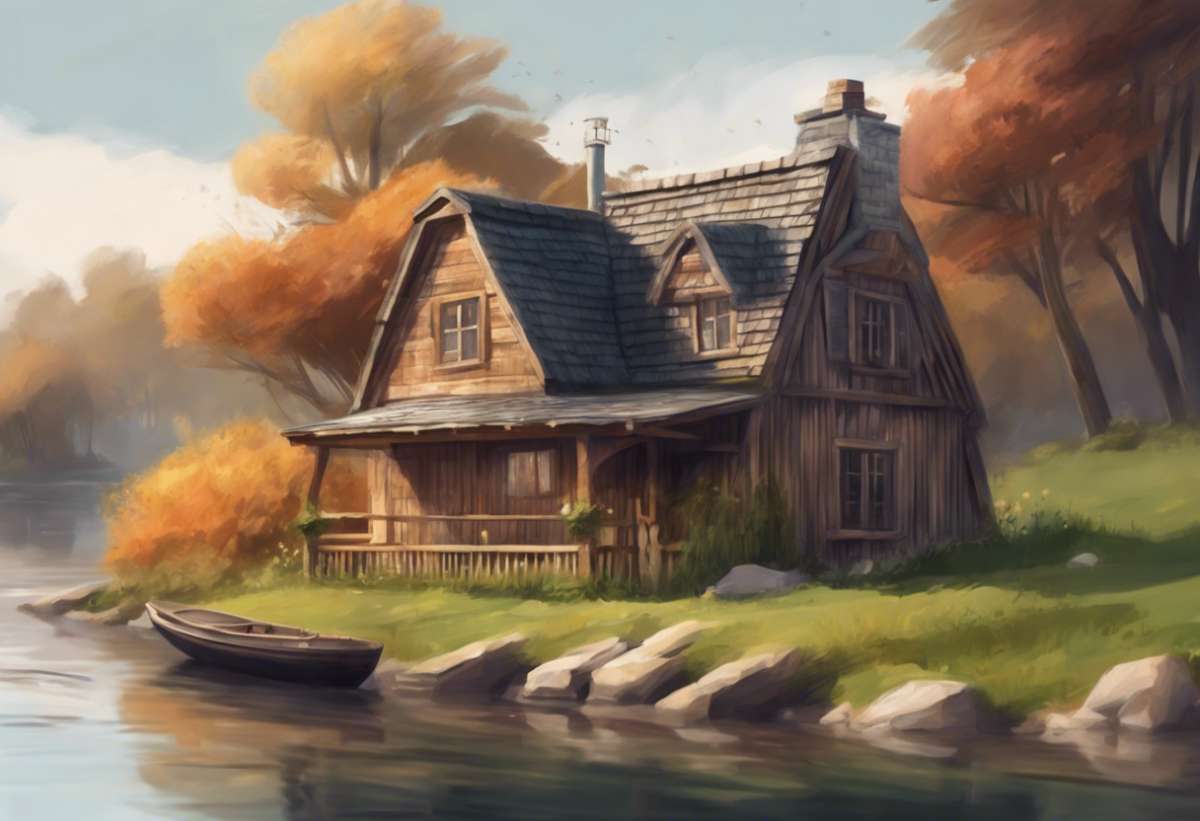
Wood delivers a warm, inviting atmosphere that works for a lot of different house styles. It’s hard to top the look of natural wood siding and it is a sustainable product. However, wood does not come without its share of issues.
When sustainably harvested, wood can be a very environmentally-friendly siding option because the material itself is highly sustainable. It’s important, however, to determine the source of the wood. If the wood comes from an old-growth forest, it’s not all that sustainable an option, whereas if it comes from a responsibly managed forest, it is. Look for FSC-certified wood siding to help narrow down your sustainable options since they guarantee the wood is harvested sustainably.
Being a natural material, wood siding doesn’t require other materials or different components in its manufacturing process so the environmental impact is minimized.
Additionally, wood is easy to work with and requires less energy and effort to transport than heavier materials. Because it’s lightweight, you’re able to transport more product than other materials like stone, requiring less fuel in your moving vehicles as well as less overall energy usage with regards to equipment.
Get the Green Building Project Checklist
Use this handy checklist on your next project to keep track of all the ways you can make your home more energy-efficient and sustainable.
There are a few drawbacks to wood, however. Wood siding only has a lifespan of 20 to 40 years, dependent on the type of wood used (cedar and redwood last the longest). There are also high maintenance requirements. You’ll have to stain or seal your siding every few years to protect it from UV damage, moisture, rot, and decay. Wood is prone to insect infestation and water infiltration, which can significantly impact the lifespan of your wood.
Engineered Wood
Engineered wood has been developed to counter the deficiencies of natural wood. Though its aesthetic does not match the “real thing,” it’s not that far off.
Engineered wood siding reduces the need for virgin timber because it’s made from wood fibres and agricultural by-products bonded with wax and resin for additional strength. It can also be composed of recycled wood fibres to further reduce the need for virgin wood.
It’s built to last a good time. Some brands offer a 50-year warranty on their engineered wood siding. Being engineered to resist insects and rot better than natural wood, it also requires a lot less maintenance than natural wood.
Reclaimed Brick
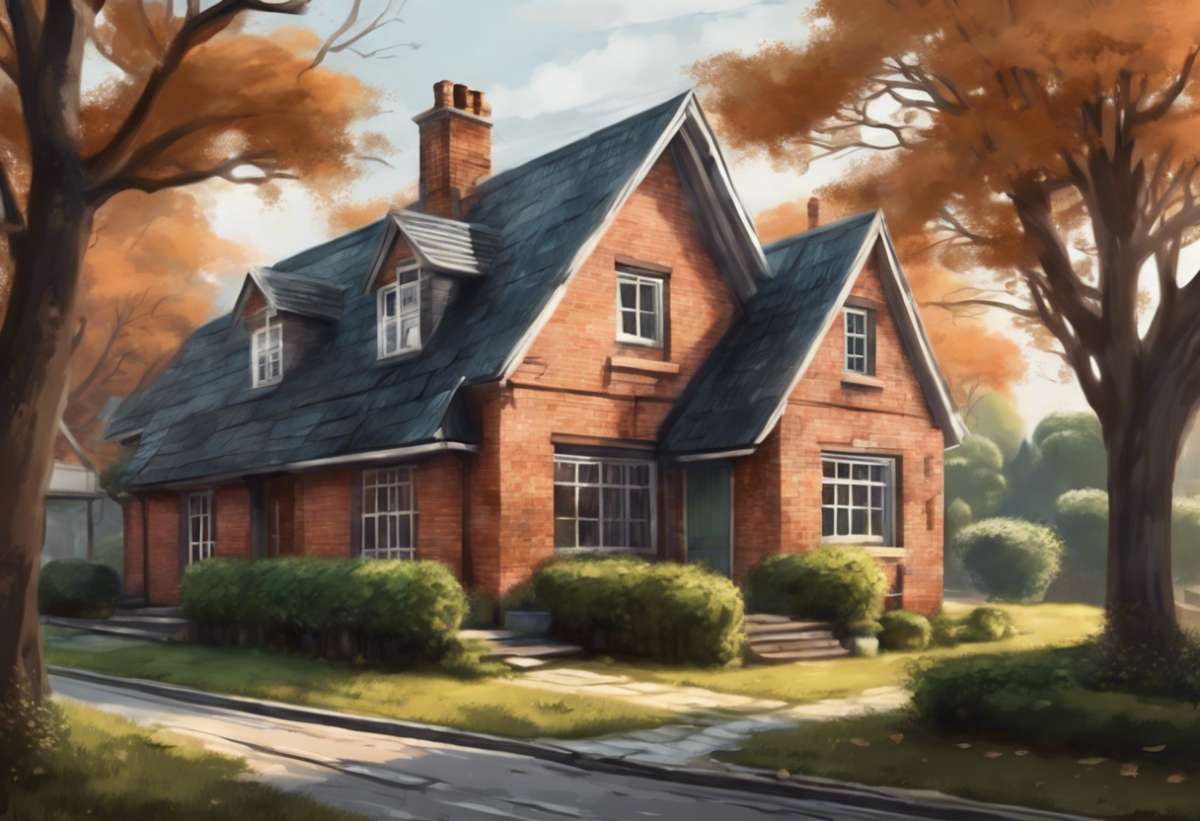
Brick is a strong choice for siding. With the exception of stone, it’s the longest lasting siding option. Brick can last 100 years or more (and with minimal maintenance). It’s heavy and durable, so it can withstand harsh weather and is resistant to rot, decay, and insect damage.
However, brick production is highly resource and energy intensive. With their large mass, that’s a lot of clay, sand, and water used to make them. Their production requires being fired at high temperatures in kilns, which are generally powered by fossil fuels.
Luckily, there is a great alternative: reclaimed bricks. Buildings are being deconstructed all the time. Rather than tossing those old bricks into landfill, by using reclaimed brick you can get all the advantages of brick without the environmental cost. You’re actually benefitting the environment by using them since they could otherwise be dumped into landfill.
Recycled Metal
Metal is another option for your siding that can be seen as environmentally friendly. The primary reason it’s considered to be a solid environmental option is that metal usually contains a high percentage of recycled materials and can easily be recycled at the end of its life.
Metal, particularly steel, is highly durable. It doesn’t suffer from the same drawbacks wood has as it is fire and pest resistant and it won’t decay or rot. Steel lasts the longest of metals with a lifespan of 40 to 60 years. Being highly durable, metal siding also requires little maintenance after installation.
There are some drawbacks. Metal can be dented by hail or a stray baseball (though some brands can be dent-resistant). Metal can amplify sounds so during a rainstorm or hailstorm it can get noisy inside (though this too can be mitigated). Metal is quite a heavy and bulky building material, often requiring specialized equipment and processes to build with.
Because of this, there are increased costs and demands for transportation and labour, which also increases the use of fuel, thus impacting the carbon footprint of the building.
Regardless, the lower need for raw resources still means that metal should be a consideration for any home that’s being built with environmental reasoning in mind, as it is strong and reliable as a long-term building material.
Stucco Alternatives
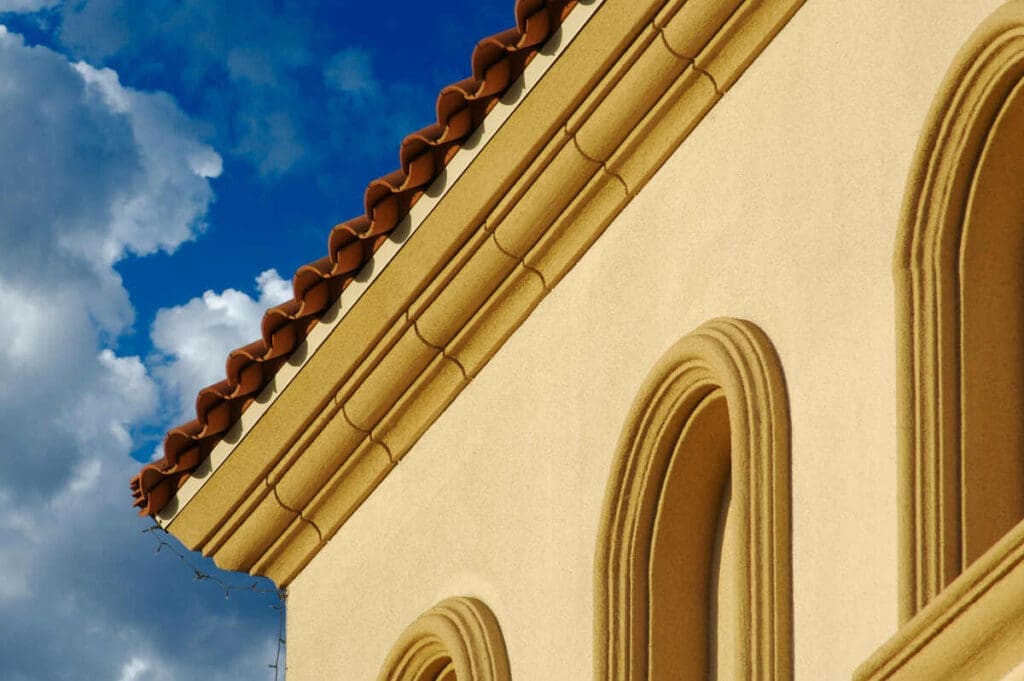
Stucco is a building material worth considering. With a lifespan of 50 to 100 years, it’s one of the most durable siding options available. It provides additional insulation for your home and is fire resistant. It also offers fantastic design flexibility. It can be dyed or painted over. It can also be manipulated to create nice textured finishes, such as stippling, swirling, and dry dash.
It consists of cement, sand, water, and lime. But cement… c’mon. How is that environmentally friendly? If it’s the conventional portland cement, it’s not. Cement is the number one CO2 emitting material in the world, responsible for 8 percent of global carbon emissions.
But, good thing you don’t have to use traditional stucco. Eco-friendly alternatives include clay-based stucco, lime-based stucco, and stucco with post-consumer recycled content. All of these options reduce the environmental impact of stucco, making it an eco-friendly siding option.
Locally-Sourced Natural Stone Veneer
Stone cladding is hard to beat. It’s extremely durable and can last centuries with very little maintenance, so when other types of siding will have to be replaced several times, contributing to additional waste, stone walls will still be standing and looking sharp.
Stone has a high thermal mass so can improve a building’s energy efficiency by absorbing heat during the day and releasing it at night, thus reducing heating and cooling costs. Being a valuable material, it has a high rate of reuse and recyclability at the end of its life. Even if it is tossed out, it is a natural material so doesn’t pose any threat to the environment. It’s also fire and pest resistant and reduces sound transmission.
And on top of all that, it’s beautiful. Stone offers a timeless, elegant look that is tough to match.
Unfortunately, stone extraction is highly resource consumptive and being such a dense material, the transportation process can be highly polluting.
Luckily, both of those problems can be mitigated to a degree if you purchase locally sourced stone veneer.
When cladding a house, it’s not necessary to utilize big, thick rocks, and it’s not even a good thing. New production techniques these days allow stone to be sliced into thin veneers that are lightweight. The net result is that transportation and energy costs are reduced due to their lighter weight. You can further reduce those costs by sourcing locally. Because of their lighter weight than traditional stone, installation costs are also reduced since they’re easier to work with.
When combined with all the other environmental benefits, natural stone veneer can make a sustainable siding option, particularly if you plan on keeping your stone walls up for your lifetime and beyond.
Selecting an eco-friendly siding option will help you prioritize the environment in the building of your home. But it’s important not just to consider the sustainability of the material itself, you have to consider the embodied energy throughout the product’s entire lifecycle (extraction, processing, manufacturing, transportation, installation, use, maintenance, and disposal).
Paying attention to the energy associated with every stage of the material’s journey will truly inform you of your overall impact and if you’re operating in an eco-friendly way.

this is all good options but where is the industrial Hempcrete ???