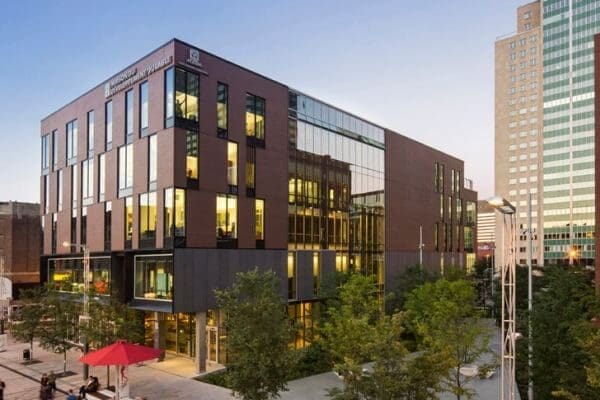

Canada is actively pursuing innovative solutions to combat climate change and simultaneously reduce expenses by investing in energy efficient buildings. One key area of focus is the buildings sector, where the Canadian government is playing a pivotal role in fostering advancements that lower carbon emissions in both residential and commercial structures. This initiative is also creating new, sustainable job opportunities while increasing energy efficiency.
Recently, Julie Dabrusin, the Parliamentary Secretary to the Minister of Energy and Natural Resources and to the Minister of Environment and Climate Change in Canada, declared a federal investment exceeding $3 million. This funding will boost various projects in British Columbia aimed at enhancing energy efficiency in buildings.

The breakdown of these investments into energy efficient buildings is as follows:
- Introba (previously known as Integral Group) receives $1,179,000. This funding is directed towards a novel construction demonstration program, anticipated to lead to the design and construction of eleven buildings in British Columbia, all prepared for net-zero-energy operations. This project also enjoys backing from the BC Ministry of Energy.
- The University of Victoria is allocated $750,000 to create, implement, and evaluate an online system. This platform is designed to streamline the design processes for buildings that are ready for net-zero-energy and exhibit high-performance features.
- The British Columbia Housing Management Commission is granted $720,000. This investment supports the development of thermalenvelope.ca, a web-based database focused on diminishing energy consumption in buildings by providing precise calculations and strategies to reduce heat loss.
- QuadReal Property Group Limited Partnership is receiving $217,500. This funding is for conducting a Front-End Engineering Design (FEED) study on an extensive energy retrofit for a multi-unit high-rise residential building in Burnaby, British Columbia.
- The Greater Victoria Housing Society, in collaboration with the Federation of Canadian Municipalities, is provided with $139,250. This amount is earmarked for a FEED study at Sitkum Terrace, a housing facility for seniors in Victoria, aiming to identify economical deep energy retrofit solutions.
These federal funds come from the Green Infrastructure – Energy Efficient Buildings Program, which is dedicated to enhancing the design, renovation, and construction of homes and buildings in Canada. The program is instrumental in developing and applying new building codes for both existing and upcoming net-zero-energy–ready buildings through various research, development, and demonstration initiatives nationwide.
These investments are in alignment with the forthcoming Canada Green Buildings Strategy. Launched by Minister Wilkinson, consultations for this strategy started in 2022. The strategy’s goals include expediting deep building retrofits, bolstering building resilience against climate impacts, transforming heating systems for spaces and water, and constructing buildings that are both net-zero and climate-resilient from the outset. These efforts are all part of Canada’s ambitious journey towards achieving a net-zero status by 2050.
This is all closely related to the new innovative housing design catalogue currently being considered by the federal government.
This strategy is not only a step towards environmental sustainability but also represents a substantial economic opportunity. The green building sector in Canada has been growing, contributing significantly to the economy.

Get the Green Building Project Checklist
Use this handy checklist on your next project to keep track of all the ways you can make your home more energy-efficient and sustainable.
According to the Canada Green Building Council, the green building industry contributed $47.9 billion to the GDP and supported nearly 500,000 jobs in 2014. This sector is expected to continue growing, with estimates suggesting that by 2030, it could support nearly one million jobs. Such growth highlights the dual benefits of this approach, addressing climate change while bolstering the economy and job market.