
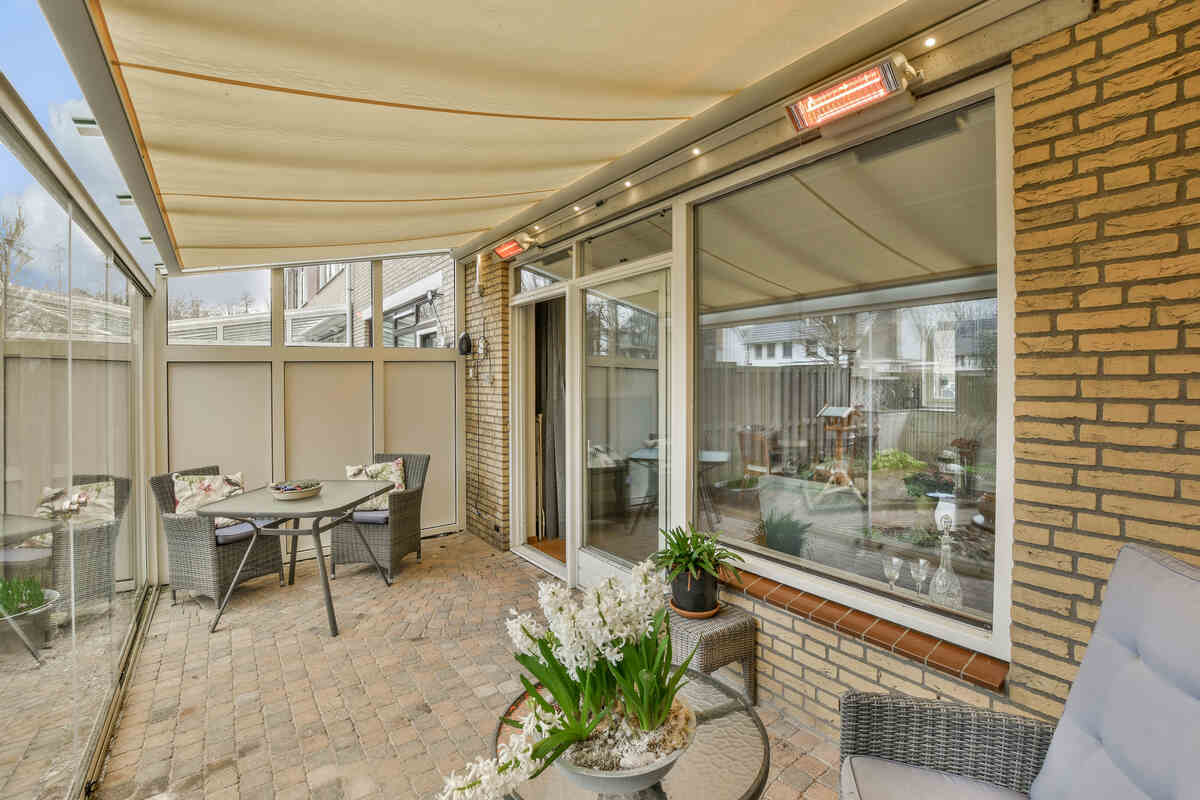
Patios too often go unused during the winter when cold winds restrict our enjoyment of the outdoor space. Luckily, there is an easy solution: a temporary patio enclosure. From screens to curtains, there are several options available that will extend the time you can spend outside on your lovely patio enjoying the outdoors. Here we’ll look at five DIY options that will give you varying amounts of protection from the elements.
Roll Up Curtains
Patio curtains require a permanent roof structure with vertical posts. They are affixed to the roof and rolled down to protect the patio from winds. They’re available in various colours and typically have a translucent section or window. Completely clear curtains (100 percent transparent), sometimes referred to as “clear vinyl walls”, are also available to allow for unobstructed viewing.
When they’re not required, rolling up the patio curtains protects the material and opens the patio during warmer weather. Hand-operated mechanisms wind the curtains up or down, but automatic-powered systems are also available. Velcro tape secures the curtains to the vertical supports, making fixing and removing simple.
Patio curtains protect from inclement weather. However, many suppliers indicate that the curtains should be rolled up during winds above 80 km/h.
Shade Screens
Shade screens, also called solar shades, are a great addition to porches and patios with permanent overhead structures as they require cross supports and tracks to hold them in place. They can be custom-made to fit most size openings and come with a remote-control motorized option for ultimate convenience.
Get the Green Building Project Checklist
Use this handy checklist on your next project to keep track of all the ways you can make your home more energy-efficient and sustainable.
Shade screens protect your patio furniture from harmful UV rays and keep out cold winds and rain, ensuring comfortable patio use during colder times. As an added benefit, when rolled down, they also function as a mosquito screen during the summer months.
Retractable Awnings
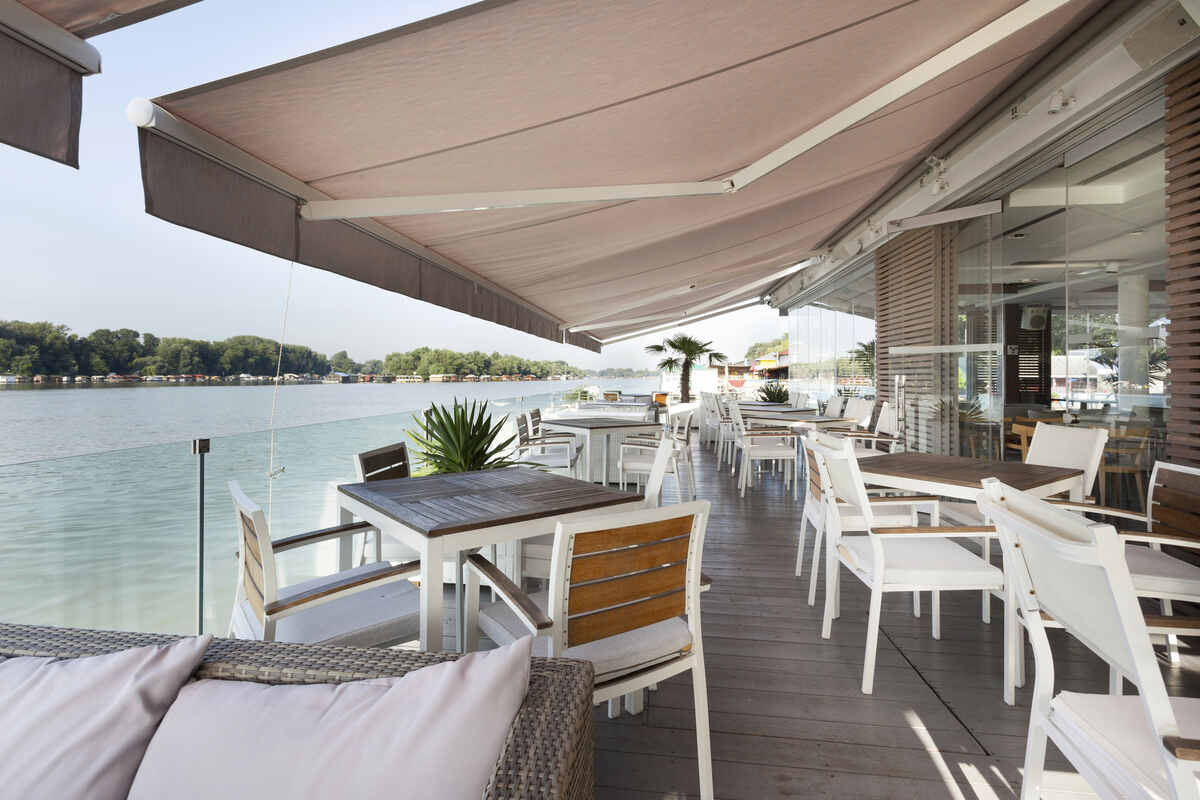
Retractable awnings will keep harmful UV rays off the patio furniture during summer and they will keep your interlocking patio free of rain year-round so you won’t slip.
The problem with patio awnings is that although they provide good protection from the sun and precipitation for the porch area, they don’t offer much protection from the wind and will need to be retracted if heavy snowfall is expected. For additional comfort, you’ll need winter porch panels, which can be easily removed and are durable.
One bonus with retractable awnings is that they can be packed away when the patio isn’t being used, prolonging the lifespan of the awning material.
Clear Vinyl Walls
Clear vinyl walls are ideal for creating a screened porch without sacrificing sunlight. They require a framework to which the panels can be attached using zip ties and grommets. Unlike other options, they offer versatility as each panel can be rolled down independently according to the amount of wind protection required.
They’re available in custom sizes, and during the warmer months, they can be neatly rolled up out of the way to allow you to enjoy the fresh air and summer sunshine.
Stacker Doors
Stacker doors are a great way to seal off the porch or patio during winter while allowing for an open area during summer when the doors can be neatly stacked to one side.
The system requires a top and bottom track where the door runners can be located and a permanent vertical section to secure the doors vertically. Stacking doors have a significant advantage over sliding doors because they can open up the patio area.
Stacker doors offer a more permanent solution and can be custom-made to ensure a perfect fit for most patios. They are one of the best options available and selecting double or triple-pane glass with low-E coating will enhance your home’s insulation qualities, providing plenty of light while allowing uninterrupted airflow in the warmer months.
Stacker doors are normally aluminum framed; however, frameless glass panels are also available although they cost more than their aluminum counterparts.
Maintenance
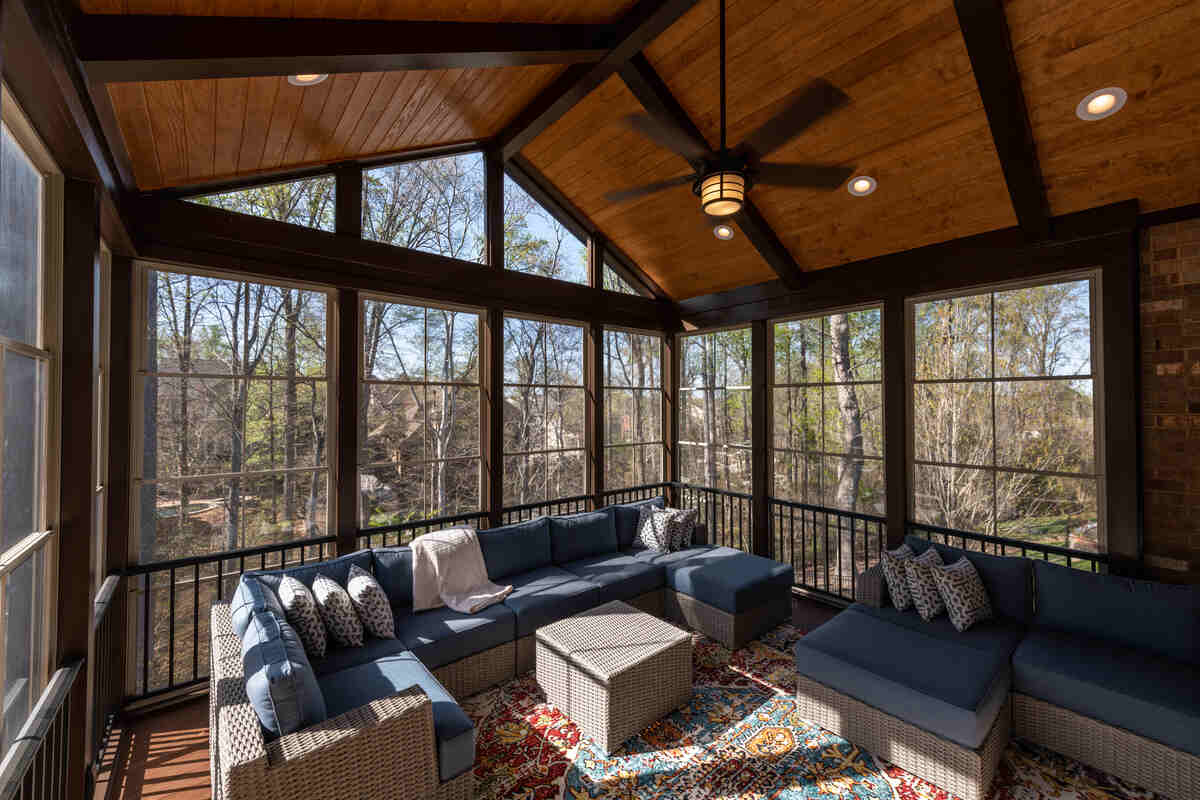
All outdoor curtains and screens, as a result of being exposed to the elements, require regular maintenance.
Clear vinyl curtains need careful treatment to avoid damaging the transparent vinyl. They should be kept clean and free of sand and dust and should only be rolled up when they are dry to avoid mould growing when stacked away.
The tracks for stacker doors and screens that utilize tracks and rails need to be kept clean; lubrication from time to time will ensure that they operate effortlessly.
How Much Does it Cost to Enclose a Patio?
You can budget around $5,000 to enclose a patio; here are the variables that influence the price:
- The existing condition of the roof and vertical supports of the patio area.
- The quality of the materials used to enclose the patio.
- The size of your patio.
- Fitting electricity or gas outlets to the enclosed area.
- Installation of climate control equipment.
How to Keep your Patio Enclosure Warm in Winter
Even the best-quality temporary patio enclosures struggle to provide adequate insulation during the cold North American winters. As a result, some temperature control is required to keep you comfortable on the porch. Portable heaters come in various styles and can be electricity- or gas-powered.
Electric heaters are the most eco-friendly option since most electricity is produced by renewable sources. If you have solar panels, it’s a no brainer.
They’re also the most convenient option as they only require a nearby wall outlet. Infrared heaters produce a very comfortable source of heat.
Now, with these kind of heaters you can only expect so much from them. However, if you’re really set on staying outside on the coldest days, try an outdoor fireplace or if you really want to get adventurous, build your own rocket mass heater bench (see the video below for an overview).
Is a Building Permit Required for a Temporary Enclosure?
Building codes and zoning requirements differ from region to region, so it’s always good to check what is legally required before embarking on your patio enclosing project. As an example, Ottawa requires that vinyl sheeting, heavy-duty fabrics and vinyl tarps used in constructing patio enclosures be certified to CAN/ULC-S109 or NFPA 701 standards.
It would be wise to budget between $300 and $1,000 to obtain the required permit, but a lot depends on your locality and the type of materials you’ll be using for enclosing the patio.
Images from Depositphotos

First heated uninsulated conservatories, now heated uninsulated patios.
Are you serious, don’t you care about future comfortable survival on this carbon rationed planet?
The forthcoming storms will rip your stuff off the wall and floor
Winter is a time to retreat into your sunny well insulated cave.