
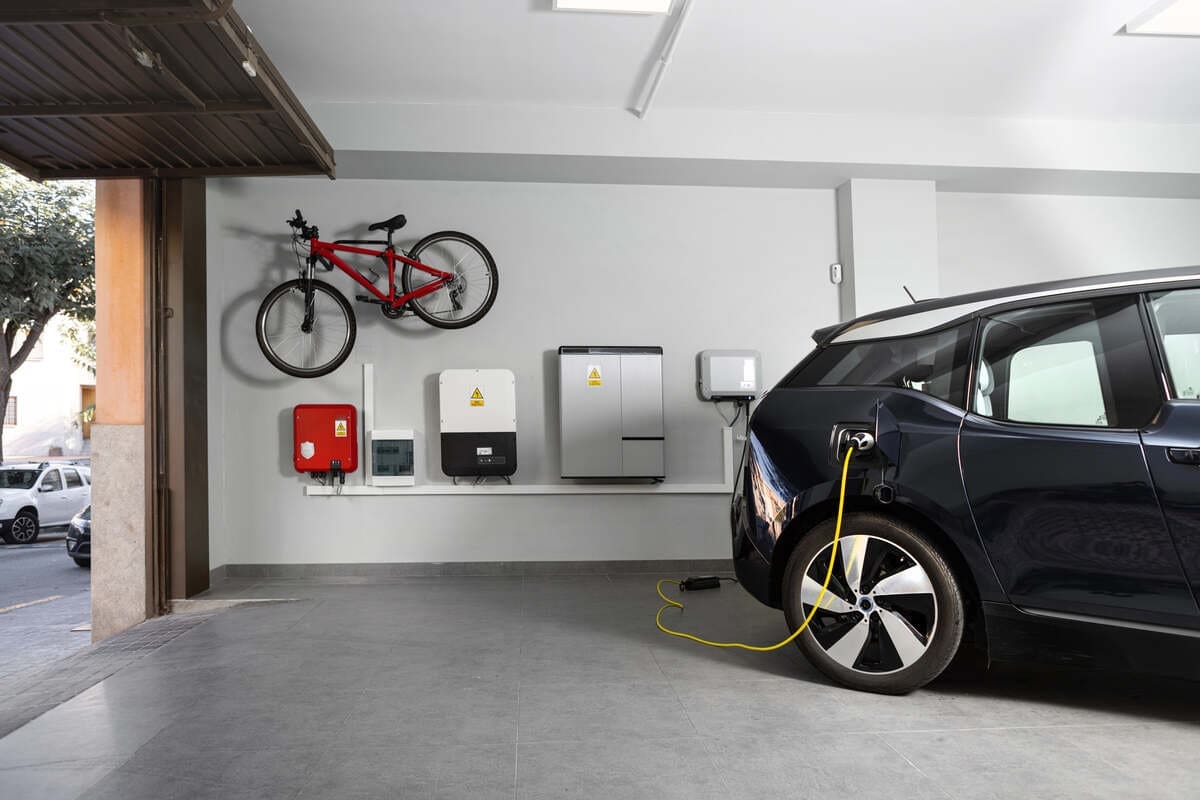
Having an electric vehicle charger at home is more convenient, safer and cheaper – and best of all, rebates are available to help reduce the cost of installation.
While the cost of installing an EV charger is affected by the province you live in, it will depend more significantly on the condition of your domestic electricity supply and the proximity of the electrical supply to where you will park your car at home.
On average, the costs to install a Level 2 EV charger at home in Canada can range from $700 to $2,500. The EV charger will cost between $500 and $1,200, and the installation costs shouldn’t exceed $1,500.
That is quite a wide range in price, so we’ll be having a look at all the details that cause that variation along with info on rebates and pricing variations between provinces.
Factors That Influence the Cost of Installing an EV Charger
Low cost ————————————————> Higher cost
| Level 1 charger | Level 1 charger | Level 2 charger | Level 2 charger | ||
| Installed electrical system | Upgrade electrical board | Minor alteration to electrical board | Upgrade electrical board and hardwire new 240V outlet | ||
| 120V outlet close to car | Fit new 120V outlet close to car (or buy longer EV cable) | Fit new 240V outlet | Fit new weatherproof outlet | ||
The age of the building can significantly impact the installation costs of an EV charger. Wiring that has deteriorated over time will require replacement to ensure a safe system to accommodate the additional load of an EV charger.

Get the Green Building Project Checklist
Use this handy checklist on your next project to keep track of all the ways you can make your home more energy-efficient and sustainable.
The wiring in older homes may not be able to cope with the additional demands of EV charging, and upgrading the system may be required to ensure safety standards are met and building regulations are complied with.
The Position of the EV Charger and Other Costs
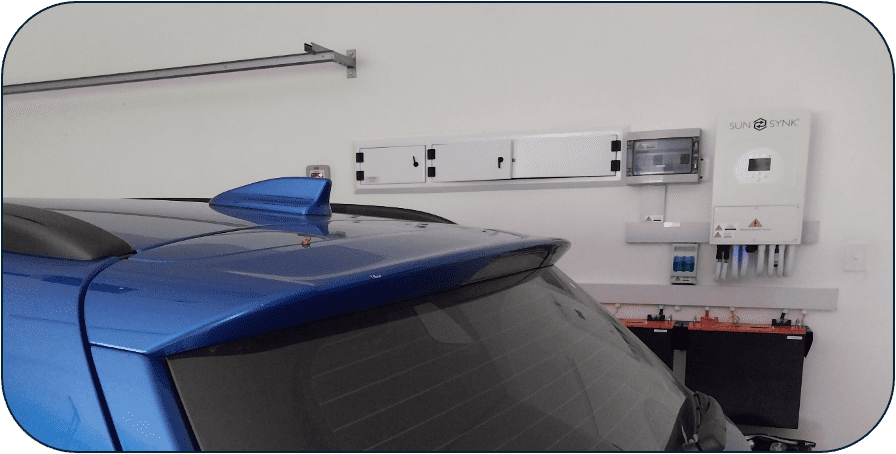
The cabling between the electrical board and the charger is expensive and can sometimes exceed $200 per meter. If you need an external charging station, the cost of an outdoor, weatherproof fitting ranges from $120 to $500.
If the existing electrical system requires an upgrade to accommodate the EV charger, the cost will be approximately $1,500 to $3,000 more, depending on the scope of the upgrade.
EV Charger Rebates
British Columbia – You can apply for a rebate of up to 50 percent, with a maximum of $350, for a Level 2 EV charging station in single-family homes. Rebates are also applicable to townhouses and apartment buildings; however, pre-approval is required for workspace installations.
Businesses can apply for a rebate of up to $14,000 for installing EV chargers at the workplace for employees. BC Hydro also offers a rebate of up to $700 for residential customers installing a Level 2 EV charger at home. In indigenous communities, the rebate is increased to 75 percent for each charging station. Full details of BC rebates are available here.
Ontario – The Electric Vehicle ChargeON program provides funding of up to 75 percent on the costs of installing EV chargers for municipalities, indigenous businesses, organizations and communities. Other applicants can apply for up to 50 percent funding.
Quebec – Owners of electric cars are eligible for a rebate of up to $600 when installing an EV charging station. Details of the procedure to obtain the rebate are available here.
Alberta – The Electric Vehicle Charging Program (EVCP) provides funding of up to 46 percent of the cost of installing charging stations. Full details of the program are available here.
It’s always worthwhile making inquiries about the rebates that apply in your area as these may change from time to time.
In particular, ensure that the charging system you are considering installing qualifies for a rebate before you make the purchase. In many instances, your contracting electrician can provide expert advice on the correct procedure to follow, particularly if you are living in a multi-use building.
Types of Home Chargers for Electric Vehicles

Chargers are categorized as Level 1, 2 or 3. The level is significant because it determines the charging time to recharge a car. This time is typically quoted in kilometres per hour, but although it sounds like a measurement of speed, it actually measures time, which is then converted to the distance the car can travel with the amount of charge.
The measurement makes it easier to determine the type of charger you need. If you only use the car for a weekly trip to pick up groceries, then a Level 1 charger will easily meet your charging requirements.
However, if you do a daily commute to work, make the school run and other trips, then it would make more sense to install a Level 2 charger.
A Level 1 charger will have a rate of around 4 kilometres per hour, while a Level 2 charger will be significantly faster, at approximately 45 kilometers per hour.
Level 3 chargers should take less than an hour to recharge a car, putting their rate at 400+ kilometres per hour.
Charging Rates of Different Chargers
Level 1 EV chargers – The most basic type of charger, the power output is around 1 kWh, which makes for a lengthy charging period, sometimes as long as 50 hours. If you plan to use your vehicle on a daily basis, this may not be the best choice. They operate with a standard 120V AC supply.
Level 2 EV chargers – Delivering a faster rate of charge, level 2 units operate with a 240 V AC supply. They are ideal for multi-use buildings where multiple vehicles require charging. The increased voltage results in a faster charging time, making it ideal for daily commuting, as the charge time is between 5 and 10 hours.
Level 3 chargers – Sometimes referred to as DC Fast Chargers, these units are significantly faster at charging and operate using DC electricity. They require a higher voltage supply than typically contained in a domestic system. The charging time is often less than an hour, making it the ideal ‘on the go’ system.
Selecting a Level 1 or 2 EV Charger Installation
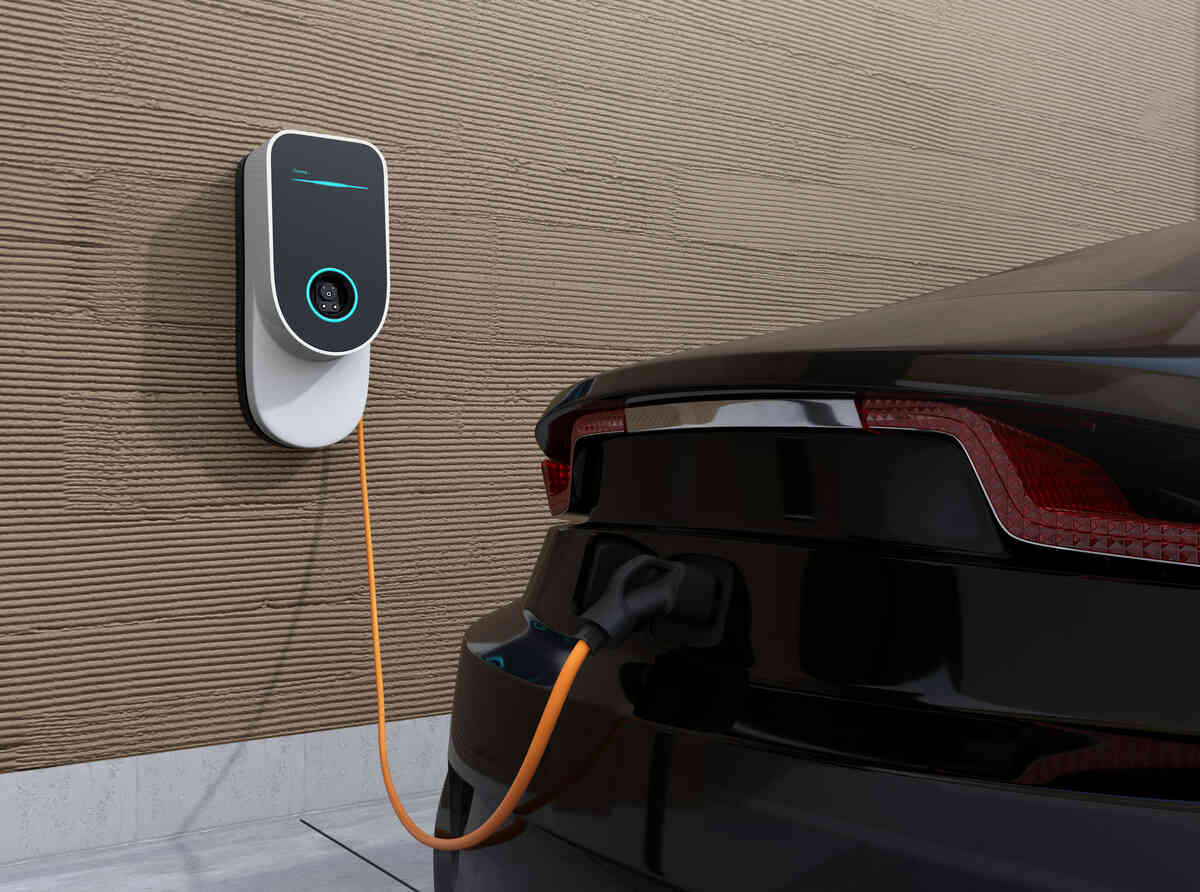
A Level 1 installation is the most affordable and requires no special or additional hardware, as it plugs directly into the standard 120V power outlet. The nozzle cable is typically supplied with the vehicle and is connected to the J port of the car, then connected to a 120 V domestic electrical outlet. This system is sometimes referred to as the ‘Emergency Charging Cable.’
The average length of a Level 1 EV charging cable ranges from 1.2 to 3 metres (4 to 10 feet). As long as you have a conveniently located 120V outlet in the vicinity of where the car will be parked, there is no additional cost.
If you don’t have a 120V outlet nearby, longer charging cables are available, but they will be heavier to accommodate the increased diameter of the wire.
The simplicity and minimal cost of a level 1 charger do, however, have the disadvantage of a slow charging rate, typically around 4 km per hour. If you need a faster charging rate, then you will need to bear the additional cost of installing a Level 2 charger that will produce a charge rate of about 45 kilometres per hour, 10 times the level 1 rate.
Level 2 EV chargers require a 240V supply, which necessitates the services of a qualified electrician to make the necessary alterations to your electrical board. Typically, this involves installing an additional circuit to accommodate a 240V outlet.
In cases where the existing panel is unable to accommodate the additional load, a sub-panel may be required. An appropriate budget to expand the board’s capacity is between $100 and $500.
It is essential to compare the cost of installing a sub-board and the cost of the length of the charging cable required. Considering future additions such as an inverter and batteries, it may be beneficial to install a new sub-board in the garage near the parking area.
Although a sub-panel incurs initial costs, it offers potential advantages by accommodating future installations of inverters, solar panels and batteries for domestic use.
The national average cost of installing an additional circuit with a 60-amp wall connector is approximately $1,000. However, if the electrical panel requires a substantial upgrade, the price can range from $1,500 to $3,500.
Safety and Pre-installation Planning
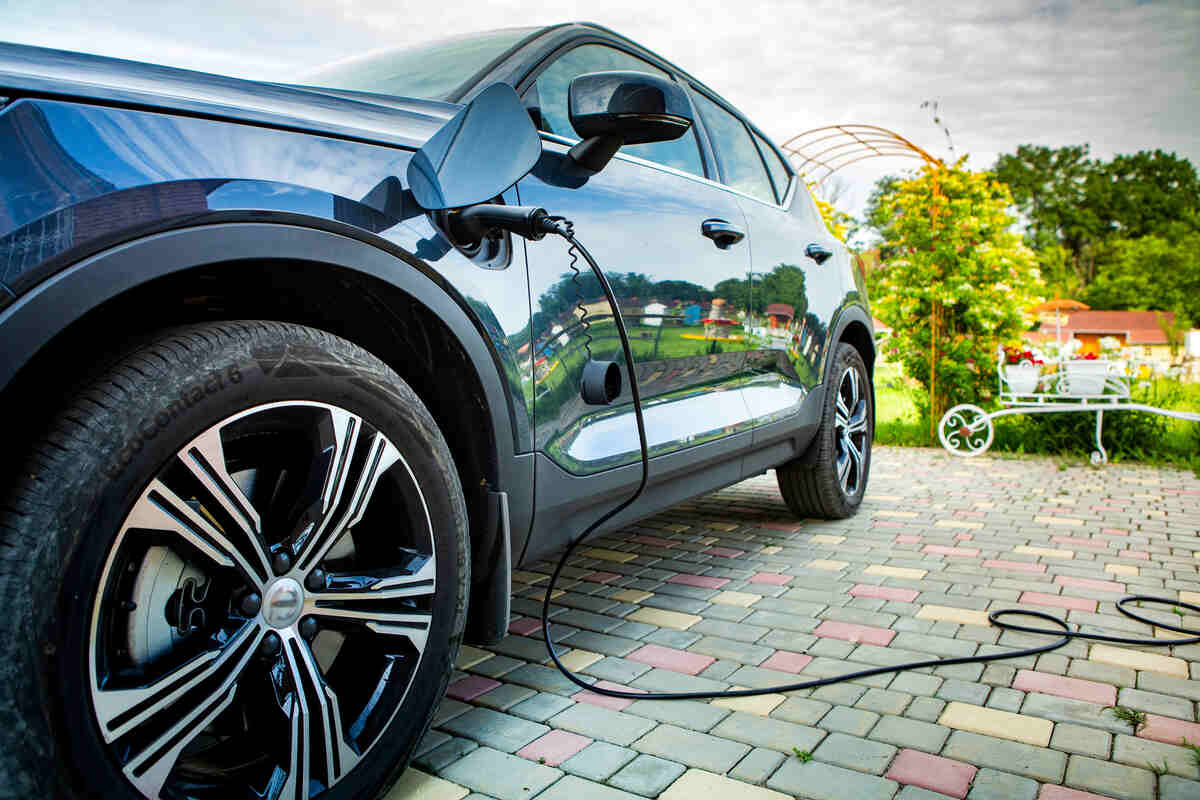
EV chargers do pose a risk of fire. Consequently, it’s essential to hire a licensed electrician to undertake the necessary alterations to your existing electrical system to accommodate the increased load of the EV charger.
In some instances, it’s a requirement to obtain pre-approval for the EV charger installation to benefit from the available rebates. Typically, your energy provider will be able to offer assistance and guidance to help you obtain the rebate, which can reduce the cost of installing the charger.
Read more on this topic in Here’s What Solar Panels Cost in Canada