What Commercial Solar Panels Cost in Canada in 2026


There’s never been a better time to install solar. The cost of commercial solar panels is on a downward trend as the technology matures and supply chains strengthen. In just the past 10 years, the installed cost of commercial solar PV systems has dropped 60 to 70 percent. If you’re looking into solar for your business, read on to find out what the costs of installing commercial solar panels are in Canada.
What Is a ‘Commercial’ Solar Panel System?
Both residential and commercial solar panels use the same solar photovoltaic cells, but they are sized differently. Commercial systems are designed for businesses and institutions so are larger in size. They typically have about 72 cells per panel, compared to residential panels with 60 cells per panel. Due to their larger size, they produce more energy and the cost per watt would be lower due to the economies of scale.
Types of Solar Panels Used for Commercial Installations
The most common solar panels in commercial projects are monocrystalline photovoltaics, built using a single silicon crystal. It is the same technology that is also used in residential systems, but at a higher wattage to support commercial-scale energy needs. Since they operate at high efficiency (approximately 20-22 percent or higher) they are often priced at a premium. Size, wattage and efficiency would differ based on the brand and manufacturer, so remember to shop around to get the best value.
Many new solar panels today are bifacial. These panels have solar photovoltaic cells and tempered glass on both sides of the panels and can generate more electricity per panel. They can generate energy from diffused sunlight that is reflected from the ground to the backside of the panels. They work best if you have a flat roof or ground mount your panels, so that you can angle your panels sufficiently to allow light to reflect off the roof to hit their backside. Even better if you have a cool roof with white reflective paint so that more light reflects off the roof.
Get the Green Building Project Checklist
Use this handy checklist on your next project to keep track of all the ways you can make your home more energy-efficient and sustainable.
Thin-film solar panels are built using non-crystalline materials like amorphous silicon and cadmium telluride. They are super flexible and can be installed in any surface you want, like skylights, windows or other curved surfaces. For businesses that do not have enough space for roof or ground-mounted solar, or cannot bear structural loads, this offers a flexible way to generate some energy using the sun. The efficiency of these panels is low, and varied depending on the material, type and location of the panels. They are not as durable as crystalline panels and have higher replacement costs.
Concentrated solar power systems have solar collectors made of mirrors or lenses, and they concentrate solar irradiance onto a receiver that converts the light into energy. Because they concentrate solar energy to a spot, the efficiency of this system is highm at about 20-40 percent. These are, however, very expensive compared to regular photovoltaic panels, and are built on the ground rather than the roof.
Factors Affecting Costs
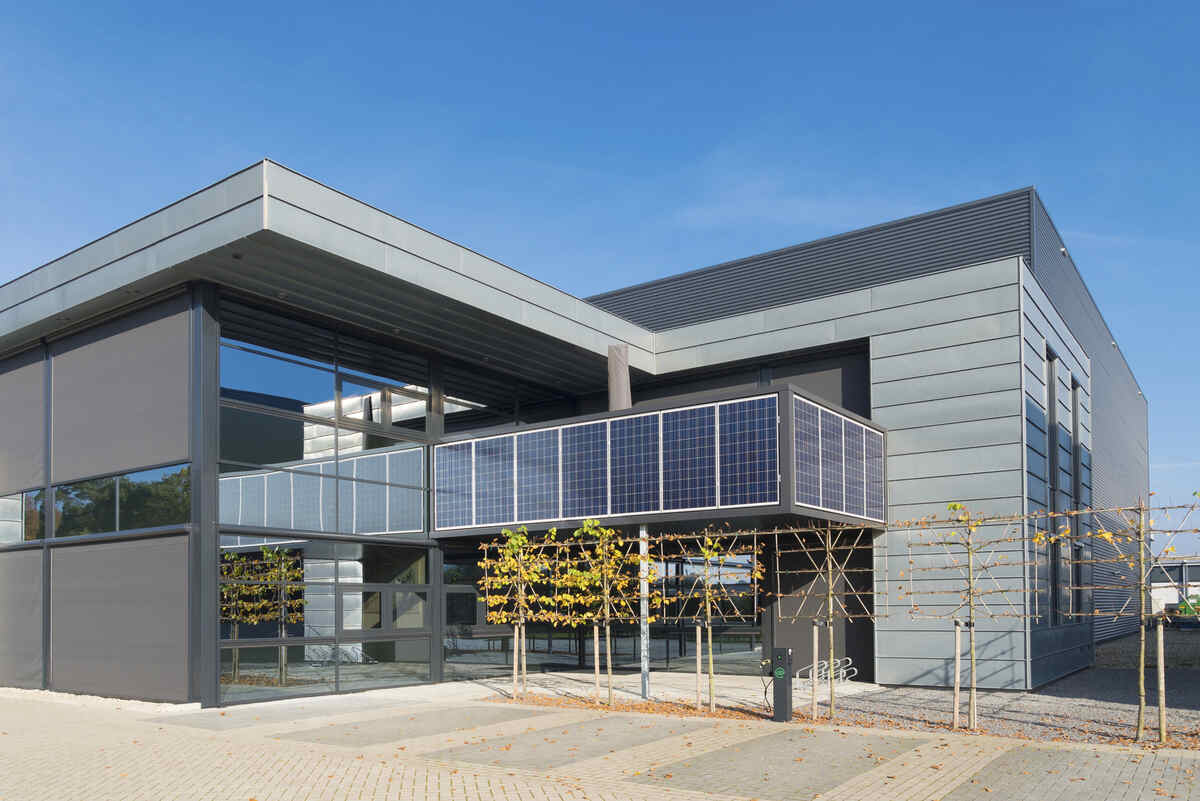
Panel type and efficiency – Choosing the right type of panel for your business will affect system costs and performance outcomes. If you have limited roof space or structural limitations, using high-efficiency panels will cost more upfront but will yield more energy per square foot so you can better achieve your energy goals.
System size and number of panels – Commercial systems typically range from 50 kW to several megawatts, requiring a greater number of panels than residential systems, and therefore higher upfront costs. However, commercial systems also benefit from economies of scale, with lower per-watt installation costs. Labour, inverter costs and permitting requirements become more cost-efficient as your system size increases.
Location -Local solar markets, provincial labour rates, electrical codes and utility requirements, have an influence on commercial installation prices. Large cities have well-developed installer ecosystems, whereas remote/northern regions may face higher costs. Transporting modules, racking and inverters, especially to remote or rural installations can add substantial logistics costs. Climatic conditions like hailstorms or heavy snowfall need tailored structural design compared to locations with lesser seasonal variations.
Installation complexity – Commercial properties vary widely with unique design and engineering needs. Solar systems need to be customized – flat industrial roofs, agricultural barn, parking-lot canopy. Newer buildings versus aging buildings would also bring in unique considerations. Structural reinforcement needs based on wind, snow or hail load requirements, integration with existing electrical and building systems like HVAC units can increase installation costs. For larger systems, grid interconnection upgrades may incur additional costs.
Other Factors
Permitting, engineering and approvals – Commercial systems bring different regulatory requirements. Development or building permits, adherence with building and electrical codes, zoning by-law compliance, utility and interconnection requirements, and fire safety compliance would be needed. Timelines and fees vary depending on the municipality and can impact total cost.
Market conditions – Commercial solar pricing is shaped by global supply chains. Material shortages, geopolitics and tariffs can all move costs. Even policies outside Canada such as U.S. tariffs on Chinese solar modules can indirectly affect Canadian prices by shifting global supply. Canada’s efforts to strengthen domestic clean technology supply chains could influence commercial solar pricing over time by reducing reliance on imports, lowering logistics costs and improving supply stability. In parallel, carbon pricing increases the cost of energy, which makes solar power a more attractive investment.
Taxes and incentives – Commercial installations are subject to HST and/or GST, and provincial sales taxes. However, GST/HST-registered businesses can often recover the tax paid on equipment and installation through input tax credits, lowering costs. Some provinces also offer accelerated depreciation, grants, or utility incentives that may improve project economics.
Monitoring and maintenance – Large systems require scheduled operations and maintenance, including panel cleaning, inverter servicing and performance inspections. Annual commercial O&M contracts would incur additional costs depending on system size and location. Commercial systems may need advanced monitoring platforms that integrate with building automation systems.
Insurance – Commercial solar increases a building’s asset value and may require coverage for fire, weather damage, theft and equipment malfunction. Annual insurance premiums can vary widely, but larger systems may have to pay higher premiums.
Average Cost of Commercial Solar Installation in Canada (2025)
In 2025, the average cost of commercial solar installation in Canada ranges between $1.90 and $2.80 per watt before incentives. This typically includes the cost of the panels, inverters, mounting, labour, permitting and electrical work. With commercial solar, you can achieve greater economies of scale. Typically, the bigger your system size, the lower your per watt cost.
| System Size | Cost Before Incentives |
| 25 kW | $47,500 – $70,000 |
| 50 kW | $95,000 – $140,000 |
| 100 kW | $190,000 – $280,000 |
| 250 kW | $475,000 – $700,000 |
| 500 kW | $950,000 – $1.4 million |
Cost per Square Foot
Commercial rooftop systems generally deliver about 15-20 watts per square foot, depending on panel efficiency, tilt angle, shading and equipment layout. Using this as a rule-of-thumb and considering a per-watt cost of between $1.90 and $2.80, the estimated per-square foot cost for a system with 15-30 W/ft² is $28.50 to $56 per square foot.
| Watts per Square Foot | Cost per Watt | Cost per Square Foot |
| 20 W/ft² | $2.00/W | $40/ft² |
| 15 W/ft² | $2.80/W | $42/ft² |
| 15 W/ft² | $1.90/W | $28.50/ft² |
These per-square-foot estimates include panels, racking, wiring and labour, but exclude structural upgrades such as roof reinforcement, which can be significant for aging buildings.
Costs vary across provinces and cities. In Ontario the average cost is $2.15–3.00/W, whereas in British Columbia, costs are lower at $1.90–2.60/W. Be sure to get multiple local quotes from installers or use a solar broker to narrow down to the best possible options.
Cost Breakdown
Typically, this is how the hardware costs of your project will be broken up:
| Component | Share of Total Cost |
| Solar panels | 50-70% |
| Inverters & electrical gear | 20–30% |
| Mounting/racking | 10% |
| Labour & installation | 20-25% |
Additional costs include permits, inspections and site assessments. Permits can cost a few hundred dollars and other costs vary depending on unique site considerations.
Average maintenance cost would be 0.2–1 percent of system cost per year. Alberta Utilities’ data showed a fixed O&M of $27.47/kW/year. Inverter replacements are typically needed every 10-15 years and may cost 10–15 percent of the system cost.
Incentives and Rebates

Federal Programs
Clean Technology Investment Tax Credit (CTITC) – The Clean Technology Investment Tax Credit provides up to 30 percent refundable tax credit for clean energy investments, including solar PV installation. This is only applicable for property acquired and placed in service on or after March 28, 2023, until December 31, 2034. This credit is designed to drop over time to 20 percent by 2032, then up to 5 percent by 2034. The 2025 Federal budget has expanded the credits to Crown corporations to make this more accessible to businesses.
Clean Economy Investment Tax Credit (CEITC) – This program allows businesses to claim refundable tax credits of up to 15 percent if they invest in non-emitting electricity generation technologies. Businesses that began construction after March 27, 2023, and/or began operation after April 15, 2024, until December 31, 2035, are eligible to claim these credits.
Canadian Renewable Conservation Expenses (CRCE) – The CRCE allow full deduction of expenses related to setting up clean energy technologies like solar energy systems. The deduction can be claimed in the first year of installation or carried forward and claimed over time. It is also possible to flow through the expenses and share among shareholders who may have invested in the system directly.
Accelerated Capital Cost Allowance (ACCA) – Companies can also leverage accelerated depreciation for clean energy systems including solar PV, allowing rapid write-off of the capital cost. Businesses can claim a higher tax rate in the early years of purchase, for example 100 percent of the asset’s cost in the first year, as opposed to the typical 30 percent. This will accelerate the tax write-off for that asset.
Provincial, Municipal and Utility Programs
There are various incentives offered by the province, municipalities and utilities that support clean energy investments in small to large businesses.
| Province/City | Program | Provider | Type of Incentive |
| Alberta | Clean Energy Improvement Program (CEIP) | Province | 100% upfront financing, repaid via property taxes. |
| Edmonton, Alberta | Clean Energy Improvement Program (CEIP) | Province | Up to $1 million incentive |
| Banff, Canmore, Medicine Hat, Alberta | Local solar rebate programs | Municipalities | Rebate amounts vary |
| Alberta | Micro-generation regulations for systems up to 5 MW | Utility | Net billing or credit system |
| British Columbia | PST exemption | Province | 7% PST exemption |
| Nanaimo & Lantzville, British Columbia | RDN Renewable Energy program | Municipalities | Rebates vary |
| British Columbia | Net-metering for systems ≤100 kW | BC Hydro (Utility) | Retail-rate bill credits |
| Manitoba | Efficiency Manitoba Solar Rebate | Province | Rebate of $0.50/Watt |
| Manitoba | Green Energy Equipment Tax Credit | Province | 10% refundable provincial tax credit |
| Québec | Net-metering for systems ≤50 kW | Hydro-Québec (Utility) | Retail-rate bill credits |
| Nova Scotia | Community Solar Program | Province | Bill credits of $0.02/kWh |
| Nova Scotia | Net-metering For systems ≤27 kW | Nova Scotia Power (Utility) | Credit rollover |
| New Brunswick | Net-metering | NB Power (Utility) | Energy bill credits |
| Saskatchewan | Net-metering Commercial for systems ≤100 kW | SaskPower (Utility) | Monthly credits for surplus energy |
| Prince Edward Island | Solar Electric Rebate Program | Province | Rebate of $0.35/Watt |
Images from Depositphotos