
Screen reader version:

Happy Feet: Eco-Friendly Alternatives
Bamboo
Best for:
- Bedrooms, kitchens, living rooms
Pros:
- Matures in less than five years
- Available in caramel and blond-colored planks
- Lasts as long as traditional hardwood
Cons:
Get the Green Building Project Checklist
Use this handy checklist on your next project to keep track of all the ways you can make your home more energy-efficient and sustainable.
- Not a local material, most imported from Asia
Cost Per Square Foot:
- $4 to $8
Cork
Best for:
- Family rooms, living rooms
Pros:
- Naturally resistant to rot and fire
- Mutes sound
- Fast recovery from dents
- Minimal manufacturing waste
- Extremely durable (properly maintained floors last 40+ years)
Cons
- Not ideal for basements or bathrooms, standing water can damage cork
- Not ideal over radiant floor heating as it’s a natural insulator
Cost Per Square Foot:
- $3 to $7
FSC-Certified Wood
Best for:
- Dining rooms, living rooms, kitchens
Pros:
- Wood certified by the Forest Stewardship Council:
- Encourages ecologically and socially responsible forestry
- Preserves biodiversity
- Respects the rights of workers and indigenous communities
Cons:
- FSC-certified companies may sell noncertified wood. Check lumber for the FSC logo
Cost Per Square Foot:
- $3 to $6
Natural-Fiber Carpet
Best for:
- Bedroom, stairs, living rooms
Pros:
- Coir, jute, and sisal fibres are biodegradable, nontoxic and renewable
- Look for products with Green Label Plus certification from the Carpet & Rug Institute to ensure the lowest chemical emissions
Cons:
- Traps dust mites and can aggravate asthma or allergies
Cost Per Square Foot:
- $4+
If These Walls Could Talk: Wall Options
Blocks made out of recycled materials
- Such as waste sludge ash from power stations
- Look like and are used in the same way as normal blocks
Non-fired bricks
- Dried naturally
- Mainly used for internal, non-load-bearing walls
- Breathable
- Good source of insulation
Recycled/re-used bricks
- Greatly reduces the energy involved in manufacturing
Fried honeycomb clay blocks
- Used to create a single skin wall
- Naturally insulating
- Quick to assemble
- Breathable
Insulation Options
Cellulose
- Made of shredded newspapers and fire retardant, damp cellulose
- Comparable price and product to fiberglass
Mineral Wool
- Made of basalt rock and recycled slag
- Sound-absorbing
- Resistant to pests and fire
Cotton
- Made of old denim and other recycled cotton
- Low chemical content
Agricultural products
- Corn, soybean oil, or sugar cane
- Available in rigid boards or spray foam
Fiberglass
- Eco-friendly versions available
- Up to 40 percent of the spun glass is made of recycled material
- Some are enclosed in bags to prevent airborne fiber concerns
Sheep’s wool
- Made from sheared wool that is fluffed and treated with pest control additives
- Good option for those concerned about health issues
Cement
- Mixed with water and frothed with air
- Permanent
- Extremely fire-resistant
- Pest and mould resistant
Greensulate
- Made from mushroom fibers
- Fibres are blended with agricultural by-products
- Custom-made fit for walls
Pick Up a Brush: What to Look for
- Latex paint
- ZERO VOC CONTENT 0%: VOCs (Volatile Organic Compounds) contribute to atmospheric pollution.
- Milk paint
Read labels
- The lower the VOCs, the safer and healthier the paint
- Low-VOC paint contains less than 50 g/L before tinting
- Zero-VOC paint has less than 5 g/L before tinting
Check VOC levels with manufacturer
- Ask if your paint can be tinted with no- or low-VOC colourants
Consider milk paints
- Synthetic-free milk paints use raw, organic ingredients and are zero-VOC even after tinting
- Require preparation (add water and mix) and some knowledge to use
Go latex over alkyd
- Most oil-based alkyd paints contain far more VOCs than water-based latex paint
- Most stains contain VOCs above 50 g/L
Go light over dark
- Lighter colours use less tinting which lowers the VOCs
Go flat over glossy
- The flatter the sheen, the lower the VOCs
The Roof Over Your Head: Green Roof
- Covered with some type of living vegetation
Intensive
- Permanent
- Thickest and heaviest option
- Requires the most maintenance
- Support large variety of plants
Extensive
- Permanent
- Common on commercial buildings
- Lighter and thinner than permanent
Trays
- Non-permanent
- Containers, or trays filled with vegetated material
- Less expensive option
Pros:
- Aesthetically pleasing
- Reduces, absorbs, and filters rainwater runoff
- Provides extra layer of insulation
- Can act as a vegetable garden
- Extends the life of a roof and/or building
Cons:
- High initial upfront costs
- Requires additional design and engineering review
- Can be high-maintenance
- Can not be retrofitted
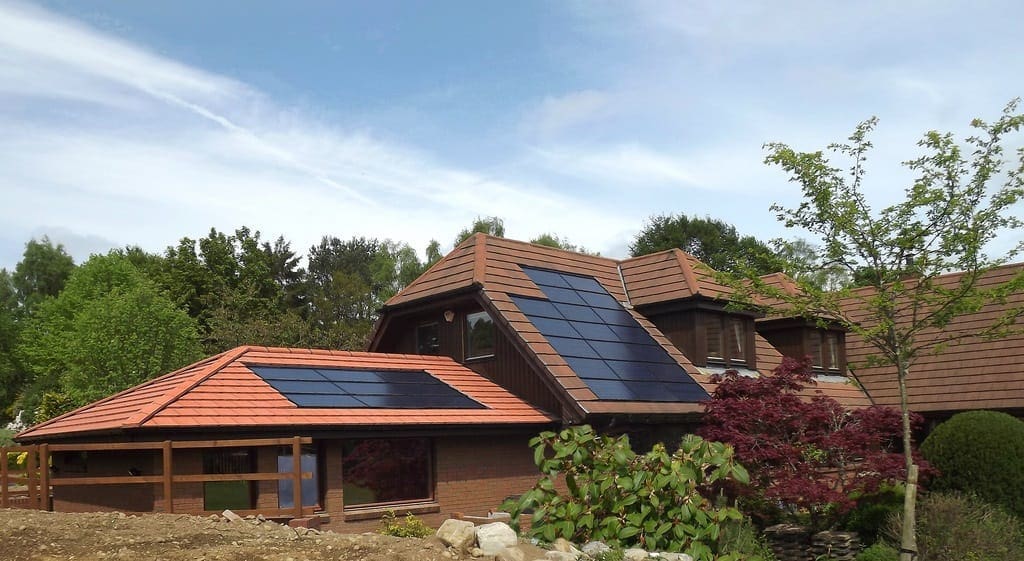
Solar Roof
- Solar system seamlessly integrated into the roof
Pros:
- Shingles can be integrated in roof design and harness the sun’s energy for power
- Can be installed new and retrofitted
- Available in a number of styles and from several manufacturers
Cons:
- More expensive than both standard solar panels and standard roofing
Conclusion
Whether you’re buying a new home or looking to remodel, sustainable replacements can positively influence the health of your family and the environment.
Sources: infographic via https://visual.ly/community/Infographics/environment/sustainable-bottom-green-material-guide; www.apartmenttherapy.com; www.sustainablebuildingresource.co.uk; www.oldhouseweb.com; ecoliving.scotiabank.com
For more information on eco-friendly materials, visit our Green Building Materials page»
image: Solar Trade Association



4.5
wow.