
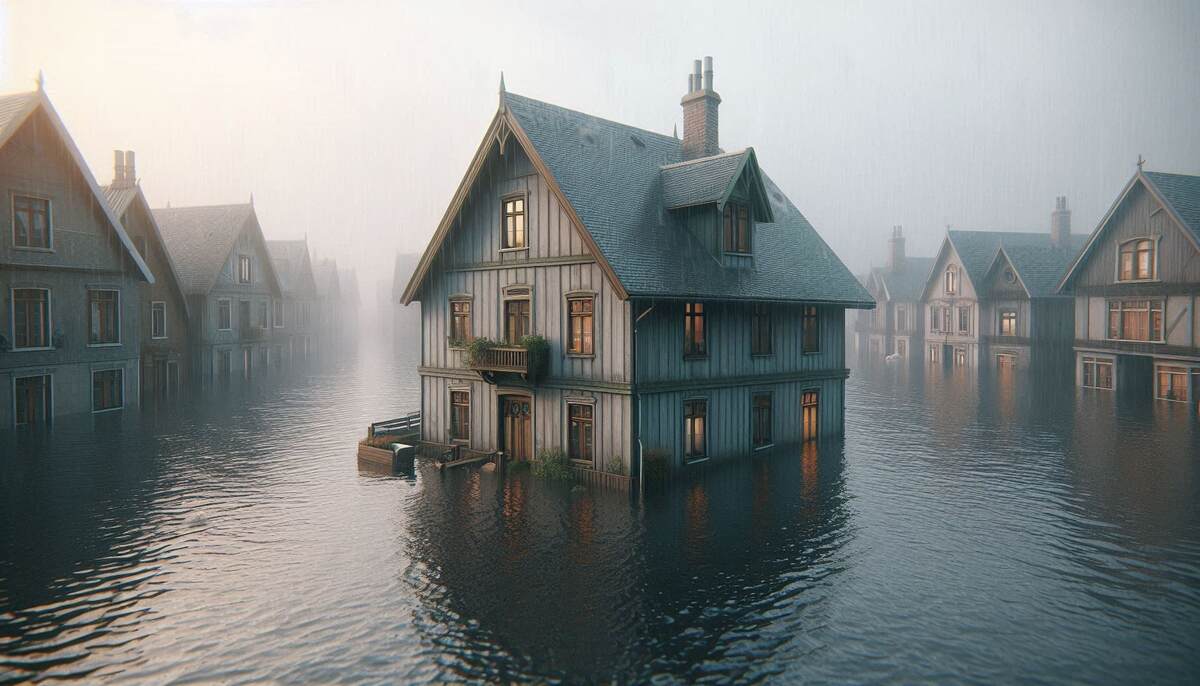
In July this year, floods in Toronto caused damage costing just under $1 billion, while lightning-caused wildfires hit Jasper with a mammoth $880-million repair bill. Alongside the fire and flooding damage, Calgary added $2.8 billion to the natural disaster repair costs after hail damage swept through the area. Not to be outdone, Quebec achieved a new record with a $2.5-billion repair bill from the uninvited visit of Hurricane Debby.
Record insurance payments indicate the desperate need to make our buildings more resilient to the ravaging consequences of climate change.
Planning for Sustainability
The National Adaptation Strategy, implemented in November 2022, focuses on innovations that will make buildings more resilient to adverse weather conditions.
Design changes that support the use of durable, low-carbon materials and practices that encourage nature-based solutions are central to making the built environment more sustainable.
Climate-resilient buildings should be designed to withstand the negative consequences of climate change. Resistance to floods, fire and high winds need to be coupled with the ability to provide decentralized power and clean water.
Improvements in insulation quality and solar gain are important factors in making buildings more sustainable. Using trees in the urban environment to provide shade in summer and implementing rooftop gardens are some practical measures that can be introduced to create a more sustainable environment.
Making Buildings Climate-resilient
Get the Green Building Project Checklist
Use this handy checklist on your next project to keep track of all the ways you can make your home more energy-efficient and sustainable.

Creating a resilient building starts with introducing measures to ensure it can survive known climatic conditions. It extends to anticipating future trends and incorporating measures to accommodate future climate-induced challenges.
The essential element in the design of sustainable buildings is their ability to provide secure and comfortable accommodation for residents by withstanding the catastrophic consequences of natural disasters.
Architects and urban planners need to assess local conditions, promote the resilient properties of materials, and utilize sustainable and durable materials such as low-carbon concrete in combination with steel reinforcing.
Designing buildings and adopting nature-based flood mitigation strategies will provide some protection against flooding. Building well above the flood line and, where appropriate, utilizing amphibious building principles will also reduce the damage caused by flooding.
Quebec residents will remember last year’s June wildfires for many years, as will New York citizens who endured the worst air quality due to the same fire.
Forest restoration projects are an essential element of climate-resilient building. They promote sustainable buildings and reduce the risk of future wildfires and consequential deterioration in city air quality. Removing invasive alien vegetation and the subsequent reduction in forest floor fuel, coupled with timely restorative planting projects, are integral parts of the drive to reduce the wildfire threat.
Rebuilding with Climate Change in Mind
The lessons learned from rebuilding after disasters have shown the frailty of original designs have resulted in several advances in what has become known as ‘design robustness’:
- Replacing destroyed buildings with new ones on elevated foundations to withstand future flooding.
- Employing new glazing techniques using hurricane and fire-resistant glass. Read more on this topic in 5 Benefits of Installing Fire-Rated Windows in Your Building.
- Installing hybrid renewable systems, such as solar panels and wind turbines, to enable buildings to have independent power supplies. Read more in Hybrid Renewable Energy Systems: Reliable, Sustainable and Cost-Effective.
- Improving insulation qualities to reduce the energy demands of buildings. Read more on this topic in Best Insulation Choices for Green Building.
- Introducing innovative design features such as overhangs to reduce heat gain.
- Incorporating green roofs and better stormwater management, including features like permeable roadways and pavements. Read more on this in A Guide to Green Roofs.
Some Examples of Innovative, Resilient Design
An impressive example of sustainable innovation is Ontario’s Credit Valley watershed program, which is focused on managing rainfall runoff from the Credit Valley Conservation Administration building. The Blue Roof design incorporates ‘smart design’ features that direct runoff according to the severity of the downpour. Low rainfall amounts are held to cool the building through evaporation. Alternatively, greater volumes of water are directed to storage tanks for non-potable water or gradually released into the stormwater system.
The Children’s Museum in New Orleans is an inspirational example of building with the environment in mind. Hurricane Katrina provided guidance for sustaining nature’s onslaught. The raised foundations and walkways and innovative stormwater management protect from flooding, while glazing is designed to withstand high winds.
The Miami Beach Convention Centre is an example of adapting to the changing climatic conditions brought on by global warming. The repurposing of the car park into a public park consisting of green lawns and play areas and the moving of the integral parts of the building to the second floor have created a more hurricane-resilient building. The aluminum roof design reflects the local marine geography, allowing natural light to enter the building.
The 100-person self-sustaining community of Schoonschip in Amsterdam is a combined creation of the residents and Space&Matter architects. The floating village boasts an integrated energy system that allows for the communal usage of solar-powered electricity. The neighbourhood supports a sustainable community with a supportive character.
Rebuilding in the Devastation Zone

Reluctance to accept changes in climatic conditions is part of human nature. Aging communities will tell you how long they have lived in the area and deeply question the validity of needing to relocate.
The estimated repair costs for Hurricane Helene hover around $225 billion, which is $25 billion more than for Hurricane Katrina. However, there is some controversy regarding the economic validity of rebuilding in areas that are frequently devastated by natural phenomena like hurricanes.
Rebuilding houses in floodplains without any intervention to install some mitigating measures is a short-lived and severely restrictive policy.
Government agencies’ changes of direction to rebuild more sustainably may initially be more expensive, but redirecting housing to areas less prone to hurricane devastation and building with more sustainable materials may offer a more permanent and financially realistic policy.
Moving housing away from disaster-prone areas and rehabilitating the area to create a natural environment that can better withstand natural disasters does offer some hope for coping with the repercussions of climate warming.
The misconceptions regarding rebuilding with sustainable materials create artificial barriers to resolving the problem. As the incidence of climate-induced devastation increases, careful analysis of repair costs needs to be aimed at creating a balance between immediate repairs and future sustainable building.

Keep up the good work you are doing important work.
Thanks for that, and how is your project coming along?